Featured · TodayTravel
Walking Beneath the Sea: Japan's Kanmon Pedestrian Tunnel
A 780-meter underground footpath lets anyone walk from Honshu to Kyushu in twenty minutes. Getting it built took three decades, a war, and an older tunnel's hard-won lessons.

Listen
Read by Finch · 6 min
The Walk From Mimosusogawa Park
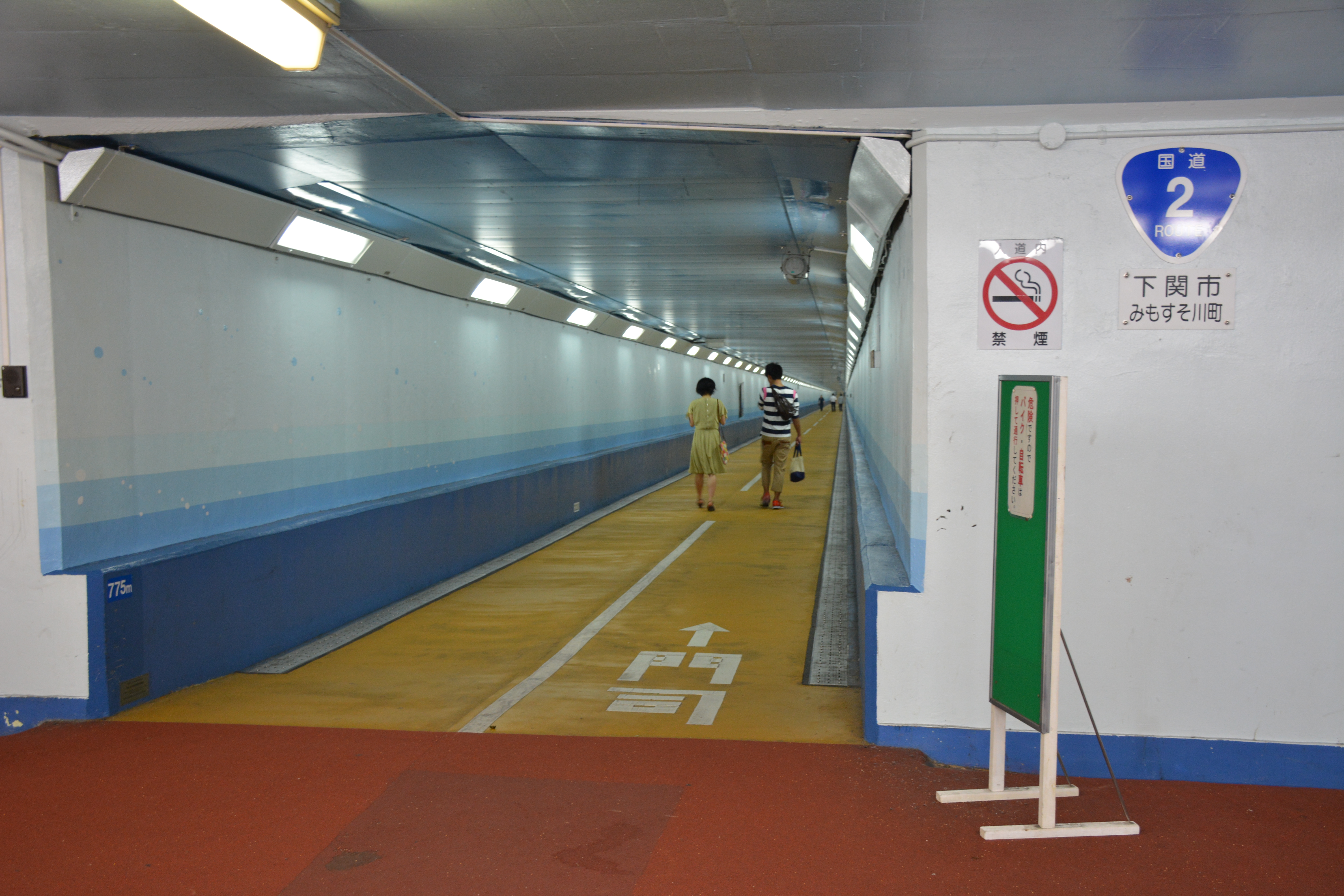
The Shimonoseki entrance to the pedestrian tunnel opens onto Mimosusogawa Park, which overlooks the stretch of water where the Taira clan was annihilated at the Battle of Dan-no-ura in 11855. A visitor takes an elevator down roughly 55 meters, finds a straight tiled corridor, and starts walking toward Kyushu3,1. The whole crossing, from one island to the other, takes about fifteen to twenty minutes1,3.

Nothing about the walk itself announces what it took to make possible. It feels less like entering an engineering project and more like going for a stroll indoors, except the ceiling above you is open water3.
The strait that pedestrians now cross on foot had resisted every obvious way of getting across. The Kanmon Strait separates Honshu and Kyushu at a point that mattered strategically but sat on difficult, unstable seabed, and for decades the only serious answer engineers had was to go under it rather than over it4,6. Japanese surveyors began test drilling in 1919, reportedly studying tunnels built elsewhere, including the one dug beneath New York's Hudson River, before deciding the crossing was even feasible4,7.
That early work fed into the Kanmon Railway Tunnel, not the pedestrian path at all. Construction started in 1936, and the project required a mix of conventional drilling and blasting on the Honshu side, where the ground was closer to solid rock, and shield tunneling and caisson work on the softer Kyushu side4. The Kyushu-bound line was finished in 1942, the Honshu-bound line in 1944, and together they formed what is described as the world's first undersea railway tunnel4.
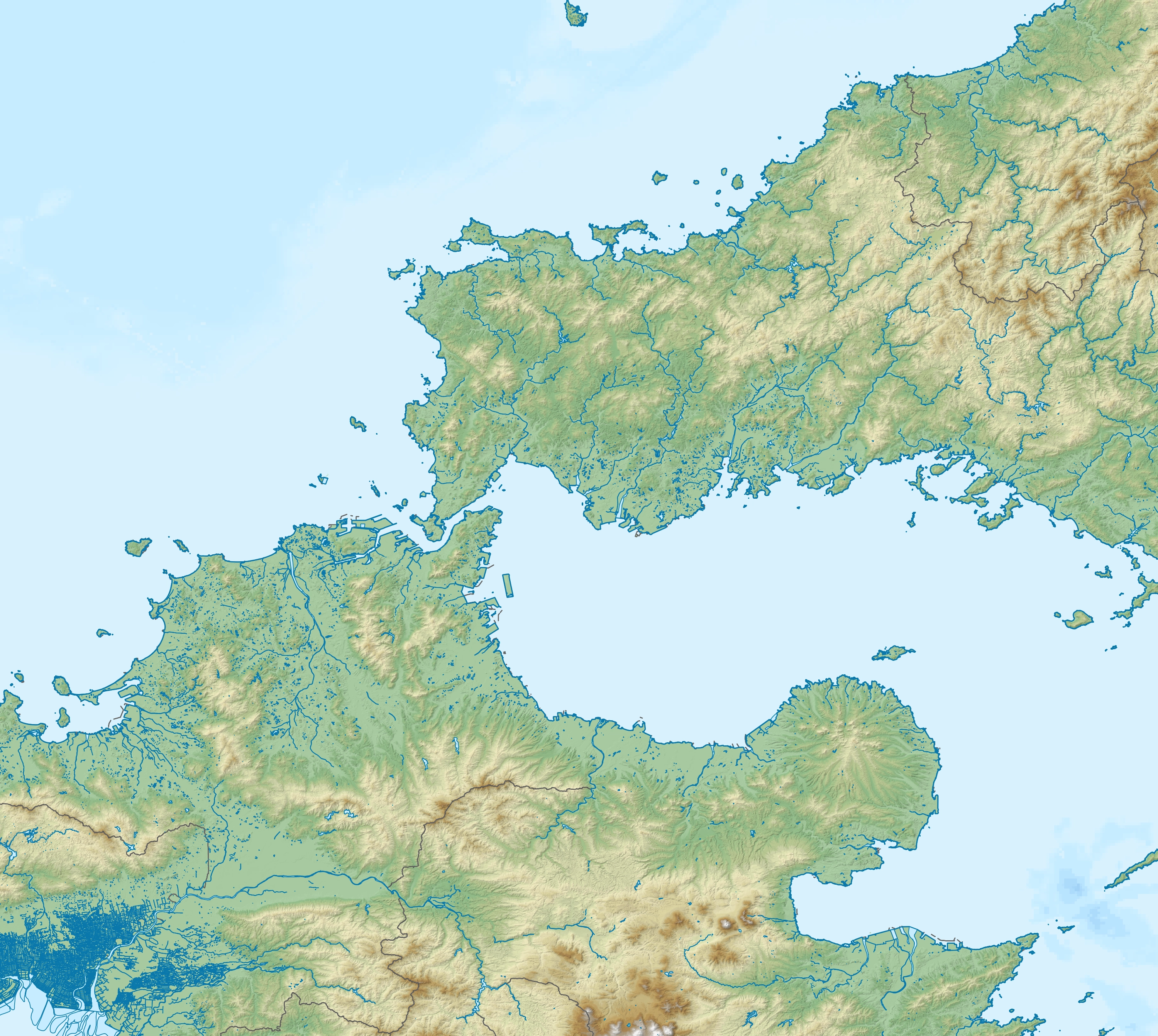
The roadway project that would eventually carry the pedestrian tunnel underneath it started on a separate and much rockier timeline. Work began in 1937 but was halted by 1939 as the Second World War overtook the country's resources, and it did not resume until 19521. By then the railway tunnel's shield-tunneling and caisson techniques had already been proven under the same strait, and Britannica notes the later roadway project, following a somewhat shorter route, was completed with improved equipment and comparatively little difficulty6.
The tunnel that opened on March 9, 1958, as a two-level undersea highway, with vehicles above and a dedicated pedestrian and bicycle passage below, carried a cost that rarely makes it into the postcard version of the story1,8. A United Press report from the time put the death toll during construction at 53 workers1. No detailed, named eyewitness account of a shift, a close call, or a worker's own words survives in the available record, so the human cost is documented only as a number, not a story4.

After 1958 the tunnel settled into ordinary life: commuters, cyclists pushing their bikes rather than riding them, tourists, and runners have used it ever since, while the Kanmon Bridge, built later, took over most of the heavy vehicle traffic8,9. Partway along the pedestrian corridor, a painted line on the floor marks the border between Yamaguchi and Fukuoka prefectures, the one feature every visitor is told to look for1,5. Standing on it, a walker has one foot on Honshu and one on Kyushu, in a passage that exists only because an older, costlier project under the same water already showed it could be done4.
The Tunnel by the Numbers
- 780 meters: length of the pedestrian passage beneath the Kanmon Strait1,3.
- 3,461 meters: total length of the Kanmon Roadway Tunnel, including approaches1.
- 55-60 meters: depth of the elevators on the Shimonoseki and Moji sides respectively3,8.
- 15-20 minutes: typical walking time for the full crossing1,3.
- March 9, 1958: opening date for both the roadway and the pedestrian tunnel1,3.
- 53: workers reported killed during construction, per a contemporary United Press report1.
- 1919: year test drilling began in the strait to assess feasibility4.
An Older Tunnel Underneath the Story
The pedestrian tunnel's existence depends on an earlier, less visited piece of infrastructure: the Kanmon Railway Tunnel, completed in two stages in 1942 and 19444. It is usually described as the world's first undersea railway tunnel, and it proved that drilling beneath the strait's unstable seabed was possible using shield tunneling and caisson construction4.
That earlier project absorbed the hardest lessons. The Honshu side allowed more conventional mountain-tunneling methods, but the Kyushu side's softer ground forced engineers to rely on shields and pneumatic caissons, compressed-air techniques meant to keep water and loose soil from collapsing into the workings4,6.
When the roadway and pedestrian tunnel resumed construction in 1952 after the wartime halt, it benefited from that experience and from improved equipment, which is why Britannica describes its completion as comparatively straightforward next to the railway tunnel's ordeal6,1. The pedestrian path people walk today is, in effect, built on top of a problem Japan had already spent over two decades solving underground.
Timeline
- 1919Test drilling begins in the Kanmon Strait to assess whether an undersea crossing is feasible.
- 1936Construction begins on the Kanmon Railway Tunnel.
- 1937Construction begins on the Kanmon Roadway Tunnel.
- 1939Roadway tunnel work is halted by World War II.
- 1942The Kyushu-bound railway tunnel bore is completed.
- 1944The Honshu-bound railway tunnel bore is completed.
- 1952Roadway tunnel construction resumes.
- 1958-03-09The Kanmon Roadway Tunnel and its lower pedestrian passage open.
Pictures



Sources
- Kanmon Roadway TunnelWikipedia
- FEATURESgov-online.go.jp
- [PDF] Kanmon Undersea Footpath Anyone claiming to have walked from ...mlit.go.jp
- 関門トンネル(鉄道)|検索詳細|地域観光資源の多言語解説文データベースmlit.go.jp
- Kanmon Pedestrian Tunnel in ShimonosekiAtlas Obscura
- Kanmon Tunnel | Description, History, Construction, & Facts | BritannicaBritannica
- Preventing carbon monoxide poisoning in the Hudson River Tunnel in 1921: recounting historyUndersea and Hyperbaric Medicine · 2021
- Kanmon Tunnel (national route)kanmon.gr.jp
- Kanmon Tunneljapan.travel
- The Kanmon Bridge — A Key Transportation Link Between ...gov-online.go.jp
Researched and written by Lorelet from the sources above. It cites as it goes, but it can still get things wrong, so check the sources for anything that matters.
Report a problem
More featured lorelets
See all
Today · Business
The Olympus Whistleblower Who Toppled His Own Board
A British executive became the first foreign CEO of a storied Japanese camera maker. Two weeks later, the board fired him unanimously, and gave a rea…

Today · History
Mary Todd Lincoln's White House Séances
After her young son died in the middle of the Civil War, the First Lady filled a White House room with mediums, candlelight, and grief. Her skeptical…

Oct 13 · History
The Night Parliament Had to Remove Its Own Ironwork
A suffragette chained herself to a barrier built to keep women silent, and the men running the House of Commons found they had no way to make her let…