
Featured · Nov 12Business
The Brothers Who Split a Town in Two
A sentence muttered in a bomb shelter has long been blamed for turning two Bavarian shoemakers into lifelong enemies.

Listen
Read by Wren · 7 min
The Dirty Bastards Are Back Again
The air raid hit Herzogenaurach sometime in 1943, and Adolf Dassler climbed into a shelter already crowded with his brother Rudolf's family1,7. Adolf and his wife, Käthe, pushed in alongside Rudolf and Rudolf's wife, and Adolf muttered a line that has outlived nearly everyone who was there: "The dirty bastards are back again"1,7. He meant the bombers overhead. Rudolf was certain he meant him1,7.
Something had already soured between the brothers well before that night, and the shelter was just where it finally surfaced1.
Two decades earlier, there had been no daylight between them at all. Adolf, newly home from the first war, started making sports shoes in his mother's laundry room in Herzogenaurach, with his father's shoemaking contacts and a local blacksmith supplying hand-forged spikes8,9. Rudolf joined him on 1 July 1924, and together they registered the Gebrüder Dassler Schuhfabrik, the Dassler Brothers Shoe Factory2,8. Adolf was the quiet craftsman, endlessly tinkering with leather and lasts; Rudolf was the loud, persuasive salesman who could walk into a room and sell what Adolf had built4,1. "They complemented each other very well to begin with," journalist Barbara Smit, who wrote a book on the feud, told Deutsche Welle4.

That partnership paid off spectacularly in 1936, when American sprinter Jesse Owens wore Dassler shoes to four gold medals at the Berlin Olympics, putting the small Bavarian firm on the world's radar1,2.
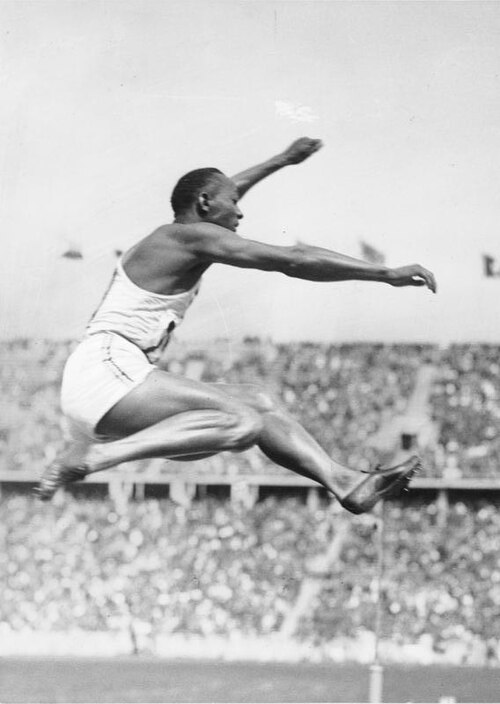
The war undid what the Olympics had built. Both brothers had joined the Nazi Party in 1933, reportedly for the business connections it offered2,9. They lived crammed into one house in Herzogenaurach with their wives, children, and parents, a closeness that frayed fast once Adolf secured a deferment to keep running the factory while Rudolf was drafted2. Rudolf, who had already served four years in the first war, was called up again in January 1943 under a total mobilization order, and he came to believe his brother and his brother's party connections were behind it2.
From his posting in Tuschin that April, Rudolf wrote directly to Adolf: "I will not hesitate to seek the closure of the factory so that you be forced to take up an occupation that will allow you to play the leader"2. According to Käthe, Rudolf also denounced his brother to local Nazi party leaders around this time2. After the war, the accusations ran both ways: Adolf and Käthe reportedly testified that Rudolf had been part of the SS, and Rudolf spent roughly a year in custody before being released; he in turn accused Adolf of profiting from wartime weapons production9,2. The sources describe this tangle of denazification claims and counterclaims, but none of them settle whose version was true, or whether the shelter remark or the wartime letters did more lasting damage2,3.
By 1948, whatever was left of the partnership gave out. The brothers split the factory's assets and staff between them4. Adolf kept the manufacturing operation and called it Adidas, built from his nickname "Adi" and the start of his surname5,6. Rudolf crossed the Aurach River and started a company he first named Ruda, after himself, before settling on Puma8,3.

Herzogenaurach absorbed the fight whole. Bakeries, bars, and football clubs sorted themselves into Adidas people and Puma people, and the town became known, in Smit's phrase, as the place "where people tend to look down because you'd always tend to look at shoes the person is wearing before you strike up a conversation"4,5. Rudolf's grandson Frank Dassler grew up with no contact at all with Adolf's side of the family4. Puma's later chief executive, Jochen Zeitz, compared the divide to East and West Berlin, restaurants and bakeries included5.
Rudolf died in 1974 and Adolf in 1978, and they were buried at opposite ends of the same Herzogenaurach cemetery1. It took until 2009, after Zeitz phoned his Adidas counterpart Herbert Hainer ahead of the UN's World Peace Day, for employees of both companies to finally play a friendly football match together5,1. Nobody who was in that shelter in 1943 is alive to say for certain what Adolf meant by his one sentence, only that his brother never let it go1,7.
Who's Who
- Adolf "Adi" Dassler: Craftsman brother who stayed to run the factory during the war and founded Adidas in 19482,5.
- Rudolf "Rudi" Dassler: Salesman brother, drafted in 1943, founded the company that became Puma8,3.
- Käthe Dassler: Adolf's wife, present in the 1943 shelter and later credited with saving the factory from American demolition in 19452,1.
- Christoph and Pauline Dassler: The brothers' parents; the business began making shoes out of their home8,9.
- Jesse Owens: American sprinter who wore Dassler shoes to four gold medals at the 1936 Berlin Olympics, giving the firm its first international exposure1,2.
- Jochen Zeitz: Later Puma chief executive who arranged the 2009 reconciliation match with Adidas5.
By the Figures
- 1924: Year Rudolf formally joined Adolf's business, forming the Dassler Brothers Shoe Factory2,8.
- 4: Gold medals Jesse Owens won at the 1936 Berlin Olympics wearing Dassler shoes1.
- 1943: Year of the disputed air-raid shelter incident and Rudolf's letter from Tuschin2,1,7.
- 1948: Year the brothers split the company into Adidas and Puma4,5.
- 60: Years the feud is commonly said to have divided the town, until the 2009 reconciliation match1,5.
What's Actually Known
The 1943 air-raid shelter exchange is the most repeated explanation for the break, but it comes from secondary accounts rather than a verified transcript, and sources are explicit that no one knows for certain what caused the final rupture4,1,7.
Barbara Smit's research points instead to Nazi party entanglements and denazification accusations as a likelier root cause, alongside friction between the brothers' wives4. Other retellings lean on the shelter story alone because it is vivid and quotable, even though the underlying record is thinner than the anecdote suggests1,7.
Accounts of the town's social division also vary in intensity. Some sources describe near-total segregation, with every bakery, bar, and tombstone maker picking a side1,9, while others, including town officials quoted decades later, describe a rivalry that was real but less absolute than the popular version suggests5.
Timeline
- 1924Rudolf joins Adolf's shoe business; the two register the Dassler Brothers Shoe Factory2,8.
- 1933Both brothers join the Nazi Party2,9.
- 1936Jesse Owens wears Dassler shoes to four gold medals at the Berlin Olympics1,2.
- 1943Rudolf is conscripted, writes a threatening letter from Tuschin, and the disputed air-raid shelter remark occurs2,1,7.
- 1945American troops consider destroying the factory; Rudolf is briefly imprisoned amid denazification proceedings2.
- 1948The brothers split the firm into Adidas and Puma4,5.
- 1974Rudolf Dassler dies8,1.
- 1978Adolf Dassler dies2,1.
- 2009Adidas and Puma employees play a reconciliation football match5,1.
Pictures



Sources
- The hatred and bitterness behind two of the world’s most popular brands | Fortunefortune.com · 2013
- Adolf DasslerWikipedia
- The Nazi Sibling Rivalry That Divided A Town And Created Modern Sportswearvice.com
- The Town that Sibling Rivalry Built, and Divideddw.com · 2006
- Sporting rivals: the town divided by Adidas and Pumacnbc.com
- BBC NEWS | Europe | German feud inspires boots townnews.bbc.co.uk
- Town divided by tale of two shoessmh.com.au
- Rudolf DasslerWikipedia
- The Wartime Family Feud That Created Adidas and Pumamentalfloss.com · 2026
- Adidas, Puma Break From Rivalry For A Day - NPRNPR
Researched and written by Lorelet from the sources above. It cites as it goes, but it can still get things wrong, so check the sources for anything that matters.
Report a problem
More featured lorelets
See all
Today · Food
The Turkey Surplus That Became the TV Dinner
A company drowning in frozen birds found an answer on an airline food cart, or so the story goes for fifty years.

Today · Space
Why Is Jupiter's Great Red Spot Actually Red?
Jupiter is built almost entirely of colorless gas, yet its most famous storm glows orange-red. Scientists have spent decades in the lab trying to fig…

Today · Art & Design
The Aztec Labret Whose Golden Tongue Still Moves
A small gold serpent made for a pierced lip somehow ended up with a tongue that flicks side to side. No one alive has ever seen it worn.