Featured · Sep 30Sports
The Night Football First Flickered Onto TV Screens
On a September afternoon in 1939, two clunky cameras on Randall's Island quietly launched American sports television, and almost nobody watching the actual game noticed.

Listen
Read by Wren · 1 min
A Warm-Up Game Nobody Bothered to Hype
Fordham University did not think much of Waynesburg College. The Rams were a preseason pick for the national championship, and this was supposed to be an easy season-opening tune-up before tougher games against Alabama and Tulane1. So when NBC decided to point its experimental cameras at Triborough Stadium on Randall's Island on September 30, 1939, nobody involved treated it as history in the making.
The New York Times covered the game the next day and buried the fact that it had been televised in a single sentence deep in the story: "The Rams had the televised game well in hand by halftime." That was it1. Fordham fullback Dom Principe later admitted the cameras meant nothing to the players at the time: "The fact that the game was being televised had no significance to those of us playing," he said, adding that Waynesburg's early touchdown caught the Rams off guard because they had underestimated the visitors1.
That touchdown belonged to Waynesburg's Bobby Brooks, who broke off a 63-yard run on just the third play of the game, making him the answer to a trivia question nobody knew existed yet: first man to score a touchdown on television4,2. Fordham, coached by Frank "Sleepy Jim" Crowley of Notre Dame's old Four Horsemen fame, shook off the shock and scored in every quarter afterward, finishing with 337 yards of offense against Waynesburg's 157 and closing it out 34–71,4.
Game official Jack McPhee remembered noticing something odd near the sideline before kickoff: "a vehicle that looked like a boxcar" parked at the edge of the field, with a camera on a tripod nearby. He didn't think much of it until he got home. "I told my wife the game had been on TV," he recalled. "She said, 'What is it? How does it work?'"1 That question was, in its way, the whole story of American television in the fall of 1939.

The technology on hand was primitive by any later standard. NBC ran the signal through its station W2XBS, transmitting from the Empire State Building as part of the network's push around the 1939 New York World's Fair1,5. Announcer Bill Stern, already a well-known radio voice, called the play-by-play, and some accounts add that Mel Allen handled pregame interviews, though that detail doesn't appear in every version of events2,6. However many people were actually watching — and that number is disputed — they were witnessing the first documented attempt to bring a fast, chaotic outdoor game into American living rooms in real time1,3.
Why a Football Game, Why 1939
Television in 1939 was less a product than a demonstration. NBC's parent company RCA used the New York World's Fair, which opened that April, as a stage to show off the new medium, and David Sarnoff had already declared from the RCA pavilion that television marked the birth of "a new art and a new industry"7,5. A football game was a useful test case precisely because it was hard: unlike a studio broadcast, it required tracking fast, unpredictable motion across a wide field.
NBC had already tried sports on camera that year, televising a Princeton-Columbia baseball game in May and a Cincinnati Reds-Brooklyn Dodgers doubleheader in August5,3. Football was the next logical target, and Fordham's season opener against Waynesburg, played away from Fordham's own campus at Triborough Stadium on Randall's Island, gave NBC a nearby, accessible venue1,8.

The cameras themselves used iconoscope tubes, an early electronic imaging technology that was notably insensitive to light compared with what came later. That meant outdoor coverage demanded careful camera placement and strong natural lighting, with only a couple of fixed vantage points available rather than the roaming, multi-angle coverage modern viewers take for granted3,9.
Who Was Involved
- NBC: Organized and transmitted the broadcast through its experimental station W2XBS, forerunner of WNBC1,5
- RCA: Supplied the iconoscope cameras and technical equipment; closely tied to NBC corporately at the time3,9
- Bill Stern: NBC's play-by-play announcer, already a prominent radio sportscaster2,1
- Mel Allen: Credited by the National Football Foundation with conducting pregame interviews, though not mentioned in every account6
- Fordham University: Coached by Frank "Sleepy Jim" Crowley, won the game 34–71,2
- Waynesburg College: Scored first through Bobby Brooks's 63-yard touchdown run, lost 34–72,4
How Big Was the Audience, Really
- 500 to 5,000: the NCAA's range for the television viewing audience1
- Approximately 1,000: the figure most often cited for television sets or viewers reached, per Wikipedia and several later accounts4,7
- 9,000: attendance in person at Triborough Stadium1
- 50 miles: the effective reception radius from NBC's Manhattan transmitter, according to an NBC-linked historical account3
- $600: the approximate cost of a television set at the time, according to Waynesburg's own athletics history — a price that put ownership well out of reach for most households2
These numbers don't all measure the same thing — some are sets, some are people — which is why the honest answer is that the audience numbered somewhere between a few hundred and a few thousand, not the mass audience the phrase "televised football" might suggest today1,4.
One Camera or Two
Sources disagree on the most basic technical detail of the broadcast. Wikipedia and Waynesburg's own athletic-history page state that NBC used a single camera4,2. The Early Television Museum's account, drawing on an NBC photograph from October 1939, describes two cameras: one positioned on the sideline for close-ups and another in the press box for a wider view of the field3.
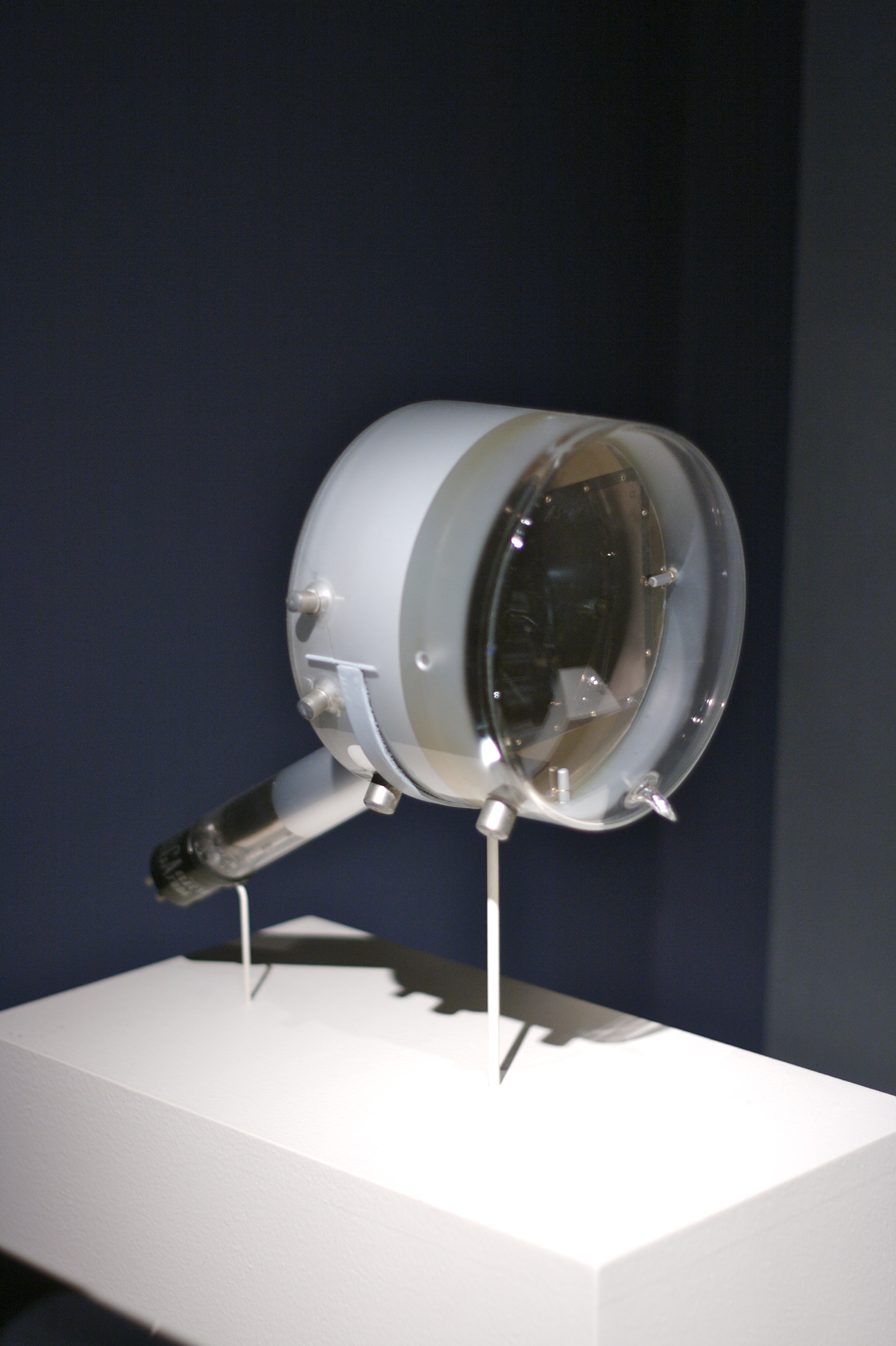
The two-camera version is the more technically detailed of the two, and it lines up with a surviving NBC photograph of the sideline unit, which suggests it's the sturdier account3,9. Either way, the production was nothing like the multi-camera coverage that would define football broadcasting decades later — this was, at most, two fixed vantage points relaying a signal by short-wave radio to Manhattan before it reached anyone's screen3.
Accounts also diverge on just how rough the picture looked. Popular retellings tend to describe the broadcast as a bumbling technical mess, but NBC's own contemporary materials called the images "newsreel quality" and said viewers within range followed the game "without the slightest difficulty"3. The honest read is that the broadcast was a serious technical achievement with real limitations — small camera count, poor low-light sensitivity, a tiny audience — rather than the outright farce it's sometimes made out to be in the retelling1,3.
Timeline
- April 30, 1939The New York World's Fair opens, giving NBC a showcase for television demonstrations1,5.
- May 17, 1939NBC televises Princeton vs. Columbia baseball, an early sports broadcasting test3.
- August 26, 1939NBC televises a Cincinnati Reds–Brooklyn Dodgers doubleheader from Ebbets Field5.
- September 30, 1939Fordham defeats Waynesburg 34–7 at Triborough Stadium in the first televised football game, broadcast by NBC on W2XBS1,2.
- October 22, 1939Brooklyn's NFL Dodgers beat the Philadelphia Eagles 24–14 at Ebbets Field in the first televised professional football game4,10.
Pictures


Sources
- The first televised football game was played Sept. 30, 1939ncaa.com · 2020
- First TV Football Gamewaynesburgsports.com
- NBC Remote Telecastsearlytelevision.org
- 1939 Waynesburg vs. Fordham football gameWikipedia
- 1930 | Our Historynbcuniversal.com
- This Week in College Football History: Sept. 27 - Oct. 3footballfoundation.org
- College Football on NBC Sports - WikipediaWikipedia
- Downing StadiumWikipedia
- The Surprisingly High-Tech Super Bowl I Broadcast - Gizmodogizmodo.com
- Calling the Playsdga.org
Researched and written by Lorelet from the sources above. It cites as it goes, but it can still get things wrong, so check the sources for anything that matters.
Report a problem
More featured lorelets
See all
Today · Film & TV
Why Nick Jr. Aired the Same Blue's Clues Episode All Week
A preschool show about a cartoon dog and her pawprints became a quiet experiment in how children actually learn from television — and the data said:…

Today · Crime
Liquid Gold: The Black Market for Used Cooking Oil
Green energy policy turned restaurant fryer grease into a commodity worth stealing, and a quiet corner of American crime grew up around it.

Today · Business
The Terminal: How a Firing Built Wall Street's Addiction
Michael Bloomberg got pushed out of Salomon Brothers with a check for about $10 million. He turned it into a locked-box machine that trading floors s…