
Featured · Nov 11History
The Night Before the Dream Speech
Hours before Martin Luther King Jr. stood at the Lincoln Memorial, he was still writing. What became of those pages took sixty years to surface.

Listen
Read by Wren · 7 min
A Suite at the Willard, Past Midnight
It was late on August 27, 1963, and Martin Luther King Jr. had been arguing with his closest advisers in the lobby of the Willard Hotel in Washington, D.C., over how to close the speech he would give the next morning1. The march was set to begin in about twelve hours, and the group still had not settled whether the message should be ideological or biblical, aimed at the students in the crowd or at the nation at large1. King eventually excused himself, telling the group, "Okay brothers, thank you so much everybody for your suggestions and input... I am now going upstairs to my room to counsel with my Lord"1. Alone in his suite, he stayed up writing and revising on a yellow notepad until around 4 a.m., scratching out lines in blue ink before sending the marked-up pages off to be typed1.
Those typed pages, carried to the Lincoln Memorial the next day, became the basis of one of the most quoted speeches in American history2,1. But the handwritten pages King actually worked over that night, the ones with the crossed-out words and the inserted phrases, disappeared from public view entirely. For sixty years almost no one knew where they had gone.
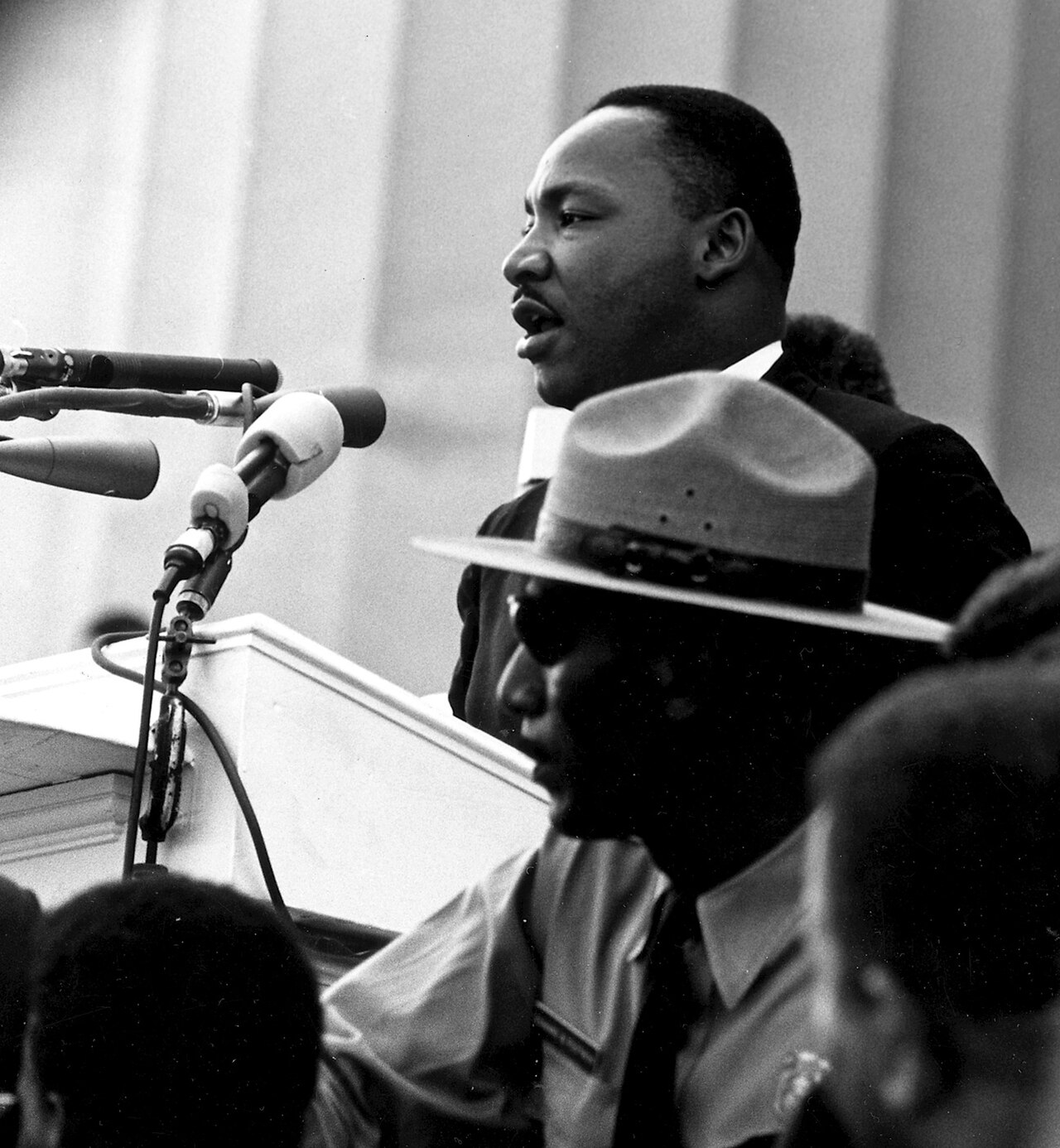
The march itself, officially the March on Washington for Jobs and Freedom, was built to pressure Congress on civil rights legislation and to showcase mass support for it2. King and other organizers had agreed beforehand to keep their remarks calm, wary of provoking the kind of confrontation that had defined earlier civil-disobedience campaigns2. The speech King was wrestling with that night had been months in the making, shaped by material from a 1962 address in Rocky Mount, North Carolina, and a June 1963 speech in Detroit's Cobo Hall, both of which already used the phrase "I have a dream"2.
Two men mattered most in the drafting. Clarence B. Jones, King's attorney and speechwriter, had worked with Stanley Levison earlier that August on a possible opening, written out on yellow paper, which Jones brought to Washington as something King could use as a reference rather than a script7,8,9. Jones later said that on the evening of August 27, with the march twelve hours off, "Martin still didn't know what he was going to say"2,8. By some accounts, Jones had arranged a screened-off space among the plants in the Willard's lobby, paying bellhops so the group could work with fewer interruptions, before King retreated upstairs alone10.
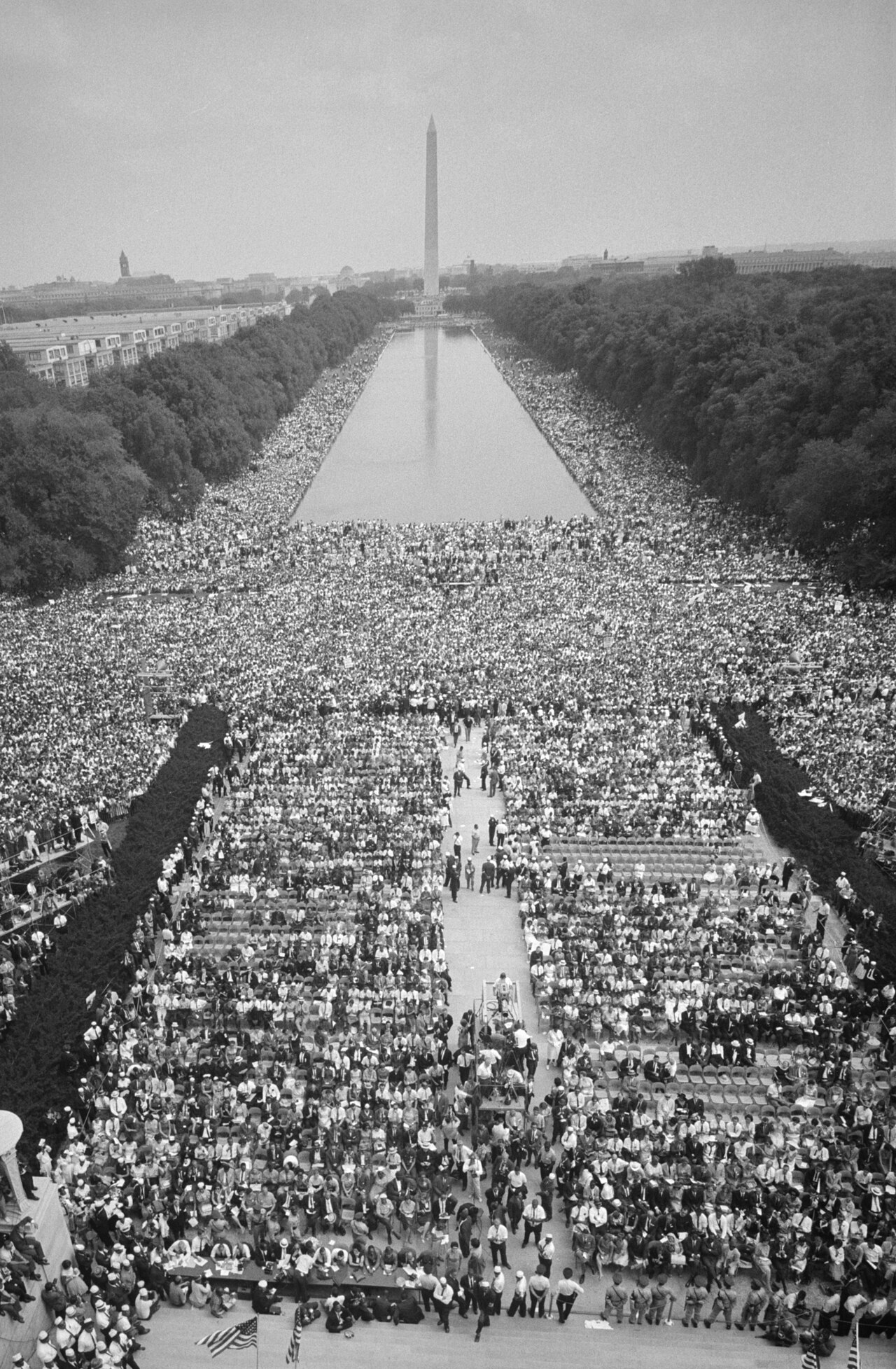
The next day, King spoke from the steps of the Lincoln Memorial before a crowd commonly estimated at about 250,000 people2,5. He largely followed his prepared text until, as the story has been told many times, gospel singer Mahalia Jackson, seated behind him, called out, "Tell 'em about the dream, Martin!"2. King set the written speech aside and moved into the improvised "I have a dream" passage that the address is now remembered for2,1.
What happened to the handwritten pages from that night at the Willard went unrecorded for decades, until Xernona Clayton, widow of King aide and speechwriter Edward T. Clayton, opened a drawer in her late husband's desk sometime in the late 1990s and found an envelope marked "Speech"7,4,5. Inside were seven pages of yellow legal paper, written in blue ink, with King's crossings-out and revisions4,5,3. Clayton recognized that the pages were connected to the famous speech, but not that they were likely its only surviving handwritten final draft, and she did not want to risk disrespecting King's memory by selling or displaying them, so she put them back in the desk1. There they stayed until she rediscovered them again in 20244,5,3.
After the second discovery, Clayton shared the pages with her financial manager, who worked with specialists at Christie's to authenticate them4,5. In November 2026, Christie's announced that the manuscript would be exhibited publicly in Atlanta and then auctioned in New York on January 22, 2027, with proceeds benefiting charities including the King Center and the Xernona Clayton Foundation3. The auction house expects it to bring more than $10 million3,6. "I'm just glad I looked in the drawer," Clayton said in the announcement3.
The pages themselves stop short of the speech's most famous words. Neither the handwritten draft nor the typed copy King carried to the lectern mentions the "I have a dream" refrain, since King added that passage only after Jackson's call from the crowd3,1. What the seven yellow pages do preserve is the ending King had settled on before he ever reached the podium, the one that closes with the line "free at last, free at last; thank God almighty, we are free at last"1. It is the record of a man still revising his words in blue ink past four in the morning, hours before he would depart from all of them.
Timeline
- Mid-August 1963Clarence Jones and Stanley Levison draft material and a possible opening for King's march speech8.
- August 27, 1963, eveningKing and advisers meet at the Willard Hotel; disagreement over the speech's direction continues into the night1.
- August 28, 1963, around 4 a.m.King finishes revising the speech alone in his hotel suite on yellow legal paper1.
- August 28, 1963King delivers the speech at the Lincoln Memorial and improvises the "I have a dream" passage after Mahalia Jackson's prompt2,1.
- Late 1990sXernona Clayton finds the seven handwritten pages in her late husband Edward T. Clayton's desk and puts them back4,5.
- 2024Clayton rediscovers the pages and brings them to specialists for authentication4,5.
- November 2026Christie's announces the manuscript's authentication and planned exhibition and auction3,6.
- January 22, 2027The manuscript is scheduled for auction in New York, with an estimate above $10 million3,6.
Pictures


Sources
- The Handwritten Final Draft of Martin Luther King Jr.'s 'I Have a Dream' Speech Was Considered Lost. It Turned Out to Be Sitting in a Desk Drawer for DecadesSmithsonian Magazine · 2026
- I Have a DreamWikipedia
- Handwritten draft of Martin Luther King's "I Have a Dream" speech to go on display in Atlantacbsnews.com · 2026
- MLK Jr.'s handwritten 'I Have a Dream' speech to be auctionedupi.com
- He helped write MLK's 'I Have a Dream' speech. Now he reflects on ...nhpr.org
- Martin Luther King's 'I Have a Dream' Draft to Be Auctioned at Christie'sartnews.com
- MLK Jr. speechwriter Clarence Jones, reflects on the March on Washington 60 years onNPR · 2023
- On Martin Luther King Day, Remembering the First Draft of 'I Have a ...hnn.us
- Palmyra grad was speechwriter, attorney for MLKburlingtoncountytimes.com
- How a D.C. hotel played an important role in Martin Luther King Jr.'s speechwbko.com
Researched and written by Lorelet from the sources above. It cites as it goes, but it can still get things wrong, so check the sources for anything that matters.
Report a problem
More featured lorelets
See all
Today · Food
The Turkey Surplus That Became the TV Dinner
A company drowning in frozen birds found an answer on an airline food cart, or so the story goes for fifty years.

Today · Space
Why Is Jupiter's Great Red Spot Actually Red?
Jupiter is built almost entirely of colorless gas, yet its most famous storm glows orange-red. Scientists have spent decades in the lab trying to fig…

Today · Art & Design
The Aztec Labret Whose Golden Tongue Still Moves
A small gold serpent made for a pierced lip somehow ended up with a tongue that flicks side to side. No one alive has ever seen it worn.