
Featured · Nov 3History
The SS Richard Montgomery: Britain's Bomb Ship That Won't Go Away
A Liberty ship loaded with wartime bombs ran aground off Sheerness in 1944 and never fully gave up its cargo. Eighty years later, officials are still deciding what to do about it.

Listen
Read by Wren · 9 min
A Ship Adrift in the Dark
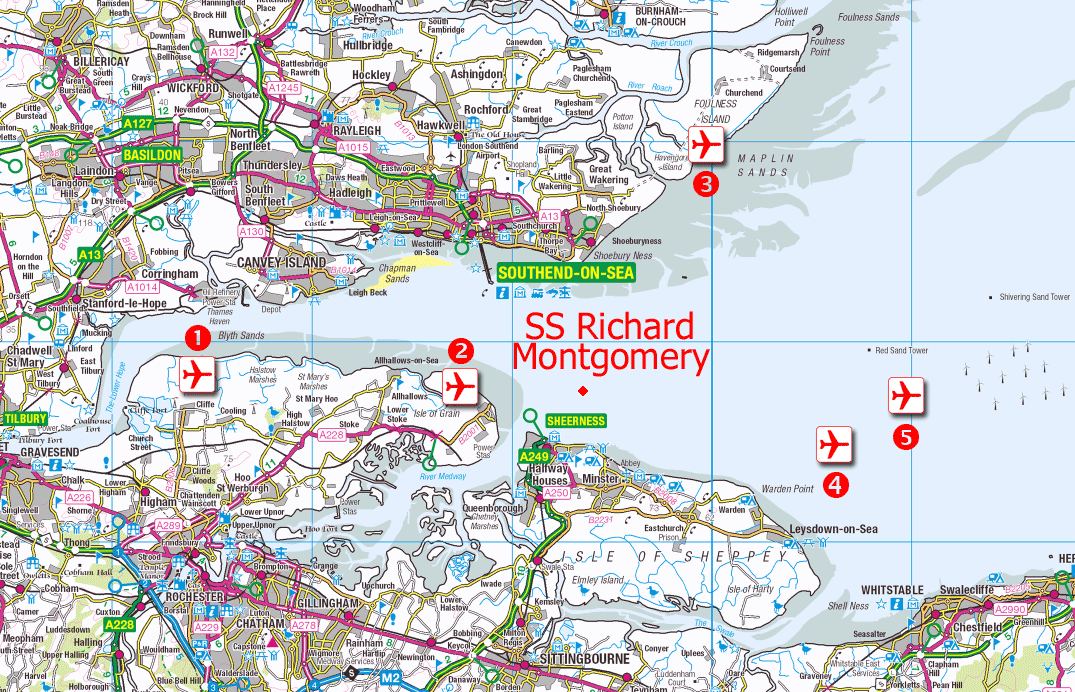
On 20 August 1944, the Richard Montgomery was anchored off Sheerness in the Great Nore, waiting for a convoy to form for the crossing to Cherbourg1,2. Sometime that night it dragged its anchor1,2,3. Several ships moored nearby noticed it drifting toward the sandbank before it grounded, about 250 metres from the Medway Approach Channel in roughly 7 metres of water1,3.
The ship's crew and the harbourmaster who had placed it there were not watching a disaster yet, just a transport out of position. But the tide was already working against them1.
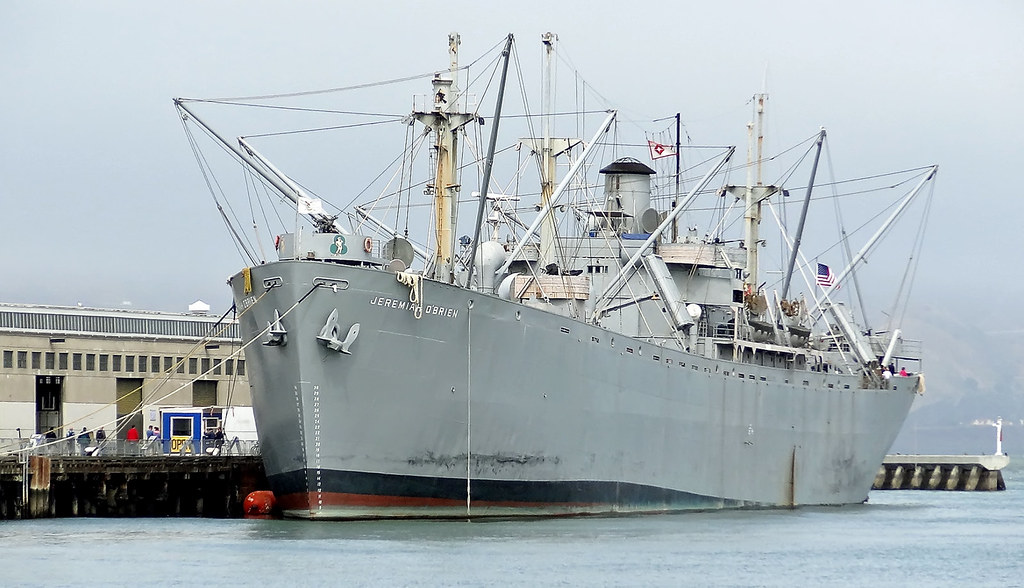
The Richard Montgomery was one of 2,710 Liberty ships built in American yards during the war, mass-produced cargo vessels designed to move supplies at a scale no shipbuilding program had attempted before4. This one had crossed from the Delaware River carrying close to 7,000 tons of bombs, intended for the Allied push that had retaken Cherbourg a few weeks earlier1,2,3.

As the tide fell, the ship's hull could not take the uneven strain of resting on the sandbank. It broke its back. What followed was not an explosion but a long, grinding salvage operation: workers managed to unload about half the cargo, roughly 3,173 tons of bombs, before the hull cracked further and the forward holds began to flood1,5,3. On 25 September 1944, with the ship deteriorating too fast to work safely, the operation stopped2,3. The remaining munitions, later estimated at around 1,400 tons of net explosive quantity, settled into the mud as the wreck broke into three parts1,6,3.
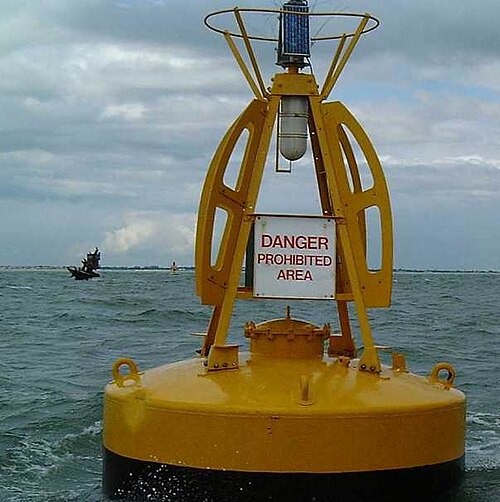
For decades afterward, the problem did not go away, it just went quiet. The wreck was placed under a prohibited area, monitored by survey after survey, and in 1973 became the first wreck designated dangerous under the Protection of Wrecks Act1,7. In 1970, a government assessment modeled what a major detonation might look like: a column of water, mud, and munitions some 300 metres wide thrown nearly 3,000 metres into the air, with a wave 5 metres high and almost every window in Sheerness, population around 20,000, broken by the blast1,2. That was a modeled worst case, not a prediction that it would happen, and the Maritime and Coastguard Agency has consistently said the risk of a major explosion is remote1.

Surveys through the 1990s, 2000s, and 2010s kept finding the same basic fact: explosives were still there, and the wreck kept changing, with new cracks and scouring around the hull1,5,8,6,9. By 2021, an Expert Advisory Group concluded that the three masts still rising above the water were themselves a hazard, placing strain on a structure that should not be strained, and recommended their removal10. The Ministry of Defence warned that if a mast collapsed on its own, it could detonate the ordnance beneath it1.
The mast-removal project began in July 2026, using remotely operated equipment, including a diamond-wire saw, so that no one had to work directly above the explosives11,12. By 19 October 2026, all three masts had been cut free and delivered to the Historic Dockyard Chatham, a project officials said was finished ahead of schedule and under budget13,14.
What didn't change is the cargo itself. The masts are gone, but the roughly 1,400 tons of wartime explosives are still sitting in the forward holds, exactly where the salvage crews left them on 25 September 19446,12,15. The ship that drifted onto a sandbank one August night is still, eighty-two years later, waiting for someone to decide what happens next.
Why the Bombs Are Still There
The core problem has never really changed: moving the explosives is dangerous, and leaving them is also dangerous, just more slowly. New Scientist's 2004 investigation, drawing on newly released government documents, concluded the cargo could still be detonated by a collision, an attack, or simply the shifting of the cargo in the tide, and that deterioration had gone far enough that spontaneous explosion was possible1.
Cost has also mattered. Declassified documents cited in that reporting showed the wreck was never dealt with immediately after the war, or in the six decades that followed, largely because of the expense of a full removal1.
A comparison case illustrates the risk side of the equation. The wreck of the Kielce, a much smaller munitions ship off Folkestone, exploded during preliminary salvage work, registering the equivalent of a 4.5 magnitude earthquake and digging a 20-foot crater in the seabed, despite carrying only a fraction of the Richard Montgomery's load1. No one was injured, but the episode has long shaped official caution about disturbing the Richard Montgomery directly.
The Cargo, By the Numbers
- Original cargo: about 6,862 to 7,000 tons of bombs and munitions when the ship grounded1,2,3
- Recovered in salvage: roughly 3,173 tons removed before work was abandoned1,3
- Estimated cargo left behind (from a post-salvage inventory): 1,667 tons of general-purpose bombs, 1,435 tons of semi-armour-piercing bombs, 173 tons of cluster-fragmentation bombs, 107 tons of white-phosphorus smoke bombs, 36 tons of other explosives, and 134 tons of non-explosive material3
- Current official estimate: approximately 1,400 tonnes net explosive quantity remaining, per the 2000 and 2021 surveys5,6
- Modeled worst-case explosion (1970 assessment): a 300-metre-wide column of water and debris thrown nearly 3,000 metres into the air, with a 5-metre wave1,2
What's Disputed or Unclear
Sources differ on exactly how much explosive remains, because they are measuring different things. The detailed post-salvage inventory lists several thousand tons of mixed ordnance and non-explosive material, while modern government surveys collapse that into a single net explosive quantity figure of about 1,400 tonnes, a different and more technical measure5,6,3. Some media reports round this to 1,500 tons, which reflects conversion and rounding rather than a disagreement about the underlying facts12,15.
The 1970 blast scenario is often repeated as though it were a prediction of what will happen, but the source material frames it as a modeled worst case used to weigh the risks of intervention against the risks of doing nothing, not a forecast of an impending explosion1,2. The Maritime and Coastguard Agency has stated since at least 1998 that the fuses have likely been flooded for decades and that the risk of major explosion is remote, even as later surveys flagged ongoing structural deterioration1.
There is also no verified eyewitness transcript or detailed personal account of the night of the grounding itself. What's documented is that the ship dragged anchor and that nearby vessels noticed it drifting, not a moment-by-moment account of life aboard1,2,3. Dramatized retellings, including a BBC drama, a National Geographic documentary, and a political thriller in which the wreck explodes, should be treated as fiction inspired by the wreck rather than historical record1.
Timeline
- 1943The Richard Montgomery is built as a Liberty ship by the St. Johns River Shipbuilding Company in Jacksonville, Florida1.
- 20 August 1944The ship drags anchor in the Thames Estuary's Great Nore anchorage and grounds on Sheerness Middle Sand1,2,3.
- August to 25 September 1944Salvage crews recover about half the cargo before the hull cracks and the operation is abandoned1,2,3.
- 1973The wreck becomes the first site designated dangerous under the Protection of Wrecks Act 19731,7.
- 1970A government assessment models the potential scale of a major detonation1,2.
- 2000-2021Repeated government surveys confirm explosives remain in the forward holds and track the wreck's deterioration5,8,6,9.
- 2021An Expert Advisory Group recommends removing the wreck's three masts; the government announces the project10,11.
- July 2026The mast-removal operation begins using remote-controlled cutting equipment11.
- 19 October 2026All three masts arrive at the Historic Dockyard Chatham, the project completed ahead of schedule13,14.
Pictures


Sources
- SS Richard MontgomeryWikipedia
- What is the SS Richard Montgomery that sank in the Thames Estuary?BBC
- TQ 97 NW 101 - SS Richard Montgomery - Historic Environment Recordheritage.kent.gov.uk
- Liberty shipWikipedia
- report on the wreck of the ss richard montgomeryassets.publishing.service.gov.uk
- [PDF] SS Richard Montgomery: Survey Report 2021 - GOV.UKassets.publishing.service.gov.uk
- PAGE | 1assets.publishing.service.gov.uk
- the wreck of - the ss richard montgomeryassets.publishing.service.gov.uk
- 1998 Report.docassets.publishing.service.gov.uk
- The SS Richard Montgomery: Information and survey reportsgov.uk
- Safe removal of masts from historic WWII shipwreck ...gov.uk
- Engineers Delicately Removed the Masts From This Bomb-Laden World War II Shipwreck in the River Thames. But 1,500 Tons of Explosives Are Still in PlaceSmithsonian Magazine
- SS Richard Montgomery mast removal projectgov.uk
- Masts from SS Richard Montgomery taken to Chatham ...BBC
- Engineers perform delicate operation on explosives-packed World War II shipwreck, but bombs remain in placecbsnews.com
- SS Richard Montgomery: background informationgov.uk
Researched and written by Lorelet from the sources above. It cites as it goes, but it can still get things wrong, so check the sources for anything that matters.
Report a problem
More featured lorelets
See all
Today · Food
The Turkey Surplus That Became the TV Dinner
A company drowning in frozen birds found an answer on an airline food cart, or so the story goes for fifty years.

Today · Space
Why Is Jupiter's Great Red Spot Actually Red?
Jupiter is built almost entirely of colorless gas, yet its most famous storm glows orange-red. Scientists have spent decades in the lab trying to fig…

Today · Art & Design
The Aztec Labret Whose Golden Tongue Still Moves
A small gold serpent made for a pierced lip somehow ended up with a tongue that flicks side to side. No one alive has ever seen it worn.