
Featured · Nov 20Technology
Windows 1.0: Microsoft's Two-Year Running Joke That Shipped
Microsoft promised a graphical future for the PC and then spent two years failing to deliver it.

Listen
Read by Finch · 8 min
The Golden Vaporware Award
On the night of November 21, 1985, one day after Windows finally shipped, Microsoft threw itself a roast at Comdex in Las Vegas3. InfoWorld editor Stewart Alsop stood up and handed Bill Gates a mock trophy: the Golden Vaporware award, a joke built entirely on how many times Microsoft had promised Windows and failed to deliver it3. Columnist John C. Dvorak piled on, joking that when Microsoft first announced Windows, Steve Ballmer still had hair3.
The room was laughing at a company that had spent two years missing deadlines on its own product3.
The story of how Microsoft got to that stage, repeatedly promising a finished product and repeatedly failing to produce one, starts two years earlier, in a different room entirely.
Microsoft publicly unveiled Windows in New York City in November 1983, with Bill Gates predicting it would be running on ninety percent of PCs by the end of 19847. The company told the press to expect a shipping product by April 19841. The inspiration, by most accounts, traced back to a demonstration Gates had seen at Comdex the year before: VisiCorp's Visi On, a graphical interface for IBM-compatible machines that convinced Gates the command-line era was running out of road2,3.
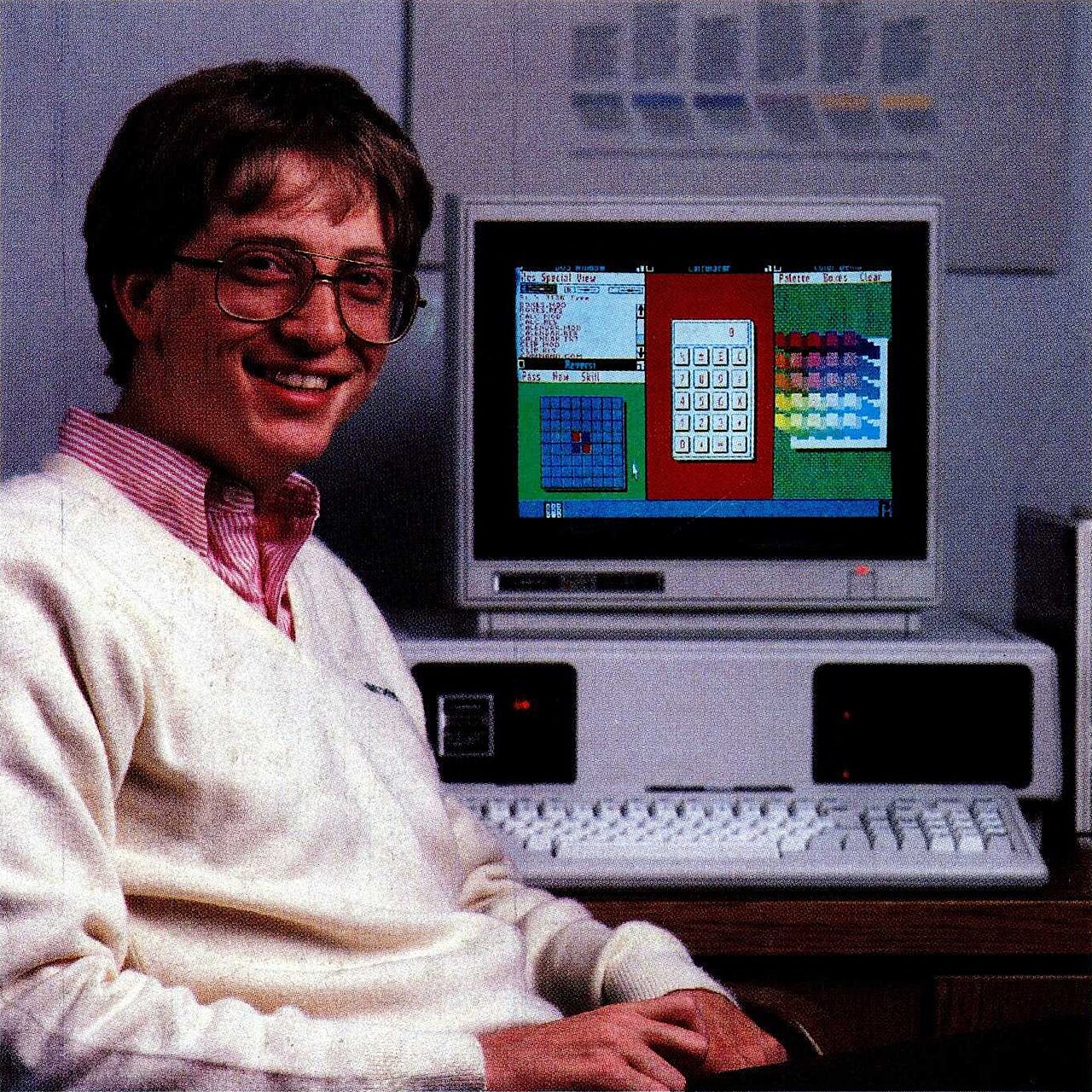
Apple's own graphical work, drawing on research from Xerox PARC, was already further along, and Microsoft scrambled to differentiate its version. In August 1983, Gates hired Scott McGregor, one of the engineers behind PARC's original windowing system, to lead development2. The team settled, after some disagreement, on windows that tiled rather than overlapped, a design choice that would later look like a limitation rather than a feature2,8.
April 1984 came and went with no product. Then May 1984 came and went too2. Through the rest of 1984, the team wrestled with basic questions it probably should have settled earlier, tiled versus overlapping windows chief among them, while leadership churned: Tandy Trower came aboard as product manager that autumn, by which point Windows was already an industry joke9. McGregor left in January 1985 and Ballmer took over his responsibilities2. Microsoft kept sending developers new beta versions through the first half of 1985, including one on June 28, the date Windows had reportedly been scheduled to ship, instead of the finished product itself10.
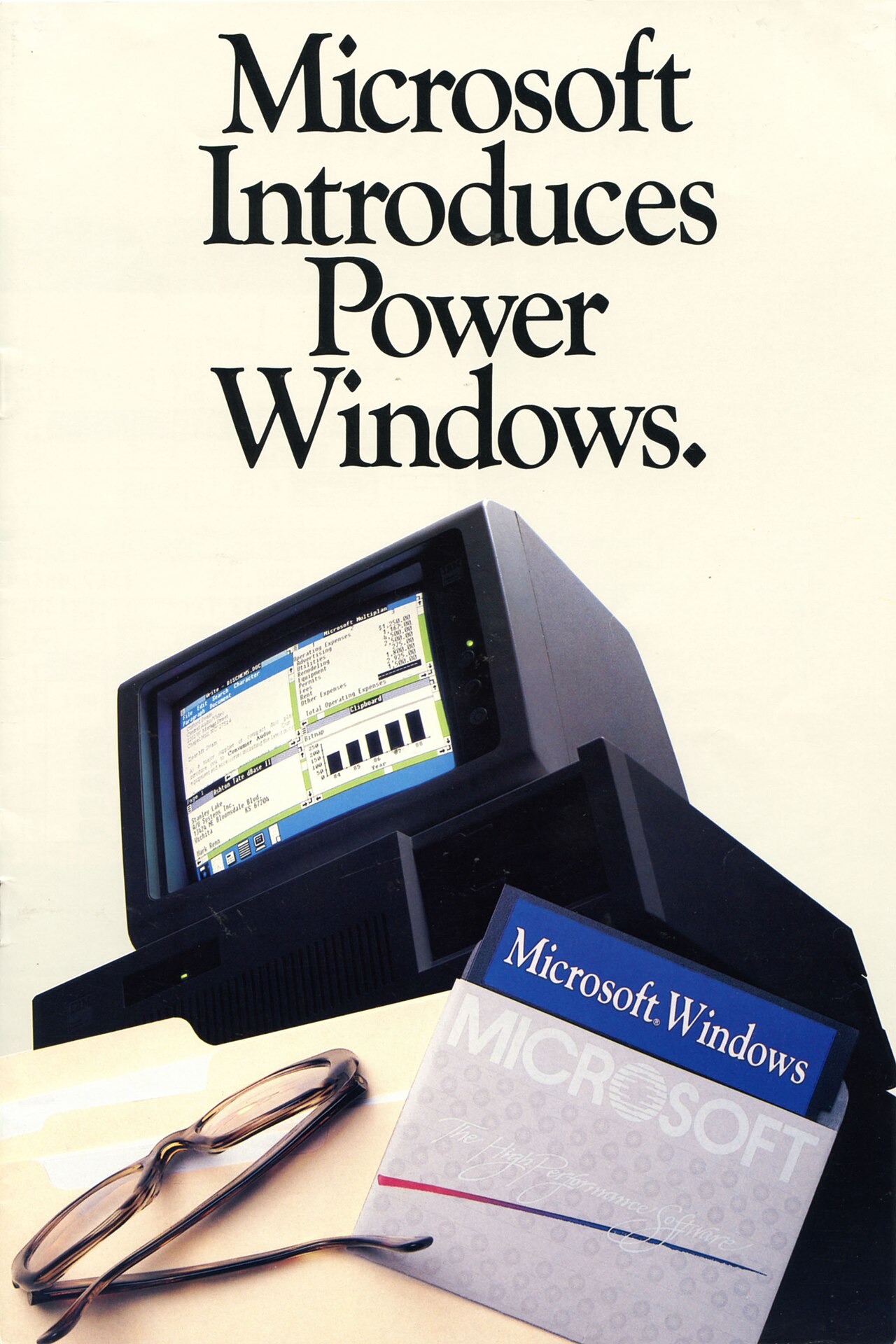
By the summer of 1985, Microsoft's problem was no longer just technical. It was credibility. The company had promised Windows so many times that outsiders had started calling it vaporware, software announced to the world that might never actually exist11. Microsoft's answer was to start showing the thing to people before it was really done: a so-called Premiere Edition went out to press and hardware makers around July or August 1985, less a finished release than proof of life10. At least one hardware maker shipped a pre-release build that September, possibly out of contractual obligation, possibly out of sheer impatience with Redmond10.
Windows was reportedly finished on November 14, 1985, mass production began the next day, and the retail version, Windows 1.01, reached manufacturing in the United States on November 2010,2. It carried a price tag of $992. The roast happened the very next night, and the joke it told, that Microsoft had finally, barely, made good on a promise it had broken for two straight years, was the only honest way to launch it3.
Selling a Mouse to People Who'd Never Used One
Getting Windows built was only half the problem. Microsoft also had to explain, to people who had only ever typed commands at a blinking cursor, why they needed a mouse at all.
The company's answer was Steve Ballmer, then a Microsoft executive known for an intensity that bordered on theatrical. In a television-style commercial promoting the new release, Ballmer played something close to a late-night infomercial host, pitching Windows Paint, the included Reversi game, and compatibility with programs like Lotus 1-2-3, all for $995,4. The ad leaned so hard into exaggerated salesmanship that it read as parody even to people who knew Ballmer believed every word of it6.
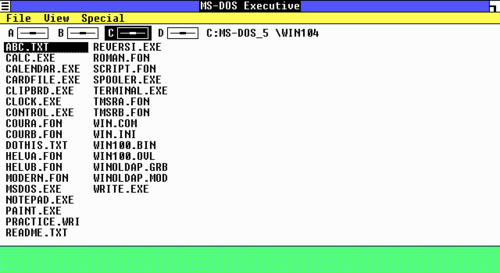
The pitch worked on its own terms: Windows 1.0 arrived with a graphical shell and a set of simple built-in programs, including MS-DOS Executive for file management, Calendar, Clock, Control Panel, Notepad, Paint, Reversi, Terminal, and Write, plus a clipboard for moving information between them2,12. Users could, in theory, keep several of these open and switch between them instead of closing one to open another12. In practice, that promise ran into the hardware of 1985. Microsoft recommended at least 512 kilobytes of memory for running multiple programs, more than most PCs of the day carried as standard, and running several windows at once on a leaner machine turned the computer sluggish fast2,3.
Critics noticed. BYTE magazine had been cautiously optimistic in 1983, but by the time Windows actually shipped, the New York Times had already run a Christmas Day 1984 editorial questioning whether windowed computing was worth the trouble at all3,7. Reviewers in 1985 and after generally agreed Windows had potential but called it slow, resource-hungry, and short on compatible software2. One Microsoft engineer later admitted Windows 1.0 was essentially a demo, and an IT team at Carnegie Mellon, shown an early version by Microsoft representatives, dismissed it outright, recalling later that they figured the company would never accomplish much with it2.
By the Numbers
- November 10, 1983: Microsoft publicly announces Windows, promising delivery by April 19841,7.
- April 1984: The promised ship date passes with nothing released1.
- January 1985: Scott McGregor leaves the project; Steve Ballmer takes over his duties2.
- November 20, 1985: Windows 1.01 ships in the United States, roughly 18 months after its original target and two years after the announcement10,1.
- $99: Retail price at launch, about $296 in 2025 dollars2.
- 500,000: Copies sold between release in 1985 and April 1987, according to Computerworld2,7.
- 1987: Microsoft replaces it with Windows 2.0, which finally allowed overlapping windows2,7.
What the Record Doesn't Settle
Several details around Windows 1.0 are fuzzier than the tidy chronology suggests. Sources disagree on exactly why one hardware maker shipped a pre-release build in September 1985, whether out of contract terms or frustration with Microsoft's delays, and the record does not resolve it10.
The exact production date of Ballmer's famous commercial is also inconsistent across accounts, with some calling it a 1985 ad and others simply describing it as an early post-release spot5,13,12. And while later retellings of the Comdex roast describe the Golden Vaporware award and Dvorak's joke about Ballmer's hair, no source offers a full transcript of the evening or independently verified details beyond those two moments3.
Timeline
- November 10, 1983Microsoft publicly announces Windows and projects an April 1984 release.
- April 1984The promised release date passes with no product.
- Autumn 1984Tandy Trower joins as product manager amid delays and internal embarrassment.
- January 1985Scott McGregor leaves the project; Steve Ballmer takes over his responsibilities.
- Summer 1985Microsoft circulates a pre-release 'Premiere Edition' to press and hardware makers to counter vaporware accusations.
- November 20, 1985Windows 1.01 ships to manufacturing in the United States at $99.
- November 21, 1985Microsoft holds a roast at Comdex; Stewart Alsop gives Bill Gates a Golden Vaporware award.
- May 1986Windows becomes available internationally as version 1.02.
- 1987Microsoft replaces Windows 1.0 with Windows 2.0, introducing overlapping windows.
Pictures


Sources
- A trip down memory lane: 30 years since Windows was announcedwindowscentral.com
- Windows 1.0Wikipedia
- Revisiting Windows 1.0: how Microsoft’s first desktop gracefully failedThe Verge · 2012
- 9 Craziest Steve Ballmer Momentslaptopmag.com · 2013
- Watch Steve Ballmer Promote Windows 1.0mentalfloss.com · 2013
- No one can sell Windows like Steve Ballmer can sell Windowssiliconrepublic.com · 2015
- The First WindowsThe New Yorker · 2013
- www.geekwire.com › 2025 › inside-the-windows-1-0Inside the Windows 1.0 reunion: How a scrappy team shipped ...geekwire.com
- Retro tech: Windows 1.0 - Custom PCcustompc.com
- Windows 1.0betawiki.net
- Vaporware - WikipediaWikipedia
- This Was Steve Ballmer Selling Windows 1.0tomshardware.com
- Windows 1.0 debuts 25 years ago today (video) - Engadgetengadget.com
Researched and written by Lorelet from the sources above. It cites as it goes, but it can still get things wrong, so check the sources for anything that matters.
Report a problem
More featured lorelets
See all
Today · Food
The Turkey Surplus That Became the TV Dinner
A company drowning in frozen birds found an answer on an airline food cart, or so the story goes for fifty years.

Today · Space
Why Is Jupiter's Great Red Spot Actually Red?
Jupiter is built almost entirely of colorless gas, yet its most famous storm glows orange-red. Scientists have spent decades in the lab trying to fig…

Today · Art & Design
The Aztec Labret Whose Golden Tongue Still Moves
A small gold serpent made for a pierced lip somehow ended up with a tongue that flicks side to side. No one alive has ever seen it worn.