
Featured · Nov 13Film & TV
Fantasound: Disney's Wild 1940 Surround Sound Gamble
For one Disney film, sound did not come from behind the screen. It came from all around the audience, built by a crew who had never attempted anything like it before.

Listen
Read by Finch · 8 min
A Word With No Real Meaning
William E. Garity, Walt Disney's chief engineer, met a reporter from The New Yorker at the Broadway Theatre in the week before Fantasia opened, while the house was still being readied for Wednesday's premiere6. His explanation, stripped of technicalities: an ordinary talkie puts sound and picture on the same strip of film, with sound coming from a clump of loudspeakers behind the screen. Fantasia did it differently, projecting picture and sound separately, with sound coming from sixty-four loudspeakers, thirty-six behind the screen, twenty-two at the rear of the orchestra floor, and six in the balcony6. "The music will rotate around every person in the audience instead of coming directly at them," Garity told the magazine, adding that the technique was absolutely revolutionary6.
He also joked, a little darkly, that if some saboteur crept into the booth and ran the sound at full blast, it would produce a hundred and sixty-five decibels, enough to kill elderly patrons, knock out everyone else, and deafen the survivors6. According to Disney's plans at that point, no more than twelve theaters in the country would ever show the film this way, because only twelve of the sound units existed, at $30,000 to manufacture and $8,000 to install apiece6.
To understand why something this impressive was also this fragile, it helps to go back three years, to a chance dinner at a Hollywood restaurant. Walt Disney, looking for a comeback vehicle for a fading Mickey Mouse, had settled on animating Paul Dukas's The Sorcerer's Apprentice as an elaborate Silly Symphony1,7. At Chasen's in late 1937, he ran into conductor Leopold Stokowski, who agreed on the spot to conduct the piece for free1,4,7. Stokowski had already been experimenting with stereophonic recording since the early 1930s, and he convinced Disney that an ordinary optical soundtrack could not do justice to the music he wanted to use4,8.
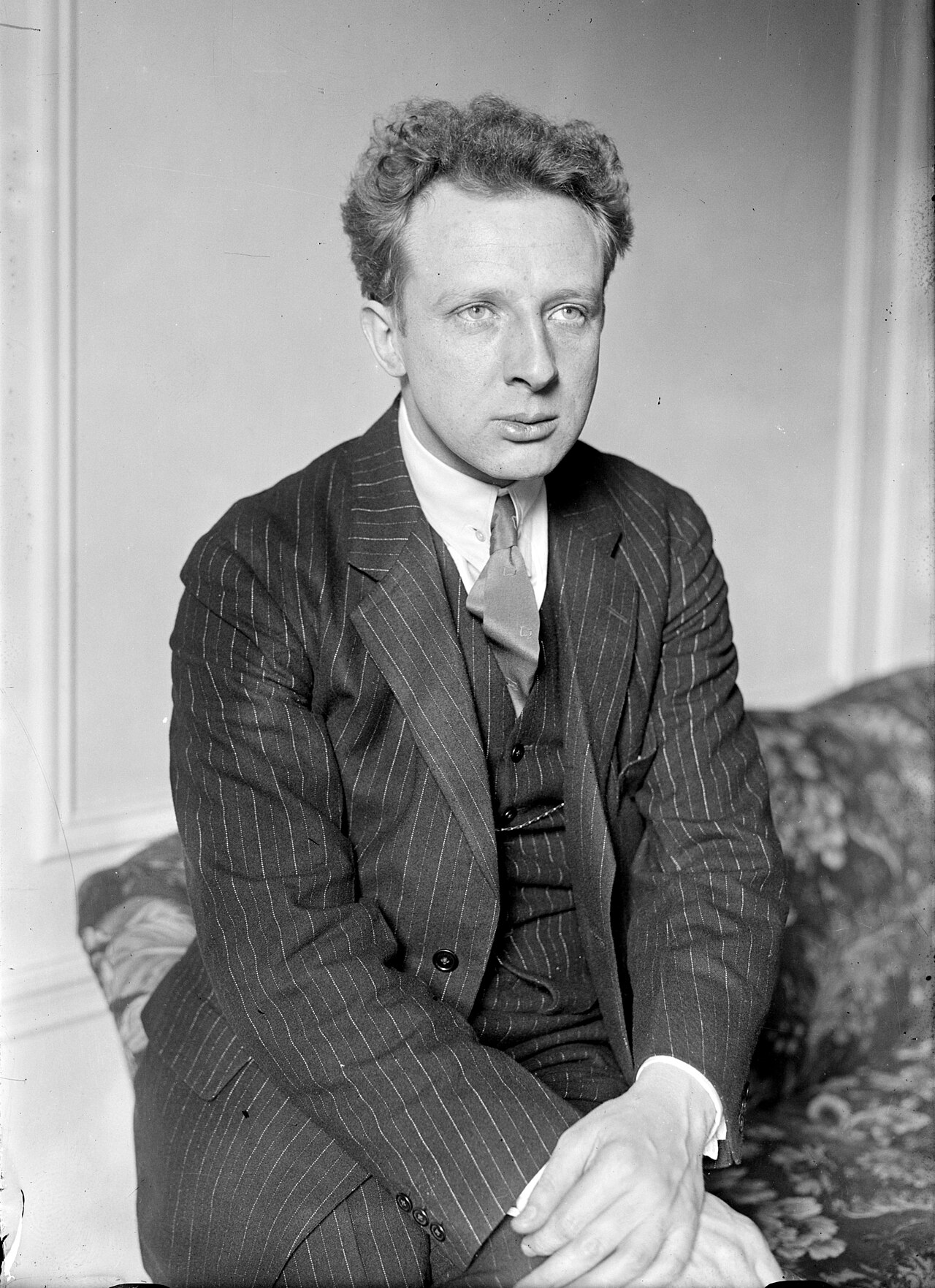
The short ballooned. Production costs on The Sorcerer's Apprentice passed $125,000, a sum no cartoon short could recoup, so in February 1938 Disney expanded the idea into a feature built around multiple classical pieces, eventually titled Fantasia1,9,7. Stokowski and the Philadelphia Orchestra recorded the music at the Academy of Music in Philadelphia using extensive microphone placement, work intended from the start to let engineers reshape the sound spatially later3,10,8. One account puts the microphone count at thirty-three, feeding eight optical tracks that were later mixed down for theatrical playback10,8.
Turning that recording into something an audience could sit inside fell to Garity and the studio's sound department, working with RCA1,4. Their central invention was the panoramic potentiometer, or pan pot, a three-circuit network that let engineers fade a sound continuously between left, center, and right speakers so a musical line seemed to travel across the room rather than simply changing volume1,3. Development began in July 1939, and engineers built and discarded roughly ten full equipment configurations, the Mark series, before settling on a workable design1,5.
The first big public test came in June 1940 at the Carthay Circle Theatre in Los Angeles, the house tied to many Disney premieres. Contemporary accounts describe the sound emerging from the screen and then spreading outward until the orchestra seemed to surround the audience11. The underlying fact, that Disney committed to an extraordinarily expensive custom system after that demonstration, is well established, though the exact words exchanged that night are less reliably documented.
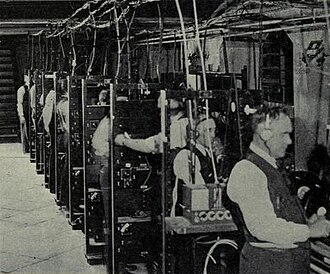
Five months later came the Broadway Theatre opening Garity had been preparing for when the New Yorker reporter found him. That installation, known in Disney's internal numbering as the Mark VII or Mark VIII depending on the account, used roughly 400 vacuum tubes, with amplifier and power-supply racks stretching more than thirty feet, and delivered about 120 watts per channel4. A full road-show unit, built to travel to other cities, needed eleven amplifier racks, two modified four-track sound-film phonographs, two synchronization units, and forty-five packing cases, altogether weighing close to 15,000 pounds5.
That scale was the problem Garity had already flagged to the reporter without quite saying so. Fitting a theater for Fantasound meant closing it for days to install extra speakers, amplifier racks, and synchronization gear, then training technicians to run it, a process costed at anywhere from $30,000 to roughly $85,000 to $100,000 per venue depending on what was counted6,4,2,7. Disney had budgeted for a national road show; RCA's president David Sarnoff had reportedly agreed to proceed only after Disney accepted a projected cost near $200,000 for the whole development, a figure Sarnoff was said to find alarming on its own12. In practice, the film played in only about thirteen theaters, almost all legitimate stage houses converted for the purpose rather than ordinary movie theaters1,9.
Fantasia lost money in its initial run, weighed down by its own production costs, the expense of leasing and outfitting each theater, and the loss of the European market as war spread9. Garity and RCA's Watson Jones ended the roadshows in 19411. In April that year RKO Radio Pictures took over distribution, stripped out the Fantasound track in favor of an ordinary mono mix, trimmed the runtime, and sent the film into wide release in 1942 on a double bill1,9. Nearly all the Fantasound equipment was dismantled and its materials given over to the war effort, leaving only one surviving system1.
The following February, the Academy gave Disney, Garity, John N. A. Hawkins, and RCA an honorary award for their contribution to sound in motion pictures, a tidy bit of recognition for a system that by then had already been pulled out of every theater that held it1,13. Garity's line to the New Yorker reporter, that the technique was absolutely revolutionary, turned out to be true in exactly the way that mattered least to Disney's ledger: it worked, it just could not survive contact with 1940s theater economics and a world at war.
Timeline
- Late 1937Walt Disney and Leopold Stokowski meet at Chasen's restaurant; Stokowski agrees to conduct The Sorcerer's Apprentice for free1,7.
- February 1938After costs on the short exceed $125,000, Disney expands the project into a feature-length film built around classical music1,7.
- July 1939Disney's technical staff, led by William E. Garity, begins developing the Fantasound system with RCA1,3.
- June 1940A major public demonstration of Fantasound takes place at the Carthay Circle Theatre in Los Angeles11.
- November 13, 1940Fantasia premieres at the Broadway Theatre in New York City with the first large Fantasound installation1,4.
- 1941Garity and RCA's Watson Jones end the Fantasound roadshows; RKO takes over distribution and replaces the track with mono sound1.
- 1942Fantasia goes into wide release in mono as a double feature; most Fantasound equipment is dismantled for the war effort1.
- February 26, 1942Disney, Garity, Hawkins, and RCA receive an Academy Honorary Award for their contribution to sound in motion pictures1.
Pictures


Sources
- FantasoundWikipedia
- Fantasia - AFI Catalog - American Film Institutecatalog.afi.com
- Fantasies of Immersive Musicctm-festival.de
- Fantastic Fantasia - John Aldred tells the story of Disney's masterpiece - Part 1 (The Newsletter of the Association of Motion Picture Sound; 1995-10) — DIX - Disney Index Projectdix-project.net
- Fantastic Fantasia - John Aldred tells the story of Disney's masterpiece - Part 2 (The Newsletter of the Association of Motion Picture Sound; 1995-12) — DIX - Disney Index Projectdix-project.net
- FantasoundThe New Yorker · 1940
- Fantastic 'Fantasia' : Disney Channel Takes a Look at Walt's Great Experiment in AnimationLos Angeles Times · 1990
- CONDUCTOR`S SOUND INNOVATIONS MAKE THE MOST OF THE MUSICchicagotribune.com · 1990
- Fantasia (1940 film)Wikipedia
- The Technologies Which Shaped Modern Surround Soundproduction-expert.com
- What Was Fantasound?mouseplanet.com
- Mickey's Music Box: Fantasia - Words in the Key of Geek.warpedfactor.com
- Fantasia (film) - D23d23.com · 2013
Researched and written by Lorelet from the sources above. It cites as it goes, but it can still get things wrong, so check the sources for anything that matters.
Report a problem
More featured lorelets
See all
Today · Food
The Turkey Surplus That Became the TV Dinner
A company drowning in frozen birds found an answer on an airline food cart, or so the story goes for fifty years.

Today · Space
Why Is Jupiter's Great Red Spot Actually Red?
Jupiter is built almost entirely of colorless gas, yet its most famous storm glows orange-red. Scientists have spent decades in the lab trying to fig…

Today · Art & Design
The Aztec Labret Whose Golden Tongue Still Moves
A small gold serpent made for a pierced lip somehow ended up with a tongue that flicks side to side. No one alive has ever seen it worn.