
Featured · Nov 3Science
Do Jumping Spiders Dream? Inside a Strange Sleep Discovery
A scientist noticed tiny spiders twitching in the dark during a pandemic lockdown, and it opened a question biologists weren't sure arachnids could even ask.

Listen
Read by Wren · 9 min
A Patch of Grass in Trier
During the coronavirus lockdowns of 2020, Daniela Rößler could not get to the Amazon fieldwork she was used to, so she settled for a patch of scrubby grass near her home in Trier, Germany3. There, after nightfall, she found jumping spiders no bigger than a pinky fingernail dangling upside down from single strands of silk, legs curled, and every so often, twitching3.
The twitching did not look random. It looked patterned, the way a sleeping cat's paw will kick on some kind of rhythm rather than at random7.
Sleep in animals is usually identified by a mix of inactivity, reduced responsiveness, a telltale posture, and recovery after deprivation2,5. REM sleep specifically, the stage linked to vivid dreaming in humans, has mostly been studied in vertebrates, where it shows up as darting eye movements and a loss of muscle tone9,2. Spiders have none of the usual vertebrate equipment: no eyelids, no neck muscles, no centralized brain built the way ours is1,2. That made Rößler's backyard observation an odd place to start asking a question usually reserved for mammals and birds.
Rößler, a behavioral ecologist then associated with the University of Konstanz, had already noticed something similar in earlier work: adult jumping spiders hanging on silk threads through the night, seemingly to avoid predators, and showing regular bursts of activity while they hung there7. That pattern was what made her and her colleagues start asking whether this could be something like REM sleep7.
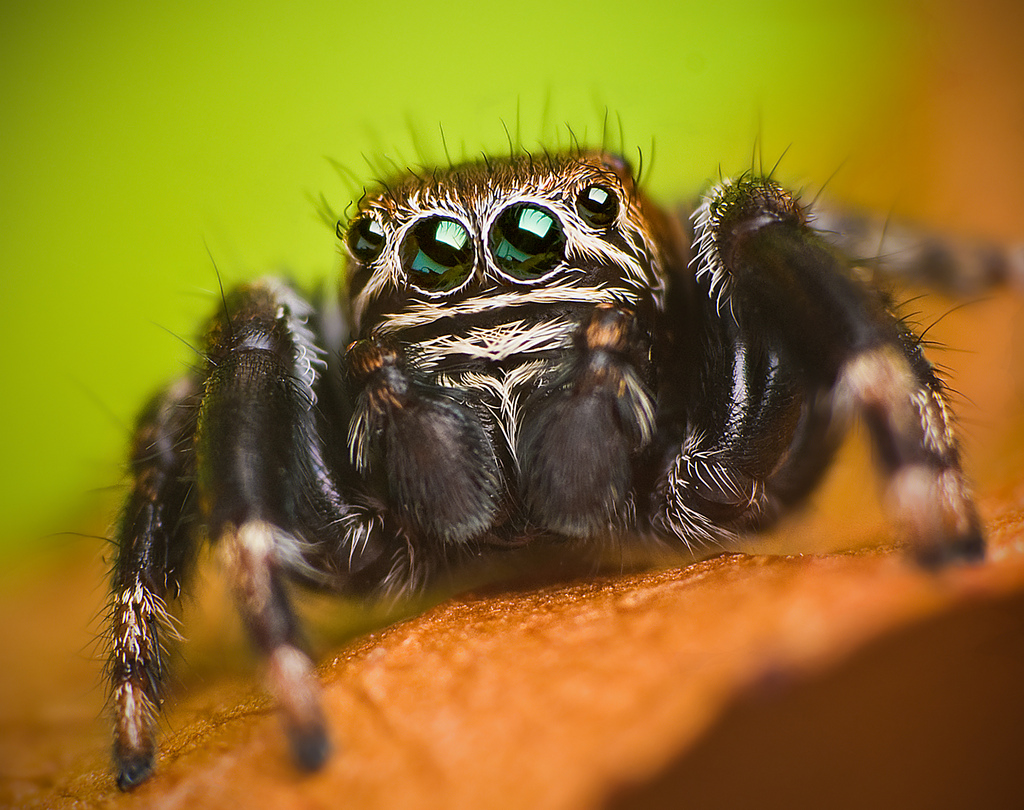
To find out, the team set up a nursery of spiderlings and filmed them overnight with infrared cameras3. Juvenile jumping spiders have translucent exoskeletons, so the researchers could watch the animals' internal retinal tubes directly, without surgery or implants2,7,8. What they saw, recorded and later published in the Proceedings of the National Academy of Sciences on August 8, 2022, was a recurring episode: the retinal tubes moved rapidly, legs curled or twitched, spinnerets sometimes moved, and the bouts got longer as the night wore on1,2,7,4. Across 34 juvenile Evarcha arcuata, these episodes lasted around 77 seconds and recurred roughly every 20 minutes3.

That regularity, and the fact that retinal motion and body twitching showed up together rather than as isolated jitters, is what pushed the team toward calling it an REM sleep-like state1,2. It is also what separated this from simple nighttime restlessness: a sleep stage that cycles on a schedule looks like biology doing something deliberate, not an animal just fidgeting. Years later, a second study, led by Nadja Geiger and Rößler and published in PNAS in 2026, pushed the case further by studying Portia fimbriata, a related Australian jumping spider, and finding two distinct sleep stages, one still and one twitchy5,10. When the team kept one spider awake overnight with fruit flies, then let it sleep, it spent about 80% more time in the twitchy, REM-like stage afterward, almost all of it as recovery5,6. That kind of rebound after deprivation is considered stronger evidence of a true, regulated sleep stage than inactivity alone5,6.
None of this proves the spiders are dreaming. Researchers, including Rößler, have been careful to separate what the behavior shows from what it might mean. Barrett A. Klein, an entomologist involved in the public discussion of the 2022 work, stressed that the evidence is behavioral, not a direct window into a spider's mind2,7. Rößler herself has put it more personally: "I personally think they are dreaming, just like any person watching a dog or cat sleep and kick their leg will think that they're dreaming, but being able to scientifically prove that is a whole different story"7. What started with a few twitching spiderlings in a patch of grass near Trier has not answered the question of spider dreams, but it has made the question impossible to dismiss.
What Counted as Sleep Before This
Sleep researchers typically look for a cluster of signs: extended inactivity, a higher threshold for waking the animal up, a species-specific resting posture, and a rebound in sleep after the animal is deprived of it2,5. REM sleep specifically is tied, in vertebrates, to rapid eye movements, reduced muscle tone, and often dreaming, though the underlying mechanics differ across species9,2.
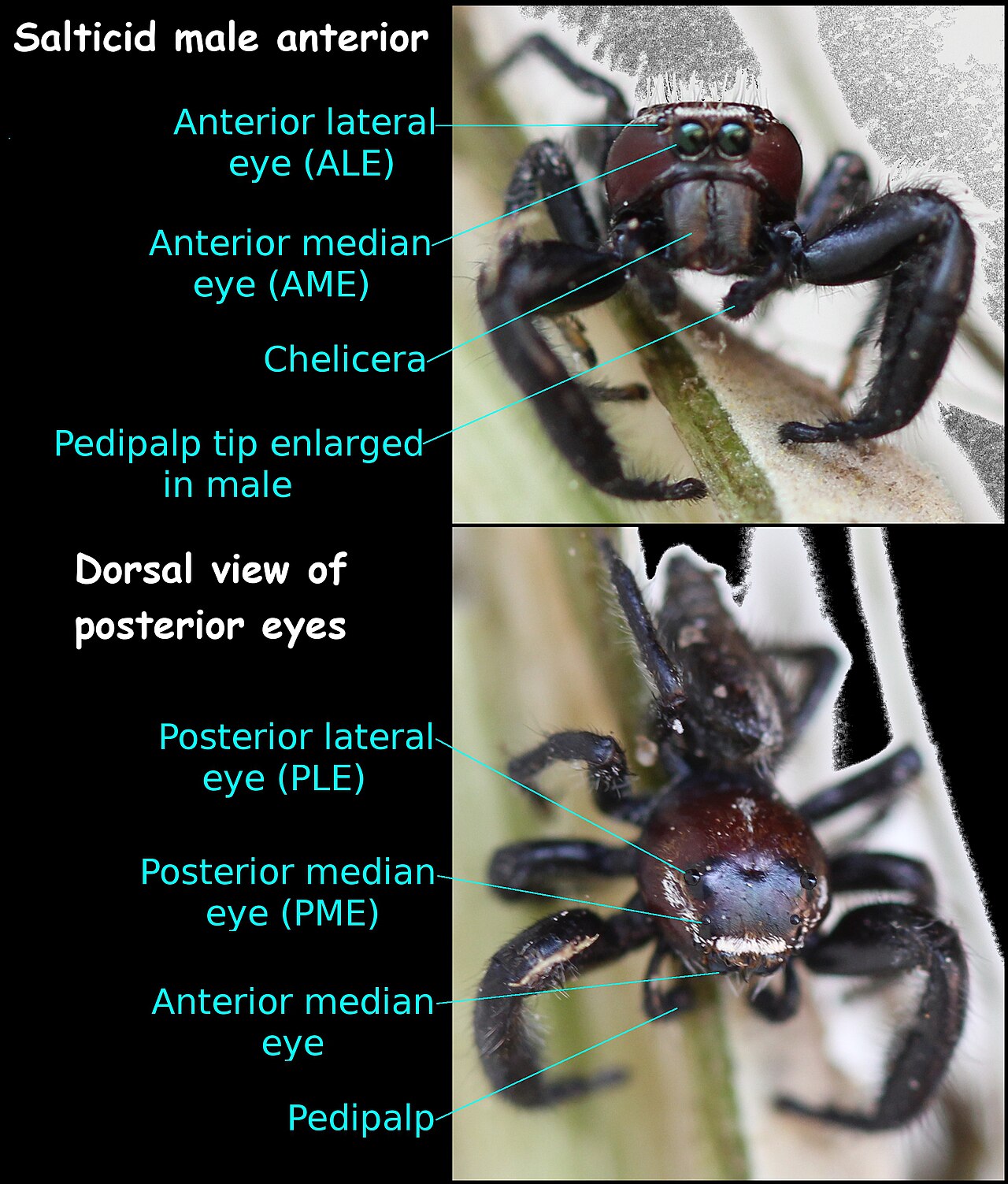
Jumping spiders happened to offer a rare opening into testing for this in an invertebrate. Their principal eyes contain movable retinal tubes rather than eyeballs that roll in sockets, and in young, translucent spiderlings, researchers can watch those tubes move without any surgery2,7,8. That anatomical quirk, more than any assumption about spider intelligence, is what made the 2022 study possible7,8.
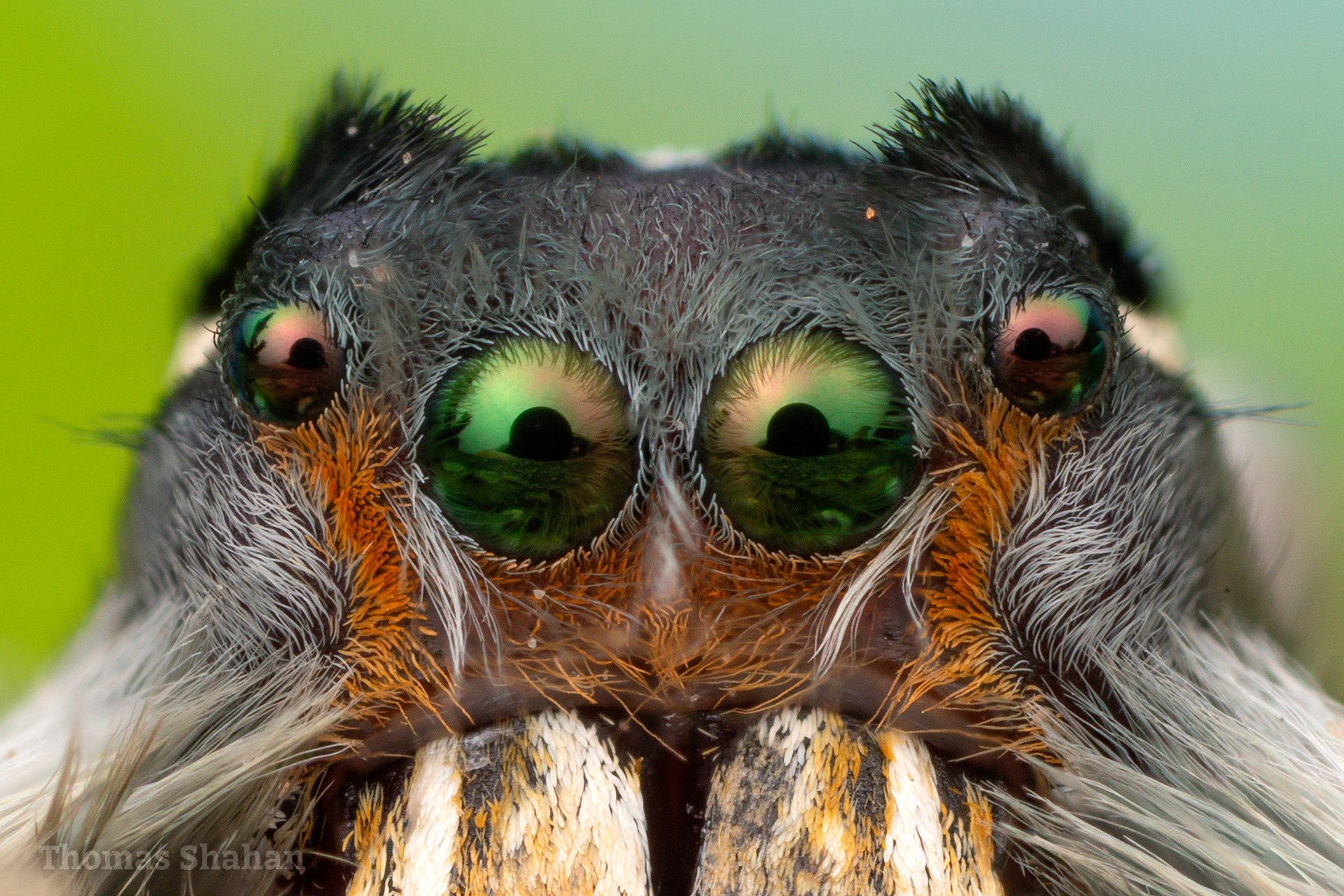
Because REM sleep had mostly been studied in mammals and birds, and because spiders lack eyelids, neck muscles, and a vertebrate-style centralized brain, the researchers chose the deliberately cautious phrase "REM sleep-like state" rather than claiming spiders experience dreaming the way humans do1,2.
The Figures That Matter
- 34: juvenile Evarcha arcuata jumping spiders recorded overnight with infrared cameras in the 2022 study1,2,4.
- ~77 seconds: average length of a REM-like episode in that study3.
- ~20 minutes: roughly how often those episodes recurred through the night3.
- 10 spiders, 109 episodes: the scale of the 2026 Portia fimbriata study, with episodes averaging about 83 seconds11.
- ~80%: the increase in time spent in the REM-like stage after one spider was kept awake overnight and allowed to recover, reported as evidence of genuine sleep rebound6.
What Isn't Settled
Neither study demonstrates that spiders dream in any subjective sense; both show behavior that resembles vertebrate REM sleep, which is not the same thing as proof of inner experience1,2,5. The 2026 team itself noted that it could not measure brain activity directly and relied entirely on documented behavior to define the sleep stages10.
Rößler has been explicit that her personal intuition (that the spiders are dreaming) goes beyond what the data can support, and that she isn't sure the question can ever be answered scientifically7. Co-author Paul Shamble has raised a related, unresolved question: whether visual dreaming of this kind might simply be what visual brains do, regardless of how different those brains are evolutionarily, which would include species with similar nervous systems but weaker vision7.
Timeline
- 2020Daniela Rößler observes twitching jumping spiders in a grass patch near Trier, Germany, during coronavirus lockdowns3.
- August 8, 2022PNAS publishes the first report of an REM sleep-like state in juvenile Evarcha arcuata jumping spiders1,2,8.
- August 2022News coverage frames the finding as the question "Do spiders dream?" while scientists urge caution2,7.
- 2024The 2022 study is named among finalists for the Cozzarelli Prize, according to the University of Konstanz4.
- 2026Nadja Geiger, Daniela Rößler, and collaborators publish a study in PNAS describing two-stage sleep and sleep rebound in Portia fimbriata5,10.
Pictures
Sources
- Do spiders sleep? Study suggests they may snooze like ...AP News
- Spiders show signs of REM-like activity, raising the question: Do they dream?kpbs.org
- Do spiders dream? A new study suggests they do.National Geographic · 2022
- Search University of Konstanzuni-konstanz.de
- How deeply do spiders sleep? — University of Bonnuni-bonn.de
- Sleep-deprived jumping spiders spent 80% more time in REM-like sleepmartincid.com
- Harvard researchers find REM sleep in jumping spiderstest.news.harvard.edu · 2022
- Regularly occurring bouts of retinal movements suggest an REM sleep–like state in jumping spidersProceedings of the National Academy of Sciences · 2022
- Rapid eye movement sleepWikipedia
- Do spiders dream? Scientists just found a surprising cluesciencedaily.com
- Jumping spiders show REM-like sleep, but do they dream?yahoo.com
- Jumping spiderWikipedia
- The stuff of nightmares? Scientists think spiders may experience REM-like sleep | CBC Radiocbc.ca
Researched and written by Lorelet from the sources above. It cites as it goes, but it can still get things wrong, so check the sources for anything that matters.
Report a problem
More featured lorelets
See all
Today · Food
The Turkey Surplus That Became the TV Dinner
A company drowning in frozen birds found an answer on an airline food cart, or so the story goes for fifty years.

Today · Space
Why Is Jupiter's Great Red Spot Actually Red?
Jupiter is built almost entirely of colorless gas, yet its most famous storm glows orange-red. Scientists have spent decades in the lab trying to fig…

Today · Art & Design
The Aztec Labret Whose Golden Tongue Still Moves
A small gold serpent made for a pierced lip somehow ended up with a tongue that flicks side to side. No one alive has ever seen it worn.