
Featured · Nov 17History
The Mossad Trap: How Vanunu Exposed Israel's Nukes
A fired nuclear technician handed a London newspaper the first real evidence of Israel's secret arsenal. Before readers ever saw it, he was gone.

Listen
Read by Finch · 9 min
A Trip to Rome
In late September 1986, Mordechai Vanunu left London bound for Rome, traveling with a woman he knew as Cindy3,10. He had spent weeks in London talking to journalists at The Sunday Times about photographs he had smuggled out of Israel's Dimona nuclear complex, and the paper's investigation was nearing publication3,5. He did not come back.
By the time the story broke, there was no Vanunu to answer questions about it. The Reverend John McKnight, an Australian priest who had befriended him, told reporters he believed Vanunu had not left Britain of his own free will3. Newsweek reported that Mossad agents had arranged the trip, and that once Vanunu was persuaded aboard a boat in the Mediterranean, he was arrested by an Israeli crew and taken back to Israel3.
To understand how a man ended up on that boat, it helps to go back to who he was before any of this: an Israeli nuclear technician, born in Marrakesh in 1952, who had emigrated to Israel with his family as a child and been hired at the Negev Nuclear Research Center near Dimona in 19776. He worked there for roughly nine years, much of it in an underground section of the plant involved in weapons-related processing6,1. He earned a good salary, enrolled at Ben-Gurion University, studied philosophy, and along the way developed left-wing sympathies and friendships with Arab students that his own security file flagged as a concern6. In early 1985 he lost his job in a round of layoffs that affected about 180 Dimona employees; a union grievance briefly got him reinstated, but he left for good not long after and secretly photographed the facility before he went, taking 57 pictures6,11.
He carried those photographs through Asia and Australia, where he converted to Christianity and met Oscar Guerrero, a freelance journalist who urged him to sell his story6. Guerrero eventually brought Vanunu to The Sunday Times in London, where journalist Peter Hounam interviewed him and had his account checked by nuclear physicist Frank Barnaby6,1. The paper judged Vanunu credible, and by the autumn of 1986 it was preparing a major investigation built on his photographs, his testimony, and a diagram of the underground complex where he said he had worked1,3.
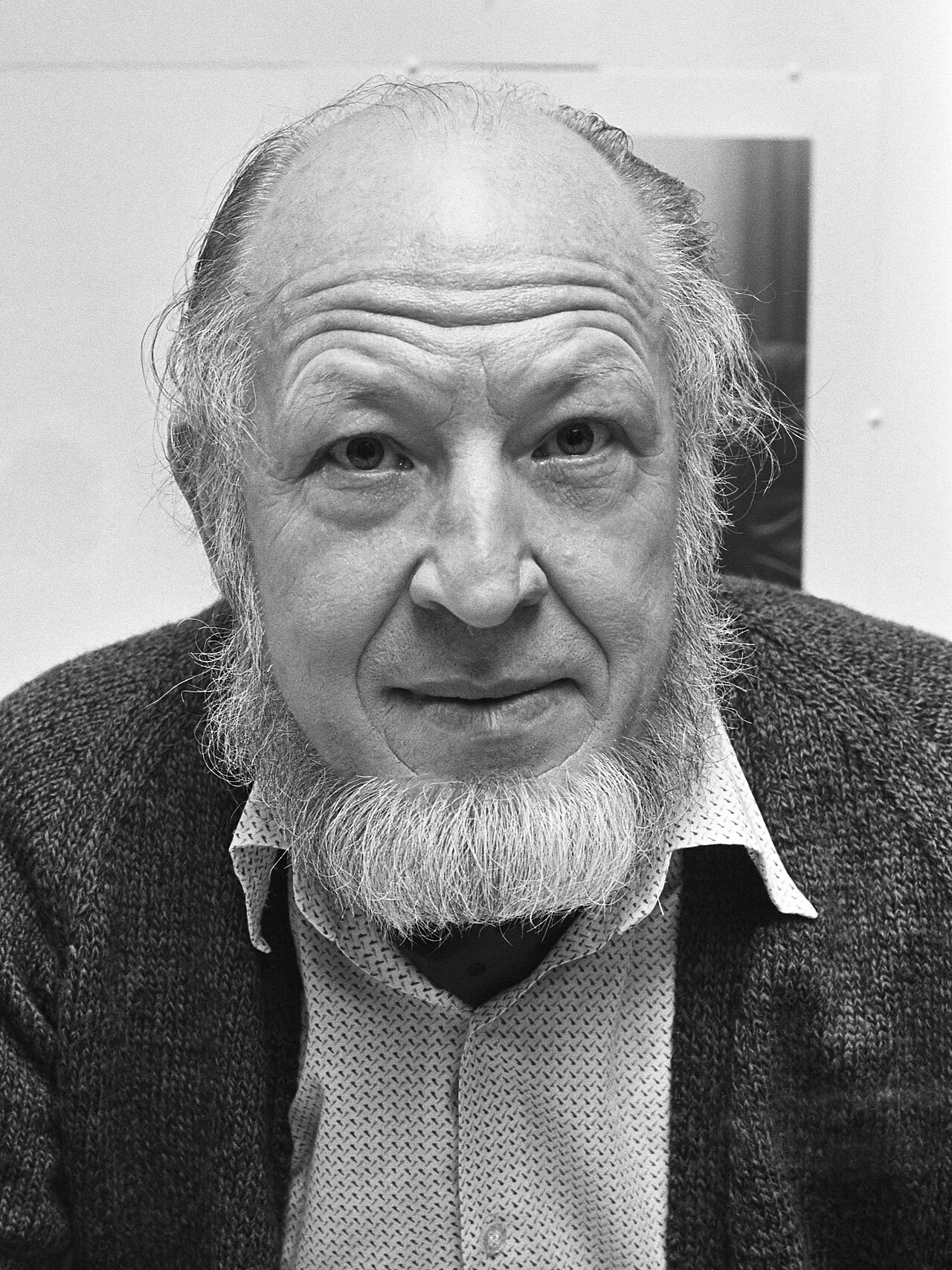
Israeli intelligence, meanwhile, had already picked up Guerrero's earlier approach to an Israeli consulate official, Avi Kliman, offering to help track down what he called an Israeli traitor6. That contact, and growing concern inside Israel about the newspaper's plans, set Mossad in motion before the story ever ran6,3.
The woman who traveled with Vanunu to Rome was later identified by The Sunday Times as Cheryl Hanin Bentov, an American-born Mossad agent who had used the name Cindy to get close to him in London4. When Hounam later confronted her, reporting at the time said she did not deny having lured him out of Britain4. In Rome, Israeli agents seized him; some accounts say he was drugged and restrained before being transported to Israel, though the public record is not uniform on that detail4. Israel's own 1993 government memorandum confirms that Vanunu took classified material from Dimona but does not lay out the operation that brought him home9.
The Sunday Times published its investigation on 5 October 1986, reporting that Israel had built an underground, eight-level production complex at Dimona and stockpiled something on the order of 100 to 200 nuclear warheads1,11,12. By then Vanunu had already vanished, having disappeared on 30 September, days before the paper's readers ever saw his photographs3. Weeks later, Israeli officials confirmed he was in custody, remanded before a judge in a secret proceeding ahead of a treason trial3.
At his court appearance, with his movements and speech restricted, Vanunu wrote the date of his abduction on the palm of his hand and held it up for photographers2. It was about the only message he could still send.
Dimona and Israel's Undeclared Bomb
Israel began building the Negev Nuclear Research Center near Dimona in 1958, and the heavy-water reactor at its core went critical sometime between 1962 and 19648. Though Israel has always described it as a research facility, the reactor produced plutonium and other materials usable in nuclear weapons, and most intelligence agencies believe Israel had working weapons before the 1967 Six-Day War8.

Israel opened Dimona to American inspectors starting in January 1965, but reportedly used false walls and other concealment to hide weapons-related work during those visits, according to declassified U.S. documents8. The site remains tightly guarded; its airspace is closed to aircraft, a restriction enforced during the Six-Day War when an Israeli jet that strayed over Dimona was shot down by an Israeli missile8.
Israeli governments have never confirmed or denied possessing nuclear weapons, a stance usually called nuclear ambiguity8,9. Estimates of the arsenal's size have varied widely over the decades, from the 100 to 200 warheads The Sunday Times reported in 1986 to later estimates running as high as 4008,11.
Who's Who
- Mordechai Vanunu: Former Dimona technician who photographed the facility and gave his account to The Sunday Times6,1.
- Cheryl Hanin Bentov ('Cindy'): American-born Mossad agent who formed a relationship with Vanunu in London and accompanied him to Rome4.
- Peter Hounam: Sunday Times journalist who led the investigation and interviewed Vanunu6,3.
- Frank Barnaby: Nuclear physicist who assessed Vanunu's technical claims for the newspaper6.
- Oscar Guerrero: Freelance journalist who brought Vanunu's story to the press and separately contacted Israeli officials6.
- Mossad: Israeli intelligence agency that organized the operation to remove Vanunu from Europe3,5.
By the Figures
- 57: Photographs Vanunu secretly took inside Dimona before leaving his job6.
- 100 to 200: Nuclear warheads The Sunday Times estimated Israel had stockpiled, based on Vanunu's account1,11,12.
- 9 years: Roughly how long Vanunu worked as a Dimona technician6,1.
- 180: Dimona employees laid off in the cost-cutting round that cost Vanunu his job1.
- 18 years: Time Vanunu spent in prison after his 1988 conviction, including more than 11 in solitary confinement6,7.
What's Disputed
Public sources agree on the outline of Vanunu's seizure in Rome but differ on specifics. Some accounts describe him being drugged and physically restrained before being moved to Israel; others give a vaguer account without independently confirming the drugging4.
Accounts also differ on whether he was transported by sea, with Newsweek's 1986 reporting describing a yacht in the Mediterranean, while other sources describe the operation in less specific terms3,4. Israel's 1993 government memorandum confirms the underlying facts of Vanunu's offense and prosecution but does not provide a detailed public account of how the operation in Rome was carried out9.
The precise size of Israel's nuclear arsenal also remains unsettled. Estimates from 1986 centered on 100 to 200 weapons, while later analyses of the Dimona complex have suggested figures as high as 4008,11.
Timeline
- 1952Mordechai Vanunu born in Marrakesh, Morocco6.
- 1963Vanunu's family emigrates to Israel6.
- 1977Vanunu hired as a technician at the Negev Nuclear Research Center near Dimona6.
- Early 1985Vanunu loses his job in a mass layoff of about 180 Dimona workers6,1.
- 1986Vanunu secretly photographs the Dimona facility and leaves Israel6.
- September 1986Vanunu meets 'Cindy' in London and travels with her to Rome3,10.
- 30 September 1986Vanunu disappears, later identified as the date of his seizure3.
- 5 October 1986The Sunday Times publishes its investigation into Israel's nuclear program1,5.
- March 1988Vanunu convicted of treason and espionage in a closed trial7.
- 2004Vanunu released after 18 years in prison6.
Pictures


Sources
- Israeli Nuclear Stockpile Reportedlatimes.com · 1986
- Vanunu: Israel's nuclear telltaleBBC
- ISRAEL SAID TO ABDUCT SELLER OF A-BOMB SECRETS (Published 1986)The New York Times · 1986
- Cindy Hanin Bentov | The Info Webtheinfoweb.org
- 1986: Nuclear technician missing after secrets leakBBC
- Mordechai VanunuWikipedia
- Vanunu Guilty in Leak of Israeli Nuclear Secretslatimes.com · 1988
- Shimon Peres Negev Nuclear Research CenterWikipedia
- MEMORANDUM REGARDING MORDECHAI VANUNU-22-Sep-93embassies.gov.il
- Mordechai Vanunu · IsraelPediaisraelpedia.org
- Israel has produced as many as 200 nuclear weapons... - UPI Archivesupi.com
- Logintandfonline.com
- Cleric Fails to Find Israeli A-Technician : Reports Official ...latimes.com
Researched and written by Lorelet from the sources above. It cites as it goes, but it can still get things wrong, so check the sources for anything that matters.
Report a problem
More featured lorelets
See all
Today · Food
The Turkey Surplus That Became the TV Dinner
A company drowning in frozen birds found an answer on an airline food cart, or so the story goes for fifty years.

Today · Space
Why Is Jupiter's Great Red Spot Actually Red?
Jupiter is built almost entirely of colorless gas, yet its most famous storm glows orange-red. Scientists have spent decades in the lab trying to fig…

Today · Art & Design
The Aztec Labret Whose Golden Tongue Still Moves
A small gold serpent made for a pierced lip somehow ended up with a tongue that flicks side to side. No one alive has ever seen it worn.