
Featured · Nov 7History
Oil Rocks: The Soviet City Built on Sunken Ships
A shed and a drilling rig on a bare Caspian reef turned, within a decade, into a town of thousands floating miles from shore. Getting there took an engineering shortcut nobody advertised.
Listen
Read by Finch · 7 min
The Night the Rock Gave Up Oil
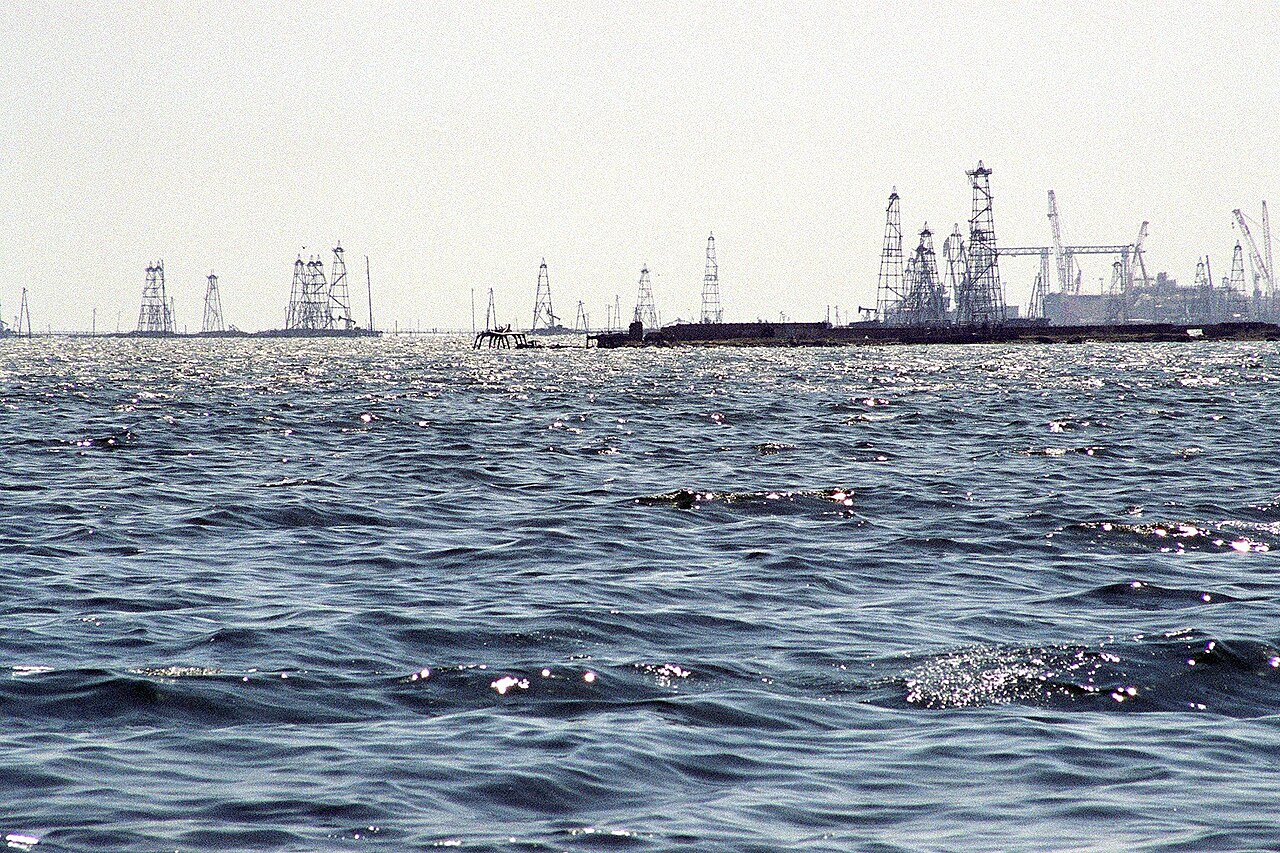
In the late 1940s there was nothing out there but a shed and a drilling rig, set on a tiny rocky outcrop that mariners had long called the Black Rock, far out in the Caspian Sea1. On the night of 7 November 1949, the crew working that rig drilled down and struck oil beneath the seabed. One widely repeated account puts the depth at about 1,100 metres3,4; another source gives the discovery well as 942 metres4. Either way, it was described as top quality crude, and the date itself carried weight: 7 November was the anniversary of the Bolshevik Revolution3.
For the moment, that was the whole operation: a shed, a rig, and a strike of oil on an exposed reef with no harbor, no dock, and no way to support a workforce in open water1. Getting from that bare outcrop to an inhabited offshore town was going to require something other than ordinary drilling know-how.
The stakes were set by the war that had just ended. Azerbaijan had been a major oil-producing region since the nineteenth century, but during the Second World War its output became strategically vital to the whole Soviet war effort, and German forces fought hard, unsuccessfully, to seize Baku and the Absheron Peninsula11,7. After 1945, Soviet engineers started looking past the fields on land toward reserves under the sea itself2,3.
The site they settled on, known in Russian as Neftyanye Kamni and in Azerbaijani as Neft Daşları, meaning Oil Rocks, sat far enough offshore that no conventional supply chain could reach it1,2. There was no solid ground to build on, no quay to land equipment, and no shelter from Caspian storms. Whatever got built there would have to create its own foundation first and its oil operation second.
The solution engineers settled on was blunt. They took obsolete vessels out to the rock and deliberately sank them, forming a sheltered basin and a partial foundation for the structures to come5,6,7. Accounts generally put the number at seven ships, giving rise to the site's old nickname, the Island of Seven Ships5,6,7. The most storied of them was the Zoroaster, commonly described as the world's first oil tanker and built in Sweden, though the sources here repeat that claim without a verified ship-by-ship inventory of the sinking2,6,7.
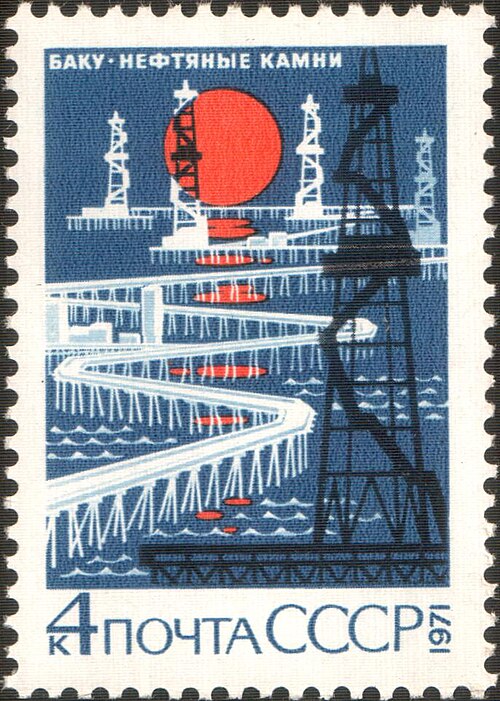
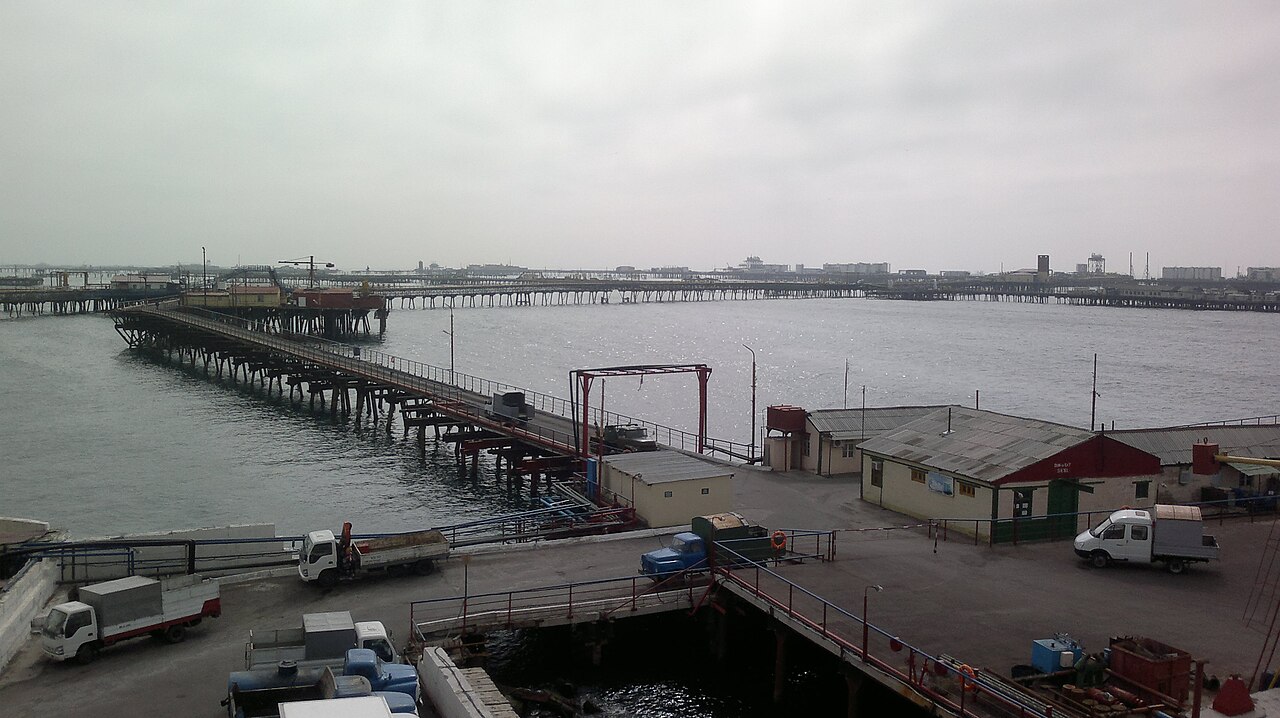
From there the settlement grew fast. Commercial production began in 1951, and through the 1950s crews drove steel piles into the seabed, raised drilling platforms, and strung trestle bridges between the growing cluster of artificial islands1,9. By the 1960s and 70s, Neft Daşları had become something closer to an actual town: housing blocks, a hotel, a bakery, a power station, workshops, docks, and roadways that vehicles could drive across2,9. Reported totals vary by source, but the settlement is generally described as having grown to roughly 2,000 wells, about 320 production sites, and more than 100 miles of bridges, with some accounts giving bridge length as high as 200 to 300 kilometres depending on what is counted1,8,2,9,6. Population estimates for its peak run above 5,0008,2,3.
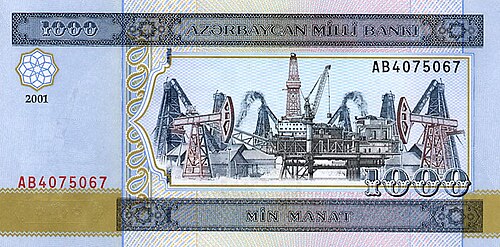
Production peaked in 1967 at a reported 7.6 million tonnes of oil in a single year1,8. After the Soviet Union dissolved in 1991, the field kept operating under independent Azerbaijan, but its relative importance shrank as newer offshore fields elsewhere in the Caspian came online5. In the twenty-first century, storms, corrosion, and age have taken a visible toll: sections of bridge and housing have collapsed or been reclaimed by the sea, and in December 2015 three SOCAR workers went missing after part of the living quarters fell into the water during a storm12. Even so, people still live and work out there, on a town whose foundations, in more than one place, are the hulls of ships nobody meant to see again1,5.
Oil Rocks by the Numbers
- 1949: Year drilling began and the decisive strike occurred, on the night of 7 November1,3.
- 1,100m vs. 942m: Depth of the discovery well, reported differently across sources3,4.
- 1951: Year commercial oil production started1,9.
- ~2,000 wells, ~320 production sites: Reported scale of the built-out field1,8.
- 100+ miles of bridges (some tallies up to 200-300 km): Trestle bridges connecting the artificial islands1,2,9,6.
- 5,000+ workers: Reported peak population in the 1960s-70s8,2,3.
- 7.6 million tonnes: Reported peak annual oil production, in 19671,8.
- ~170-180 million tonnes: Cumulative oil produced over the site's roughly 75-year history, per SOCAR and reporting12,1.
What the Record Doesn't Pin Down
Sources disagree on basic figures. The discovery depth is given as both roughly 1,100 metres and 942 metres3,4, and bridge length ranges from just over 100 miles to figures as high as 200 to 300 kilometres1,2,9,6, likely depending on whether a source counts only the main trestles or the full network.
The claim that exactly seven ships, including the tanker Zoroaster, were sunk to found the settlement is repeated across multiple accounts, but none of the sources reviewed here provide a primary sinking record or confirmed list of which vessels were used2,5,6,7.
Joseph Stalin is frequently invoked in popular writing as the man who "built" the city, since the project unfolded during his rule and Soviet oil policy at the time emphasized Caspian output3. Nothing in the sources reviewed establishes that Stalin personally ordered, designed, or visited the project; the association appears to be shorthand for the Soviet state effort rather than a documented personal role2,3.
Accounts also differ on whether Neft Daşları was the world's first offshore oil platform outright or specifically the first large-scale offshore oil settlement; it is frequently cited in Guinness World Records as the former, while earlier small-scale undersea extraction near Baku dates to 180312,13.
Timeline
- 1945-1948First large-scale geological survey of the area12.
- 7 November 1949Drilling crew strikes oil beneath the seabed; depth reported as either about 1,100m or 942m1,3,4.
- 1949Obsolete ships, commonly said to number seven, are sunk to form a protected harbor and foundation5,6,7.
- 1951Commercial oil production begins1,9.
- 1952Systematic construction of trestle bridges between artificial islands begins12.
- 1958Large-scale construction adds hostels, a hotel, cultural palace, bakery12.
- 1967Peak annual production of 7.6 million tonnes of oil1,8.
- 1991Soviet Union dissolves; field continues operating under Azerbaijan5.
- 4 December 2015Three SOCAR workers reported missing after living quarters collapse into the sea during a storm12.
Pictures


Sources
- https://edition.cnn.com/2024/11/06/climate/oil-rocks-neft-daslari-caspian-sea-city/cnn.com
- Visit a Crumbling, Soviet-Era Floating 'Oil City'bloomberg.com
- Stalin Built the World's First Offshore Oil Rig Into an Entire Floating Cityvice.com · 2012
- Iain Cameronx.com
- Oil Rocks : The Land Of Fire In The Middle Of The Sea - CITI I/Onews.citi.io
- Remembering Neft Dashlari, Stalin's utopian ocean city made from ...gizmodo.com
- Exploring the Crumbling Soviet Oil Platform City of Neft Dashlarispiegel.de · 2012
- Neft Daşları: The Soviet-era oil city still floating in the Caspian Sea | The Express Tribunetribune.com.pk · 2024
- Inside 75-year-old Soviet ‘floating city’ slowly crumbling into the seamirror.co.uk · 2024
- The once-booming European city slowly sinking into the seaexpress.co.uk
- The Floating City of Neft Dashlari is Slowly Being ...abandonedspaces.com
- Neft DaşlarıWikipedia
- Petroleum industry in AzerbaijanWikipedia
- Neft Daşları: the strange Soviet city on the Caspian Seafaroutmagazine.co.uk
- Development modeling of the Neft Dashlari field within the South Caspian BasinVisnyk of Taras Shevchenko National University of Kyiv. Geology · 2026
Researched and written by Lorelet from the sources above. It cites as it goes, but it can still get things wrong, so check the sources for anything that matters.
Report a problem
More featured lorelets
See all
Today · Food
The Turkey Surplus That Became the TV Dinner
A company drowning in frozen birds found an answer on an airline food cart, or so the story goes for fifty years.

Today · Space
Why Is Jupiter's Great Red Spot Actually Red?
Jupiter is built almost entirely of colorless gas, yet its most famous storm glows orange-red. Scientists have spent decades in the lab trying to fig…

Today · Art & Design
The Aztec Labret Whose Golden Tongue Still Moves
A small gold serpent made for a pierced lip somehow ended up with a tongue that flicks side to side. No one alive has ever seen it worn.