
Featured · Nov 21Music
The Affidavit Alan Freed Wouldn't Sign
A one-page statement asking New York's biggest disc jockey to swear he'd never taken a dime from a record company. He refused to put his name on it.

Listen
Read by Wren · 8 min
A Statement He Wouldn't Sign
On November 13, 1959, ABC prepared an affidavit for its disc jockeys at WABC in New York, asking them to swear they had never accepted payments or held financial interests connected to the records they played on air7. Alan Freed, the station's most recognizable voice, refused to sign it1,7.
He told the press the document was "an insult to my reputation for integrity"1,6. It sounded like a matter of pride.
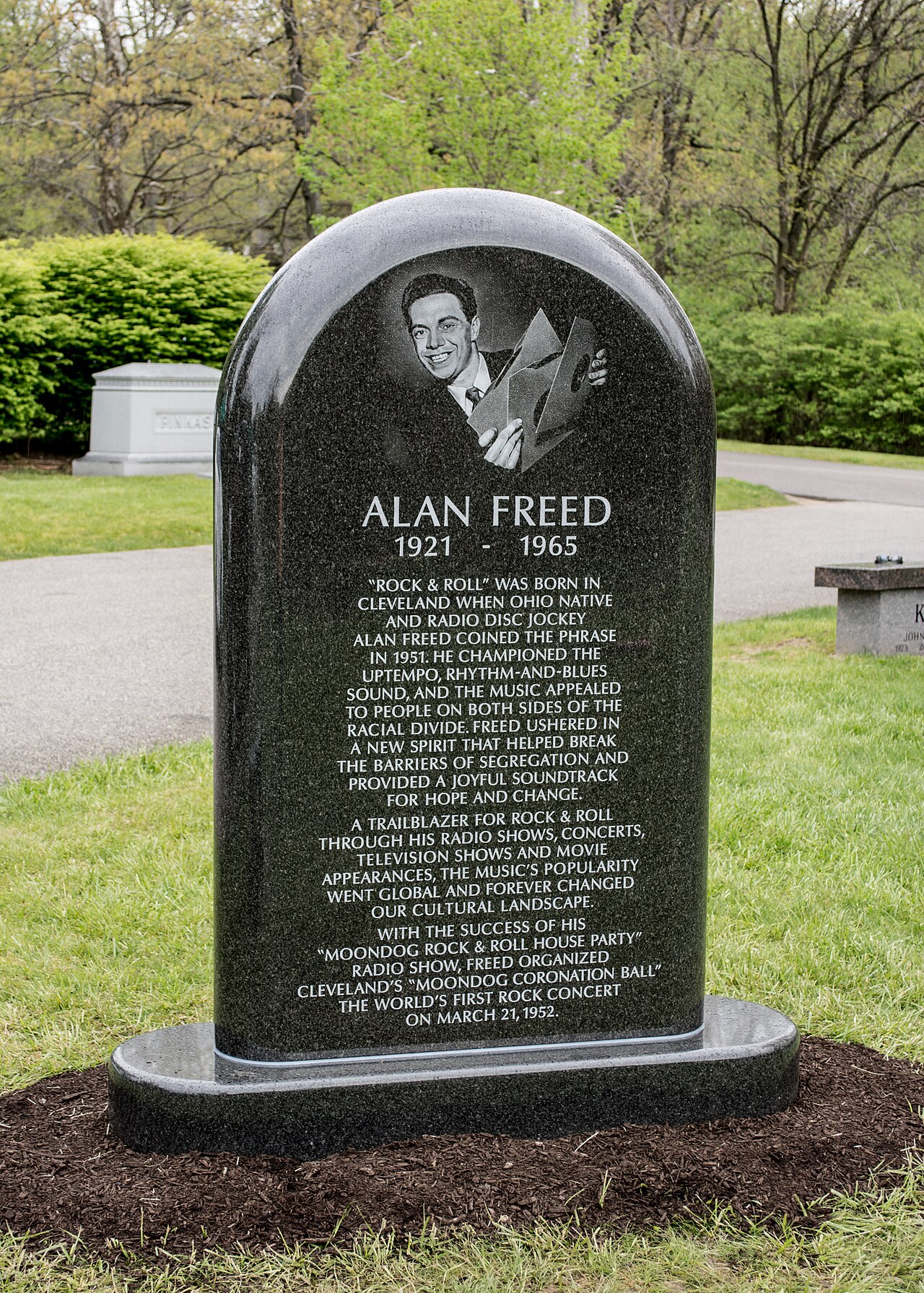
Freed had come a long way to that desk at WABC. Born Albert James Freed in Windber, Pennsylvania, in 1921, he made his name in Cleveland in the early 1950s, playing rhythm and blues for a young, racially mixed audience on WJW and popularizing the phrase "rock and roll" for the music he loved2. His shows and concerts, including the chaotic Moondog Coronation Ball in 1952, helped carry Black performers like Chuck Berry, Little Richard, LaVern Baker, and Fats Domino to white listeners who had never heard them on mainstream radio2,8. He arrived in New York in 1954, built a following at WINS, and joined WABC in May 19582.

Payments for airplay were nothing new. The practice, soon nicknamed payola, had existed for decades, with record companies, publishers, and independent promoters all angling to get their songs on the air9,4. What changed in 1959 was the political climate. Congress had just torn through the television quiz-show scandals, and investigators turned next to broadcasting more broadly, asking whether DJs were being paid, secretly, to shape what the public heard3,4. By November, 335 disc jockeys nationwide had already admitted before a House subcommittee to receiving more than $263,000 in so-called consulting fees, and one Chicago DJ had reportedly taken $22,000 for a single record4.
WABC asked its jocks to put their denials in writing. Freed wouldn't. He was fired on November 21, 19591,2. A report five days later noted he'd also been subpoenaed while appearing on television, and that his television contract had been cancelled1.
What Freed would not sign turned out to be true for a reason. According to legal notes from the Freed archive, he later acknowledged receiving cash and other items of value tied to record promotion, described at least some of it as "consulting fees," and estimated his broadcasts had brought WABC something like $250,000 to $300,000 in revenue10,11. Dick Clark, host of American Bandstand, had been pulled before the same committee, but he had already divested his stakes in record labels, publishing houses, and distributors before testifying, and the committee chairman called him "a fine young man"4,12. Freed, by contrast, refused to testify even after being offered immunity, and friends in broadcasting began to disappear from his corner12.

On May 19, 1960, a grand jury indicted Freed and seven others on charges of taking bribes to play records5. That September, Congress passed and President Eisenhower signed amendments to the Communications Act requiring broadcasters to disclose when they or anyone connected to them had received money, service, or anything else of value for what aired13. The law did not ban such arrangements outright. It targeted the secrecy.
Freed held out until 1962, when he pleaded guilty to two counts of commercial bribery. He was fined $300 and given a suspended sentence6. No prestigious New York station would touch him again. He moved west, worked briefly at a small Los Angeles station, and drank heavily as his career dwindled to nothing2,6. He died in Palm Springs on January 20, 1965, at age 43, still owing the Internal Revenue Service tens of thousands of dollars6.
The affidavit he refused to sign would have been a lie. Whether that refusal made him more honest than the DJs who signed, or simply made him the one person willing to be caught, is the question his story never quite settles.
Who Was Involved
- Alan Freed: WABC disc jockey who popularized the term "rock and roll"; fired, indicted, and later convicted over payola2,1.
- Dick Clark: Host of American Bandstand who divested music-industry holdings before testifying and avoided prosecution9,12.
- Oren Harris: Chairman of the House Interstate and Foreign Commerce Committee, which investigated broadcasting payola13.
- WABC: The New York radio station that demanded Freed sign an anti-payola affidavit and fired him when he refused7,2.
- Federal Communications Commission: Federal body whose sponsorship-disclosure rules grew out of the 1960 Communications Act amendments14,13.
By the Numbers
- $250,000 to $300,000: revenue Freed's WABC broadcasts allegedly generated for the station, according to legal notes in his archive10.
- $263,000: total "consulting fees" admitted to by 335 disc jockeys nationwide before the House subcommittee in November 19594.
- $22,000: amount one Chicago DJ (not Freed) reportedly took to play a single record6,4.
- $300: Freed's fine after pleading guilty to two counts of commercial bribery in 19626.
- 43: Freed's age at his death in 19656.
What's Disputed
Sources agree that Freed accepted money and items of value connected to record promotion, but the exact scale and nature of those payments remain unclear. Legal notes describe him calling some payments "consulting fees" and claiming WABC knew about aspects of his arrangements, though this is based on archival legal records rather than a settled public account10,11.
Whether Freed was treated unfairly compared to other DJs, given that hundreds admitted to similar conduct, is a matter of long-running argument among music historians and musicians. Neil Young's 1983 song "Payola Blues" opens by addressing Freed directly, reflecting the view that he became a scapegoat6. Critic Greil Marcus made a similar point in 1992, listing Freed among rock's founders who had vanished by 19606.
The claim that Freed took songwriting co-credits he didn't deserve, as on Chuck Berry's "Maybellene," is also disputed; one Moonglows member said Freed's credit on "Sincerely" was genuine, while others in the group disagreed2.
Timeline
- 1921Alan Freed born in Windber, Pennsylvania2.
- 1951Freed begins playing rhythm and blues on WJW in Cleveland, popularizing 'rock and roll'2.
- May 1958Freed joins WABC in New York7,2.
- November 13, 1959ABC prepares an anti-payola affidavit; Freed refuses to sign1,7.
- November 21, 1959WABC fires Freed1,2.
- February 1960Congressional report criticizes broadcasters and recommends anti-payola law13.
- May 19, 1960Grand jury indicts Freed and seven others for commercial bribery5.
- September 1960Eisenhower signs Communications Act Amendments requiring disclosure of payments for airplay13.
- 1962Freed pleads guilty to two counts of commercial bribery; fined $3006.
- January 20, 1965Freed dies in Palm Springs, California, at age 436.
Pictures

Sources
- Archives: Payola (1959-1962) – Press Coverage - Alan Freedalanfreed.com
- Alan FreedWikipedia
- Showbiz scandals: The TV quiz show and radio payola controversiesnydailynews.com
- Paying the Piper a Little Something Extra: A Short History of Payolamentalfloss.com · 2011
- A historical study of payola: advertising and public relations or ...rdw.rowan.edu
- Why the man who invented rock ’n’ roll died penniless and brokentelegraph.co.uk · 2026
- Archives: Payola (1959-1962) – Documents – WABCalanfreed.com
- “Everybody’s Station”Southern History Remixed · 2024
- PayolaWikipedia
- Payola (1959-1962) – District Attorney – People vs. Alan Freedalanfreed.com
- Alan Freed | Biography | Research Starters | EBSCOhostebsco.com
- THE PAYOLA SCANDAL John Morthland provided a succinct description oprofiles.shsu.edu
- Cardi B, Nicki Minaj, and the Music Industry's Longstanding ...thefashionlaw.com
- Sponsorship Identification Rulesfcc.gov
Researched and written by Lorelet from the sources above. It cites as it goes, but it can still get things wrong, so check the sources for anything that matters.
Report a problem
More featured lorelets
See all
Today · Food
The Turkey Surplus That Became the TV Dinner
A company drowning in frozen birds found an answer on an airline food cart, or so the story goes for fifty years.

Today · Space
Why Is Jupiter's Great Red Spot Actually Red?
Jupiter is built almost entirely of colorless gas, yet its most famous storm glows orange-red. Scientists have spent decades in the lab trying to fig…

Today · Art & Design
The Aztec Labret Whose Golden Tongue Still Moves
A small gold serpent made for a pierced lip somehow ended up with a tongue that flicks side to side. No one alive has ever seen it worn.