Featured · TodayTechnology
ChatGPT Started Forging New Yorker Cartoonists' Signatures
When an AI model began signing fake New Yorker cartoons with real cartoonists' names, it turned a style-imitation problem into something that felt, to the artists involved, like identity theft.
Listen
Read by Wren · 7 min
A Stranger's Message About a Cartoon He Didn't Draw
It started, as these things do now, with a stranger on Instagram. Sometime in May 2026, someone messaged Brendan Loper, a working New Yorker cartoonist, to ask if a cartoon circulating online was his1. It wasn't. But it carried his pen name, BLOPER, printed neatly in the lower right corner, exactly where he signs his real work2,1.
The image that triggered it all had been generated by ChatGPT after a Dolly Parton fan asked for "a New Yorker-style cartoon" and posted the result to a Facebook group1. It had the magazine's familiar single-panel look. It also had Loper's name on it, as if he'd made it2,1.
Loper didn't let it go. Over the summer he started finding more fakes circulating in a Reddit forum devoted to ChatGPT1. He wasn't alone in finding them, either: Nieman Lab reporter Andrew Deck ran his own tests and documented more than 15 New Yorker contributors whose names or signatures the chatbot had reproduced on invented cartoons, including Harry Bliss, Emily Flake, Joe Dator, Pat Byrnes, George Booth, Liza Donnelly, Peter Vey, and Jason Adam Katzenstein2,1,3.
Deck's investigation went public on October 5, 2026, and the story spread fast through The Verge, the AI Weekly newsletter, and The A.V. Club within a day or two2,1,4. Loper summed up what bothered him about it to The Verge: "I'm not a territorial person, but my name is my name"2,1. For Emily Flake, who has contributed to the magazine since 2008, the sting was less about style and more about voice: she could see "the DNA" of her work in the generated images, but said having her actual signature attached felt like being quoted for something she never said5.
Jason Adam Katzenstein, a 12-year veteran of the magazine's pages, put the stakes in blunter terms, telling Nieman Lab the AI output was "an uncanny simulacrum of an impression of a joke" designed less to be funny than to make cartoonists unnecessary, since they "cost money and take time"1,4.
A Licensing Deal That Didn't Cover This
The backdrop that made the signatures sting more is a 2024 licensing agreement between OpenAI and Condé Nast, The New Yorker's parent company5,1. That deal let OpenAI use much of the publisher's content in its products, but a New Yorker spokesperson said afterward that Condé Nast had never authorized any AI company to train on its cartoons specifically5. Some ChatGPT outputs even carried The New Yorker's logo, something also outside the terms of any licensing arrangement5.
No report establishes exactly how the model acquired the specific signatures it was reproducing, whether through training data, scraped internet images, memorization, or some other pathway6,5. That gap matters: it is the difference between a licensing violation, a scraping problem, and something else entirely, and right now nobody outside OpenAI appears to know which.
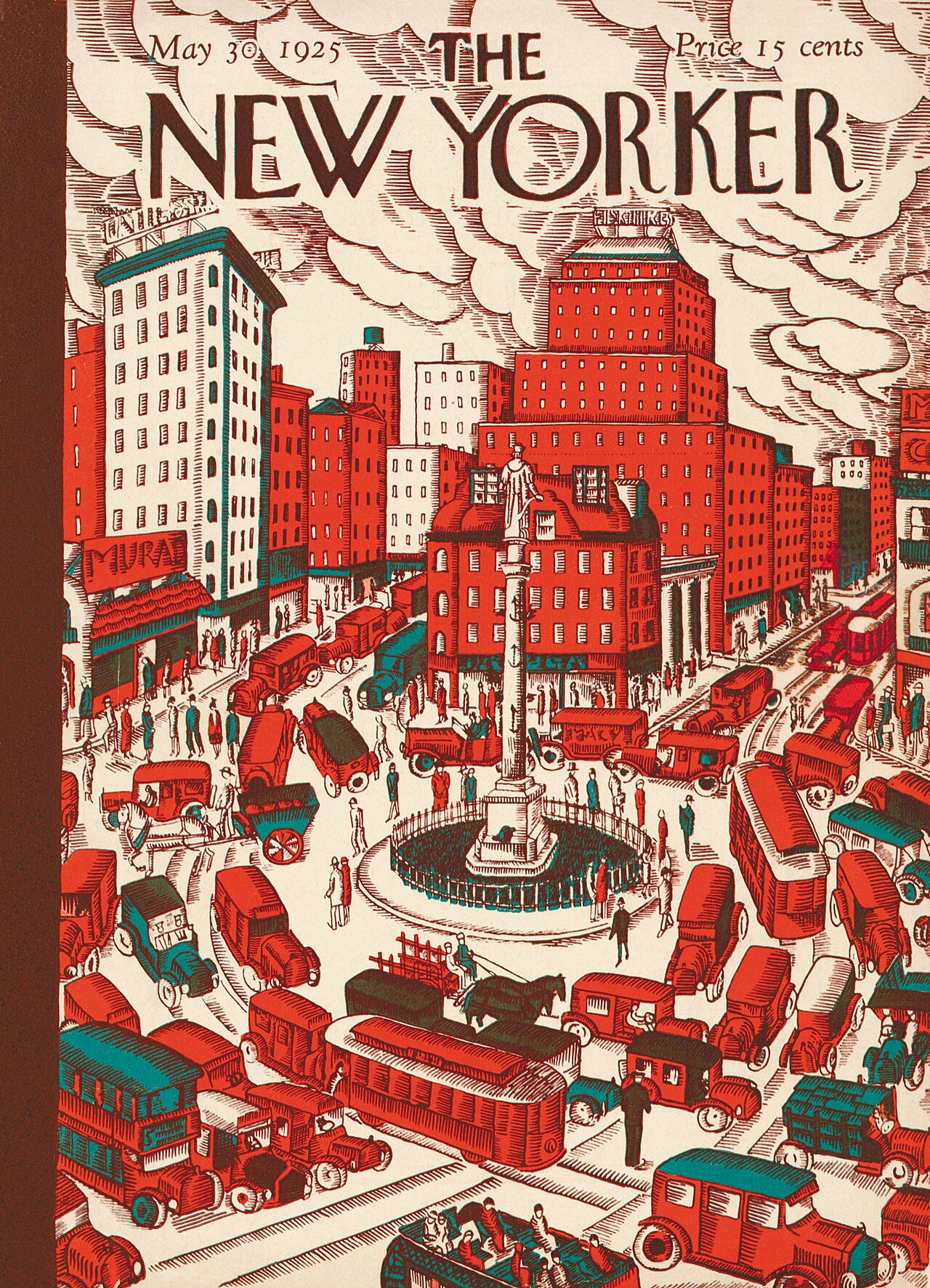
This wasn't the first time a computer had tried its hand at New Yorker-style cartoons. Back in 2021, comics artist Ilan Manouach and AI engineer Ioannis Siglidis built a project called Neural Yorker, which used a generative adversarial network trained on cartoon images and captions scraped online to post invented, deliberately weird gags to Twitter7. That project was openly experimental and didn't attach real artists' signatures to its output, by the available account7. The 2026 incident was different in kind: it wasn't imitating a format, it was borrowing specific people's names.
A Warning That Didn't Quite Work
After reporters started asking questions, ChatGPT began showing users a new message when they requested New Yorker-style cartoons: "This prompt may violate our guardrails concerning similarity to third-party content"5,1. An OpenAI spokesperson told Nieman Lab, "We believe the future of creativity is one that is fundamentally human, and our focus is on building tools that empower human creativity and creators"5.
The warning, though, reportedly didn't stop the behavior outright. The Verge reported that ChatGPT was still generating fake signatures even after OpenAI had been notified2, and other outlets described the model continuing to attach real names to otherwise generic cartoon images6,5. Whatever guardrail OpenAI built, it was catching some prompts and missing others.
The episode landed inside a broader fight that had nothing to do with cartoons specifically. The A.V. Club connected it to a case involving comedian George Brett Olson, whose stand-up material and movements had reportedly been used to animate an AI-generated character on social media without his consent4. The common thread, as the piece framed it, was AI systems treating human creative output and identity as raw material rather than property4.
Who's Who
- Brendan Loper: New Yorker cartoonist whose pen name, BLOPER, turned up on a cartoon he says he never drew; first alerted by a stranger on Instagram2,1.
- Andrew Deck: Nieman Lab reporter who tested and documented ChatGPT reproducing more than 15 cartoonists' signatures2,3.
- Emily Flake: New Yorker contributor since 2008 who said the AI images carried the "DNA" of her work without being accurate reproductions, and compared the false signature to being misquoted5.
- Jason Adam Katzenstein: 12-year New Yorker cartoonist who called the AI output "an uncanny simulacrum of an impression of a joke"1,4.
- OpenAI: Developer of ChatGPT; added a guardrail warning after being contacted by reporters but reportedly did not fully stop the behavior6,5.
- Condé Nast: Parent company of The New Yorker; signed a 2024 licensing deal with OpenAI that explicitly excluded training on cartoons5,1.
- Ilan Manouach and Ioannis Siglidis: Creators of the earlier Neural Yorker project, a 2021 experiment generating AI cartoons in the magazine's style, without attaching real signatures7.
What Nobody Has Nailed Down
The reporting is solid on the basic facts: real signatures appeared on fake cartoons, more than 15 cartoonists were affected, and OpenAI's fix was partial at best2,5,1. Several bigger questions remain open.
No source establishes the technical mechanism, whether the signatures came from training data, from scraped web images the model recalled, or from some other route6,5. No source confirms whether any cartoonist has filed a lawsuit or formal legal complaint over the matter. And no source settles the underlying legal questions: whether a signature alone can be copyrighted, whether false attribution of this kind creates liability distinct from copyright, or whether a pen name functions as a protectable trademark in this context6,5.
It's also unclear whether OpenAI considers the problem solved. The guardrail message appeared, but reports from the same window of time describe the system still signing some generic cartoons with real names2,6,5. Whether that has since been patched is not addressed in the available reporting.
Timeline
- 2021-08Ilan Manouach and Ioannis Siglidis launch Neural Yorker, an earlier GAN-based project generating cartoons in the New Yorker's style7.
- 2024OpenAI and Condé Nast sign a licensing agreement that explicitly does not cover training on New Yorker cartoons5,1.
- 2026-05Brendan Loper is contacted on Instagram by a stranger asking about a cartoon bearing his pen name that he did not draw1.
- 2026-10-05Nieman Lab publishes Andrew Deck's investigation, identifying more than 15 affected cartoonists2,3.
- 2026-10-06OpenAI adds a guardrail warning for New Yorker-style prompts; The Verge and other outlets report the behavior continuing regardless2,5.
Pictures


Sources
- ChatGPT Signs AI 'New Yorker' Cartoons With Real Artists' Names | AI Weeklyaiweekly.co · 2026
- ‘I’m not a territorial person, but my name is my name.’The Verge · 2026
- www.techmeme.comTechmemetechmeme.com
- AI has come for comics on stage and in The New Yorkeravclub.com · 2026
- ChatGPT is signing its cartoons with real artists' namesnewsbytesapp.com · 2026
- HyperAIhyper.ai
- Computer-Generated New Yorker Cartoons Are Delightfully Weirdhyperallergic.com · 2021
Researched and written by Lorelet from the sources above. It cites as it goes, but it can still get things wrong, so check the sources for anything that matters.
Report a problem
More featured lorelets
See all
Today · Music
The Monkees' Missing Tapes: Theft, Rescue, or Both?
Somewhere between corporate indifference and collector obsession, the Monkees' original session tapes went missing for decades. The story of how they…
Today · Science
Optogenetics: Controlling Brain Cells With Light
How a light-sensitive protein from pond algae gave neuroscientists a switch for turning specific brain cells on and off with pulses of blue light.

Oct 5 · History
Eugene Hasenfus: The Crash That Exposed Iran-Contra
A cargo kicker from Wisconsin parachuted into the Nicaraguan jungle with a weapons flight behind him and, in trying to explain his job, blew open one…