
Featured · Nov 10History
¿Por qué no te callas?: The King, the Mic, and a Meme
At a 2007 summit meant to showcase cooperation across the Spanish-speaking world, a famously restrained monarch leaned toward Venezuela's president and said seven words nobody expected from him.

Listen
Read by Wren · 5 min
A Microphone Goes Dead, and the King Leans In
Hugo Chávez's microphone had already been switched off by summit organizers, and he kept talking anyway1. A few seats away, King Juan Carlos I of Spain, listening to Spanish Prime Minister José Luis Rodríguez Zapatero try to finish a sentence, leaned forward, turned toward Chávez, and said four words that would outlive the summit itself: "¿Por qué no te callas?"1,2 The room applauded1.
Something had already broken before most of the room registered what was happening. The words were ordinary, almost playground-simple, but they came from a man whose entire public reputation rested on never saying anything like them2,7.
The occasion was the 17th Ibero-American Summit, held in Santiago, Chile from 8 to 10 November 2007 and hosted by Chilean President Michelle Bachelet7. The summit existed to bring together the leaders of Spain, Portugal, and Latin America, and its official theme that year was social cohesion2. It was the kind of gathering built for communiqués, not confrontations.
The spark was José María Aznar, the conservative who had governed Spain from 1996 to 2004. Chávez used his turn at the microphone to call Aznar a "fascist," according to the Los Angeles Times, and, per other accounts, "less human than snakes," while accusing him of having backed the failed 2002 coup attempt against Chávez's government1,3. Zapatero, Aznar's successor and a political opponent of his, nonetheless rose to defend him, pointing out that Aznar had been democratically elected and was "a legitimate representative of the Spanish people"1,2.
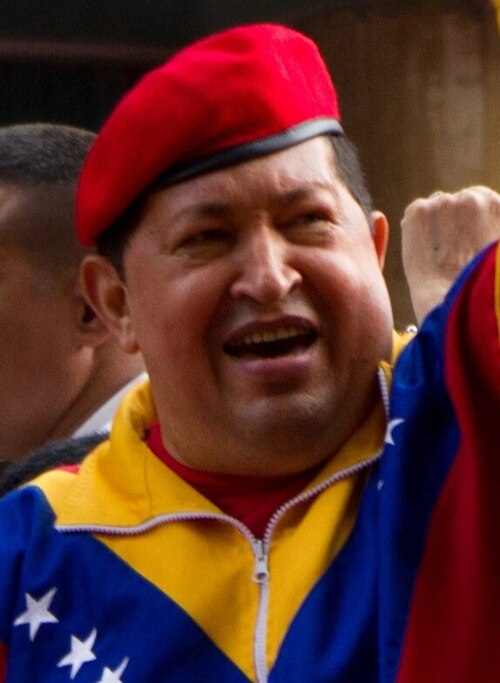
Chávez kept at it. Even after his microphone was cut, he continued interrupting as Zapatero tried to defend Aznar1. That was the moment Juan Carlos, a monarch who had reigned since 1975 and was widely credited with steering Spain's peaceful transition to democracy after Francisco Franco's death, broke from decades of public restraint8,2. He used the informal "tú" rather than the formal "usted," which made the rebuke land less like a royal pronouncement and more like something a tired parent says at the dinner table2,7.

Within days, the clip was everywhere, but the biggest surprise wasn't diplomatic at all. By 20 November, roughly ten days after the summit, reports said about 500,000 people had downloaded a ringtone built from the king's words, generating an estimated €1.5 million, around $2.2 million at the time, for ringtone distributors4,5. The phrase showed up on T-shirts sold out of Florida and Texas, became a greeting among Venezuelan expats, inspired a domain name that drew a $4,600 eBay bid, and turned into a slogan for Chávez's opponents ahead of Venezuela's December 2007 constitutional referendum1,9.
Chávez did not take it quietly. He demanded an explanation, questioned the king's democratic legitimacy, and threatened to review Venezuela's relationship with Spain, including scrutiny of Spanish companies like Banco Santander operating there1,6. Venezuelan state television replayed footage of a young Juan Carlos standing beside Franco, framing the king as the dictator's heir rather than his dismantler1,2. Spanish diplomats worried Chávez would pivot from attacking "American imperialism" to attacking Spain itself1.
The freeze didn't last. In July 2008, Chávez and Juan Carlos met in Spain, and Chávez joked about the whole episode; the relationship was treated afterward as repaired6. Zapatero later said he hadn't grasped how big the moment had become until he got home and his own daughter greeted him with the king's line, and the two of them laughed1. The microphone that had been switched off in Santiago turned out not to matter at all. By then everyone had heard the king anyway.
Timeline
- 8-10 November 200717th Ibero-American Summit held in Santiago, Chile, hosted by Michelle Bachelet7.
- 10 November 2007Chávez repeatedly interrupts Zapatero; King Juan Carlos tells him, "¿Por qué no te callas?"1,2.
- Mid-November 2007Chávez demands an explanation and threatens to review ties with Spain1,6.
- 20 November 2007Reports put ringtone downloads at roughly 500,000 and revenue near €1.5 million ($2.2 million)4,5.
- July 2008Chávez and Juan Carlos meet in Spain and publicly ease the dispute6.
Pictures


Sources
- ¿Por qué no te callas?Wikipedia
- King's words to Chavez start a battle royallatimes.com · 2007
- Spain's king befriended New World despite Chavez spat - Digital ...digitaljournal.com
- 'Shut up' Chavez Ringtone A Monster Hit in Spain, Latin AmericaWIRED · 2007
- Chavez Inspires Million-Dollar Insultforbes.com · 2007
- Spain's king tells Chavez to 'shut up' | CBC Newscbc.ca
- Venezuela: Why Don't You Shut Up?globalvoices.org
- Juan Carlos IWikipedia
- Spanish king to Venezuela's Chavez: Why don't you shut up, now a ring tone; download here | TechCrunchtechcrunch.com · 2007
- Spanish King telling Chavez to 'shut up' becomes ringtone ...eastbaytimes.com
Researched and written by Lorelet from the sources above. It cites as it goes, but it can still get things wrong, so check the sources for anything that matters.
Report a problem
More featured lorelets
See all
Today · Food
The Turkey Surplus That Became the TV Dinner
A company drowning in frozen birds found an answer on an airline food cart, or so the story goes for fifty years.

Today · Space
Why Is Jupiter's Great Red Spot Actually Red?
Jupiter is built almost entirely of colorless gas, yet its most famous storm glows orange-red. Scientists have spent decades in the lab trying to fig…

Today · Art & Design
The Aztec Labret Whose Golden Tongue Still Moves
A small gold serpent made for a pierced lip somehow ended up with a tongue that flicks side to side. No one alive has ever seen it worn.