
Featured · Oct 31History
Troy's First Instrument, 160 Years in the Digging
Archaeologists at Hisarlik have spent a century and a half pulling gold, pottery, and weapons out of the ground. In 2026 they found something that had never turned up before: a sound.

Listen
Read by Wren · 6 min
A Gap on the Excavation Map
On modern excavation maps of Hisarlik, there is a blank space in the middle of the site, with a note that reads: palace removed by Schliemann1. Heinrich Schliemann dug a trench straight through the mound in 1870, cutting down fast in his hunt for Homeric Troy, and in doing so sliced through layers that held exactly the kind of evidence later archaeologists would have wanted intact1,2.
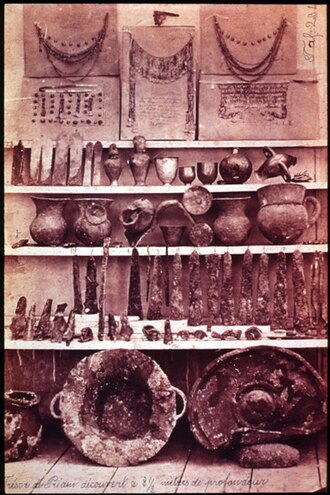
For the century and a half since, digs at Hisarlik have turned up a pair of gold diadems, more than a hundred two-handled wine goblets, and arrowheads and weapons from the Late Bronze Age1. Walls, palaces, pottery, treasure, the debris of a city that burned more than once1. What never surfaced, in all that digging, was anything that made a sound1.
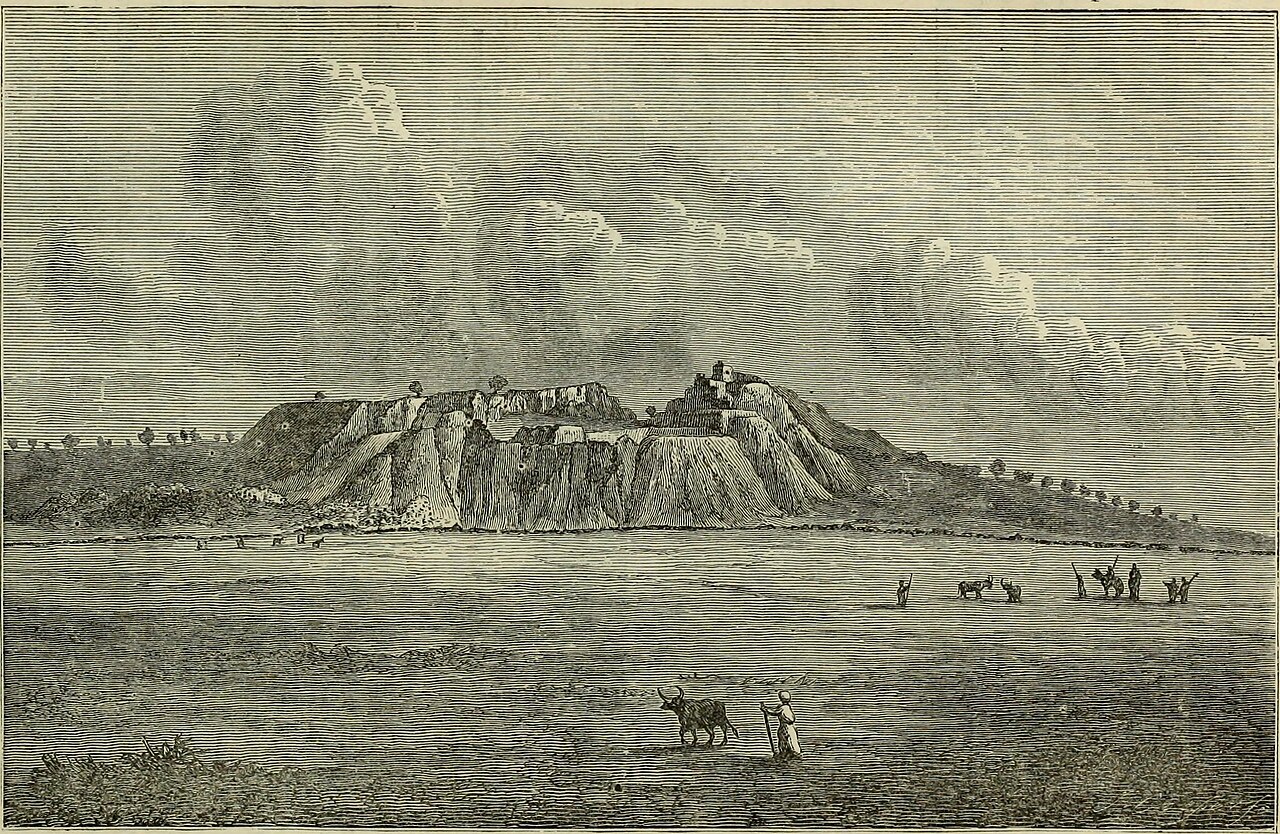
The site itself, known to archaeology as Hisarlik, sits in present-day Canakkale Province in northwestern Turkey and is identified with the Troy of the Iliad and Odyssey3. Frank Calvert, an Englishman who owned land nearby, surveyed the mound in the 1860s and correctly linked it to classical-era Ilion, a conclusion that convinced Schliemann to dig there in the first place3. Excavators since have split the site into nine layers, Troy I through Troy IX, each built on the ruins of the one before, stretching from roughly 3600 B.C. through the Roman period3.
Since 2014, the excavation has been run by a team from Canakkale Onsekiz Mart University led by Rustem Aslan, after Turkey canceled a large batch of excavation permits, including one held by a University of Wisconsin-led international team3. Aslan's group has kept digging through layers that cover roughly four thousand years of occupation, which means a single season can turn up objects separated by over a thousand years from each other.
That is roughly what happened in 2026. Archaeologists working an Archaic-period settlement layer, dated to about 750 to 480 B.C., recovered a fragment of bone that excavators identified as a flute, with its head section still attached to the body4,5. In a different part of the site, near the old city gate of Troy II, the same season's team found the human-shaped head of an idol dating to roughly 4,500 years ago, to the Early Bronze Age4,5.
Turkey's Culture and Tourism Minister, Mehmet Nuri Ersoy, announced both finds on social media on October 22, 2026, and called the bone object the first and only musical instrument recovered in the history of excavation at Troy2,6. Ersoy said the flute offered the first direct archaeological evidence of musical culture at the site, something ancient texts had implied but no physical object had confirmed1,5.
What got announced, though, is narrower than what got reported in the days after. The object is a fragment, not a complete instrument, and the available accounts do not give its full surviving length, the number or spacing of any finger holes, the species of animal the bone came from, or whether it can still produce a pitch1,4,7. Calling it a flute is the identification made by the excavators and relayed by officials, not yet a published study in musical archaeology1,4. Some outlets tied the find directly to Homer's lifetime; others, more carefully, described it only as evidence of music in Troy's Archaic period, since the eighth-century dating is approximate1,8.
Aslan, for his part, noted a coincidence of timing rather than claiming certainty about the flute's connection to epic poetry. Earlier in 2026, composer Ludwig Goransson had used a similar ancient wind instrument, a replica aulos, to create a siren song for Christopher Nolan's film adaptation of the Odyssey1. To find a bone flute that might date to Homer's own lifetime in the same year that the Odyssey loomed large in theaters was, Aslan said, an interesting coincidence from the perspective of excavation history1.
The gap on the map where Schliemann's trench cut through the palace layer is still there, a reminder of what earlier digging destroyed before anyone thought to look for sound rather than gold1. The flute fragment survived instead in the Archaic layer, a small bone object that outlasted a century and a half of excavation without being found, or without being recognized for what it was.
Timeline
- 1870Heinrich Schliemann begins large-scale excavation at Hisarlik, cutting a trench that later archaeologists found had damaged earlier and later layers1,2.
- 2014A Canakkale Onsekiz Mart University team led by Rustem Aslan takes over excavation permits at Troy3.
- 2026During the year's excavation season, archaeologists recover a bone flute fragment from an Archaic-period layer and a 4,500-year-old idol head near the Troy II city gate4,5.
- 2026-10-22Culture and Tourism Minister Mehmet Nuri Ersoy announces the finds, calling the flute the first musical instrument found at Troy2,6.
- 2026-10-23Archaeology and news outlets begin reporting the discovery internationally4,5.
Pictures



Sources
- Crafted From Bone, This 2,800-Year-Old Flute Unearthed in Troy May Have Been Played Around the Time That Homer Composed 'The Iliad' and 'The Odyssey'Smithsonian Magazine · 2026
- A first in 160 years of excavation history at Troy! A 2,800-year-old bone flute has been uneartheden.haberler.com · 2026
- TroyWikipedia
- News - Unusual Objects Unearthed at Troy - Archaeology Magazinearchaeology.org · 2026
- 2,800-year-old bone flute found at Troy, the first in 160 yearshurriyetdailynews.com
- Troy bone flute: first musical instrument found at siteturkeydailynews.com
- 2800-year-old bone flute unearthed in Troyheritagedaily.com
- 2,800-Year-Old Bone Flute Becomes Troy's First Instrument, but Is It Homer's?ancient-origins.net
- Paleolithic fluteWikipedia
- Tras más de 160 años de excavaciones en Troya, aparece su primer instrumento musical: una flauta de hace 2.800 añosmarca.com · 2026
- Encuentran una flauta de hueso de hace 2800 años en Troya, el primer instrumento musical descubierto en las excavaciones de la ciudadlabrujulaverde.com
Researched and written by Lorelet from the sources above. It cites as it goes, but it can still get things wrong, so check the sources for anything that matters.
Report a problem
More featured lorelets
See all
Today · Food
The Turkey Surplus That Became the TV Dinner
A company drowning in frozen birds found an answer on an airline food cart, or so the story goes for fifty years.

Today · Space
Why Is Jupiter's Great Red Spot Actually Red?
Jupiter is built almost entirely of colorless gas, yet its most famous storm glows orange-red. Scientists have spent decades in the lab trying to fig…

Today · Art & Design
The Aztec Labret Whose Golden Tongue Still Moves
A small gold serpent made for a pierced lip somehow ended up with a tongue that flicks side to side. No one alive has ever seen it worn.