
Featured · Nov 2History
The Great Emu War: When Australia Fought Birds and Lost
In 1932, the Australian Army sent machine guns after a wheat-country nuisance, and the nuisance had other plans.

Listen
Read by Wren · 8 min
An Ambush at the Dam
On 4 November 1932, Major G.P.W. Meredith positioned his men near a dam in the Campion district, where more than 1,000 emus were reported heading toward the water1. The soldiers waited until the birds came close before opening fire with a Lewis gun, finally getting the dense, stationary target the weapon was built for1. The gun jammed after twelve birds went down, and the rest of the flock scattered before another shot could be fired1.
No more emus were sighted that day1. For an officer who had seen the Western Front, it was a strange kind of enemy: one that did not hold formation, did not panic in the way infantry panicked, and simply vanished into the scrub the moment the shooting started.
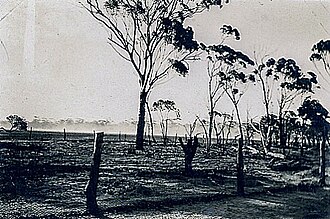
The story of how a Royal Australian Artillery detachment ended up aiming machine guns at birds starts with the land itself. After World War I, the Australian government had settled thousands of ex-servicemen on marginal wheat country in Western Australia's Wheatbelt, encouraging them to expand production even as the Great Depression crushed wheat prices and promised subsidies failed to appear1,5. In 1932, roughly 20,000 emus migrated off their inland breeding grounds and into that same farmland, drawn by cleared fields and water put out for livestock1,5. They ate crops, trampled fields, and broke fences that rabbits then slipped through1,3.
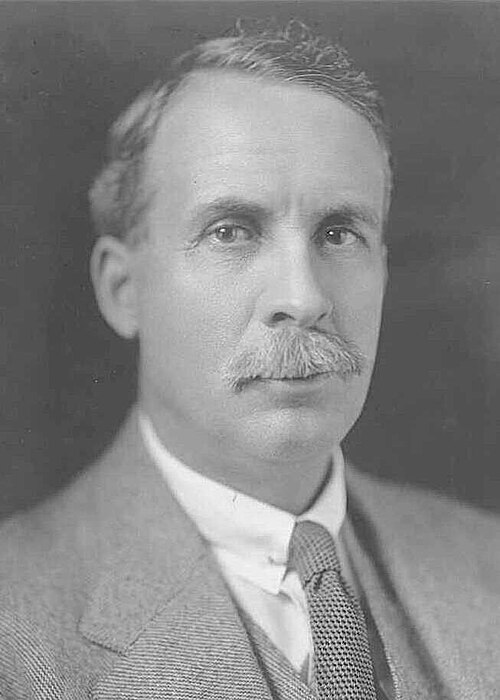
Farmers, many of them veterans who knew exactly what a machine gun could do, sent a deputation to Defence Minister Sir George Pearce asking for Lewis guns1,2. Pearce agreed, reportedly on the grounds that the birds would make good target practice and that their feathers could be used for light-horsemen's hats2. Command went to Major Meredith of the Seventh Heavy Battery, a World War I veteran, who brought two Lewis guns, 10,000 rounds of ammunition, and two soldiers, Sergeant S. McMurray and Gunner J. O'Halloran1,2.
Rain delayed the start, scattering the emus further, and the first engagement did not happen until 2 November 19321,4. Around 50 birds were spotted at Campion, but they were out of range, and when local settlers tried to herd them into an ambush, the flock split into small groups and ran1. A second group that day lost perhaps a dozen birds to gunfire, a thin result against the scale of the problem1.

The soldiers tried mounting a Lewis gun on a truck to chase the birds down, but the truck could not hold steady enough for accurate fire, and during one pursuit it struck a fence, breaking off the attack while the emus got away3,4. Newspapers covered the fiasco, and on 8 November members of the House of Representatives discussed the operation; Pearce withdrew the detachment the same day after reports that only a few emus had died1,6. Meredith, after the withdrawal, compared the birds to Zulus and later remarked that if he commanded a division with the emus' bullet-carrying capacity, 'it would face any army in the world. They can face machine guns with the invulnerability of tanks'2,3,7.

Four days later, under pressure from Western Australia's premier, James Mitchell, Pearce sent Meredith back out, and the operation continued from 13 November to 10 December, with the soldiers working more patiently near water points and fences where emu movements were predictable1,2,4. By early December the guns were reportedly killing about 100 emus a week2. When Meredith was recalled for good, he claimed 986 confirmed kills from 9,860 rounds, a suspiciously tidy ten rounds per bird, plus an additional 2,500 birds he said had died later of their wounds, a figure that cannot be verified1,2.
What got lost in the ridicule is that nobody in the government had actually declared war on anything; 'Emu War' was a label the press attached to what was, on paper, a pest-control request granted to soldier-settlers1. Farmers asked again for military help in 1934, 1938, and 1943, and were refused each time1,2. Instead, Western Australia leaned on an existing bounty system, and it worked: in a single six-month stretch in 1934, farmers claimed 57,034 bounties, far outperforming anything the Lewis guns had managed1. The emus, as one ornithologist's account put it, had split into 'innumerable small units that made use of military equipment uneconomic'1,2, and it was the farmers themselves, paid by the bird rather than armed by the state, who finally thinned the flocks the army could not.
Timeline
- October 1932Soldier-settlers ask Defence Minister Sir George Pearce for machine guns; deployment is arranged1,2.
- 2 November 1932First engagement at Campion; emus scatter and only a handful are killed1.
- 4 November 1932Ambush at a dam; over 1,000 emus approach but the Lewis gun jams after 12 kills1.
- 8 November 1932Parliament debates the operation; Pearce withdraws the troops amid ridicule1,6.
- 13 November 1932Operation resumes under pressure from WA Premier James Mitchell1,2.
- 10 December 1932Meredith's detachment is recalled; he reports 986 emus killed with 9,860 rounds1,2.
- 1934A bounty system yields 57,034 claims in six months, far outperforming the military cull1.
Pictures


Sources
- Emu WarWikipedia
- Pickering Brook Heritage Group- Heritage Sitesold.pickeringbrookheritagegroup.com.au
- Microsoft Word - issue 1romanianjournalofhistoricalstudies.wordpress.com
- From the Archives, 1932: The Great Emu War beginswatoday.com.au
- When Australia Went To War With Its Emusmentalfloss.com · 2016
- Making sure you're not a bot!trove.nla.gov.au
- The Great Emu War: How Flightless Birds Beat the Australian Armyhistoryhit.com
- The Great Emu War: Australia’s 1932 Lesson for Drone-Swarm Warfarewarhistoryonline.com
Researched and written by Lorelet from the sources above. It cites as it goes, but it can still get things wrong, so check the sources for anything that matters.
Report a problem
More featured lorelets
See all
Today · Food
The Turkey Surplus That Became the TV Dinner
A company drowning in frozen birds found an answer on an airline food cart, or so the story goes for fifty years.

Today · Space
Why Is Jupiter's Great Red Spot Actually Red?
Jupiter is built almost entirely of colorless gas, yet its most famous storm glows orange-red. Scientists have spent decades in the lab trying to fig…

Today · Art & Design
The Aztec Labret Whose Golden Tongue Still Moves
A small gold serpent made for a pierced lip somehow ended up with a tongue that flicks side to side. No one alive has ever seen it worn.