
Featured · Nov 4History
The Ultravoyagers Who Linked Hawaii and Easter Island
A 2026 genetic study found that Native Hawaiians and the people of Rapa Nui are each other's closest Polynesian relatives, separated by thousands of miles of open ocean.
Listen
Read by Finch · 8 min
A Long Way From Everything
Somewhere near Easter Island, a group of seafarers loaded their double-hulled catamarans with taro, sweet potato, and bananas, enough to last many weeks at sea, and enough, they hoped, to plant in a new home on the other side of the ocean2. There is no written record of the voyage: no logbook, no name for the captain, no date beyond what scientists can infer centuries later from DNA2.
What happened next left the researchers who eventually studied it stunned. Keolu Fox, an anthropologist at the University of California, San Diego, later admitted that his team checked their results four different ways because they could not believe what the numbers were telling them1.
To understand why, it helps to know what Polynesian navigators were actually capable of. They sailed outrigger and double-hulled canoes across thousands of kilometers of open Pacific using no compass, no sextant, and no written charts6. Instead they tracked the rising and setting points of specific stars, the direction of ocean swells, wind patterns, cloud formations hanging over unseen islands, and the flight paths of birds like the sooty tern and the Pacific golden plover6,7,8. Navigators held guild status on their home islands, and their methods are still taught today on islands like Taumako in the Solomons6.
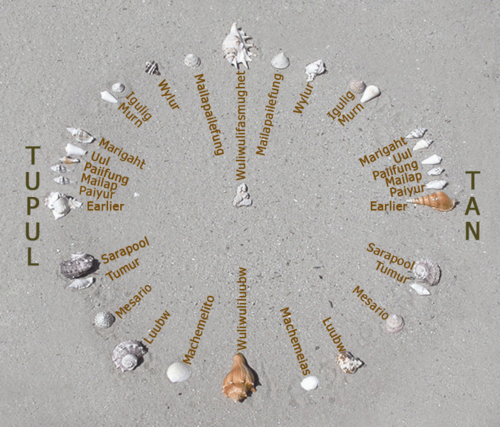
That system carried Polynesian settlers eastward in stages, not in one leap. Archaeology shows an initial settlement of the Cook Islands before 1000 CE, then expansion into the Society Islands and Marquesas, with radiocarbon dates placing the Society Islands' settlement around 1025 to 1120 CE6,8. From there, a 2021 study by some of the same researchers traced a path from Samoa through the Cook Islands to the Society Islands and Mangareva, reaching Easter Island around 12101. Rapa Nui sits so far from anywhere else that its own population, by the time European ships arrived, no longer had seaworthy canoes at all; Jacob Roggeveen found no evidence of ongoing navigation when he landed there6.
The 2026 study picks the thread up from there. Researchers led by Alexander Ioannidis of Stanford, working with Fox and others, analyzed the complete genomes of 1,050 Polynesian people, including 317 Native Hawaiians and 12 Easter Islanders, comparing the length of shared chromosomal segments to estimate how recently different island populations shared a common ancestor1. They reconstructed thousands of family trees from that data. In 61 percent of them, Hawaii and Rapa Nui paired together as closest relatives, ahead of every other Polynesian population1.

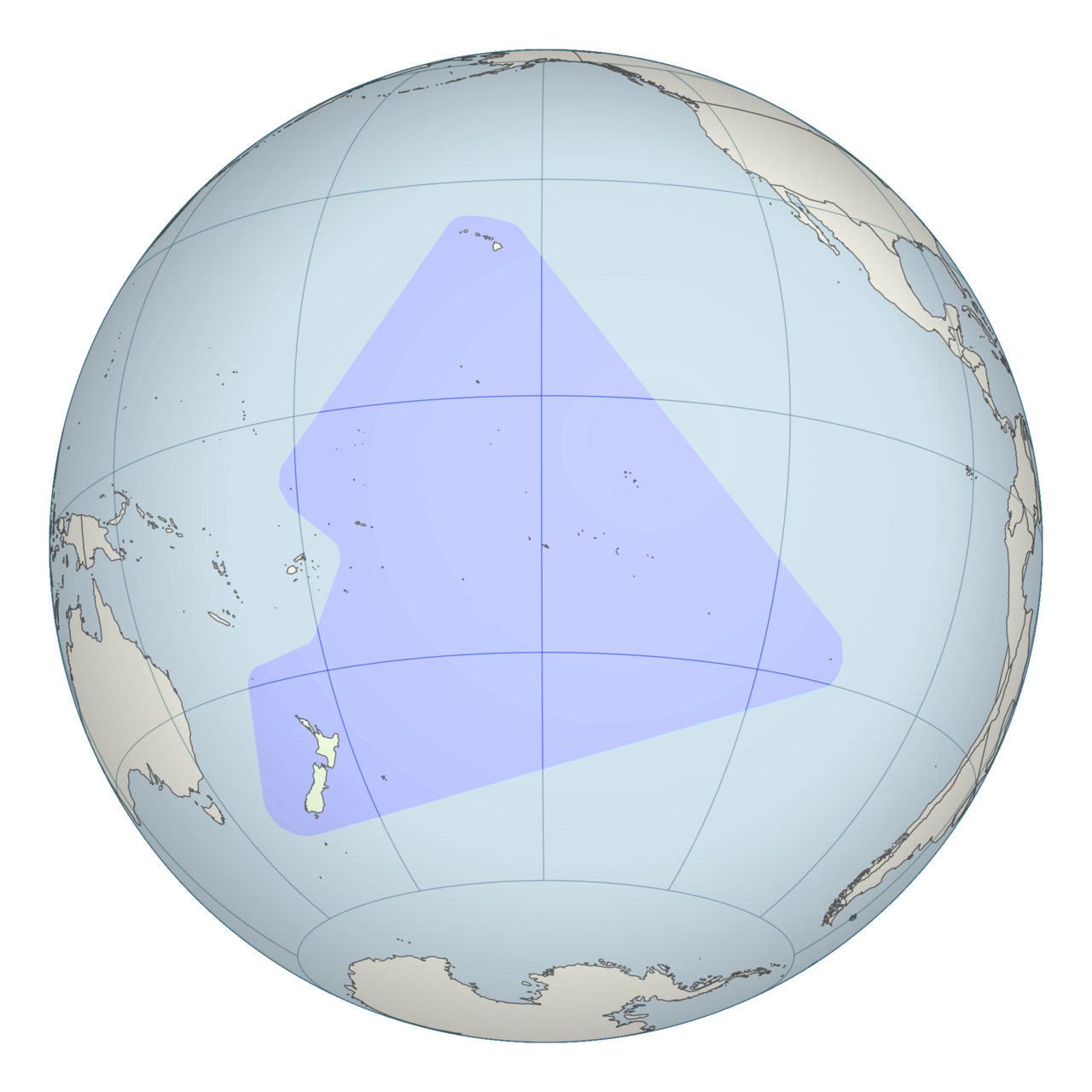
That is where the story gets more complicated than a single heroic crossing. The deeper ancestral population behind both islands appears to sit near Mangareva, in French Polynesia's Gambier Islands, roughly 5,530 kilometers from Hawaii and about 2,600 kilometers west of Rapa Nui3. People from that Mangarevan-linked population reached Rapa Nui in the early 1200s after a voyage of more than 2,400 kilometers, and a subset of that same lineage later moved on toward Hawaii4,5. Patrick Kirch, an archaeologist at the University of Hawaii at Manoa who was not part of the study, called the overlap between the genetic and archaeological evidence reassuring on its own terms: independent methods pointing to the same answer1.
The distance between Hawaii and Rapa Nui, around 7,100 to 7,200 kilometers or 4,400 to 4,500 miles, is comparable to the distance between San Francisco and Lima4,3. Whether that distance was crossed in one continuous voyage or through a longer chain of movements through Mangareva remains an open question the genetic data alone cannot settle4,9. What the data does show is that these were not isolated, static populations drifting apart. Something kept them connected, even after they ended up on opposite corners of the Polynesian Triangle, thousands of miles and, by some reckonings, centuries apart1,3.
The same bottlenecks created by generations of island-hopping left a mark that reaches into the present. Three genetic variants linked to conditions like dislocated eye lenses, vision loss, and kidney failure now appear in 2 to 4 percent of the Eastern Polynesian populations studied, a frequency researchers say justifies dedicated genetic screening1,2. Cosimo Posth, a population geneticist at the University of Tubingen who was not involved in the study, said the bottlenecks in these populations are the strongest ever reported, stronger even than those documented among Ashkenazi Jews1. The food stocked on those canoes all those centuries ago was meant to start a new life. It also, without anyone intending it, wrote itself into the health of their descendants today.
How Wayfinding Actually Worked
Polynesian navigators memorized a specific sequence of stars for each route, switching to a new guide star once the first climbed too high in the sky, and used stellar elevation to judge their latitude6. Harold Gatty, who wrote a wartime survival guide for shipwrecked sailors, documented how voyages between specific islands tracked the migratory paths of particular birds, such as the long-tailed cuckoo on routes toward New Zealand6.
Close to land, navigators read different signs: cloud formations, the reflection of shallow water on the undersides of clouds, and the behavior of land-based birds6. Some researchers have also documented an unexplained light phenomenon called te lapa, described as bursts of light near the water's surface that Polynesian navigators reportedly used to reorient at sea6.
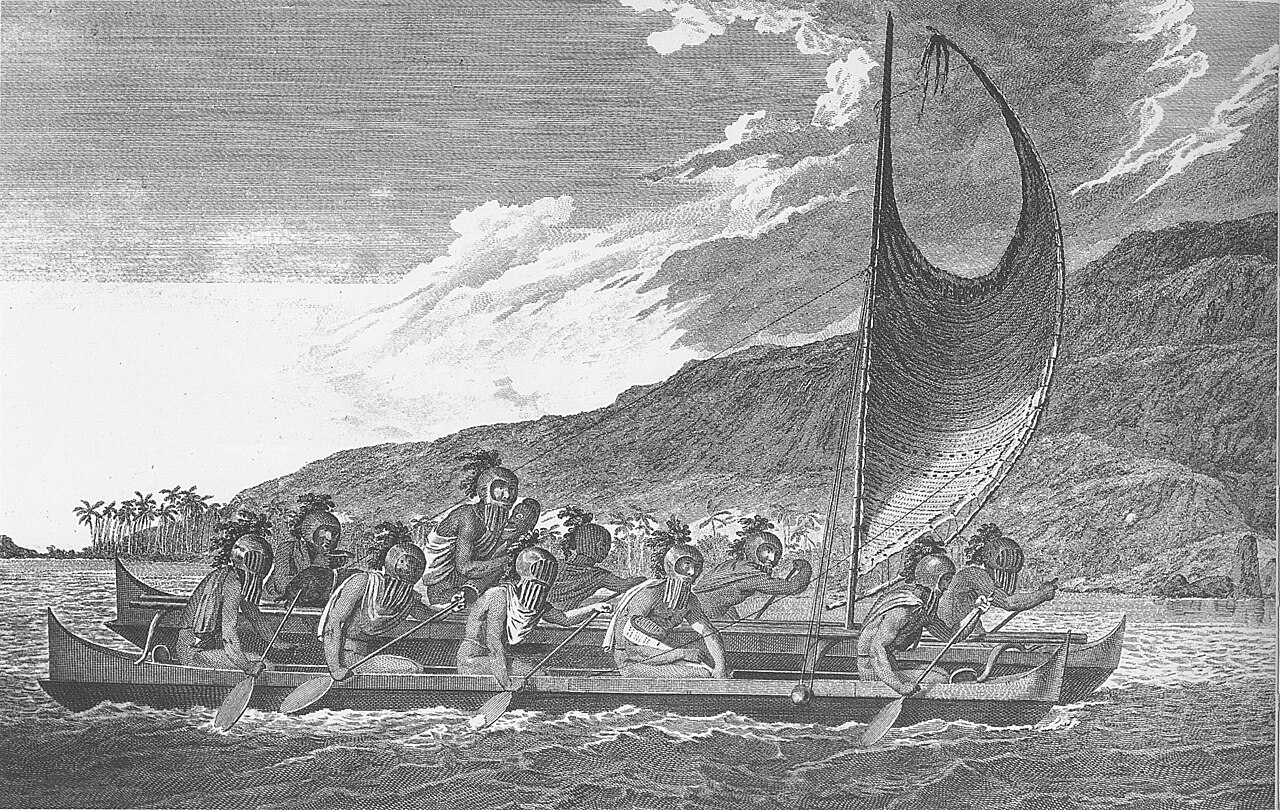
This knowledge was oral, not written, and it survives today largely through revival efforts like the voyaging canoe Hokulea, which has sailed using traditional wayfinding methods without modern instruments10.
The Distances Involved
- 4,400 to 4,500 miles: the straight-line distance between Hawaii and Rapa Nui, comparable to San Francisco to Lima4,3
- 1,050: modern Polynesian genomes analyzed in the 2026 study, including 317 Native Hawaiians and 12 Easter Islanders1
- 61 percent: the share of reconstructed family trees in which Hawaii and Rapa Nui paired as closest relatives1
- 5,530 kilometers: the approximate distance from Mangareva, the likely deeper ancestral homeland, to Hawaii3
- Early 1200s: when settlers are believed to have reached Rapa Nui from the Mangareva region, after a voyage of more than 2,400 kilometers4,5
- 2 to 4 percent: the frequency of certain deleterious genetic variants, linked to vision and kidney conditions, found among Eastern Polynesian populations studied1,2
What's Still Not Settled
The genetic evidence shows ancestry and relatedness between populations; it does not identify a named canoe, a specific navigator, or a precisely dated expedition1. Reports describe the proposed Hawaii-bound journey as emerging from a population connected to Rapa Nui and Mangareva, but they stop short of confirming it was a single, uninterrupted 4,400-mile voyage rather than a longer chain of movements4,9.
Dates for Hawaii's initial settlement also diverge across sources. Some traditional and heritage accounts place first settlement around 400 CE, with origins linked to the Cook Islands, Tahiti-nui, or a homeland called Hiva11. Radiocarbon-based chronologies cited elsewhere instead put the settlement of Hawaii, Rapa Nui, and New Zealand broadly between 1190 and 1290 CE, following settlement of the Society Islands around 1025 to 1120 CE8. The Wikipedia entry on ancient Hawaiian population likewise uses a settlement date near 1100 to 1150 CE, which undercuts the older model of a 500 CE arrival and steady population doubling every 110 years that once supported population estimates near one million by the time Captain Cook arrived12. No study in the available material resolves these competing chronologies into a single agreed timeline.
Timeline
- before 1000 CESettlement of the Cook Islands, early staging ground for eastward Polynesian expansion6.
- c. 1025-1120 CERadiocarbon dates place settlement of the Society Islands in this range8.
- c. 1210 CEResearchers trace settlement reaching Easter Island via Samoa, the Cook Islands, the Society Islands, and Mangareva1.
- early 1200sGenetic reconstruction places arrival of settlers on Rapa Nui, following a voyage of over 2,400 kilometers from Mangareva4,5.
- c. 1190-1290 CEBroader radiocarbon chronology for settlement of Hawaii, Rapa Nui, and New Zealand8.
- 2026-10-08Study published in Science reporting that Native Hawaiians' closest Polynesian relatives are the people of Rapa Nui1,13.
Pictures


Sources
- Native Hawaiians Descend From a Group of 'Ultravoyagers' Who Sailed About 4,400 Miles From Easter Island, Genetic Study SuggestsSmithsonian Magazine · 2026
- New genetic study reveals surprising origin of Native Hawaiiansmed.stanford.edu · 2026
- Native Hawaiians and Easter Islanders came from same ...livescience.com
- Genetic study shows seafarers from Easter Island settled HawaiiReuters
- The Surprising Origins of Native Hawaiians - Nautilusnautil.us · 2026
- Polynesian navigationWikipedia
- Wayfinders : Polynesian History and Origin - PBSpbs.org
- How did Polynesians find Hawaii and New Zealand without a compass?ourearthshistory.com
- Native Hawaiians Share 'Ultravoyager' Roots With Easter Island, DNA Study Findswithinnigeria.com
- Guiding Us Home: Traditional Hawaiian Wayfinding Aboard Hōkūleʻafolklife.si.edu
- Notes on the Discovery and Settlement of Polynesiaarchive.hokulea.com
- Ancient Hawaiian populationWikipedia
- Native Hawaiians' Closest Polynesian Relatives Live on ...natureworldnews.com
Researched and written by Lorelet from the sources above. It cites as it goes, but it can still get things wrong, so check the sources for anything that matters.
Report a problem
More featured lorelets
See all
Today · Food
The Turkey Surplus That Became the TV Dinner
A company drowning in frozen birds found an answer on an airline food cart, or so the story goes for fifty years.

Today · Space
Why Is Jupiter's Great Red Spot Actually Red?
Jupiter is built almost entirely of colorless gas, yet its most famous storm glows orange-red. Scientists have spent decades in the lab trying to fig…

Today · Art & Design
The Aztec Labret Whose Golden Tongue Still Moves
A small gold serpent made for a pierced lip somehow ended up with a tongue that flicks side to side. No one alive has ever seen it worn.