Featured · Sep 29Film & TV
The Night Disney Showed Critics an Unfinished Cartoon
In September 1991, Disney took a half-finished Beauty and the Beast to the New York Film Festival, pencil tests and all, betting that hardened cinephiles would see genius in the gaps.

Listen
Read by Wren · 7 min
A Cartoon for the Art-House Crowd
On September 29, 1991, Disney did something no studio had really tried before: it walked an unfinished cartoon into Alice Tully Hall and dared the New York Film Festival crowd to love it anyway. The festival's audience skewed toward serious cinephiles and critics, not families looking for a matinee, and the print they saw was frankly a mess by conventional standards. Roughly a third of the film existed only as pencil tests, storyboards, and rough sketches rather than finished, colored animation2.
The American Film Institute's catalog puts the finished portion at around 70 percent, which lines up with the one-third-unfinished figure cited by the Film Society of Lincoln Center1,2. Other accounts, including later retrospectives, put completion closer to 80 percent5. The discrepancy probably comes down to how you define "finished"—layout, animation, cleanup, or final color—but the underlying point everyone agrees on is that audiences were watching a film visibly under construction.
That was the gamble. Disney had spent the late 1980s clawing its way back from a rough patch, and The Little Mermaid (1989) and The Rescuers Down Under (1990) had reestablished the studio as a serious player in animation again6. Beauty and the Beast, directed by Gary Trousdale and Kirk Wise and shepherded by studio chief Jeffrey Katzenberg, was meant to push further, treating animation not as kid stuff but as a legitimate form of cinema3,1.
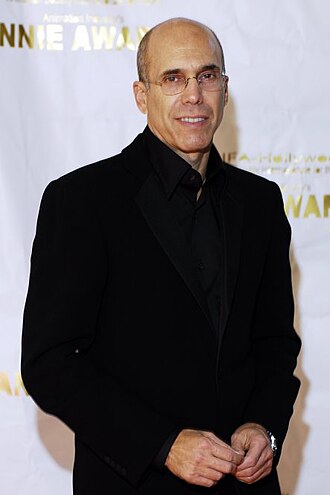
Instead of hiding the unfinished sequences, Disney let the seams show, presenting them as a demonstration of craft rather than a confession of delay. It worked. The New York Times review the same day framed the screening within the festival's broader interest in the mechanics of filmmaking, describing the presentation as fragmented but revealing7. When the lights came up, the audience gave the film a standing ovation, according to both the AFI catalog and the Film Society of Lincoln Center's own account of the night1,2. Wendy Keys, a former NYFF selection committee member, later recalled it less as applause and more as "roars of happiness," with outbursts recurring throughout the screening8.
The reaction mattered because it reframed the unfinished footage. Pencil tests and storyboards, instead of looking like evidence of a studio behind schedule, became a kind of guided tour through how an animated feature actually gets built—layout to line test to color. Disney would repeat variations on this format twice more before the film's wide release: for Academy members at the newly restored El Capitan Theatre on October 19, and at a January 1992 LACMA benefit screening at Glen Glenn Sound Studios1. By the time the finished film opened on November 22, 1991, critics who'd seen the rough cut were already primed to talk it up3.
A Film Built Around a Dying Man's Songs
The songs that carried that unfinished screening came from Howard Ashman and Alan Menken, the team behind The Little Mermaid's score. Ashman was seriously ill with AIDS throughout the production and died on March 14, 1991, six months before the New York screening and eight months before the film reached theaters3. The finished film is dedicated to him.
The story itself borrowed less from Disney's own back catalog than from Jean Cocteau's 1946 La Belle et la Bête, whose enchanted-castle atmosphere shaped the design of Beauty and the Beast's talking furniture and moody sets9. Screenwriter Linda Woolverton's finished script, delivered before storyboarding began, was itself a departure for the studio, which had typically storyboarded its way to a screenplay rather than the other way around3.
Technically, the film also leaned on Disney's Computer Animation Production System, used here for the first time in a fully realized set piece: the ballroom dance, where a computer-generated room glides beneath hand-drawn characters3. That sequence, still unfinished or partly finished at the NYFF screening, was one of the elements audiences would have seen in a rawer form that September night.
Who Was in the Room
- Howard Ashman: Lyricist and producer whose songs with Menken defined the film's tone; died in March 1991 before its release3.
- Alan Menken: Composer who wrote the score and songs with Ashman; won two Oscars for the finished film3.
- Gary Trousdale and Kirk Wise: Co-directors of the film3.
- Don Hahn: Producer who oversaw the production and its unusual festival rollout4.
- Jeffrey Katzenberg: Disney studio chairman who pushed the animation revival and greenlit turning the project into a musical3,6.
- Wendy Keys: Former NYFF selection committee member who later described the audience's reaction as "roars of happiness"8.
By the Numbers
- September 29, 1991: Date of the Work in Progress screening at Alice Tully Hall during the 29th New York Film Festival1,2.
- ~70-80%: Estimated share of the film that was finished animation at the time of screening, depending on the source1,5.
- November 22, 1991: U.S. wide theatrical release date3.
- 6: Academy Award nominations, including the first Best Picture nomination for an animated film3.
- 2: Oscars won—Best Original Score and Best Original Song—at the March 30, 1992 ceremony3.
- $331 million: Initial worldwide gross; later reissues pushed the all-time total past $450 million3.
What Gets Exaggerated in the Retelling
The core claim—an unfinished print, a festival crowd, a standing ovation—is solid, backed by the AFI catalog and the Film Society of Lincoln Center's own records1,2. What varies is the flavor of the details people add later.
How much of the film was actually done ranges from roughly 70 percent in AFI's account to around 80 percent in some retrospective pieces, likely a matter of how "complete" gets defined across layout, animation, and color stages1,5. And while the standing ovation is well documented, colorful descriptions of a night-long uproar or continuous cheering come mostly from decades-later recollections rather than any contemporaneous count8,5. That doesn't make them false, just harder to verify than the plain fact of the ovation itself.
Timeline
- 1989-1990The Little Mermaid and The Rescuers Down Under reestablish Disney's feature-animation studio commercially and critically6.
- 1991-03-14Howard Ashman dies of AIDS-related complications, months before the film's release3.
- 1991-09-29Unfinished Work in Progress version screens at Alice Tully Hall during the 29th New York Film Festival, receiving a standing ovation1,2.
- 1991-10-19Disney shows the same work-in-progress cut to Academy members at the El Capitan Theatre1.
- 1991-11-22Beauty and the Beast opens wide in U.S. theaters3.
- 1992-01Work-in-progress print screens again at a LACMA benefit at Glen Glenn Sound Studios1.
- 1992-03-30At the 64th Academy Awards, the film wins Best Original Score and Best Original Song and becomes the first animated Best Picture nominee3.
Pictures


Sources
- AFI|Catalogcatalog.afi.com
- FSLC and Disney announce a 25th anniversary screening of Beauty and the Beast on September 18 | Film at Lincoln Centerfilmlinc.org
- Beauty and the Beast (1991 film)Wikipedia
- 7 Secrets from the Cast of Beauty and the Beastvanityfair.com · 2016
- Inside the 25th Anniversary Screening of Beauty and the Beastplaybill.com
- Disney RenaissanceWikipedia
- Review/Critic's Notebook; The Inner Workings Of the Animator's ArtThe New York Times
- ‘Beauty and the Beast’ Returns to the Film Society of Lincoln Center for 25th Anniversary Celebrationanimationfascination.wordpress.com · 2016
- Beauty and the Beast | Reelviews Movie Reviewsreelviews.net
- 25th Anniversary Screening of 'Beauty and the Beast'filmlinc.org
Researched and written by Lorelet from the sources above. It cites as it goes, but it can still get things wrong, so check the sources for anything that matters.
Report a problem
More featured lorelets
See all
Today · Film & TV
Why Nick Jr. Aired the Same Blue's Clues Episode All Week
A preschool show about a cartoon dog and her pawprints became a quiet experiment in how children actually learn from television — and the data said:…
Today · Crime
Liquid Gold: The Black Market for Used Cooking Oil
Green energy policy turned restaurant fryer grease into a commodity worth stealing, and a quiet corner of American crime grew up around it.

Today · Business
The Terminal: How a Firing Built Wall Street's Addiction
Michael Bloomberg got pushed out of Salomon Brothers with a check for about $10 million. He turned it into a locked-box machine that trading floors s…