Featured · TodaySpace
The Fake Moon and Mars Rising Beside NASA Houston
A Texas hangar is filling with ten tons of volcanic rock to look like another world. It isn't NASA building it.
Listen
Read by Wren · 7 min
Ten Tons of Rock by Rail
More than ten tons of dark volcanic basalt arrived by train from Uvalde County, Texas, bound for a hangar at NASA's Exploration Park outside Houston5. Inside, the plan was to spread it into a layer about 16 inches thick across part of a 2.5-acre space, then run an all-electric articulated front-end loader over it to carve craters, swells, and inclines meant to pass for the lunar surface5. A tunnel nicknamed the "Wormhole" was built to connect that Moon simulation to a separate, Mars-themed landscape on the other side5.
None of this belongs to NASA. The rock, the loader, the tunnel, all of it sits on land next to Johnson Space Center but answers to Texas A&M University, which is paying for it1,5.
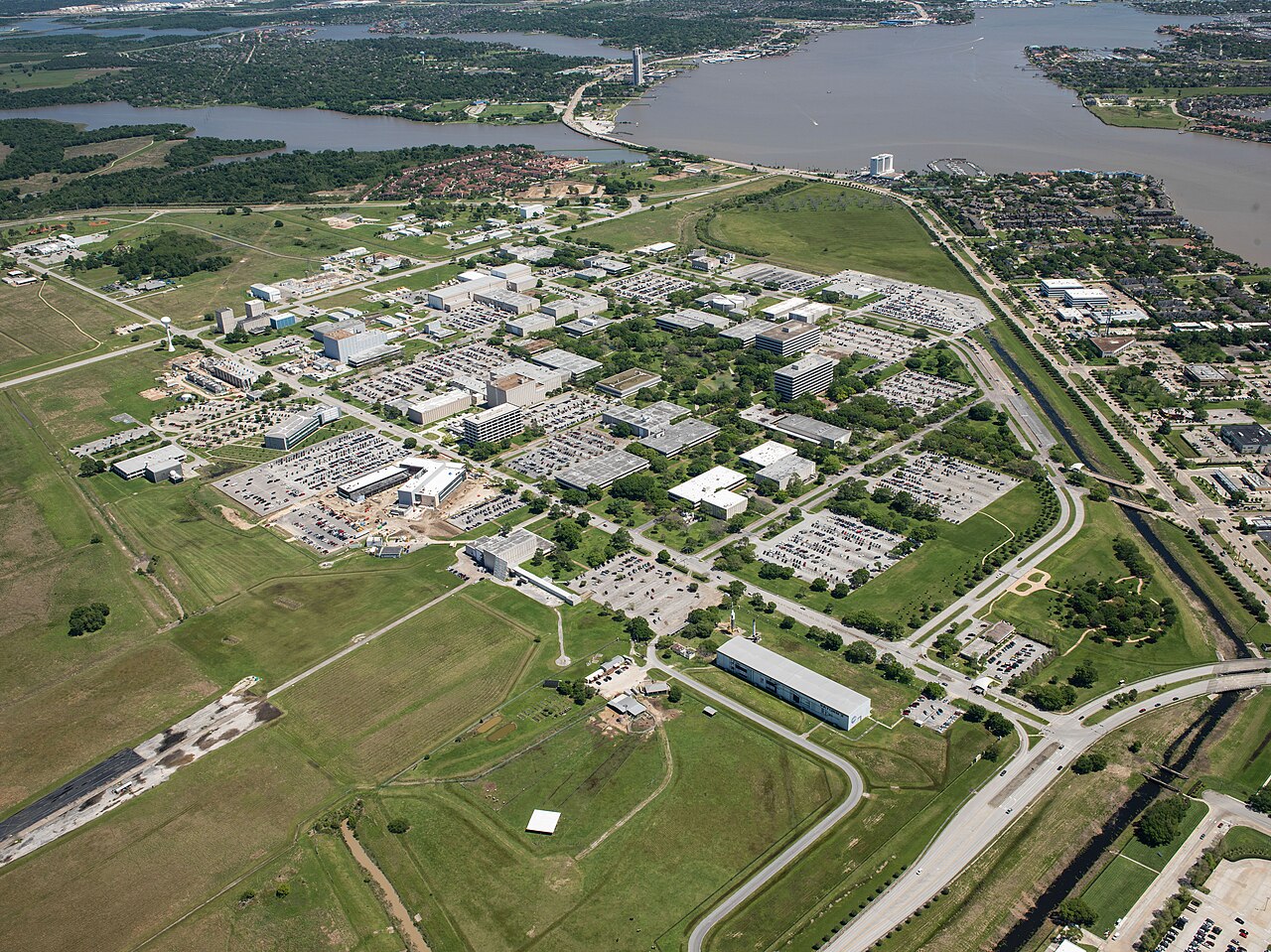
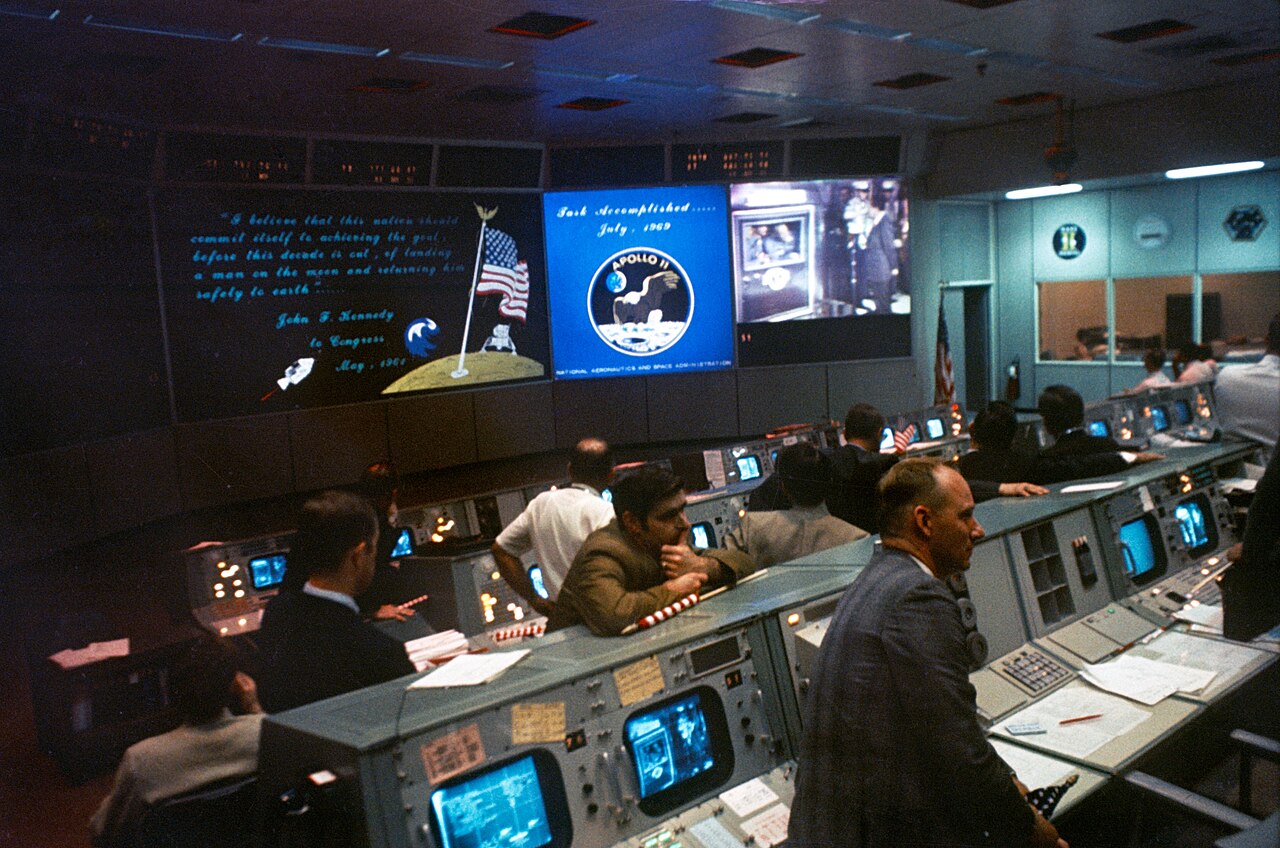
To understand why a university is building a fake planet next door to the people who actually run human spaceflight, it helps to remember what Houston already is. Johnson Space Center has been NASA's home for human spaceflight since 1963, when the agency moved its Space Task Group from Virginia to land donated near Clear Lake10. Mission Control there has directed every crewed NASA flight since Gemini 4, earning Houston its nickname as the place astronauts call home mid-flight10.
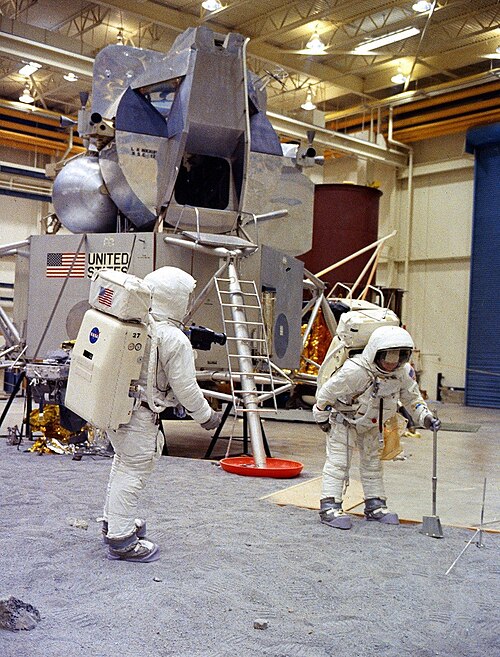
That legacy already comes with its own testing infrastructure, just a much smaller version. At JSC's Energy Systems Test Area, in a building called B351, NASA runs the Lunar Development and Test Facility: a dust containment lab, a 3-foot cube vacuum chamber, a 15-foot "dirty" thermal vacuum chamber, and a drill tube that can be chilled to simulate frozen lunar material6,7,8,9. Engineers there expose spacesuit joints, rovers, and tools to lunar regolith simulant to see what the Moon's sharp, clingy dust does to hardware before it ever leaves Earth6,8.
That work is careful but small, measured in feet, not acres. The NASA chambers can hold a drill tube or a test bed roughly 48 by 96 inches, enough to study a mechanism, not enough to rehearse a mission with full-size rovers and crews walking a landscape6,7. The gap between what NASA's chambers can do and what a full mission rehearsal requires is what Texas A&M's planners set out to fill, at a scale no chamber could match: 234,000 square feet of indoor terrain inside a 400,000-square-foot complex, built on a 32-acre site that makes the university the first tenant of the 240-acre Exploration Park development1,2,3,4.
The project's price tag, about $200 million, and its timeline reflect that ambition1,3. Construction began in 2024, moved toward the indoor landscapes by early 2026, and by April 2026 had brought in another tenant: the Seattle company Interlune, awarded roughly $4.84 million by the Texas Space Commission in September 2025 to build a lunar-regolith-simulant plant on the same campus11,4. By October 2026, Texas Monthly's on-site reporting found a grand opening planned for late that November, with Ambrose, the institute's leader, describing a facility meant to let rovers, spacesuits, and vehicles be tested at scales NASA's own chambers were never built for5.
As of this briefing, the basalt is still being shaped into a landscape no one has driven a mission rehearsal across yet. The test for whether a man-made Moon beside Houston's real spaceport actually keeps the region ahead of companies building their own hardware elsewhere is a test that hasn't happened.
Scale of the New Complex
- $200 million: estimated cost of the Texas A&M Space Institute1,3
- 32 acres: size of the institute's site inside Exploration Park1,3
- 400,000 square feet: total planned size of the complex1
- 234,000 square feet: combined indoor Moon and Mars test-bed area2,4
- 10+ tons: volcanic basalt hauled by train from Uvalde County for the lunar terrain5
- 16 inches: intended thickness of the simulated lunar rock layer5
- 2.5 acres: size of the hangar holding part of the Moon simulation5
- 15 feet: diameter of NASA's existing "dirty" thermal vacuum chamber at JSC6,7
- 3 meters: depth of NASA's chillable regolith drill tube7
- $4.84 million: Texas Space Commission award to Interlune for a lunar-regolith-simulant facility near JSC11
Who's Involved
- Texas A&M University: building and funding the 400,000-square-foot Space Institute, including the Moon and Mars indoor terrain, beside Johnson Space Center1,5.
- NASA Johnson Space Center: operates its own, older and smaller lunar dust and regolith test facilities at Building B351, and anchors Houston's human-spaceflight operations10,6,8,9.
- Interlune: Seattle-based company awarded about $4.84 million by the Texas Space Commission to build a lunar-regolith-simulant plant at the same campus11,4.
- Ambrose: leader at the Texas A&M Space Institute, quoted by Texas Monthly describing the facility's capabilities5.
- Mike Salinas: NASA Propulsion and Power Division branch deputy chief, quoted on the purpose of JSC's existing Lunar Development and Test Facility8.
What the Evidence Does and Doesn't Show
The sources document real infrastructure: a large university-built complex under construction next to NASA's Houston campus, and smaller, already-operating NASA test chambers nearby6,1,5,9. They establish costs, square footage, materials, and a construction timeline running toward a planned late-November 2026 opening1,5,3.
What the sources do not establish is that this facility will guarantee Houston's continued leadership in human spaceflight as commercial companies expand their own capabilities. That claim, framed around competitive "dominance," is a strategic interpretation rather than a documented fact. No source in this dossier measures the Texas A&M institute's effect on where companies choose to locate testing, hiring, or missions.
Similarly, while NASA's own facilities and the university's new complex sit on adjoining land and serve related purposes, they are separate projects with separate funding and management, and the sources don't describe a formal merger of the two efforts beyond physical proximity and shared interest from companies like Interlune1,11,4.
Timeline
- 1961NASA selects Houston as the site for its new human-spaceflight center, later Johnson Space Center10.
- 2023-04-24NASA publishes a technical description of its Lunar Development and Test Facility at JSC Building B3519.
- 2024NASA describes its dust-testing and simulant capabilities, including the 3-foot and 15-foot chambers6,7.
- 2024Construction begins on the Texas A&M Space Institute site beside JSC3.
- 2025-09-02Texas Space Commission awards Interlune about $4.84 million to build a lunar-regolith-simulant facility near JSC11.
- 2026-03-04Reporting identifies the 234,000-square-foot Moon and Mars test beds as the next construction stage2.
- 2026-04-09Greater Houston Partnership reports construction shifting to the indoor Moon and Mars landscapes and Interlune's planned Lunar Regolith Simulant Center4.
- 2026-06-01Texas A&M describes the planned 400,000-square-foot institute, calling its simulations the world's largest indoor lunar and Martian surfaces1.
- 2026-10-20Texas Monthly publishes an on-site account of basalt from Uvalde County, the hangar, the Wormhole tunnel, and the planned late-November opening5.
Pictures


Sources
- The Texas A&M System: Building to Lead in Spacenews.tamus.edu
- Texas A&M Space Institute reaches construction milestone as NASA ...khou.com
- Texas A&M's $200 Million Space Institute - Austin County News Onlineaustincountynewsonline.com
- Texas A&M Space Institute Tops Out, Attracts New Tenantshouston.org
- An Exclusive First Look at Texas A&M's New $200 Million Space InstituteTexas Monthly
- Dust - NASANASA · 2024
- In-Situ Resource Utilization - NASANASA · 2024
- NASA’s Lunar Development and Test Facility Prepares Artemis Hardware for Moon - NASANASA · 2026
- Lunar Development & Test Facility, JSC B351NASA
- Johnson Space CenterWikipedia
- Texas Space Commission awards $4.84M for Interlune ... - UPIupi.com
Researched and written by Lorelet from the sources above. It cites as it goes, but it can still get things wrong, so check the sources for anything that matters.
Report a problem
More featured lorelets
See all
Today · Art & Design
Frank Lloyd Wright's War with New York City
A museum built to house art that didn't look like anything else took sixteen years, institutional turmoil, and a small war with city hall before anyo…

Today · Music
The Afternoon Tom Petty Waited Under a Pine Tree
A Florida boy with nothing to do got in his aunt's car to go watch a movie being filmed.

Oct 20 · Film & TV
The Princess Diana Pay-Per-View Seance
In March 2003, two British psychics claimed to put viewers in touch with a dead princess. What they were allowed to broadcast depended entirely on wh…