
Featured · Nov 13Gaming
The Elder Scrolls Game Nobody Could Play Got a Second Life
In 2004, Bethesda promised a full Elder Scrolls RPG on a phone shaped like a taco. Two decades later, someone finally finished the job.

Listen
Read by Wren · 7 min
The Promise and the Phone
In May 2004, Todd Howard, executive producer of The Elder Scrolls, told IGN he hadn't expected to offer "a full 3D, first-person RPG with great action and environments so soon," crediting Nokia's new handheld for delivering, in his words, "the best 3D experience we've ever seen on a mobile device"8. The game was Shadowkey, announced days earlier as part of a partnership between Bethesda, Vir2L Studios, TKO Software, and Nokia9.
That confidence did not entirely survive contact with the hardware it was built for.
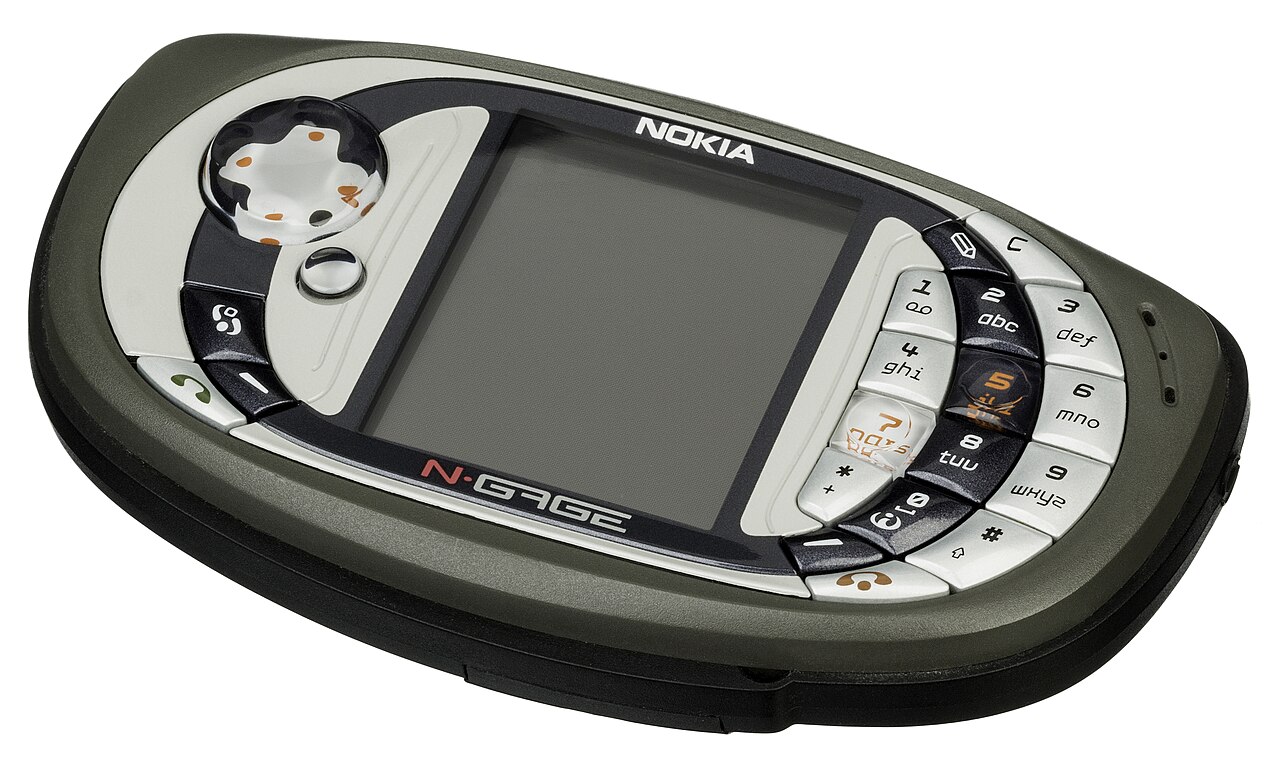
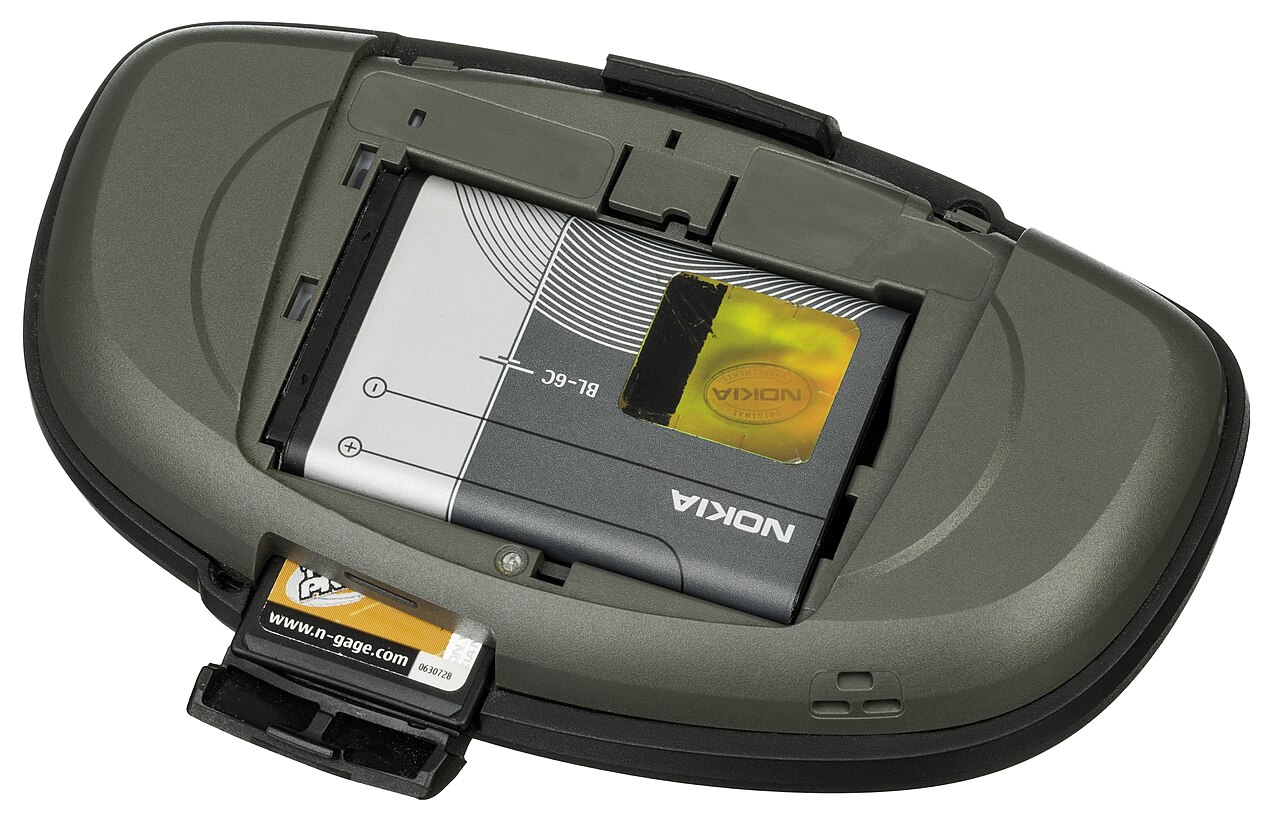
The device in question was the N-Gage, Nokia's attempt to merge a GSM phone with a handheld game system, launched in October 2003 at a reported development cost north of $100 million3. It became best known for an unfortunate design quirk: to make a call, you had to hold the whole slab sideways against your face, a posture that earned it comparisons to a taco and made it an easy punchline3,4. Despite a tour across Europe and partnerships with major publishers like EA and Sega, the N-Gage was outsold by the Game Boy Advance 100 to 1 in its first weeks in the US, and Nokia admitted in November 2005 that it had sold only a third of expectations before pulling it from Western markets3.
Shadowkey itself shipped into that mess on November 9, 2004, after a fifteen-person team built it in about nine months, working closely with the original Elder Scrolls developers to keep it authentic to the setting1. Players chose from nine classes and eight races and set out to stop a shadow-mage from binding a monster called the Umbra'Keth using seven magical Star Teeth, a plot drawn straight from the series' fantasy of ancient empires and feuding sorcerers1,10. Critics were not unkind so much as resigned: GameSpot's review called the combat and controls "crippled" by the N-Gage's limits, dismissed the story as unremarkable, but praised the cooperative multiplayer and the game's use of Morrowind's soundtrack1. Metacritic settled the game at a 591.
When the N-Gage died in 2005, Shadowkey effectively died with it, locked to a platform few people owned and fewer still kept3,4. For twenty years it existed mostly as a trivia answer, the kind of thing a certain type of fan reads about on a wiki at 1 a.m.
That changed in late October 2026, when a developer named Dan Whelan got a playable build of the game running on PC, not through an emulator, but by reading Shadowkey's original ARM program and rebuilding its behavior piece by piece, then connecting that new code to the original game's data, scripts, and quests4,6. It was reverse engineering in the most literal sense: take the compiled machine code the N-Gage ran and reconstruct, line by line, what it must have been doing.
What Whelan said next complicated the story. Asked in his project's FAQ how the port was made, he answered plainly: "I used AI to assist with coding and building the engine, and with debugging." He added that most of the upgraded artwork came from "AI image generation combined with Photoshop and some manual sprite editing"4. Polygon flagged the same disclosure from the project's trailer description, noting it would likely be "a deal-breaker for many" given ongoing arguments over generative AI's costs to labor and the environment11.

What shipped on November 11 and 12, 2026, was nonetheless concrete: native Windows, Mac, and Android builds, with widescreen presentation, controller support, upscaled artwork, a rewritten PC graphics engine, bloom lighting, and two modes, a "Classic" setting that preserves the original feel and a "Modern" one that adds stamina-based sprinting, stealth, fall damage, fast travel, and ragdoll physics4,12. The install process is almost comically plain: download the archive, run Shadowkey.exe, point it at a folder containing your own original N-Gage files (acquired however you acquired them), and press Play5,7. The game still won't run without Bethesda's original data; the restoration rebuilds the engine, not the copyright.
Twenty-two years after Howard promised the best 3D mobile RPG anyone had seen, Shadowkey finally got hardware that could show what that promise looked like. It just took a fan, a decompiled binary, and a piece of software neither Howard nor Nokia could have imagined sitting at the keyboard in 2004.
Who's Who
- Dan Whelan: the developer behind the 2026 fan restoration, publicly released as Shadowkey Reforged (also documented under the project name Shadowkey Remastered); disclosed using AI for engine coding, debugging, and much of the new artwork4,5.
- Vir2L Studios: the original 2004 developer of The Elder Scrolls Travels: Shadowkey for Nokia's N-Gage, working with TKO Software and Bethesda1,8.
- Todd Howard: Bethesda's executive producer for The Elder Scrolls at the time, who publicly championed Shadowkey's ambitions for the N-Gage platform in 20048.
- Nokia: manufacturer and publisher partner for the N-Gage hardware that Shadowkey was exclusive to, and the company that discontinued the platform in 20053,9.
By the Numbers
- 2004: year Shadowkey was announced (May 3) and released (November 9)8,9,2.
- 9 months: roughly how long the fifteen-person original development team spent building the game1.
- 59: Shadowkey's Metacritic score on release1.
- $100 million+: reported development budget for the N-Gage hardware platform itself3.
- 3 million: total N-Gage units sold worldwide over its roughly two-year lifespan before discontinuation3.
- 22 years: the gap between Shadowkey's original N-Gage release and its 2026 PC restoration, as framed by contemporary coverage11,13.
- 120 fps: the restoration's supported frame rate, though the original game's logic remains tied to roughly 25 frames per second under the hood14.
Timeline
- 2004-05-03Bethesda and Nokia announce The Elder Scrolls Travels: Shadowkey for the N-Gage.
- 2004-05-11IGN reports on Vir2L Studios' work on the N-Gage Elder Scrolls project.
- 2004-11-09Shadowkey ships at retail, exclusive to the N-Gage.
- 2005-11Nokia discontinues the N-Gage in Western markets after disappointing sales.
- 2026-10A playable fan reconstruction of Shadowkey surfaces, built from the original ARM binary.
- 2026-11-11Windows, Mac, and Android builds of Shadowkey Reforged/Remastered are released publicly.
Pictures



Sources
- The Elder Scrolls Travels: ShadowkeyWikipedia
- The Elder Scrolls Travels: Shadowkey - WikipediaWikipedia
- N-GageWikipedia
- One Elder Scrolls fan is reviving and upgrading (with AI) a lost spin-off for the Nokia N-Gage and porting it to PCpcgamer.com · 2026
- Release Shadowkey Remastered v0.135.0 · samioan/shadowkey-remasteredgithub.com
- Fan-made Shadowkey: Reforged brings The Elder Scrolls spin-off to 4K PCsmezha.net
- Releases · samioan/shadowkey-remastered · GitHubgithub.com
- Elder Scrolls Travels to N-Gage - IGNign.com · 2004
- The Elder Scrolls Travels: Shadowkey(TM) Comes To The N-Gage Platformglobenewswire.com · 2004
- The Elder Scrolls Travels: Shadowkey [Articles] - IGNign.com
- Forgotten Elder Scrolls Game Gets Surprise Re-Releasepolygon.com · 2026
- The Elder Scrolls' most obscure adventure gets a 4K PC makeoverultimatepocket.com
- An Elder Scrolls Classic Is Finally Getting the Remaster It Deserves After 22 Yearsdualshockers.com
- Fan project Shadowkey: Reforged brings 2004 N-Gage Elder Scrolls game to PC in 4Kgokawiil.com
- The Elder Scrolls Travels: Shadowkey Remastered by Zeggorozeggoro.itch.io
Researched and written by Lorelet from the sources above. It cites as it goes, but it can still get things wrong, so check the sources for anything that matters.
Report a problem
More featured lorelets
See all
Today · Food
The Turkey Surplus That Became the TV Dinner
A company drowning in frozen birds found an answer on an airline food cart, or so the story goes for fifty years.

Today · Space
Why Is Jupiter's Great Red Spot Actually Red?
Jupiter is built almost entirely of colorless gas, yet its most famous storm glows orange-red. Scientists have spent decades in the lab trying to fig…

Today · Art & Design
The Aztec Labret Whose Golden Tongue Still Moves
A small gold serpent made for a pierced lip somehow ended up with a tongue that flicks side to side. No one alive has ever seen it worn.