Featured · Oct 5History
The Jarrow Crusade: When 200 Men Marched on London
When their shipyard closed and the jobs vanished, 200 men from a dying Tyneside town walked 282 miles to ask Parliament, politely, for the right to work.

Listen
Read by Finch · 7 min
Two hundred men and a petition
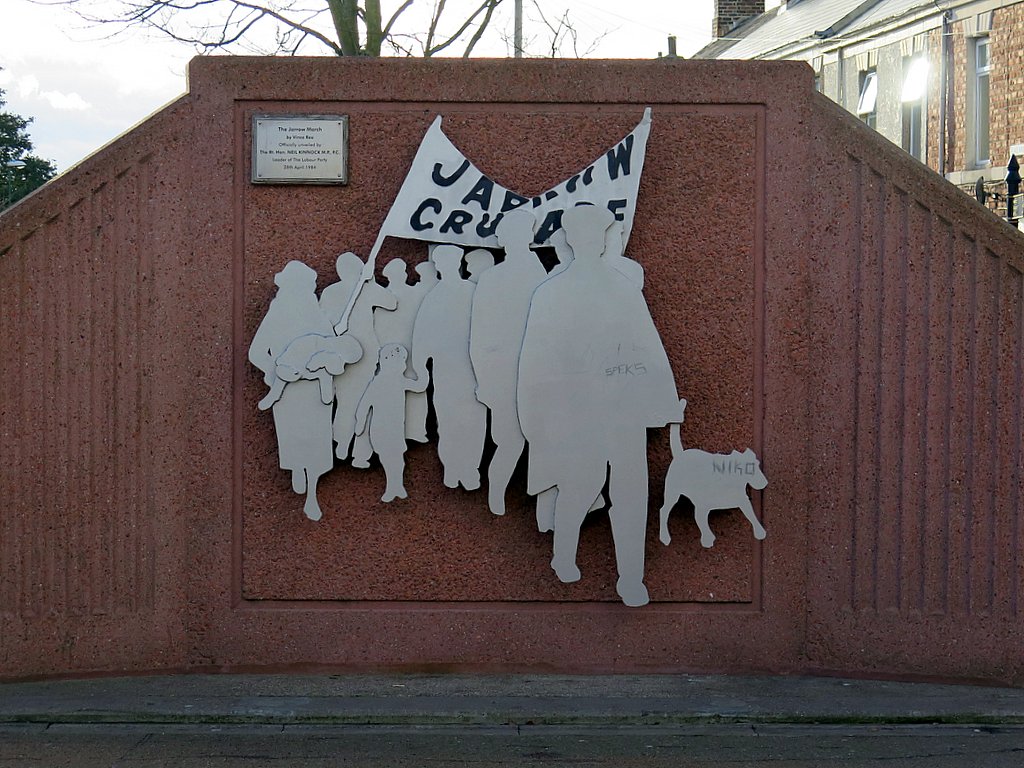
On the morning of Monday, 5 October 1936, two hundred men lined up outside Jarrow Town Hall, shouldered their packs, and started walking toward London, 282 miles away1,8. They called themselves Crusaders, not marchers, and that word choice mattered. This was not meant to look like a riot or a rabble. It was meant to look like a town asking, with its hat in its hand and its dignity intact, for the one thing it needed: work.
The reason they were walking was simple and brutal. Jarrow's entire economy had been built around one company, Palmers Shipbuilding and Iron Company, founded in 1851, which at its peak employed thousands of shipwrights, engineers, and ironworkers3,9. When Palmers collapsed in 1933 and its Jarrow works passed to National Shipbuilders Securities, a government-backed body set up to shrink Britain's shipbuilding capacity, the yard was closed and dismantled rather than kept running3,10. Sources differ on the precise closing date, with the National Archives citing 1931 and other accounts putting the final shutdown in 1933 to 193411,5, but the practical result was not in dispute: a town of around 8,000 shipyard jobs was reduced to roughly 100 men on a temporary scheme, and local accounts put overall unemployment at about 70 percent1,4.
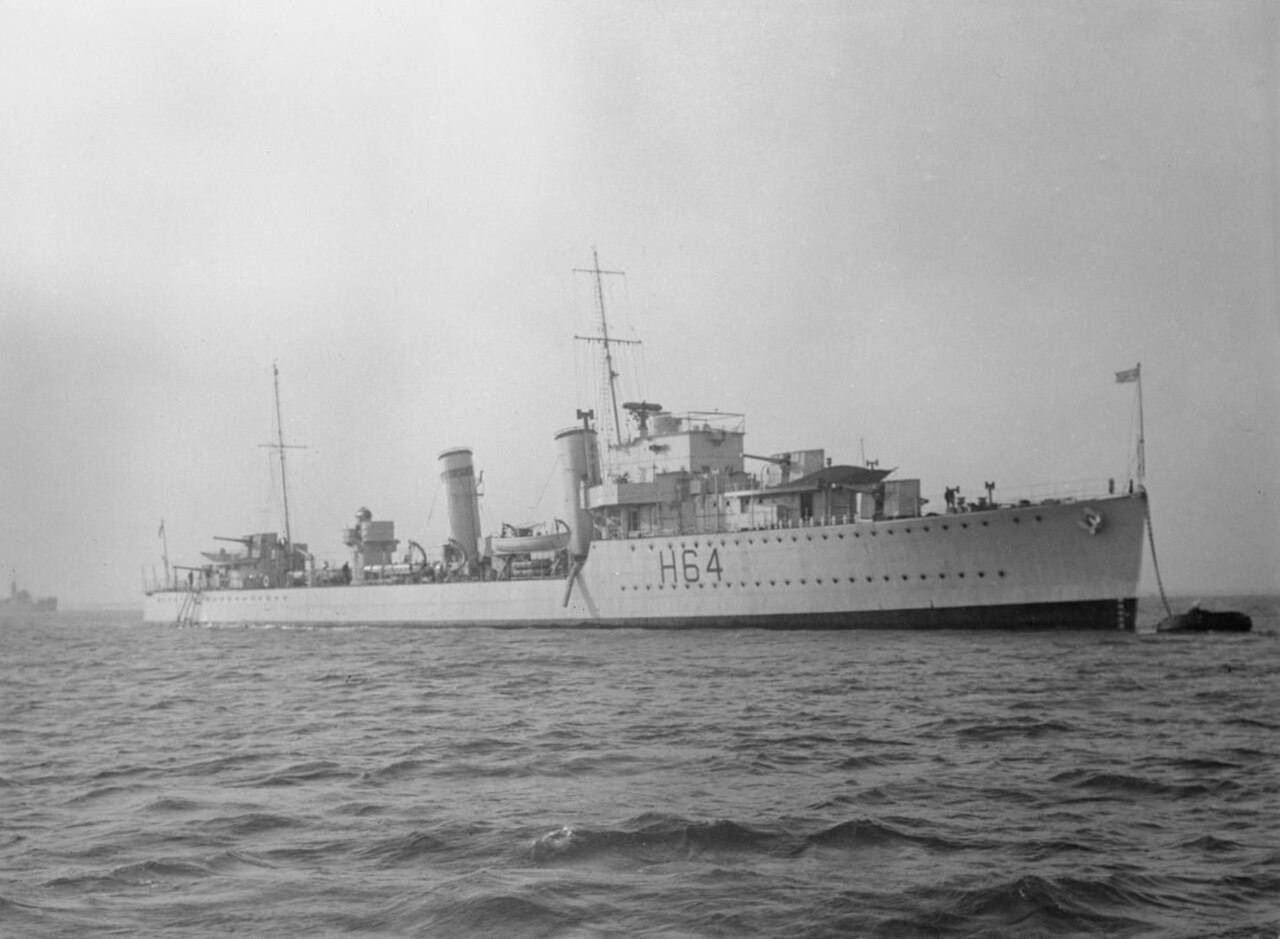
The march itself was the product of a public meeting in Jarrow in July 1936, where the borough council agreed to petition Parliament again, this time backed by a march and signatures from across the town6. About a thousand men reportedly volunteered; organizers picked two hundred, favoring married men with families, men who would read, to anyone watching from a train window or a newsreel, as respectable and sober rather than radical6. Jarrow Borough Council chair David Riley helped lead them, and their Labour MP, Ellen Wilkinson, became the campaign's public face, walking stretches of the route herself and speaking at stops along the way1,2.

For 26 days the men walked through towns across England, fed and housed along the way by local branches of all the main political parties, not just Labour5,8. That cross-party welcome on the road stood in contrast to the chillier reception from organized labor's leadership. The Trades Union Congress and the national Labour Party kept their distance, wary of being linked to the Communist-organized 'hunger marches' that had crisscrossed Britain since the early 1920s under the National Unemployed Workers' Movement5. Jarrow's organizers went out of their way to separate themselves from that lineage, even as Special Branch reportedly tracked the march out of concern over political agitation6.
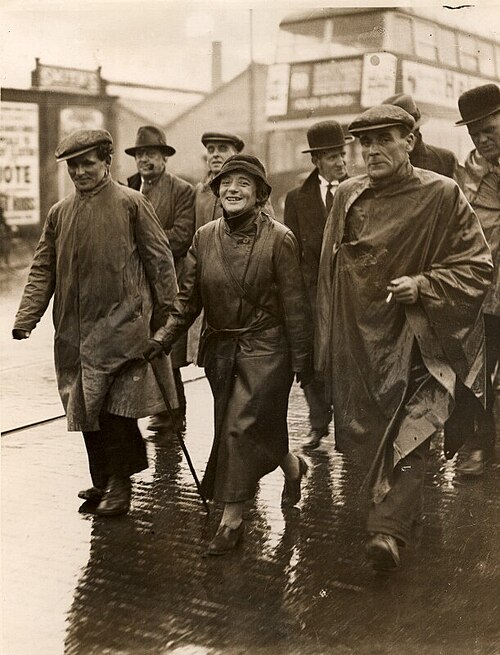
They reached Marble Arch on 31 October 1936, soaked through by heavy rain, having covered what some accounts round up to 290 or 300 miles6,12. Prime Minister Stanley Baldwin declined to meet them6. On 4 November, Ellen Wilkinson carried their petition, signed by somewhere between 11,000 and 12,000 Jarrow residents depending on the source, into the House of Commons7,2. It was received. It was not debated. The men went home believing they had failed5.
A town built on one company
Jarrow's fortunes had been tied to shipbuilding since 1851, when Palmers established its yard on the Tyne; over the following eighty years the company launched more than a thousand ships from the town5,9. By the 1920s, mismanagement and the collapse of postwar world trade had already put Palmers into decline, and a plan to replace the aging yard with a modern steelworks was blocked by the British Iron and Steel Federation, an employers' body protecting its own interests5. That blocked steelworks became the marchers' central demand: not charity, but a new industry to replace the one that had vanished.
The wider national picture made Jarrow's collapse feel especially cruel. Britain's economy had been recovering through the mid-1930s, with growth averaging around 4 percent a year and housing booms in the south, but that recovery was wildly uneven, leaving the old industrial regions of the northeast, Scotland, and South Wales far behind5. Jarrow, with no real industry left to fall back on, became the sharpest example of that gap.

Who's who
- Ellen Wilkinson: Labour MP for Jarrow from 1935, nicknamed 'Red Ellen'; organized and publicized the march and presented its petition to Parliament on 4 November 19367,2.
- David Riley: Chair of Jarrow Borough Council; a principal local leader alongside Wilkinson1,2.
- Stanley Baldwin: Conservative Prime Minister who led the National Government and declined to meet the marchers6.
- Palmers Shipbuilding and Iron Company: Jarrow's dominant employer since 1851, whose collapse in 1933 triggered the crisis3,9.
- National Shipbuilders Securities Ltd: Government-backed company that bought Palmers' Jarrow works and closed them rather than keep them running, as part of a national effort to shrink excess shipyard capacity3,10.
By the numbers
- 200: men selected to march, out of roughly 1,000 who volunteered6.
- 282 miles: the march's commonly cited distance, though some sources round to 290 or 3001,12.
- 26 days: duration of the march, 5 to 31 October 19361,5.
- 11,000–12,000: signatures on the Jarrow petition, depending on the source7,2.
- 70 percent: commonly cited unemployment rate in Jarrow at the time of the march4,3.
- 8,000 to about 100: the drop in shipyard-related jobs cited by Parliament's own account of the petition1.
What the sources disagree on
Accounts diverge on exactly when Palmers' yard closed for good. The National Archives dates the shipyard's closure to 1931, while several other histories, including Wikipedia's and the Co-Curate archive, place the decisive closure and dismantling in 1933 to 193411,5,3. The discrepancy likely reflects different stages of the same slow collapse (sale, closure, demolition) rather than a real factual dispute.
The exact mileage of the march also varies by source, from 282 to roughly 300 miles, a difference that comes down to how the route was measured and whether figures were rounded for retelling1,12. Petition signature counts likewise range from about 11,000 to 12,000 depending on which heritage source is cited7,2.
Finally, how to read the march's reception in London is contested. Some accounts stress the warm public welcome the men received along the route and at their arrival; others emphasize the government's cold shoulder, Baldwin's refusal to meet them, and the TUC's and Labour leadership's wariness about the whole enterprise6,5. Both things were true at once, which is part of why the Jarrow March became such a durable symbol: a popular, well-liked protest that still, in the moment, changed nothing.
Timeline
- 1851Palmers Shipbuilding and Iron Company founded in Jarrow, becoming the town's dominant employer3,9.
- 1933Palmers collapses; its Jarrow works pass to National Shipbuilders Securities Ltd3,10.
- 1933–34Jarrow's shipyard and associated works are closed or dismantled, producing mass unemployment3,5.
- 1935Ellen Wilkinson is elected Labour MP for Jarrow2.
- July 1936A public meeting in Jarrow agrees to petition Parliament and send a march to London6.
- 5 October 1936Two hundred marchers set off from Jarrow Town Hall1,8.
- 31 October 1936Marchers arrive at Marble Arch in London; Stanley Baldwin declines to meet them6.
- 4 November 1936Ellen Wilkinson presents Jarrow's petition to the House of Commons7.
Pictures


Sources
- The Jarrow Crusadeparliament.uk
- People’s History Museum celebrates 'Red Ellen' Wilkinson - People's History Museumphm.org.uk
- Jarrow March, 1936 | Co-Curateco-curate.ncl.ac.uk
- BBC - History - British History in depth: The Jarrow CrusadeBBC
- Jarrow MarchWikipedia
- The Jarrow march: the lasting legacy of the 1936 protest - HistoryExtrahistoryextra.com
- Ellen WilkinsonWikipedia
- Wilkinson, Ellen (1891–1947)encyclopedia.com
- Palmer Jarrowtynebuiltships.co.uk
- Palmers Shipbuilding and Iron Company Limited | Co-Curateco-curate.ncl.ac.uk
- Jarrow Crusadenationalarchives.gov.uk
- 'The march is alive in the minds of the people of Jarrow today'BBC · 2026
- Decades after Jarrow March young jobless still feel 'ignored'BBC · 2026
Researched and written by Lorelet from the sources above. It cites as it goes, but it can still get things wrong, so check the sources for anything that matters.
Report a problem
More featured lorelets
See all
Today · Technology
ChatGPT Started Forging New Yorker Cartoonists' Signatures
When an AI model began signing fake New Yorker cartoons with real cartoonists' names, it turned a style-imitation problem into something that felt, t…

Today · Music
The Monkees' Missing Tapes: Theft, Rescue, or Both?
Somewhere between corporate indifference and collector obsession, the Monkees' original session tapes went missing for decades. The story of how they…

Today · Science
Optogenetics: Controlling Brain Cells With Light
How a light-sensitive protein from pond algae gave neuroscientists a switch for turning specific brain cells on and off with pulses of blue light.