
Featured · Nov 18Science
Florida's Mushroom That Is Both Magic and Deadly
A UF student cataloguing fungi in a central Florida wetland found a small brown mushroom that didn't fit any of the categories he'd learned.

Listen
Read by Finch · 8 min
A Blue Stain in the Swamp
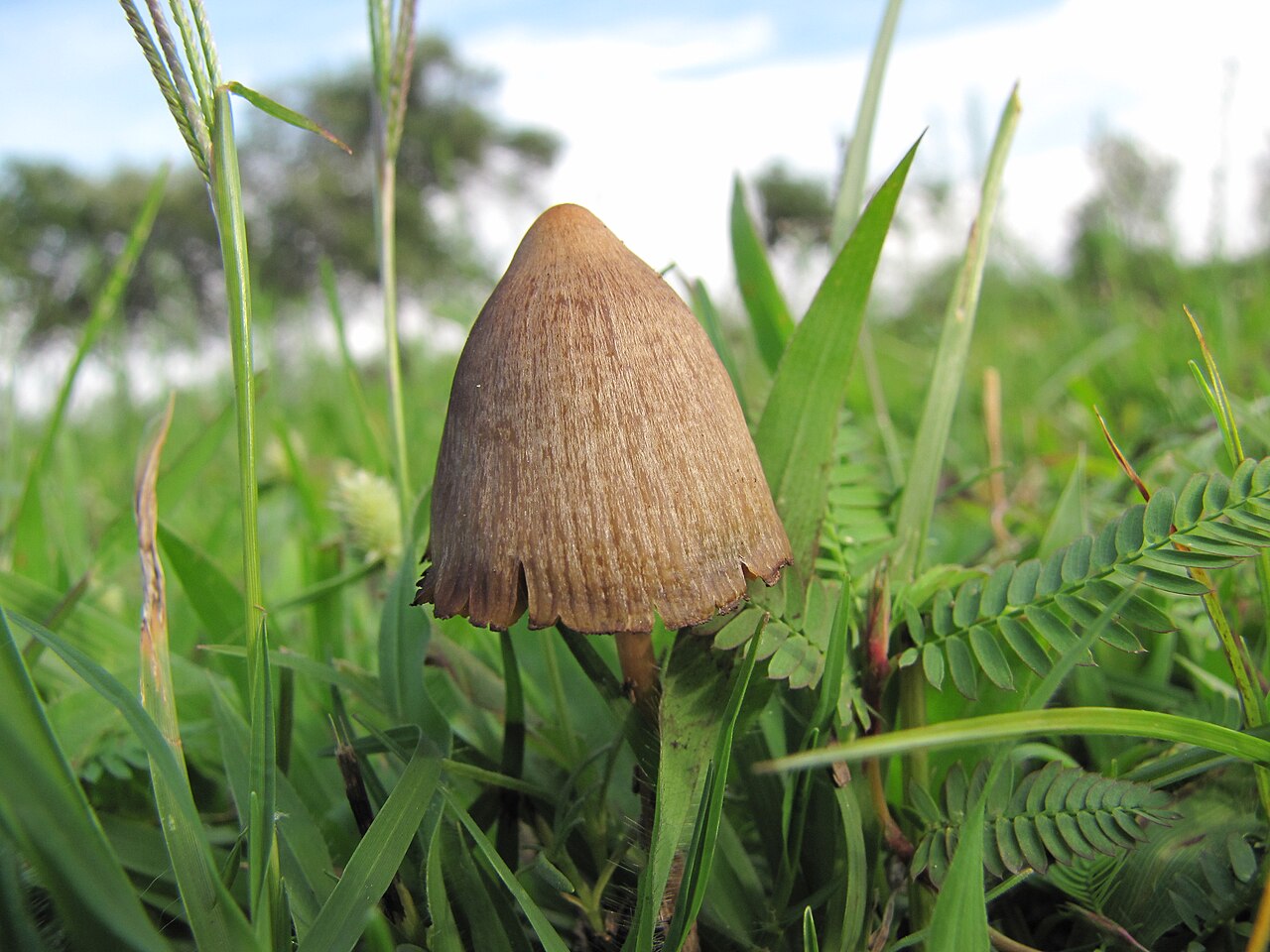
Andrew Kunik, then an undergraduate in Matthew E. Smith's UF/IFAS mycology lab, was documenting fungi at the Ordway-Swisher Biological Station when he came across a small brown mushroom growing on a moss-covered, decaying palm trunk1,2,3. It belonged to the genus Galerina, a group of inconspicuous "little brown mushrooms" that already included known killers3. When handled, this one stained blue, a reaction associated with some of the psychedelic "magic" mushrooms3.
That was the detail that didn't belong. Galerina species in this lineage were known for amatoxins, the poisons behind some of the world's worst mushroom fatalities, not for the chemistry of a magic mushroom3,4.
Smith's lab had a practical reason to be out there in the first place. As Florida's state mycologist, Smith regularly fields calls from poison control centers, emergency rooms, and veterinarians trying to figure out what a person or a dog might have eaten3. The team was specifically hunting for undocumented amatoxin-producing Galerina species in Florida when Kunik's find turned up3,4.
Kunik and a colleague split the work: one ran the bioinformatics and genome analysis, the other handled the chemical side3. "We matched up our findings and confirmed that we saw both compounds," Kunik said. "I could hardly believe it"3. Mass spectrometry of the mushroom tissue turned up both psilocybin and amatoxins, and genomic analysis found the biosynthetic genes for both, independently supporting the same unlikely conclusion5,6.
One of those compounds had never been seen before. The chemical analysis flagged a dominant signal at a mass-to-charge ratio of 903.367 with a retention time of 8.99 minutes, which the researchers characterized as a new amatoxin they named alpha-proamanitin5,4,7. "There is no species of mushroom anywhere, in any group, that has been known to produce both at the same time," Kunik told Live Science. "So it's quite remarkable"4.
The bigger question was how. Phylogenetic analysis pointed to horizontal gene transfer, the movement of genetic material between organisms outside normal inheritance, as the mechanism: the mushroom's lineage appears to have already had amatoxin biosynthesis locked in before it separately picked up the genes for psilocybin5,6. The researchers found evidence that psilocybin biosynthesis entered Galerina at least twice, once into a lineage with no toxins and once into the toxic lineage that produced this mushroom5. Smith described his own reaction plainly: "To find them both together in one mushroom, I never expected to find that... We were shocked"4.
The study, titled "The 'dark magic mushroom' co-produces amatoxins and psilocybin," was published in Current Biology on November 11, 2026, and UF/IFAS and news outlets quickly adopted the nickname "dark magic mushroom" for Galerina indica5,3,6. Outside researcher Hannah Reynolds, a fungal ecologist at Western Connecticut State University who wasn't involved in the study, called the finding "very cool," noting how unusual it was to see the gene cluster jump in, get rearranged, and possibly arrive twice4.
None of this makes the mushroom anything but dangerous. It still produces amatoxins capable of causing severe liver injury and death, psilocybin or no psilocybin5,4,8. The blue stain that first caught Kunik's eye, long used as an informal signal that a mushroom is a safe, recreational psychedelic, turned out in this species to be sitting right alongside one of the deadliest classes of toxins fungi make1,5.
Two Chemistries That Weren't Supposed to Mix
Psilocybin is the compound behind the psychedelic effects of "magic mushrooms," converted in the body to psilocin, which acts on serotonin receptors to produce altered perception, euphoria, and distorted time sense9. Amatoxins are cyclic peptides found in genera including Amanita, Galerina, and Lepiota that shut down RNA polymerase II, the enzyme cells need to build proteins, and can cause fatal liver failure from as little as half a mushroom cap10.
Before this study, these two chemical worlds were understood to be separate. Known amatoxin producers (death caps and their relatives) did not make psilocybin, and known psilocybin producers did not make amatoxins1,2,3. Earlier research had already shown that amatoxin biosynthesis spread between unrelated mushroom genera through horizontal gene transfer, and that psilocybin biosynthesis could spread the same way, but no single species had been confirmed to carry both pathways at once4,11.
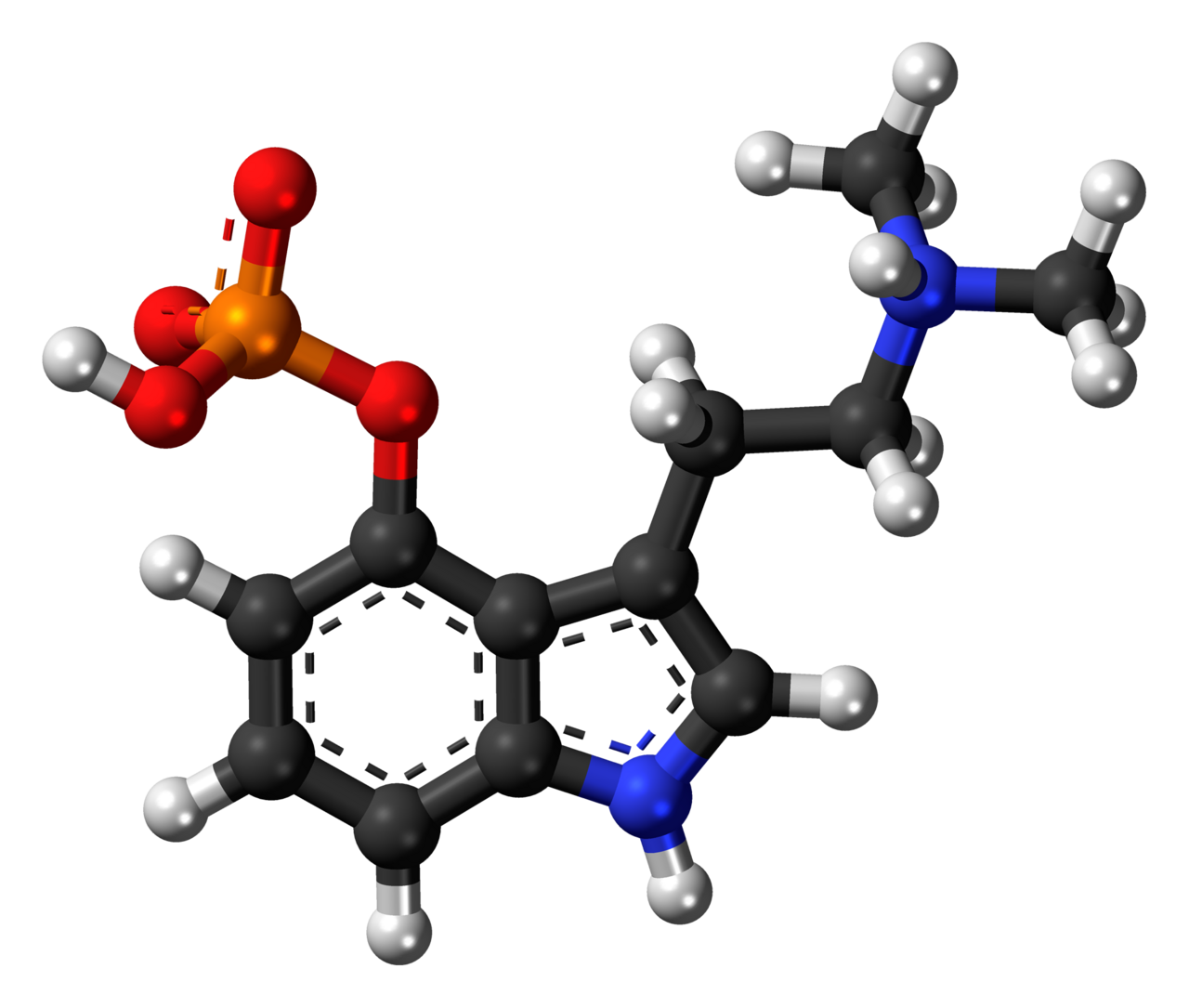
That gap is what made Galerina indica worth naming. It gave researchers, for the first time, one organism in which to study how a lineage that already makes a lethal toxin goes on to acquire a mind-altering compound through a completely separate genetic route5,6.
Who's Involved
- Andrew Kunik: Undergraduate researcher (now the study's first author) in Matthew Smith's UF/IFAS lab, who found the unusual mushroom while documenting fungi at Ordway-Swisher Biological Station1,2,3,4.
- Matthew E. Smith: UF/IFAS professor of plant pathology, Florida's state mycologist, and Kunik's lab supervisor, who regularly advises poison control and emergency physicians on mushroom identification3,4.
- Hannah Reynolds: Fungal ecologist at Western Connecticut State University, uninvolved in the study, who commented on the surprise of the finding4.
- University of Florida Institute of Food and Agricultural Sciences (UF/IFAS): Institutional home of the research and the lab where the discovery was made1,2,3.
The Figures That Matter
- 3: voucher specimens examined, catalogued FLAS-F-73455, FLAS-F-73456, and FLAS-F-734581,5,8,6.
- 903.367: the mass-to-charge ratio (m/z) signal identifying the new amatoxin, alpha-proamanitin5.
- 8.99 minutes: the retention time at which that signal appeared in chemical analysis5.
- At least 2: separate instances researchers believe psilocybin biosynthesis was acquired within the genus Galerina, once into a non-toxic lineage and once into the toxic lineage behind this mushroom5.
- November 11, 2026: publication date of the study in Current Biology5,6.
What's Still Unsettled
Sources differ on exactly when the horizontal gene transfer that gave Galerina indica its psilocybin genes occurred. One estimate places it around 15.5 million years ago, while Kunik has noted it's possible the transfer happened through two separate events, potentially as recently as 6 million years ago; researchers say sequencing more specimens could help resolve the timeline4.
The study also suggested that acquiring psilocybin biosynthesis may have coincided with reduced amatoxin potency in this species, but that is described as a comparative evolutionary inference rather than proof the mushroom is any safer to handle or eat5,12.
No source provides a verbatim account of the exact moment or precise date in 2025 when Kunik first spotted the mushroom in the field, nor what he was doing or carrying at the time beyond "documenting fungi"1,2,3,8. Those specifics should not be assumed.
Timeline
- 2025Andrew Kunik finds an unusual Galerina mushroom on a decaying palm trunk at Ordway-Swisher Biological Station1,2,3,8.
- 2026 (before publication)Mass spectrometry and genomic analysis confirm the mushroom produces both psilocybin and amatoxins, including a new amatoxin5,3,4.
- 2026-11-11Study "The 'dark magic mushroom' co-produces amatoxins and psilocybin" published in Current Biology5,6.
- 2026-11-12 to 2026-11-16UF/IFAS and news outlets publicize the discovery under the nickname "dark magic mushroom"1,2,13,3.
Pictures
Sources
- Florida students discover ‘dark magic mushrooms’wfla.com
- UF Students Discover 'Dark Magic Mushroom'news4jax.com
- UF students discover the ‘dark magic mushroom’news.ufl.edu
- Florida's 'dark magic' mushrooms have a deadly combination of chemicals never seen beforelivescience.com · 2026
- The “dark magic mushroom” co-produces amatoxins and psilocybinPubMed Central · 2026
- The “dark magic mushroom” co-produces amatoxins and psilocybincell.com
- ‘Dark magic mushroom’ found that produces hallucinogenic compound and one of the most deadly toxins - The Economic Timeseconomictimes.indiatimes.com
- This magic mushroom can killsciencenews.org
- PsilocybinWikipedia
- AmatoxinWikipedia
- Genes and evolutionary fates of the amanitin biosynthesis pathway in poisonous mushrooms.Scholarly work · 2022
- zoterobiorxiv.org
- Florida student discovers ‘dark magic mushroom'clickorlando.com
Researched and written by Lorelet from the sources above. It cites as it goes, but it can still get things wrong, so check the sources for anything that matters.
Report a problem
More featured lorelets
See all
Today · Food
The Turkey Surplus That Became the TV Dinner
A company drowning in frozen birds found an answer on an airline food cart, or so the story goes for fifty years.

Today · Space
Why Is Jupiter's Great Red Spot Actually Red?
Jupiter is built almost entirely of colorless gas, yet its most famous storm glows orange-red. Scientists have spent decades in the lab trying to fig…

Today · Art & Design
The Aztec Labret Whose Golden Tongue Still Moves
A small gold serpent made for a pierced lip somehow ended up with a tongue that flicks side to side. No one alive has ever seen it worn.