Featured · TodayFilm & TV
Late Night Horror: The BBC's Lost Ghost Tapes
A six-week 1968 BBC Two horror anthology vanished soon after it aired, and the story of why has grown scarier in the telling than the show itself.
Listen
Read by Finch · 6 min
A horror show that outran its own evidence
The title card alone promised more than the BBC ever quite delivered: six half-hour plays, broadcast late on BBC Two between 11 April and 16 May 1968, built around a producer's hunch that horror worked better after dark1,2,6.

That producer was Harry Moore, a former story editor who had shepherded Thirty-Minute Theatre and a run of Arthur Conan Doyle adaptations before deciding British television was neglecting a genre America had already handed to housewives doing the ironing6. Moore told the trade press in 1967 that horror worked better on screen than on radio, because television forces you to watch rather than imagine, and that late-night slots suited it best6.
The anthology ran its full six episodes: "No Such Thing as a Vampire," "William and Mary," "The Corpse Can't Play," "The Triumph of Death," "The Bells of Hell," and "The Kiss of Blood"3,10. "No Such Thing as a Vampire" aired on 19 April at roughly 10:55 p.m. and reportedly drew 1.8 million viewers, an unusually large audience for BBC Two at the time6. The series ended on schedule on 16 May and was not brought back1,10.
What happened next is where the story usually gets dramatic in the retelling: viewers supposedly flooded the switchboard, the BBC yanked the show in horror at its own content, and the tapes were destroyed so nobody would ever see it again. The documented version is quieter. The BBC did receive complaints about the series' suitability3,2,11. But it was not pulled mid-run, no contemporary record of a mass telephone campaign survives in the sources available, and the destruction of the tapes, when it came, followed the BBC's routine practice of reusing expensive videotape once a programme's repeat value had expired3,5.
How the tapes actually disappeared
The series was shot on 2-inch, 625-line PAL colour videotape, an expensive and reusable format3. The BBC repeated the series in 1970, and once that repeat window closed, the master tapes for all six episodes were either erased for reuse or junked3,5.
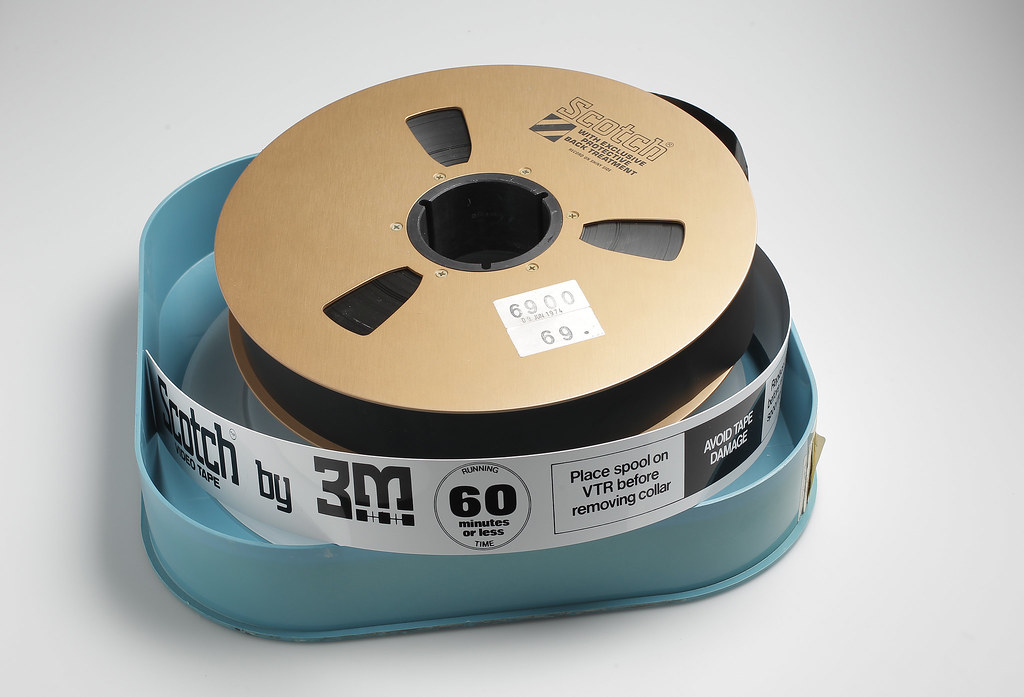
This was not unique to Late Night Horror. Retrospective estimates cited in later reporting suggest as much as 70 percent of BBC programming from the 1950s through the 1970s was discarded in similar fashion, an estimate rather than a precise count7,12. Tape stock cost money and archiving a late-night horror anthology with modest ratings and mixed reviews was not a priority3,5.
What saved the two surviving episodes was not the BBC's own archive but black-and-white 16mm film telerecordings, made originally for overseas sales, that ended up scattered in private hands3,13. Archivist Chris Perry spent decades chasing rumors of surviving prints before "The Corpse Can't Play" resurfaced through Kaleidoscope and the British Film Institute in 2016 and screened at the Missing Believed Wiped event in December 20173,5,13.
The Dorset cinema storeroom
The second recovery, decades later, had an almost absurdly ordinary origin. Darren Payne, a projectionist who runs 35mm screenings at The Regent, an art deco cinema in Christchurch, Dorset, was asked to check a small, nondescript stack of film cans a board member had found tucked away and nearly thrown out6. One can was handwritten: Late Night Horror.
Payne, a self-described horror collector, recognized the title and ran it through his own projection equipment at home. It turned out to be "No Such Thing as a Vampire," unseen for nearly sixty years6. The find, reported in 2026 through the charity Film is Fabulous, left the series with two confirmed surviving episodes instead of one2,6,7.
Four episodes remain missing: "William and Mary," "The Triumph of Death," "The Bells of Hell," and "The Kiss of Blood"8,9. Both surviving episodes exist only as monochrome film, not the original colour videotape, so the recovery preserves performance and plot but not how the series actually looked on air in 19683.
Myth versus record
The phrase that keeps attaching itself to this series is that it was "so terrifying it was destroyed." That is the story people want to tell, and it is understandable why: a show scary enough to get banned is a better anecdote than a show that quietly ran out its contract and got taped over.
One retrospective account explicitly flags the deliberate-destruction explanation as a "darker theory" sitting alongside the far more mundane one, that the BBC simply reused the tape stock as it did with countless other programmes4. The complaints were real, according to multiple accounts3,2,11, but a formal cancellation order, a documented flood of phone calls, or an explicit decision to erase the tapes because they were frightening does not appear in the available record.
What is solid: six episodes aired on schedule, the show was not renewed, and the master tapes vanished through processes typical of the era rather than, so far as the sources show, a single dramatic act of suppression3,1,5,10.
Who's who
- Harry Moore: BBC producer behind Late Night Horror, previously worked on Thirty-Minute Theatre and Conan Doyle adaptations6.
- Chris Perry: Television archivist who pursued "The Corpse Can't Play" for decades before its 2016 recovery5,7.
- Kaleidoscope: Archive organization that helped return and restore "The Corpse Can't Play"3,13.
- British Film Institute: Institutional partner in the 2016 recovery and preservation effort3,13.
- Darren Payne: Cinema projectionist who found "No Such Thing as a Vampire" in a Dorset storeroom6.
- BBC Two: Channel that aired the series weekly from April to May 19681,2.
Timeline
- 13 Sept 1967"No Such Thing as a Vampire" is telerecorded ahead of broadcast6.
- 11 Apr 1968Late Night Horror premieres on BBC Two1,2.
- 19 Apr 1968"No Such Thing as a Vampire" airs, reportedly drawing 1.8 million viewers6.
- 16 May 1968Final episode, "The Kiss of Blood," airs, closing the six-episode run1,10.
- 1970Series is repeated; afterward the original colour videotapes are erased or discarded3,5.
- 2016"The Corpse Can't Play" resurfaces as a 16mm black-and-white print via Kaleidoscope and the BFI3,13.
- 16 Dec 2017"The Corpse Can't Play" screens publicly at Missing Believed Wiped3.
- 2026"No Such Thing as a Vampire" resurfaces in a Dorset cinema storeroom2,6,7.
Pictures



Sources
- Late Night Horror (TV Series 1968) ⭐ 6.8 | Drama, Horror, Mysteryimdb.com
- Late Night Horror | Originals for BBCbbc.originals.watch
- Late Night HorrorWikipedia
- The Canceled British Horror Series That Was So ...slashfilm.com
- The Twisty Tale of the BBC Show Supposedly So Terrifying That It Was DestroyedAtlas Obscura · 2023
- Lost Late Night Horror Found | Film is Fabulousfilmisfabulous.org.uk · 2026
- Lost episode of BBC show 'so terrifying it was destroyed' discoveredmetro.co.uk
- 'Terrifying' BBC horror show ripped from the archives rediscovered after ...mirror.co.uk
- Lost episode of terrifying BBC show resurfaces after 60 yearsmirror.co.uk
- Late Night Horrornostalgiacentral.com
- Late Night Horror (TV Series 1968) - Plotimdb.com
- Film buff finds lost 1968 vampire TV movie that was ...yahoo.com
- This Horror Series Was Cancelled for Being Too Scary, and Now It’s Mostly Lostcollider.com
Researched and written by Lorelet from the sources above. It cites as it goes, but it can still get things wrong, so check the sources for anything that matters.
Report a problem
More featured lorelets
See all
Today · History
Stealing Thunder: The Petty Grudge Behind a Famous Phrase
A failed 1709 tragedy, a borrowed sound effect, and the critic who never let it go: how John Dennis gave English one of its sharpest idioms for getti…
Today · Art & Design
The Rodin Scan Fight: Who Owns a Digital Copy of Public Art?
An American artist spent nearly a decade trying to pry 3D scans of The Thinker loose from Musée Rodin, and the fight over whether the museum could ow…

Oct 3 · Technology
It Runs Doom: Now Inside a SQL Database
A database company spent its engineering hours making a 1993 shooter run entirely as SQL queries, the latest and strangest chapter in a decades-long…