Featured · Sep 30Film & TV
The Pixar Lunch That Conceived Four Animated Classics
In the summer of 1994, four Pixar staffers went to a diner while Toy Story was still finishing up and, over lunch, sketched the outlines of A Bug's Life, Monsters Inc, Finding Nemo, and WALL-E.
Listen
Read by Finch · 6 min
Four Guys, One Diner, No Guarantee of a Future
Toy Story was not yet finished, and nobody at Pixar knew if it would work. That is the detail that gets lost in the retelling: when John Lasseter, Andrew Stanton, Pete Docter, and Joe Ranft sat down for lunch at the Hidden City Cafe in Point Richmond, California, in the summer of 1994, they were not celebrating a hit. They were trying to figure out what came next, just in case there was a next1,2.
Andrew Stanton later described the mood as practical rather than triumphant. Toy Story was, in his words, "almost complete," and the group reasoned that if Pixar was going to make another movie, the clock on developing it needed to start immediately, success or no success1,3. This was a small computer-animation shop that had never released a feature film, sitting in a diner, trying to plan a future it could not yet be sure it had earned.
What came out of that lunch, according to the accounts each participant has given since, were four rough premises. One was about an insect colony under siege, which grew into A Bug's Life. Another was about monsters and the children they secretly haunt, which became Monsters, Inc. A third was about a father crossing an ocean to find his lost son, the seed of Finding Nemo. The last was about a small robot alone on an abandoned Earth, which eventually became WALL-E1,2,4.

The detail everyone repeats is that they sketched these ideas on restaurant napkins. That part shows up consistently across retellings1,2. What is less certain is whether entire story treatments, or every major plot beat of four future movies, were literally drawn on those same napkins in one sitting, as opposed to loose notes and talk that got fleshed out over the following years.
Stanton has been the most specific about the WALL-E idea in particular. In production notes for that film, he recalled: "One of the things I remember coming out of it was the idea of a little robot left on Earth... like, what if mankind had to leave Earth and somebody forgot to turn the last robot off, and he didn't know he could stop doing what he's doing?"6. That is a character and a premise, not a script, and it took another fourteen years to reach theaters.
Who Was at the Table
- John Lasseter: Pixar's chief creative leader and director of Toy Story, who later directed A Bug's Life1,7.
- Andrew Stanton: A Toy Story co-writer who went on to direct Finding Nemo and WALL-E8,1.
- Pete Docter: A Pixar animator and story artist at the time, later the director of Monsters, Inc.1,9.
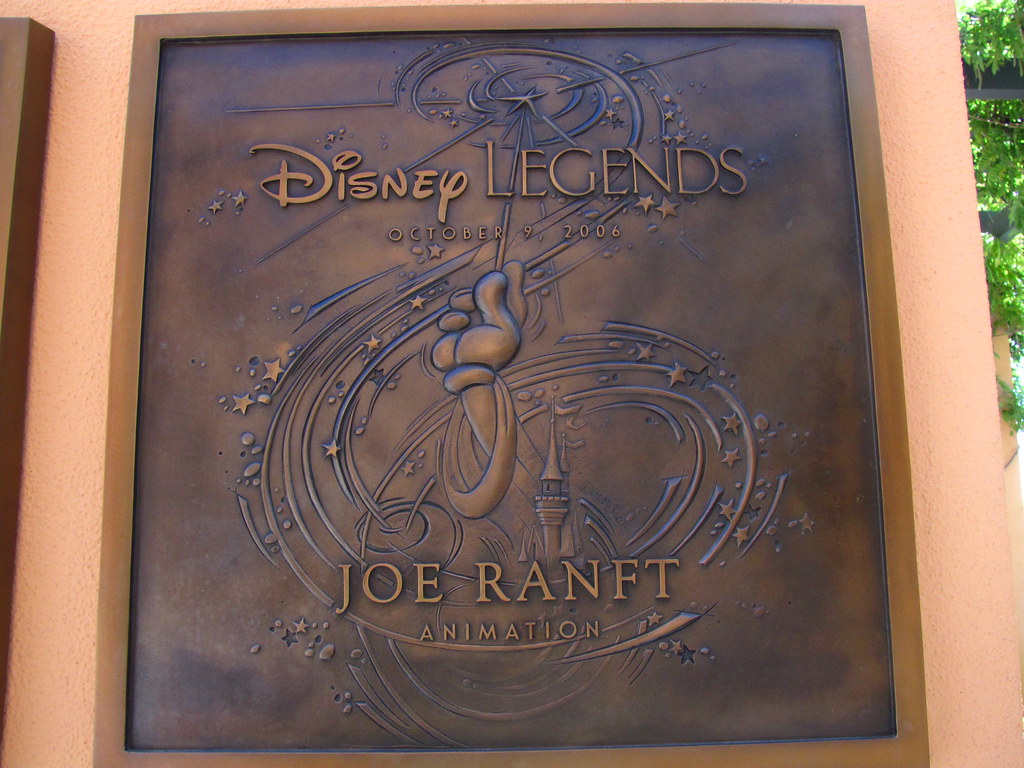
- Joe Ranft: A senior story artist central to Pixar's early development work. Ranft died in a car accident on August 16, 20056.
From Napkin Sketch to Box Office
Toy Story reached theaters through Disney on November 22, 1995, and became the first fully computer-animated feature film, a fact that changed Pixar's leverage practically overnight. Its success meant the studio could actually chase the ideas from that 1994 lunch instead of just talking about them.
A Bug's Life came first, directed by Lasseter and Stanton, opening November 25, 1998, as Pixar's second feature. It kept the insect-colony premise but became specifically the story of Flik, an inventive ant trying to save his colony from grasshoppers, a much more character-driven version of the original napkin idea.
Monsters, Inc. followed on November 2, 2001, directed by Pete Docter, turning the loose concept of monsters and children's fears into the story of Sulley, Mike, and the toddler Boo, plus a fully built monster-powered energy economy that was not part of the original pitch.
Finding Nemo arrived May 30, 2003, directed by Stanton, and became one of Pixar's biggest successes, eventually winning the Academy Award for Best Animated Feature at the 76th Academy Awards. WALL-E closed out the set on June 27, 2008, also directed by Stanton, expanding the lonely-robot idea into a nearly dialogue-free first act and a love story between WALL-E and EVE, and it too won the Best Animated Feature Oscar, at the 81st Academy Awards.

The Tally
- A Bug's Life (1998): about $363 million worldwide, directed by John Lasseter.
- Monsters, Inc. (2001): about $579 million worldwide, directed by Pete Docter.
- Finding Nemo (2003): about $940 million worldwide including a later re-release, directed by Andrew Stanton.
- WALL-E (2008): about $533 million worldwide, directed by Andrew Stanton.
- Combined, the four films took in roughly $2.4 billion in worldwide theatrical grosses, not counting home video, merchandise, or inflation.
- Two of the four, Finding Nemo and WALL-E, won the Academy Award for Best Animated Feature.
What's Solid and What's Shorthand
The core of the story holds up: four named people, a real cafe, a real summer, and a set of ideas that later became real movies. The lineup of Lasseter, Stanton, Docter, and Ranft is consistent across every account, including Stanton's own retelling in a promotional trailer for WALL-E2,3.
What is softer is the precision. Sources describe the timing as "summer 1994" or just "1994," never a specific date1,2,3. The napkin sketches are widely repeated but functionally unverifiable beyond the participants' own memory, and there's no public evidence that the surviving napkins, if they exist, contain complete plots for four films rather than fragments and phrases.
The bigger simplification is the idea that four finished movies were plotted out in one sitting. What the lunch produced was closer to a creative slate: broad premises and characters that then went through years of writing, story review, and total reinvention. Monsters, Inc.'s energy economy, Finding Nemo's ocean ecosystem and Dory's memory loss, and WALL-E's near-silent first act were not born at that table; they were built later, sometimes by entirely different people brought onto each project.
Timeline
- Summer 1994Lasseter, Stanton, Docter, and Ranft have lunch at the Hidden City Cafe in Point Richmond, California, and sketch ideas for Pixar's next projects.
- November 22, 1995Toy Story is released, becoming the first fully computer-animated feature film.
- November 25, 1998A Bug's Life opens, the first of the four lunch-linked films to reach theaters.
- November 2, 2001Monsters, Inc. is released.
- May 30, 2003Finding Nemo is released and later wins the Academy Award for Best Animated Feature.
- August 16, 2005Joe Ranft dies in a car accident.
- June 27, 2008WALL-E is released and later wins the Academy Award for Best Animated Feature.
Pictures



Sources
- Pixar Movies Thanks to Napkin Sketches at Lunch Meetingbusinessinsider.com
- The Lunchtime Meeting That Inspired Four Beloved Pixar Moviesmentalfloss.com · 2026
- TV Interview - Pixar director surfs from sea to space | Creative Loafingcreativeloafing.com
- In 1994, the Pixar team had the most productive lunch ...x.com
- Trivia: Cafe Where Pixar Came Up With 'A Bug's Life', ' ...slashfilm.com
- That famous Pixar lunch of 1994gointothestory.blcklst.com · 2014
- Disney Pixar: Monsters, Bugs, Toys & Cars, Incindependent.co.uk · 2013
- Andrew StantonWikipedia
- Pixar's $4 Billion Lunch - The Investor's Podcast Networktheinvestorspodcast.com
Researched and written by Lorelet from the sources above. It cites as it goes, but it can still get things wrong, so check the sources for anything that matters.
Report a problem
More featured lorelets
See all
Today · Film & TV
Why Nick Jr. Aired the Same Blue's Clues Episode All Week
A preschool show about a cartoon dog and her pawprints became a quiet experiment in how children actually learn from television — and the data said:…

Today · Crime
Liquid Gold: The Black Market for Used Cooking Oil
Green energy policy turned restaurant fryer grease into a commodity worth stealing, and a quiet corner of American crime grew up around it.

Today · Business
The Terminal: How a Firing Built Wall Street's Addiction
Michael Bloomberg got pushed out of Salomon Brothers with a check for about $10 million. He turned it into a locked-box machine that trading floors s…