
Featured · Nov 14Gaming
How a Video Game Ocarina Revived a 19th-Century Instrument
A handful of ceramic artisans suddenly found their phones ringing after a Nintendo game shipped in November 1998. The instrument they made had a much older story than anyone calling them seemed to know.
Listen
Read by Finch · 7 min
The Phone Starts Ringing in Issaquah
Anita Feng had been making traditional ceramic ocarinas for 25 years out of her workshop in Issaquah, Washington, when her business abruptly more than doubled, to about 60 handmade instruments a month2. She was getting five to ten orders a day, mostly for ten-hole ocarinas like the one played in a certain video game, and told The New York Times that three-fourths of her business now came from people who had played it2.
Something had clearly changed, and fast. Feng said she might need to hire help just to keep up2. But the instrument she had spent a quarter century perfecting was not new, and neither, it turned out, was this kind of sudden demand.
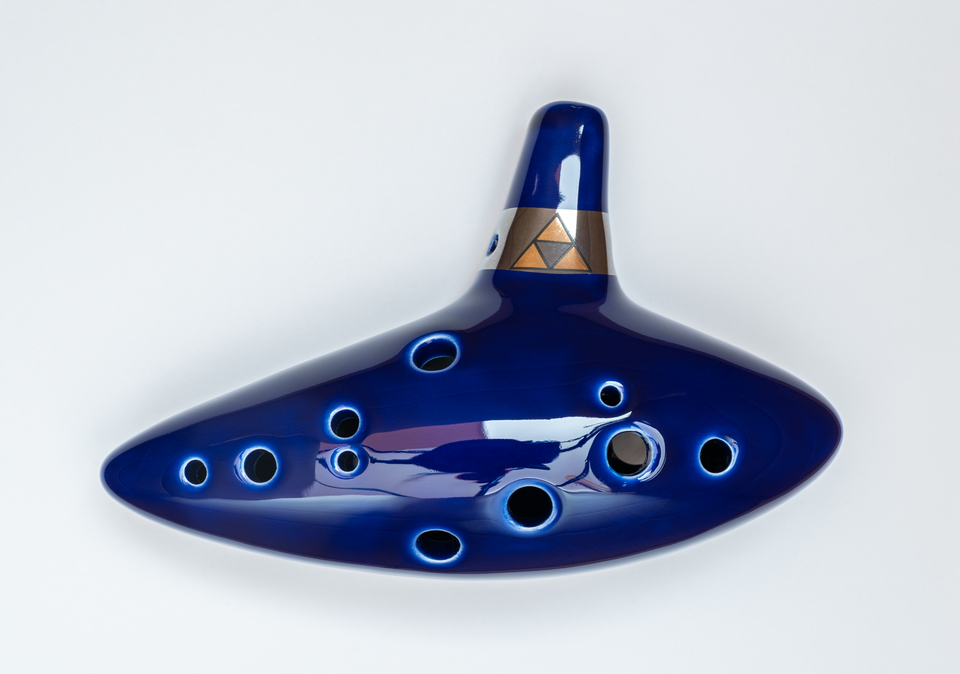
What had changed was Nintendo's The Legend of Zelda: Ocarina of Time, released for the Nintendo 64 in Japan on November 21, 1998 and in North America two days later1,5. The game put a small blue ocarina, decorated with the Triforce, directly into the player's hands. Early in the story, Princess Zelda throws it to Link as she and her attendant Impa flee Hyrule Castle at night, and Link retrieves it from the castle moat1. From there the player uses it constantly: pressing buttons to perform named melodies like Zelda's Lullaby, the Song of Time, and the Song of Storms, which open doors, summon allies, change weather, and eventually let Link move between childhood and adulthood by playing before the altar in the Temple of Time1.

The game arrived as one of the most anticipated titles of the decade and lived up to it. Famitsu magazine gave it a perfect 40 out of 40, the first score of its kind the magazine had ever awarded4. Commercially it broke records too: around 325,000 North American pre-orders, about a million copies sold in its first week, 2.5 million within three weeks, and roughly 7.6 million copies worldwide over its lifetime5. During just the last six weeks of 1998, it sold about 2.5 million units and generated $150 million in revenue, with Nintendo projecting eventual sales of six million copies or more2.
The instrument that got thrown into a digital moat, though, was not Nintendo's invention. It dates back, in some form, well over a century before the game, and in looser forms much further than that.

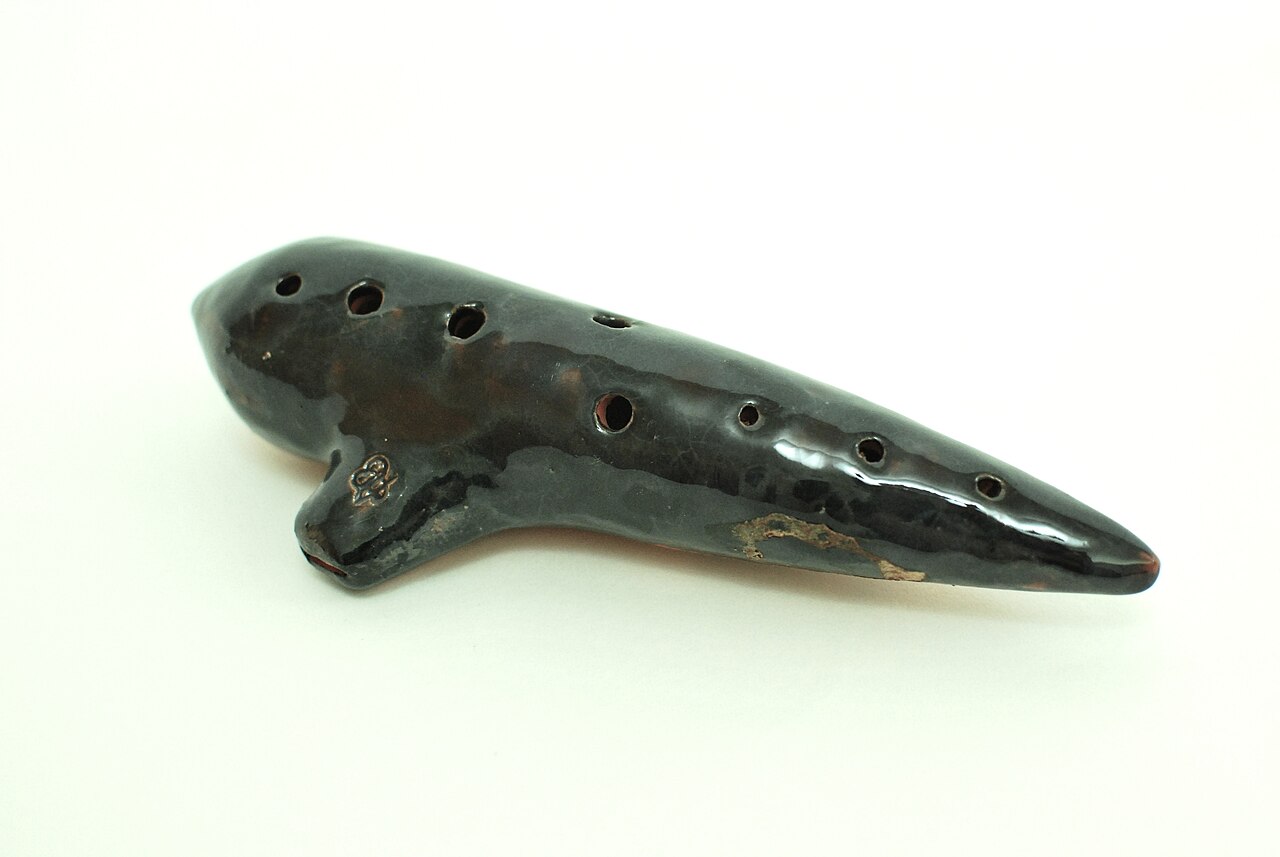
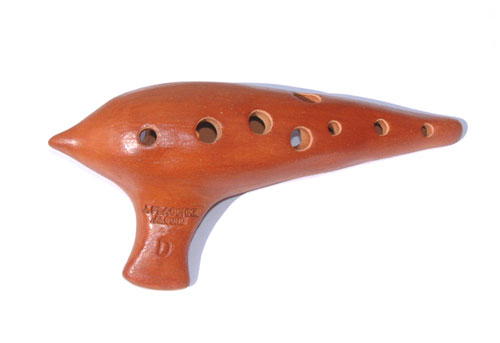
The word ocarina comes from ucaréṅna, Bolognese dialect for "little goose," and the modern ceramic version was built by Giuseppe Donati, a 17-year-old instrument maker from Budrio, Italy, who handcrafted it from clay in 1853 with seven to ten finger holes and a spouted mouthpiece3. Vessel flutes of a similar kind existed long before Donati, with archaeological precedents in Mesoamerica, China, and Europe; Cortés's expeditions are credited with bringing Aztec ocarinas to European courts, where the instrument became a popular toy3. In the twentieth century, British mathematician John Taylor developed a four-hole fingering system in 1964 that let a compact pendant ocarina play a full chromatic octave, a design still used widely today3.
That long, uneven history of popularity is part of why 1998 looked less like an invention and more like a very specific kind of lightning strike. The game did not teach the world what an ocarina was. It gave millions of players, many of them children, a reason to want one particular object they had already held, virtually, in their own hands.
Not every maker caught that lightning the same way. Charlie Hind, who ran Hind Musical Instruments and made wooden ocarinas, reported only a limited sales increase, because fans wanted the ceramic look of the in-game instrument rather than Hind's wood models2. Feng's ceramic pieces, closer to what Link actually carried, sold out instead.
Back in Issaquah, the orders kept coming in, five to ten a day, for an object that had existed in something like its current form since a teenager in Budrio shaped clay by hand in 1853, and in rougher forms for thousands of years before that3,2. The game had not resurrected a dead instrument. It had simply put a camera on one that had been quietly waiting its turn.
By the Numbers
- 325,000: North American pre-orders for Ocarina of Time ahead of its November 1998 launch5.
- 1 million: copies sold in the game's first week5.
- 2.5 million: copies sold within three weeks, matching roughly $150 million in revenue over the final six weeks of 19985,2.
- 7.6 million: worldwide lifetime copies sold of the original Nintendo 64 release5.
- 40/40: Famitsu's review score, the first perfect score the magazine had ever given4.
- 60 a month: ocarinas Anita Feng's workshop was producing after the game's release, up from roughly half that before2.
- 1853: the year Giuseppe Donati, then 17, built the first modern ceramic ocarina in Budrio, Italy3.
Who's Who
- Giuseppe Donati: Italian instrument maker from Budrio who developed the modern ceramic ocarina in 1853 at age 173.
- John Taylor: British mathematician who devised the four-hole "English" fingering system for pendant ocarinas in 19643.
- Anita Feng: ceramic artisan in Issaquah, Washington, whose ocarina business doubled after the game's release2.
- Charlie Hind: maker of wooden ocarinas at Hind Musical Instruments, who saw only a limited sales bump2.
- Shigeru Miyamoto: producer of Ocarina of Time at Nintendo1.
- Koji Kondo: composer who scored the game and designed its interactive music system1.
- Eiji Aonuma: one of the game's principal directors1.
Timeline
- 1853Giuseppe Donati, 17, builds the first modern ceramic ocarina in Budrio, Italy3.
- 1964John Taylor develops the four-hole English fingering system for pendant ocarinas3.
- November 21, 1998The Legend of Zelda: Ocarina of Time releases in Japan1.
- November 23, 1998The game releases in North America1.
- Late 1998Ceramic ocarina maker Anita Feng's business doubles as orders come in from players2.
- December 11, 1998The game releases in Europe1.
Pictures



Sources
- The Legend of Zelda: Ocarina of TimeWikipedia
- Compressed Data; Can You Play 'Feelings' On the Ocarina? (Published 1999)The New York Times · 1999
- OcarinaWikipedia
- Why is The Legend of Zelda: Ocarina of Time important to so many people?videogameschronicle.com
- Zelda: Ocarina of Time Remake—A Critical System Seller for Switch 2gamescreed.com
- The Legend of Zelda: Ocarina of Time - WikipediaWikipedia
- Zelda: Ocarina Of Time Remake Is Set To Outsell The N64 Original In Its First Weekkotaku.com · 2026
- Compressed Data; Can You Play 'Feelings' On the Ocarina? (Published 1999)The New York Times · 1999
- A ‘Legend of Zelda’ Game Is Reborn and ’90s Nostalgia Fans Are All InThe New York Times · 2026
- Zelda Was in Dire Straits Before Breath of the Wild, Former Nintendo Marketing Leads Say - SSBCrack Newsnews.ssbcrack.com
- The Legend of Zelda: Ocarina of Time Remake Sells Over 5.2 Million ...animenewsnetwork.com
Researched and written by Lorelet from the sources above. It cites as it goes, but it can still get things wrong, so check the sources for anything that matters.
Report a problem
More featured lorelets
See all
Today · Food
The Turkey Surplus That Became the TV Dinner
A company drowning in frozen birds found an answer on an airline food cart, or so the story goes for fifty years.

Today · Space
Why Is Jupiter's Great Red Spot Actually Red?
Jupiter is built almost entirely of colorless gas, yet its most famous storm glows orange-red. Scientists have spent decades in the lab trying to fig…

Today · Art & Design
The Aztec Labret Whose Golden Tongue Still Moves
A small gold serpent made for a pierced lip somehow ended up with a tongue that flicks side to side. No one alive has ever seen it worn.