
Featured · TodayHistory
The Zinoviev Letter and Britain's 1924 Red Scare
Four days before a general election, a newspaper published a secret document said to prove Moscow was plotting with Britain's governing party. Decades later, investigators still could not fully agree on who had written it.

Listen
Read by Finch · 7 min
A Phone Call Before Breakfast
On the morning of Saturday, 25 October 1924, Philip Snowden, Labour's chancellor of the exchequer, was woken by J.H. Thomas, the colonial secretary, pounding on his bedroom door. "Get up, you lazy devil!" Thomas reportedly said. "We're bunkered."9 Four days before the country voted, the Daily Mail had just put a secret document on its front page, and the government Snowden served was about to spend its last days in office answering for it1,9.
The document was presented as a letter from Grigory Zinoviev, head of the Communist International, instructing British communists to infiltrate the Labour movement and prepare for revolution1,9.
To understand why a single piece of paper could rattle a government, it helps to go back to January 1924, when Ramsay MacDonald formed Britain's first Labour government1. It was a minority government, propped up by Liberal votes, and MacDonald used the moment to extend official recognition to the Soviet Union and negotiate two Anglo-Soviet treaties covering trade and outstanding debts1,4. Conservatives hated the idea of a Labour government cozying up to Moscow, and the treaties needed parliamentary ratification that was never guaranteed4.
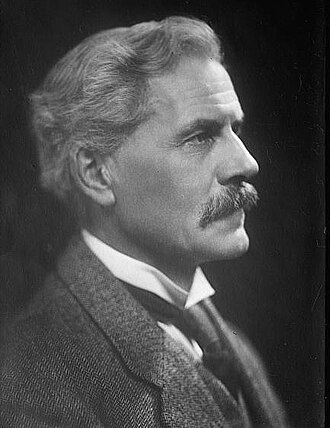
The crisis that actually ended MacDonald's government had nothing to do with Zinoviev. In August 1924, the Communist Party newspaper Workers' Weekly published an open letter urging soldiers not to fire on fellow workers in a class war, and prosecutors charged the paper's editor, John Ross Campbell, under the Incitement to Mutiny Act1,4. The government withdrew the prosecution under pressure, and Conservatives and Liberals combined to pass a motion of no confidence on 8 October 19241,3,4. Parliament was dissolved the next day, and an election was set for 29 October3.
That same day, 9 October, a 'very secret' telegram from MI6's station in Riga, Latvia, carrying an English text of the alleged Zinoviev letter, reached MI6 headquarters in London7. The letter, dated 15 September 1924, urged British communists to 'strain every nerve' to secure ratification of the Anglo-Soviet treaties and to intensify propaganda work inside the armed forces9. Exactly how it traveled from Riga into the hands of British officials, and then into a national newspaper, has never been fully settled; the Foreign Office received it by 10 October, two days after MacDonald's government fell in Parliament1,7.
Copies moved through intelligence and Conservative political circles for two weeks before the Daily Mail got hold of one around 24 October4,2. On 25 October, the paper ran it under the headline "Civil War Plot by Socialists' Masters," framing Labour's leadership as effectively controlled by Moscow1,4. Other right-wing papers picked it up within hours1.
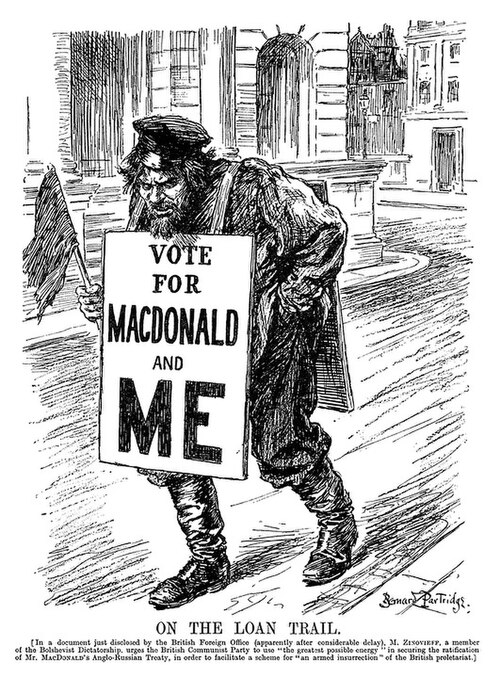
The Soviet response was immediate and furious. Soviet ambassador Christian Rakovsky rejected it as a forgery the day after publication5, and on 26 October a telegram from Zinoviev reached the Trades Union Congress denouncing the document as a 'gross falsification' and an 'election manoeuvre'4. Zinoviev later published a fuller denial in December 1924, pointing out that the Comintern never called itself the 'Executive Committee of the Third Communist International' and that he had been on holiday in Kislovodsk on the date the letter was supposedly signed1.
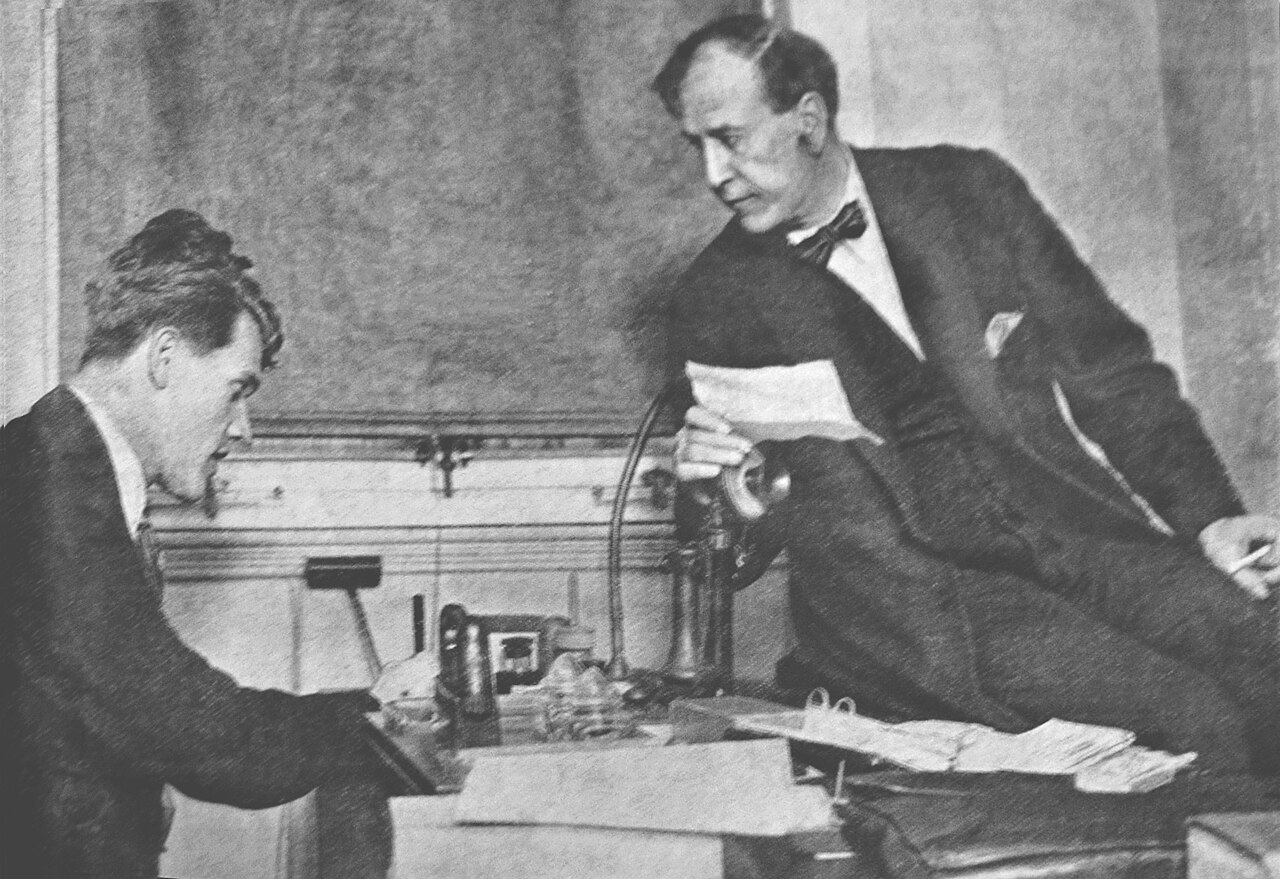
The truth about its origin did not surface for decades, and even then only partially. A 1967 book by three Sunday Times journalists first floated the idea that White Russian monarchists in Berlin had forged it, and the widow of one alleged forger, Irina Bellegarde, said she watched her husband draft it after being told the request came from 'a person in authority in London'1. In 1999, Foreign Office historian Gill Bennett, given access to British and Russian archives, concluded the letter was almost certainly a forgery, likely produced by White Russian émigré networks possibly involving Ivan Pokrovsky, with no proof that MI6 officers wrote the text themselves6,7,8. Bennett did find that British intelligence figures, including Desmond Morton, later Churchill's close aide, handled the document without verifying it and may have let it circulate for political convenience8. She called it, in the end, 'a most extraordinary and mysterious business' that remained 'incomplete'8.
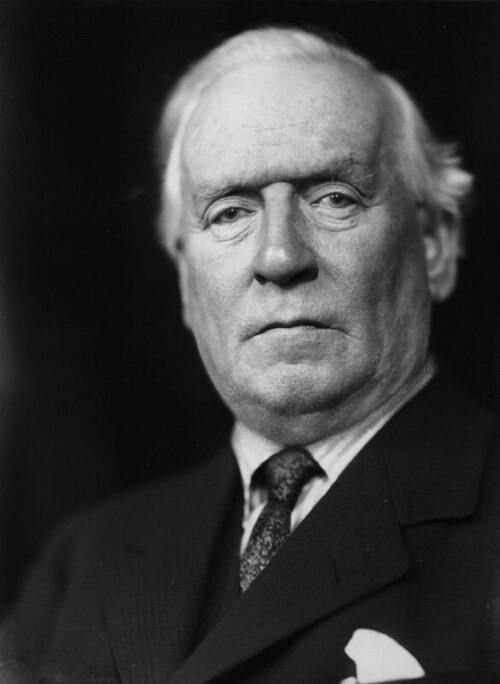
The Conservatives won the 1924 election by a landslide, gaining 155 seats, while the Liberal Party collapsed from 158 seats to 401,3. Labour's own vote share actually held up and its total vote rose by about a million, mostly because it fielded more candidates than before1,3. Historians have argued ever since about how much the letter itself mattered, given that Labour's parliamentary position was already untenable before the Daily Mail ever published anything1,10,11. What is certain is that by the time Philip Snowden got out of bed that Saturday morning, the question of who had actually written the letter was already the least important one in Westminster.
Timeline
- 22 January 1924Ramsay MacDonald forms Britain's first Labour government, a minority administration1.
- February 1924MacDonald extends official recognition to the Soviet Union1.
- August 1924Workers' Weekly editor John Ross Campbell is charged over an open letter urging soldiers not to fire on fellow workers; the prosecution is later dropped1,4.
- 8 October 1924MacDonald's government loses a no-confidence vote tied to the Campbell affair1,3,4.
- 9 October 1924Parliament is dissolved; an MI6 telegram from Riga carrying the alleged Zinoviev letter reaches London the same day3,7.
- 10 October 1924The Foreign Office receives the forged letter1.
- 24-25 October 1924The Daily Mail obtains and publishes the letter under the headline 'Civil War Plot by Socialists' Masters'1,4.
- 26 October 1924Zinoviev telegrams a denial to the Trades Union Congress, calling the letter a forgery and election manoeuvre4.
- 29 October 1924The Conservatives win the general election by a large majority; Labour loses office1,3.
- 21 November 1924The new Conservative government cancels the unratified Anglo-Soviet trade agreement1.
- January 1999Foreign Office historian Gill Bennett concludes the letter was almost certainly forged, likely by White Russian émigrés6,7,8.
Pictures



Sources
- Zinoviev letterWikipedia
- Zinoviev Letter | Encyclopedia.comencyclopedia.com
- 1924 United Kingdom general electionWikipedia
- Russia and the British voter: the 'Zinoviev Letter', 'Red Scare' and 1924 general electionwarwick.ac.uk
- SOVIET SEES FORGERY; Rakovsky Replies to Foreign ...The New York Times
- www.conspiracy.wiki · wiki · zinoviev-letter-1924The Zinoviev Letter - conspiracy.wikiconspiracy.wiki
- Red scare: the story of the Zinoviev letterpoliticshome.com
- Official: Zinoviev letter was forgedthe-independent.com · 1999
- The British Secret Service and Anglo-Soviet Relations in the 1920s Part I: From the Trade Negotiations to the Zinoviev LetterThe Historical Journal · 1977
- The British Election | American Political Science Review | Cambridge CoreCambridge Core · 1925
- The British Election | American Political Science Review | Cambridge CoreCambridge Core · 1925
- The Zinoviev Letter of 1924: A Classic Case of DisinformationRuser avec l’information · 2025
Researched and written by Lorelet from the sources above. It cites as it goes, but it can still get things wrong, so check the sources for anything that matters.
Report a problem
More featured lorelets
See all
Today · Science
Trapping Antimatter: The Hunt for Cosmic Asymmetry
At CERN, physicists have learned to hold antiprotons in magnetic bottles for months and measure them with brutal precision. The numbers keep coming b…

Today · Space
The Thousand-Mile Cloud That Shouldn't Exist
A white streak kept appearing beside a Martian volcano, growing fast and vanishing by lunch. It took eight years and a small army of orbiter images t…

Oct 24 · Sports
The Battle of the Buffet: Who Hit Ferguson With Pizza?
A Premier League match that ended a historic unbeaten run spilled into the Old Trafford tunnel, where someone hit Sir Alex Ferguson with a flying sli…