
Featured · Nov 19History
The Dam That Outlived the City It Was Built to Save
In a gorge above the ruins of ancient Antioch, a sixth-century wall of stone and concrete still does its job. The question is how it managed to.

Listen
Read by Finch · 6 min
A Wall Still Doing Its Job
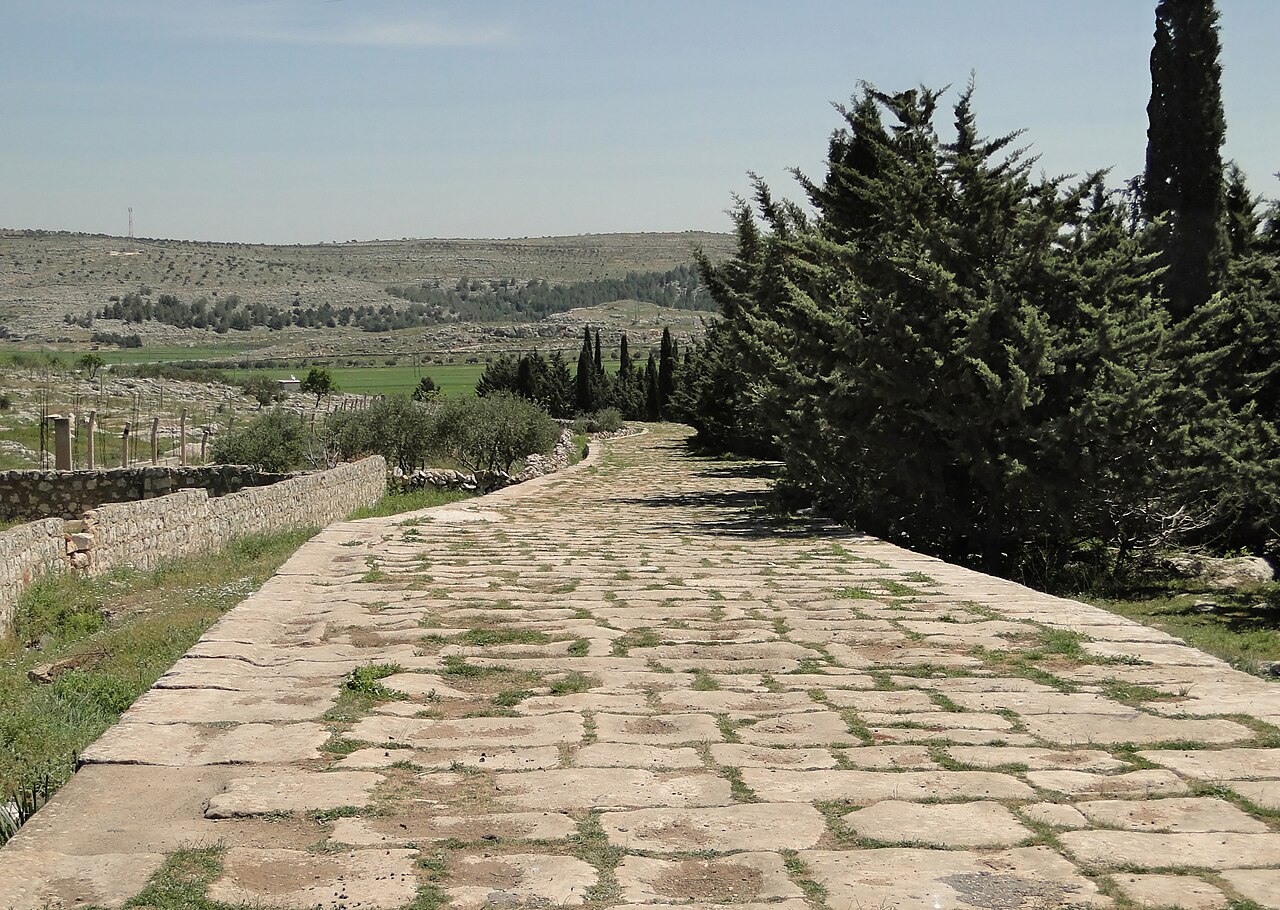
East of Antakya, in a narrow gorge once called the Parmenios ravine, a wall of Roman concrete and stone still stands about 36 meters high, 30 meters wide, and 7.1 meters thick1,8. It is still described as functioning as a dam8. The city it was built to protect is mostly gone, buried under meters of river silt, its monumental Roman street now sitting more than eight meters below the modern ground level9,4.
That is the part that does not quite add up. Antioch sat on one of the most seismically active stretches of the eastern Mediterranean, struck by more than sixty notable earthquakes over its history, roughly ten of them above magnitude 79. The city's walls, columns, and streets were pulled down, rebuilt, pulled down again. This one structure, tucked into a gorge and doing a job nobody much celebrates, kept working.
To understand why, you have to go back to what the gorge was for in the first place. Antioch was founded in 300 BC on the Orontes River, between the slopes of Mount Silpius and the riverbank, hemmed in by its own topography9. The Parmenios stream ran down from the mountains through a steep gorge toward the city, and during the rainy season it could turn violent, which is presumably why people called it the Onopniktes, the donkey drowner10.
The gorge was already carrying infrastructure before anyone built a dam there. Around 300 AD, an aqueduct crossed the Parmenios on a bridge, carrying water from a source near Dünsünlü, about 5 kilometers south of the city, into Antioch's center2. Even earlier, Antioch had dug tunnels and channels under its main streets just to manage water flowing in from the hills10.
By about 526, those older works had failed in an unglamorous way: they were clogged with alluvial sediment4,5. That same year, Antioch was hit by a major earthquake, one entry in a long list of disasters that kept dragging the emperor in Constantinople into the city's affairs4. Justinian I, who ruled from 527 to 565, oversaw the rebuilding that followed, including changes made when the city was reconstructed after 5408,4,11. Sometime around 550 to 555, his engineers, whose names the record does not preserve, finished the structure now called the Iron Gate, folding the old aqueduct crossing into something much larger: a dam, a bridge, a stretch of city wall, and a fortified gate all in one1,2,3.
What made it hold, where so much else in Antioch did not, comes down to a choice about shape. Instead of building a straight, heavy wall and trusting its own weight to resist the water, the builders gave the dam an arched, curved form that pushed the hydraulic pressure sideways into the solid rock of the gorge walls on either side1,6. The cliffs did part of the work the concrete would otherwise have had to do alone. That is also why it gets called, carefully, one of the earliest surviving arch dams and the only ancient one still functioning, a claim about what has survived to be seen rather than a claim about what came first8,7,12.
It did not stay untouched. Repairs followed over the following centuries, but Antioch's fortunes declined, trade routes shifted, and the structures around the dam were quarried, eroded, or simply abandoned as the city's importance faded13. By the modern era the Iron Gate survived as an isolated fragment, cut off from the vanished city walls it once belonged to, worn down by flooding, seismic activity, and decades of neglect3. The earthquakes that struck southern Turkey in February 2023 added fresh damage on top of old structural weakness, and in 2024 Europa Nostra listed the Iron Gate among Europe's 7 Most Endangered heritage sites, warning that without intervention the slow destruction would continue3.
None of that has stopped the dam from doing, in a reduced and battered way, roughly what it was built for. The wall in the gorge is still there. It is still, as far as the record shows, still a dam.
Timeline
- c. 300 ADAn aqueduct bridge crosses the Parmenios gorge, carrying water to Antioch from a source near Dünsünlü2
- 526 ADOlder aqueduct works are clogged with alluvial sediment; a major earthquake strikes Antioch4,5
- 527-565 ADReign of Emperor Justinian I, who oversees rebuilding in Antioch after disasters11
- c. 550-555 ADThe Iron Gate reaches its present form, combining dam, aqueduct, wall, and gate1,2,3
- February 2023Earthquakes in southern Turkey damage the already weakened structure3
- 2024Europa Nostra lists the Iron Gate among Europe's 7 Most Endangered heritage sites3
Pictures


Sources
- Iron Gate (Antioch) - WikipediaWikipedia
- 7ME 2024 Iron Gate Antioch Technical Report.docx7mostendangered.eu
- European experts renew call for decisive action to preserve the Iron Gate of Antioch in Türkiye - Europa Nostraeuropanostra.org · 2026
- Place - ToposTexttopostext.org
- Plekos 21, 2019plekos.uni-muenchen.de
- 📖 [PDF] Antioch by Andrea U. De Giorgi | 9780367633042, 9781317540410perlego.com
- Arch dam - WikipediaWikipedia
- List of ancient Greek and Roman architectural records - WikipediaWikipedia
- AntiochWikipedia
- Antiochia - Greek Travel Pagesgtp.gr
- Undamming a river; challenges and opportunitieskwua.org
- Antioch on the Orontesapi.pageplace.de
- History of dams - WikipediaWikipedia
Researched and written by Lorelet from the sources above. It cites as it goes, but it can still get things wrong, so check the sources for anything that matters.
Report a problem
More featured lorelets
See all
Today · Food
The Turkey Surplus That Became the TV Dinner
A company drowning in frozen birds found an answer on an airline food cart, or so the story goes for fifty years.

Today · Space
Why Is Jupiter's Great Red Spot Actually Red?
Jupiter is built almost entirely of colorless gas, yet its most famous storm glows orange-red. Scientists have spent decades in the lab trying to fig…

Today · Art & Design
The Aztec Labret Whose Golden Tongue Still Moves
A small gold serpent made for a pierced lip somehow ended up with a tongue that flicks side to side. No one alive has ever seen it worn.