
Featured · Nov 16History
The Hammer and the Hoxne Hoard
A tenant farmer's missing tool sent a retired gardener into a Suffolk field with a metal detector, and what came up out of the ground was not what either man expected.

Listen
Read by Finch · 9 min
A Hammer Goes Missing
On 16 November 1992, Eric Lawes swept a metal detector across a field near Hoxne, Suffolk, looking for a hammer that his friend, tenant farmer Peter Whatling, had lost while working the land1,2. The detector gave a signal, and Lawes began to dig. What came up was not a hammer. It was a gold coin, then another, then gold jewellery, then silver spoons, all apparently from the fourth century6.
He stopped digging2. For a man who had just stumbled onto what might be a fortune, it was an odd thing to do, but it is exactly what happened next that matters2.
Lawes was a retired gardener who had received the metal detector as a retirement present, not a professional treasure hunter out working a known site3,6. Whatling was simply the tenant farmer who needed his tool back. The errand that brought them to the field that day was ordinary enough that neither man had any reason to expect what the ground was about to give up.

Instead of clearing out the rest of the deposit himself, which is what plenty of detectorists before him had done at other sites, Lawes and Whatling reported the find immediately to Suffolk County Council, which owned the land, and to the police3,2. That single decision, made in a field on a November afternoon, is the reason the discovery became something archaeologists could actually study rather than just another pile of loose Roman silver with no context.
A team from the Suffolk Archaeological Unit, led by Judith Plouviez, arrived the next day and carried out an emergency excavation of what remained in the ground1,2. They finished it in a single day, lifting the deposit in small blocks of soil so the arrangement of objects, containers, and layers could be reconstructed later under laboratory conditions at the British Museum, where the finds arrived on 17 November2. That level of care let researchers determine that the hoard had been packed into a wooden chest, long since rotted away, and that it held coins, jewellery, and tableware all stowed together rather than scattered by chance3,2.
A coroner's inquest in Lowestoft declared the find Treasure Trove on 3 September 19932,1. The hoard was eventually valued at £1.75 million, and Lawes, as the legal finder, received the reward and chose to split it with Whatling, whose field it was and whose lost tool had started everything5,1.
The hammer itself turned up during the follow-up excavation of the site. It was donated to the British Museum, where it now sits near the treasure it led to, a plain iron tool keeping company with gold body chains and silver pepper pots3,6. Whatling had sent his friend out that day to find a hammer. It took the better part of a year, several archaeological teams, and a coroner's court to actually get it back to him.
What Was in the Ground
The final count, after a follow-up survey of the ploughed field in 1993 turned up a few more coins, came to 569 gold solidi, 14,272 silver coins, and 24 bronze coins, for a total of 14,8653,4. Some sources round the figure slightly differently depending on which recovery phase they include, but all agree it is the largest assemblage of late Roman gold and silver coinage ever found in Britain3,7.
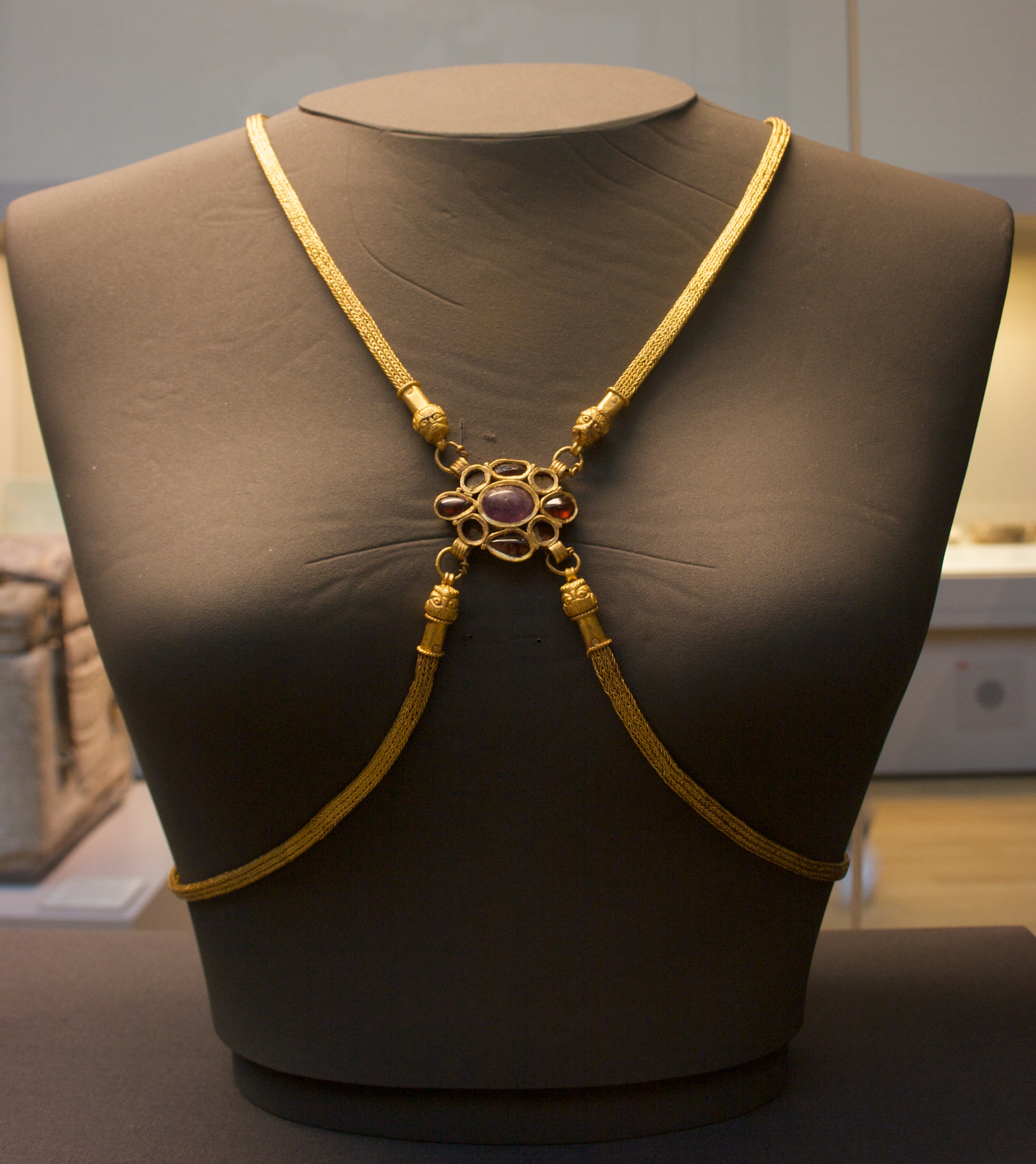
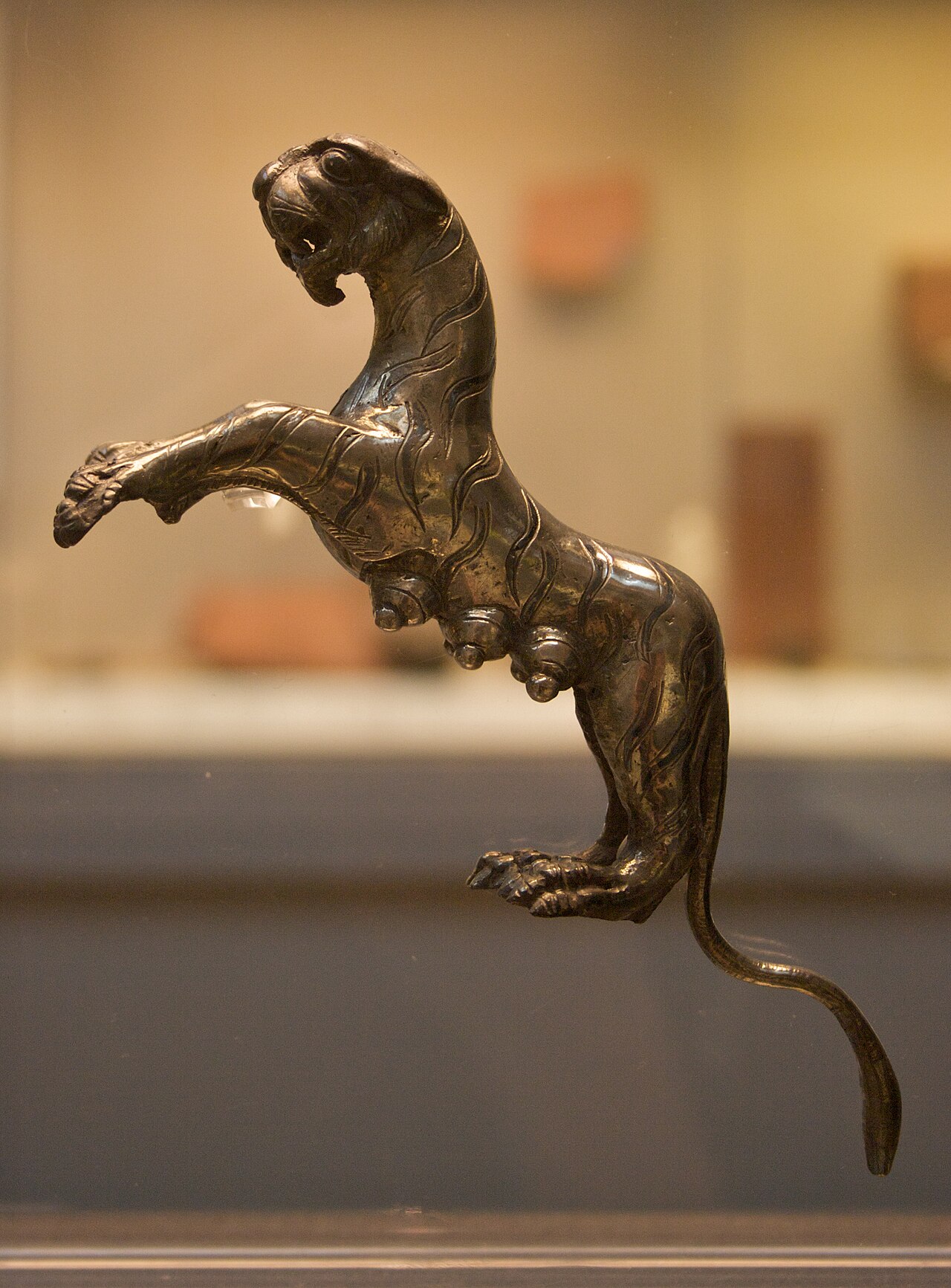
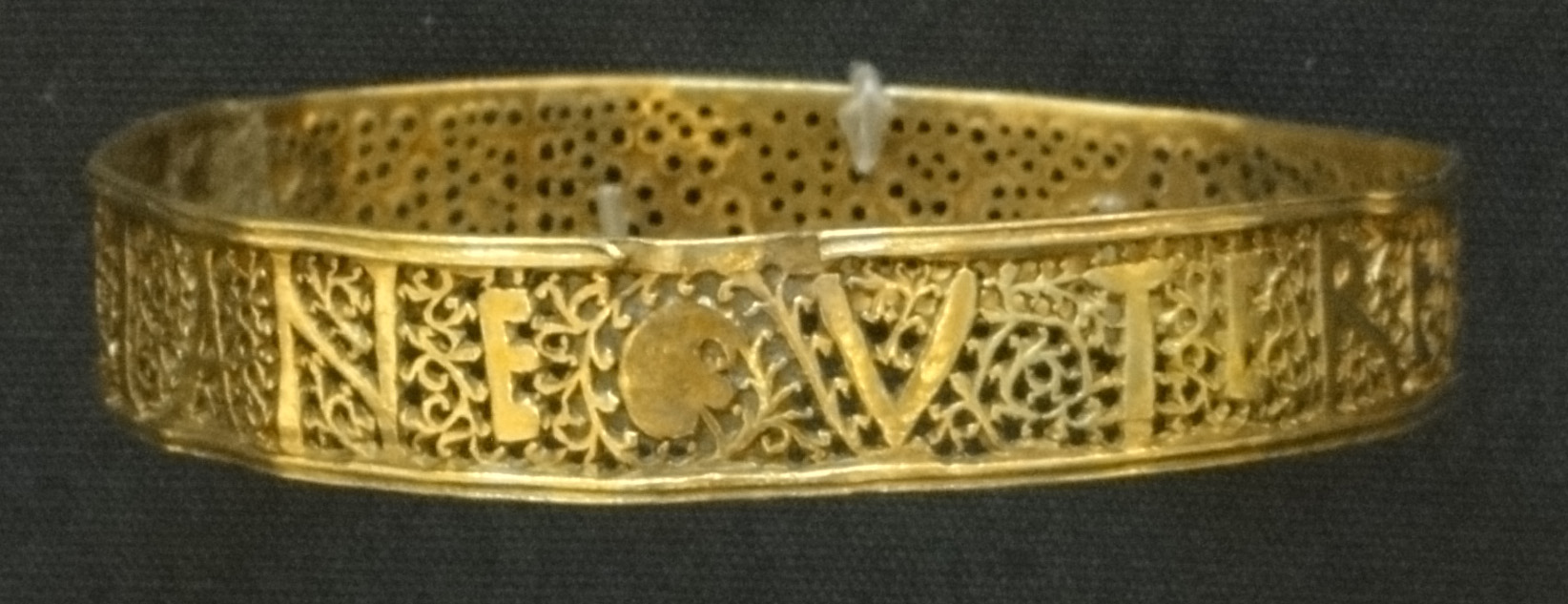
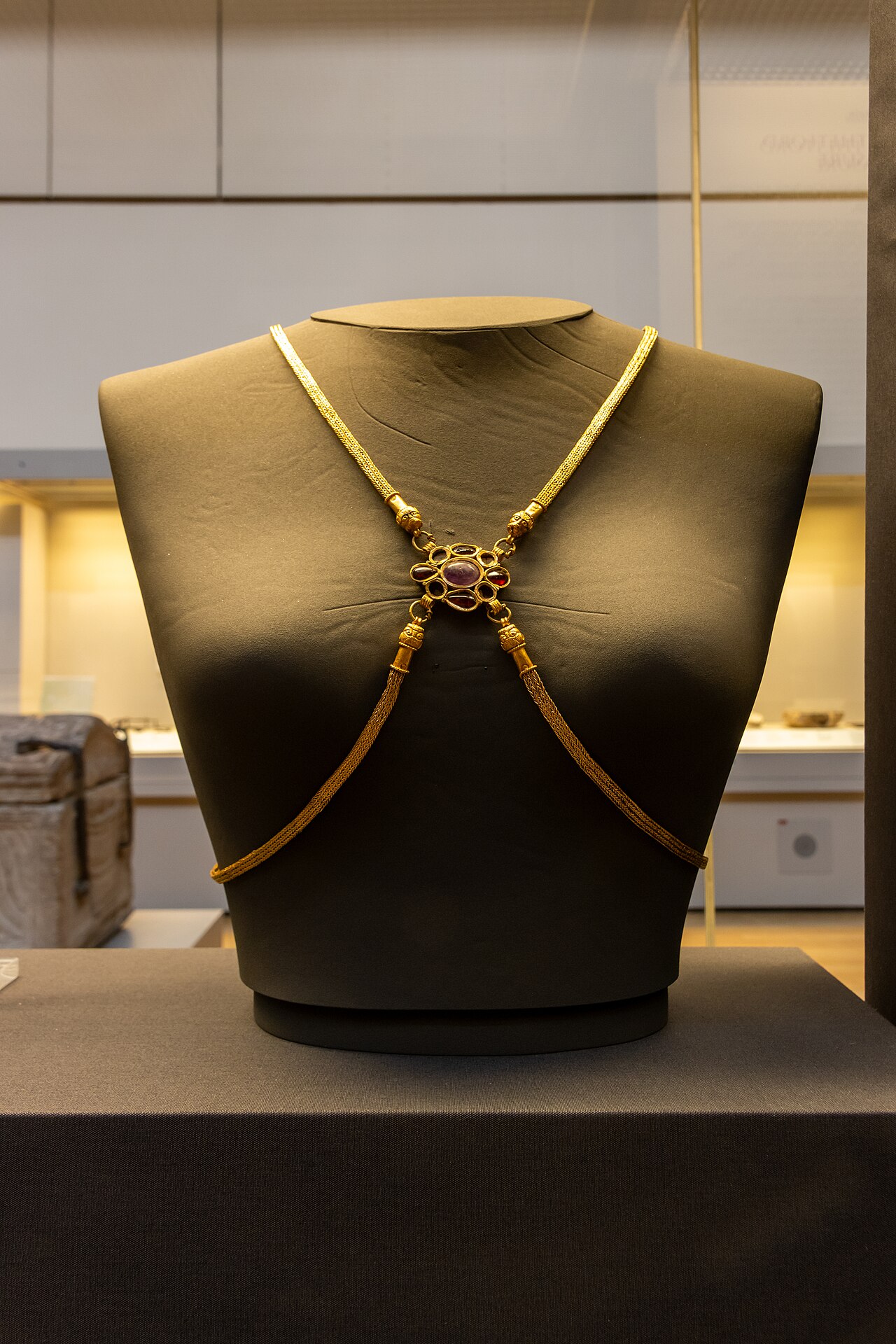
Alongside the coins were 29 pieces of gold jewellery, including a body chain, six necklaces, three rings, and nineteen bracelets, plus 78 silver spoons, 20 ladles, nine toilet implements, and four silver pepper pots, one shaped as a woman's bust and known as the Empress pepper pot3,4. That piece became well known enough to be featured in the BBC's A History of the World in 100 Objects, though curator Catherine Johns has cautioned that it likely depicts a wealthy Roman-British woman rather than an actual empress3,6.

The coins carry mint marks and emperors' portraits running from Valentinian I through Honorius, whose reign (AD 393 to 423) gives the hoard's latest fixed point3,2. Many of the silver coins had been clipped, a practice connected to Britain's silver supply running short in the twilight years of Roman administration, and the hoard's sheer volume of clipped coins has made it a reference point for studying that process3,7.
Why the objects went into the ground at all is less certain than what was in the chest. The traditional view ties the burial to the chaos of Britain's separation from the Roman Empire around AD 410, when wealthy households facing raids from Saxons, Picts, and others buried valuables they hoped to recover later7. Archaeologist Peter Guest has argued the coin evidence points to a burial date after 408 or 409, possibly later than the traditional timeline allows, though he has also said the dating methods available cannot settle the question definitively7.
Who Was There
- Eric Lawes: Retired gardener and amateur detectorist who found the hoard while using a metal detector he had been given as a retirement present3,6.
- Peter Whatling: Tenant farmer who lost his hammer and asked Lawes to help find it, then shared in reporting the discovery and in the reward1,2.
- Judith Plouviez: Led the Suffolk Archaeological Unit team that carried out the emergency excavation on 17 November 19922.
- Catherine Johns: British Museum curator who studied the hoard and offered a more grounded reading of the Empress pepper pot's identity3,6.
- Suffolk County Council: Landowner notified immediately by Lawes and Whatling, which set the official recovery process in motion3,2.
The Hoard by the Numbers
- 14,865 total coins: 569 gold solidi, 14,272 silver coins, 24 bronze3,4.
- 29 pieces of gold jewellery, including one body chain, six necklaces, three rings, and 19 bracelets3,4.
- 78 silver spoons and 20 ladles1,4.
- Four silver pepper pots, including the Empress pepper pot, about 7.5 centimetres tall4.
- Roughly 60 pounds (27 kg) of gold and silver objects in total3.
- £1.75 million valuation in 1993, about £3.77 million in 2025 terms3.
- Entire visible deposit excavated in a single day, 17 November 19922.
After the Dig
News of the find leaked to the press within days. The Sun ran a front-page story on 19 November with a photo of Lawes and his detector, claiming the hoard was worth £10 million before its contents or value had actually been assessed3. The British Museum held a press conference the following day to get ahead of the speculation, and once the initial frenzy passed, curators were able to clean and stabilize the hoard without further disruption, finishing basic conservation within a month3.
The site itself kept giving up material. A 1993 survey of the ploughed field added four more gold coins and 81 silver coins to the total, and a 1994 excavation, prompted by illegal detecting near the find spot, turned up a single post hole that may once have marked the burial location for whoever buried it, hoping to come back3.
The case became one of the arguments for overhauling Britain's treasure law. The old common-law doctrine of Treasure Trove, dating back to the era of Richard the Lionheart, only covered finds proven to have been deliberately buried with intent to recover them, a standard nearly impossible to satisfy in court8. The Treasure Act 1996 replaced it, widening what counted as treasure and guaranteeing that finders, tenants, and landowners could all share in a reward, codifying the kind of arrangement Lawes and Whatling had worked out between themselves3,6,8.
What's Still Disputed
Several popular retellings of the discovery include vivid details, such as a specific phrase Lawes supposedly said at the moment of discovery, that do not appear in the archaeological record or contemporary reporting. Those should be treated as embellishment rather than documented fact.
The exact burial date remains an open question among specialists. The traditional reading places it around the end of Roman administration in Britain, roughly AD 410, while Peter Guest has argued for a date after 408 or 409 that could run later into the fifth century, based on coin wear and clipping patterns rather than any organic material, since nothing in the hoard survived that could be radiocarbon dated7.
The identity of the figure on the Empress pepper pot is also unsettled. Early accounts assumed it depicted a Roman empress, based on a resemblance to later Byzantine imagery, but subsequent study of similar figures has suggested the design may not represent an empress at all, and Catherine Johns has proposed it more likely shows a wealthy Roman-British woman of the kind who might have owned the hoard3,9,6.
Timeline
- 16 November 1992Eric Lawes searches a Hoxne field for Peter Whatling's lost hammer and instead finds Roman coins and silver with his metal detector.
- 17 November 1992Suffolk Archaeological Unit, led by Judith Plouviez, carries out an emergency excavation; finds taken to the British Museum.
- 19-20 November 1992The Sun breaks the story; the British Museum holds a press conference to address public speculation.
- September 1993A follow-up survey of the ploughed field recovers additional coins, bringing the total to 14,865.
- 3 September 1993A coroner's inquest in Lowestoft declares the hoard Treasure Trove.
- 1993-94The hoard is valued at £1.75 million and acquired by the British Museum; Lawes shares the reward with Whatling.
- 1996The Treasure Act 1996 replaces the old common-law doctrine, partly in response to cases like Hoxne.
Pictures



Sources
- A man searching for a lost hammer in England accidentally discovered the richest Roman treasure ever found in Britainearth.com · 2026
- The Hoxne Late Roman Treasure | Britannia | Cambridge Corecambridge.org · 1994
- Hoxne HoardWikipedia
- The Roman Hoxne Hoard - World History Encyclopediaworldhistory.org
- Roman coins hoard found while man searched for lost hammernews.corticorp.com
- He Was Looking for a Lost Hammer. He Found a Roman Treasure Instead.popularmechanics.com · 2026
- A Search for a Lost Hammer Led to the Largest Cache of Roman Treasure Ever Found in BritainSmithsonian Magazine · 2018
- Plan to extend protection for buried treasureThe Independent · 1996
- Empress pepper potWikipedia
- Golden hoard and silver too at British Museumthe Guardian · 2003
Researched and written by Lorelet from the sources above. It cites as it goes, but it can still get things wrong, so check the sources for anything that matters.
Report a problem
More featured lorelets
See all
Today · Food
The Turkey Surplus That Became the TV Dinner
A company drowning in frozen birds found an answer on an airline food cart, or so the story goes for fifty years.

Today · Space
Why Is Jupiter's Great Red Spot Actually Red?
Jupiter is built almost entirely of colorless gas, yet its most famous storm glows orange-red. Scientists have spent decades in the lab trying to fig…

Today · Art & Design
The Aztec Labret Whose Golden Tongue Still Moves
A small gold serpent made for a pierced lip somehow ended up with a tongue that flicks side to side. No one alive has ever seen it worn.