Featured · TodayHistory
Stealing Thunder: The Petty Grudge Behind a Famous Phrase
A failed 1709 tragedy, a borrowed sound effect, and the critic who never let it go: how John Dennis gave English one of its sharpest idioms for getting ripped off.

Listen
Read by Wren · 5 min
A Flop, a Thunderclap, and a Furious Critic
John Dennis was not a man who went quietly. By 1709 he had spent most of a small inherited fortune, burned through a government sinecure arranged by the Duke of Marlborough, and settled into life as London's most combative literary critic, the kind of man who could turn a theater review into a blood feud4. That year, Drury Lane finally staged his tragedy Appius and Virginia, a Roman drama about a corrupt official trying to seize a soldier's daughter, which Dennis had reportedly written as early as 17057,2.
The play needed thunder. Eighteenth-century theaters already had ways of faking it, usually cannonballs or drums rattled offstage, but Dennis wanted something better and apparently built or refined a device that produced a more convincing rumble3,8. Later writers would attach a specific name to it, the thunder sheet, a large piece of tin shaken to produce a resonant growl, though the sources never nail down exactly what Dennis's version looked like4,9.

The thunder worked. The play did not. Appius and Virginia closed fast, with three nights being the number most often repeated, though no account firmly confirms where that figure originates3,8. Drury Lane's managers pulled it and slotted in something that actually sold tickets: a revival of Shakespeare's Macbeth, already a dependable crowd-pleaser1,6.
Here is where the story turns petty in the most satisfying way. Dennis, by one account still haunting the theater after his own humiliation, sat in the audience for Macbeth and heard his thunder device booming through the storm scenes4,3. He did not take it well. Tradition holds he leapt up and shouted something to the effect of, "That is my thunder, by God; the villains will play my thunder but not my play!"3
That line, or a version close to it, is the whole reason anyone remembers John Dennis today. It calcified into a phrase that no longer has anything to do with sound effects: to steal someone's thunder now means taking credit for, or preempting, somebody else's idea or moment1,6.
Who's Who
- John Dennis (1657/1658 to 1734): Playwright and critic, author of Appius and Virginia, and the man credited with the original complaint about stolen thunder4,7.
- Alexander Pope (1688 to 1744): Poet and satirist, longtime rival of Dennis; his 1729 Dunciad contains the earliest known printed version of the anecdote5,3.
- William Shakespeare: Author of Macbeth, the play whose Drury Lane revival allegedly reused Dennis's thunder effect; Shakespeare had been dead for roughly a century and had no part in the dispute1,2.
- Drury Lane management: The theater's unnamed leadership withdrew Dennis's play and later used his effect in Macbeth. No source names the individuals responsible1,3.
What's Solid, What's Just a Good Story
The durable parts of this tale check out. Dennis wrote Appius and Virginia, it opened at Drury Lane in 1709, it failed quickly, and Dennis was associated with a notably effective thunder device around the same production1,2,3. The idiom's traditional link to his outburst is old and widely repeated.
The shakier parts are the ones that make the anecdote fun to tell. The exact wording of Dennis's outburst varies by source and era: Pope's 1729 footnote has him simply crying "S'death! that is my Thunder," with no mention of theft at all, while later retellings from the 1730s and 1740s add the "steal" language and build out the scene with more drama each time5,3. Samuel Johnson himself apparently suspected Pope invented or embellished the whole episode, given how bitterly the two men despised each other3.

The "three nights" figure for the play's run gets repeated across sources but none of them cite an underlying box-office record, so treat it as traditional rather than verified3,8. And the exact mechanics of Dennis's device, whether it was a true innovation or an improvement on an existing trick, and whether "thunder sheet" accurately describes what he built, is similarly undocumented in detail3,4,9. Nobody in the sources claims there was a patent, a contract, or a lawsuit over the thunder. Dennis's grievance was moral, not legal, which is actually part of why the phrase works so well: it was always about credit, not property.
Why a Sound Effect Mattered So Much
Early 1700s London theater was in the middle of an arms race for spectacle. Thunder, lightning, trapdoors, and other mechanical effects were increasingly central to tragedies and supernatural dramas, Shakespeare revivals especially, because audiences had started expecting more than actors declaiming verse1,6. A good thunder effect could outlive the production it was built for, which is exactly what happened here: Dennis's play vanished from the repertory, but the theatrical trick he refined became a standard tool, eventually recognizable enough to end up described, imperfectly, as the "thunder sheet" still used in theaters today9,4.
That imbalance, a failed script versus a durable technical trick, is what gives the anecdote its shape. Dennis's resentment was really about watching the one thing he built outlast everything else he'd tried to say with it.
Timeline
- 1705John Dennis reportedly writes Appius and Virginia, though staging is delayed7.
- 1709Appius and Virginia opens at the Theatre Royal, Drury Lane, and fails quickly1,2.
- 1709 (soon after)Drury Lane stages Macbeth, reportedly reusing Dennis's thunder effect, prompting his outburst1,3.
- 1729Alexander Pope publishes the second edition of The Dunciad, containing the earliest known printed version of the anecdote5.
- 1734The Life of Mr. John Dennis is published, retelling the story with embellished dialogue shortly after Dennis's death5.
- 1747A biographical compilation first renders the quote using the verb 'steal,' closer to the modern idiom5.
Pictures


Sources
- Stealing thunderWikipedia
- Appius and Virginia (1709 play)Wikipedia
- Steal one's thunder: origin and history of phraseworldwidewords.org
- John Dennis (dramatist)Wikipedia
- Quote Origin: They Will Not Let My Play Run, But Steal My Thunder – Quote Investigator®quoteinvestigator.com
- BBC Learning English - Course: The Experiment / Unit 1 / Session 8 / Activity 1BBC · 2026
- Dictionary of National Biography, 1885-1900/Dennis, John - Wikisource, the free online libraryen.wikisource.org · 2011
- Steal one’s thunderworldwidewords.org
- Thunder sheet - WikipediaWikipedia
Researched and written by Lorelet from the sources above. It cites as it goes, but it can still get things wrong, so check the sources for anything that matters.
Report a problem
More featured lorelets
See all
Today · Film & TV
Late Night Horror: The BBC's Lost Ghost Tapes
A six-week 1968 BBC Two horror anthology vanished soon after it aired, and the story of why has grown scarier in the telling than the show itself.
Today · Art & Design
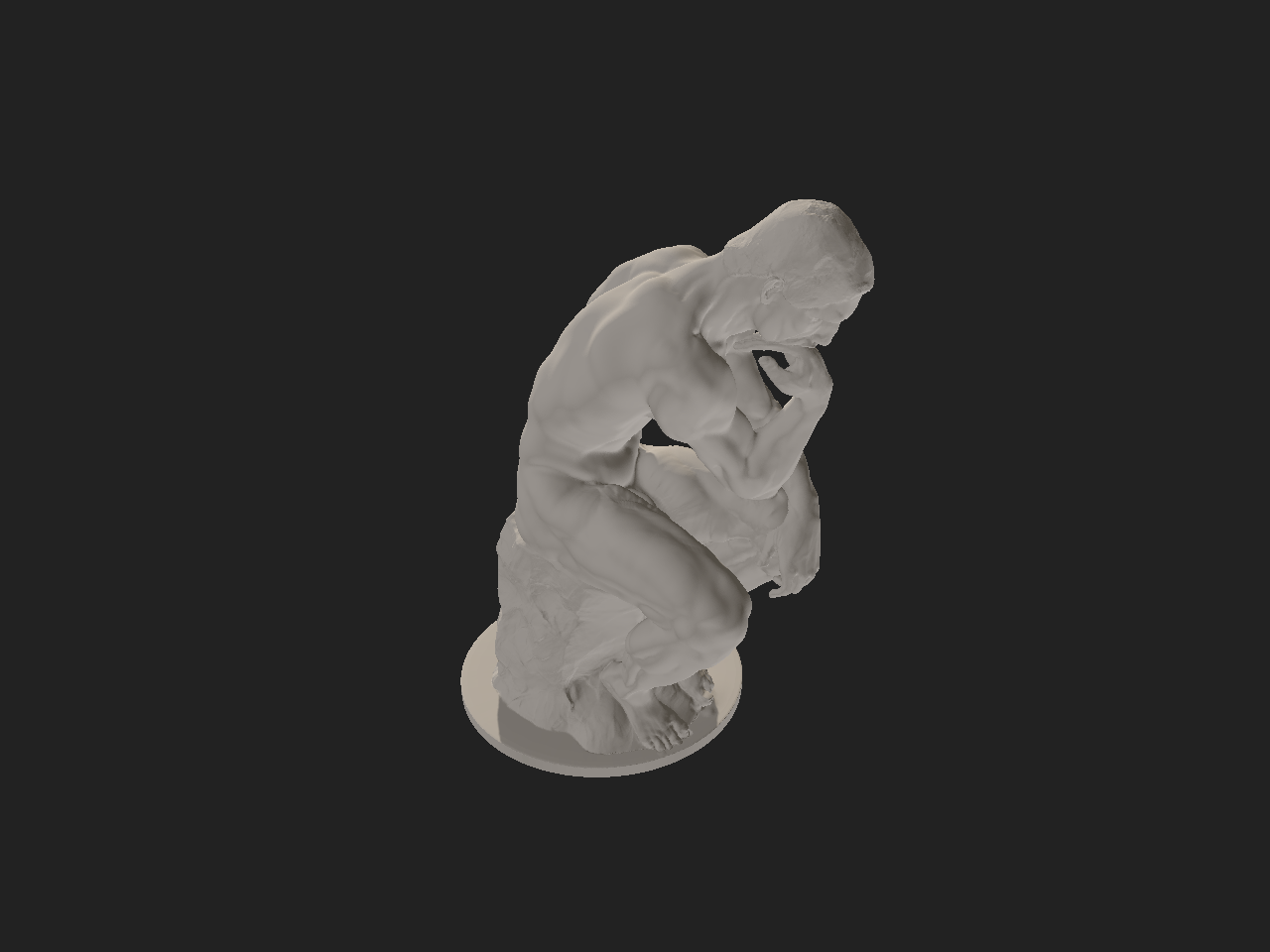
The Rodin Scan Fight: Who Owns a Digital Copy of Public Art?
An American artist spent nearly a decade trying to pry 3D scans of The Thinker loose from Musée Rodin, and the fight over whether the museum could ow…

Oct 3 · Technology
It Runs Doom: Now Inside a SQL Database
A database company spent its engineering hours making a 1993 shooter run entirely as SQL queries, the latest and strangest chapter in a decades-long…