
Featured · Nov 21Art & Design
The Painting Hilma af Klint's Foundation Didn't Fight For
A record-shattering auction in Stockholm reopened a decades-old argument about whether a mystic painter's visions belong to the public, the market, or no one at all.

Listen
Read by Wren · 8 min
Sixteen Times the Estimate
At Bukowskis in Stockholm on Thursday, November 19, 2026, a small abstract painting called Ser III No. 5 went under the hammer with a high estimate of $800,0001,2. By the time bidding stopped, it had sold for SEK 128.9 million, about $12.7 million with fees, nearly sixteen times what anyone expected1,2,3. It was the highest price ever paid for a work by Hilma af Klint, and the highest ever paid for any artwork in the Nordic region3.
The number alone made news. But it landed inside a fight that had nothing to do with the hammer price and everything to do with who gets to decide what happens to af Klint's work at all.
Hilma af Klint died in Djursholm, Sweden, in October 1944 after a traffic accident, at 814. She left behind more than 1,200 paintings and 125 diaries, and a condition: the public should not see the work for at least 20 years, because, as she put it to those around her, the world was not ready4,1. Af Klint had spent decades believing her hand was guided by spiritual forces she called the High Masters, channeled through sessions with a group of women known as The Five4. Her major cycle, The Paintings for the Temple, 193 works made between 1906 and 1915, was understood by her as something closer to religious instruction than art for sale6,7.
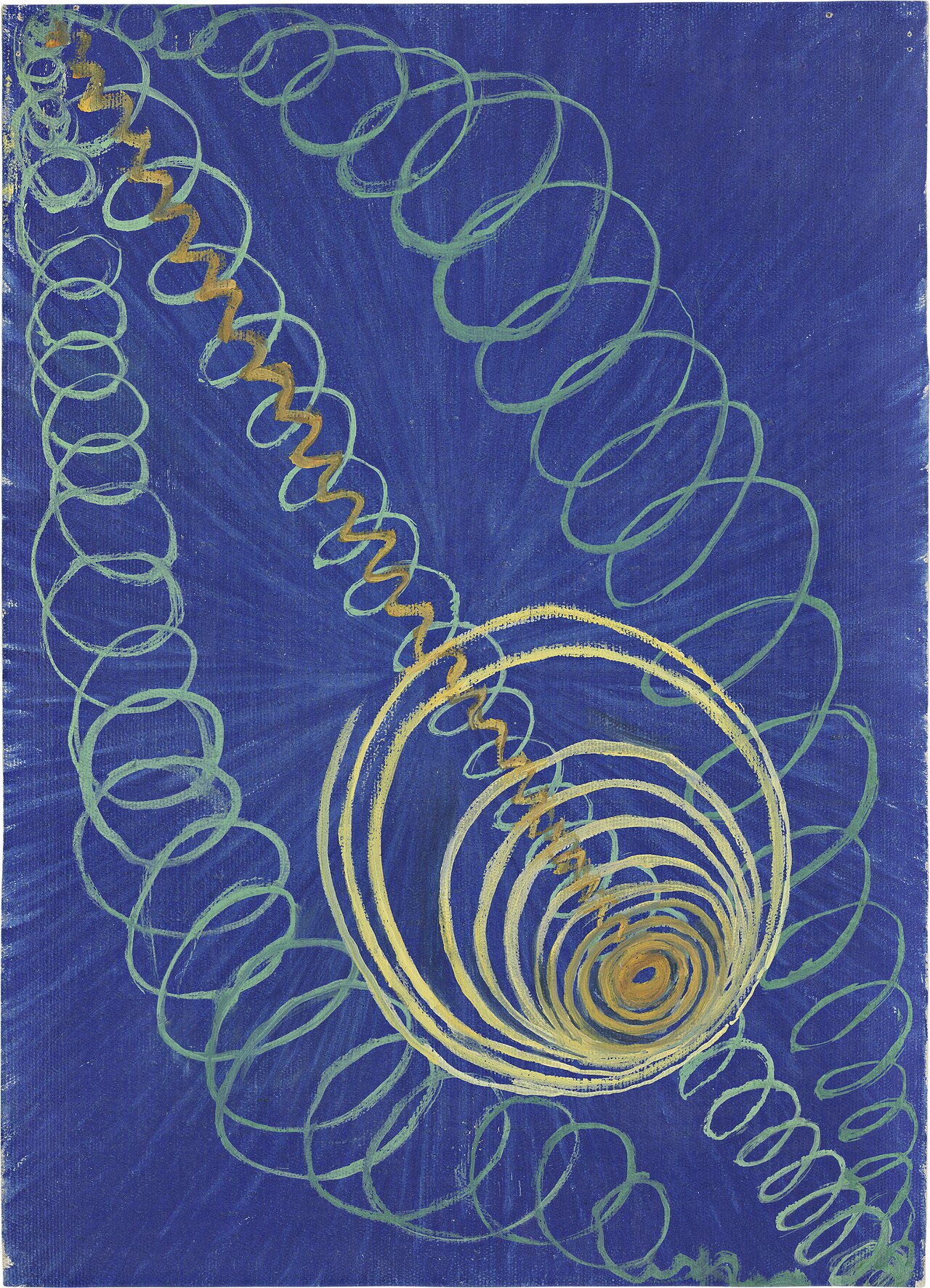
She left the collection to her nephew Erik af Klint, and it eventually passed into the Hilma af Klint Foundation, established in 197212,9. The foundation's rules drew a sharp line: the 193 Temple paintings could never be sold, but other, later works could be sold if the money went toward preserving the rest of the collection5,6,7. That distinction, seemingly tidy on paper, is the fault line everything since has run along.
For decades almost none of this mattered commercially, because almost nobody outside Sweden knew who af Klint was. That changed with the Guggenheim Museum's 2018-2019 exhibition, Hilma af Klint: Paintings for the Future, which drew enormous crowds and recast her, in the eyes of many art historians, as the first abstract painter in Western art, ahead of Kandinsky, Malevich, and Mondrian4,1. A 2022 biopic followed. Suddenly a body of work that had barely circulated was worth fighting over1.
The fighting had actually started earlier. In 2010, foundation board member Anders Kumlander proposed selling a selection of works to help fund a museum13. The family objected; Ulrika af Klint, then chair, said later that the board hadn't properly authorized it and that the full proceeds never reached the foundation13. It set the pattern for everything after: one side arguing that selling pieces could finance preservation and public access, the other insisting the work had to stay whole.
That pattern repeated in late 2024, when the foundation's board explored a partnership with the gallery David Zwirner that would have expanded international sale and circulation of af Klint's work9,10. Erik af Klint, the artist's great-grandnephew and by then foundation chair, opposed it, arguing the foundation existed to protect the work, not sell it9,10. Critics called the plan an attempt to plunder the estate; Zwirner's side rejected that word and said the deal would have supported wider access and conservation9. The arrangement fell apart by December 2024.
The painting that actually reached Bukowskis in 2026, though, hadn't come through any of that. It had been held by the same unnamed family since 1995, after the foundation deaccessioned what Bukowskis described only as "a small number of works"2. Louise Wrede, head of Bukowskis' art department, said the foundation knew about the 2026 sale and did not oppose it, and that once sold, the foundation had no further claim on the work11. The painting the world was arguing over, in other words, had already slipped outside the foundation's reach three decades before the fight over David Zwirner ever started.
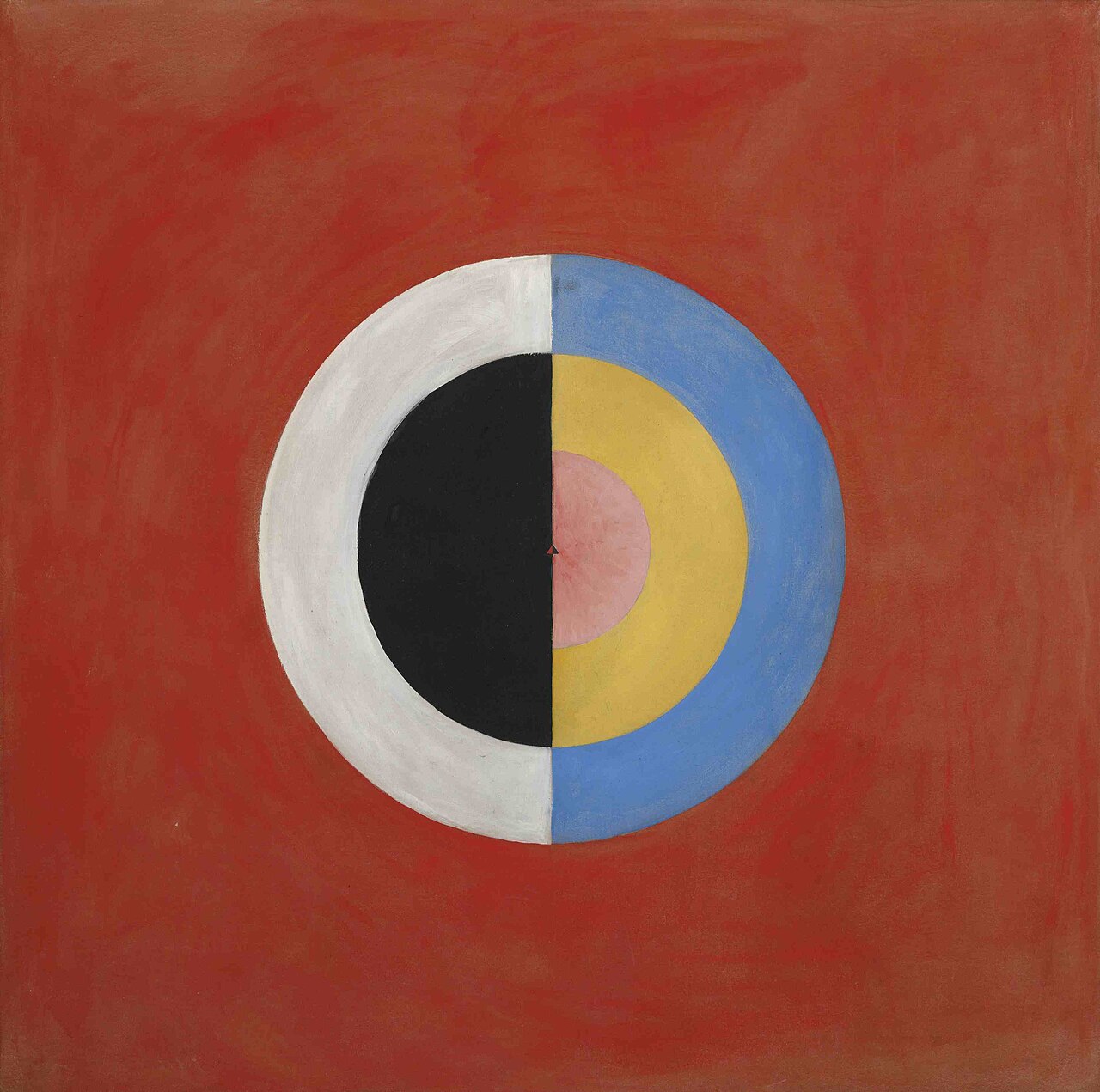
That earlier, quieter exit didn't resolve anything. In early 2025, Erik af Klint filed a petition with the Stockholm District Court, arguing the rest of the board had violated the foundation's statutes and should resign, while board members who favored wider access and permitted sales pushed back12,5,8. A March 2025 report raised the possibility that af Klint's work could eventually be pulled from public view altogether, or housed in a purpose-built temple setting, depending how the case resolved5,14.
None of that governance fight produced the Bukowskis sale, and none of it stopped it. The painting that broke af Klint's auction record, and the Nordic region's, was never really part of the current battle at all. It had already left the building.
Timeline
- October 21, 1944Hilma af Klint dies in Djursholm, Sweden, after a traffic accident.
- 1972The Hilma af Klint Foundation is established to manage her estate.
- 2010Board member Anders Kumlander proposes selling works to fund a museum; the family objects.
- 2018-2019The Guggenheim Museum's exhibition brings af Klint international fame.
- 1995An unnamed family acquires Ser III No. 5 after the foundation deaccessions a small number of works.
- 2019Af Klint's previous auction record, about $165,825, is set at Stockholms Auktionsverk.
- Late 2024A proposed partnership with gallery David Zwirner collapses amid objections from Erik af Klint.
- Early 2025Erik af Klint petitions the Stockholm District Court over the foundation's governance.
- November 19, 2026Ser III No. 5 sells at Bukowskis for SEK 128.9 million, a record for the artist and the Nordic region.
Pictures


Sources
- One of Hilma af Klint's Amazingly Rare Abstract Paintings Sold for a Record $12.7 Million at Auction. But Should It Have Been on Sale at All?Smithsonian Magazine · 2026
- Hilma af Klint Painting Sells in Sweden for $12.7 M., a Recordartnews.com
- News - Rare Hilma af Klint Painting Achieves Record SEK 128.9 Million at Bukowskis - Bukowskisbukowskis.com
- Hilma af KlintWikipedia
- Could Hilma af Klint's Works Be Removed From Public View?hyperallergic.com
- Is Hilma af Klint's Legacy at Risk of Being Locked Away?news.artnet.com
- Hilma af Klint Descendant Opposes David Zwirner Gallery ...hyperallergic.com
- Hilma af Klint: should art be for the public, despite the artist's wishes?artshub.com.au
- David Zwirner Responds to Accusations of Attempting to ‘Plunder' Hilma af Klint's Estatenews.artnet.com
- Partnership Deal Between the Hilma af Klint Foundation, David Zwirnerartnews.com
- Hilma af Klint Abstract Painting to Be Auctioned for the First Time in More ...swedenherald.com
- Auction of rare Hilma af Klint artwork illuminates tensions over her legacyNPR · 2026
- The Strange Afterlife of Hilma af Klint, Painting's ...The New Yorker
- Hilma af Klint's art could be hidden from public viewdn.se
Researched and written by Lorelet from the sources above. It cites as it goes, but it can still get things wrong, so check the sources for anything that matters.
Report a problem
More featured lorelets
See all
Today · Food
The Turkey Surplus That Became the TV Dinner
A company drowning in frozen birds found an answer on an airline food cart, or so the story goes for fifty years.

Today · Space
Why Is Jupiter's Great Red Spot Actually Red?
Jupiter is built almost entirely of colorless gas, yet its most famous storm glows orange-red. Scientists have spent decades in the lab trying to fig…

Today · Art & Design
The Aztec Labret Whose Golden Tongue Still Moves
A small gold serpent made for a pierced lip somehow ended up with a tongue that flicks side to side. No one alive has ever seen it worn.