Featured · Sep 29History
The Two Planes That Landed as One
Over a paddock in New South Wales, a 22-year-old trainee pilot flew a wrecked, welded-together pair of bombers to a landing nobody thought possible.

Listen
Read by Wren · 7 min
A Grinding Crash Over a Paddock
It started as a routine cross-country exercise, the kind trainee pilots did every week. Two Avro Ansons from No. 2 Service Flying Training School took off from Forest Hill, near Wagga Wagga, on the morning of 29 September 1940, headed toward Corowa and back1. At the controls of the upper aircraft, tail number N4876, was Leading Aircraftman Leonard Graham Fuller, 22, from Cootamundra, with navigator Ian Sinclair beside him. Below and slightly ahead flew L9162, piloted by 19-year-old Jack Inglis Hewson, with Hugh Fraser as his navigator1.
At about 300 metres over the township of Brocklesby, the two aircraft banked into a turn. Fuller lost sight of the Anson beneath him. Then, in his own words later, came "a grinding crash and a bang as roaring propellers struck each other and bit into the engine cowlings"1. The two planes did not fall apart. They locked together, the lower Anson's gun turret wedged into the upper wing root, its tail balancing against the other's tailplane, like two mismatched puzzle pieces jammed shut by force1.
Here is the detail that makes the story: the collision killed both engines on Fuller's aircraft, but the engines on the plane underneath kept running at full power. The combined wreck did not plummet. It kept flying, slowly circling, what Fuller called a "freak combination... lumping along like a brick"1. He discovered, almost by accident, that his ailerons and flaps still answered him, giving him enough grip on the air to actually steer this improvised, two-fuselage aircraft.
Sinclair and Fraser bailed out by parachute. Then Hewson followed them, his back sliced by the other plane's spinning propeller blades as he climbed free1. That left Fuller alone, riding a machine that was never meant to exist, hunting for somewhere to put it down.
He flew about 8 kilometres, found a large paddock southwest of Brocklesby, and brought the locked aircraft in for a belly landing. The wreck slid roughly 180 metres across the grass before stopping1. Fuller later told the RAAF's Inspector of Air Accidents that he had simply done what he'd been trained to do: land near a farmhouse, land into the wind. "She was pretty heavy on the controls, though," he added1.
Who Was Aboard
- Leonard Graham Fuller: 22-year-old trainee pilot of the upper Anson, N4876; stayed at the controls through the whole ordeal and made the landing1,2.
- Ian Menzies Sinclair: Fuller's navigator, 27, from Glen Innes; parachuted to safety1.
- Jack Inglis Hewson: 19-year-old pilot of the lower Anson, L9162; injured by propeller blades but parachuted out and survived1.
- Hugh Gavin Fraser: Hewson's navigator, 27, from Melbourne; parachuted to safety, but was later killed in a separate training-flight collision in Northern Ireland in January 19421.
Why It Didn't Fall Apart
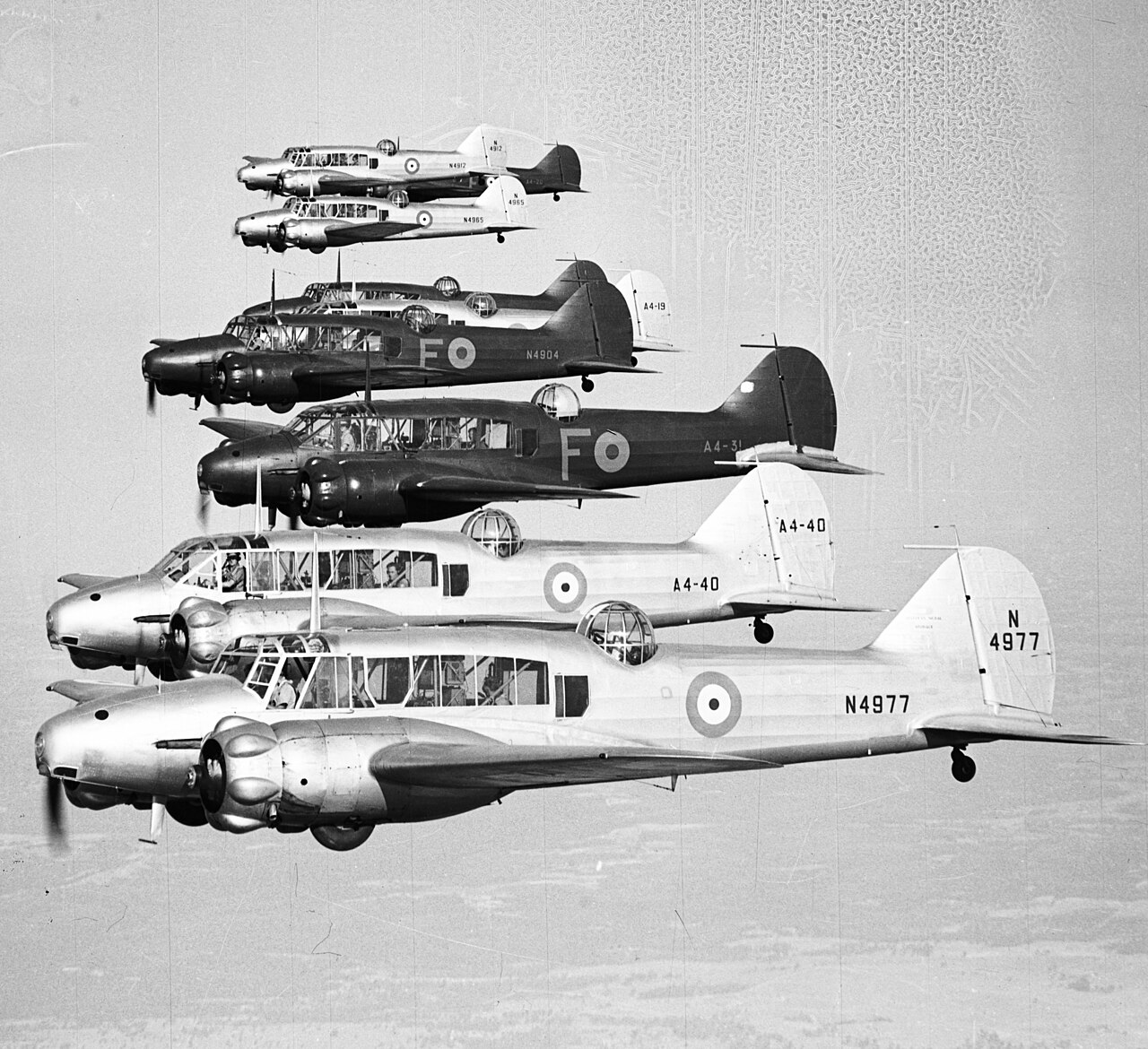
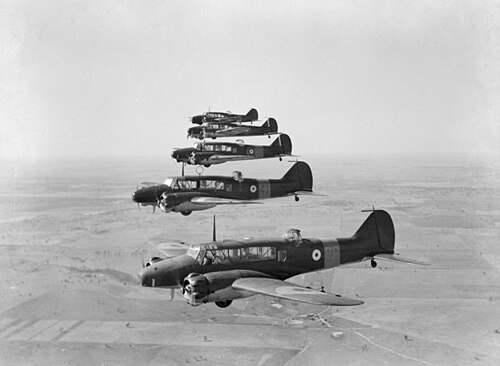
The Avro Anson was Britain's workhorse trainer of the era, a twin-engine monoplane originally built for coastal patrol but repurposed by the thousands to teach Commonwealth pilots to fly during the Second World War4. No. 2 Service Flying Training School, still a construction site when its first course began in July 1940, was one of many such schools feeding pilots into the Empire Air Training Scheme1.
What kept the two wrecked Ansons airborne was a matter of dumb structural luck. The lower aircraft's engines survived undamaged and kept generating thrust. Its landing gear was intact too, meaning Fuller could set the combined wreck down on wheels rather than skid it in on a torn belly1. Meanwhile his own aircraft, though engineless, still had working control surfaces. He essentially flew a two-fuselage glider bolted to a functioning engine block underneath it, steering with one plane's flight controls and drawing power from the other's motors.

Group Captain Arthur "Spud" Murphy, the RAAF's Inspector of Air Accidents, flew in from Melbourne the moment he heard, and called the improvised landing site "perfect"1. It's a rare thing for an accident investigator to hand out that kind of compliment.
What Happened After
News of the collision traveled fast; papers around the world picked it up, turning Brocklesby into an unlikely dateline1. Fuller was credited with saving roughly £40,000 in military hardware, and both Ansons were eventually repaired: N4876, the upper aircraft, went back into flight service, while L9162 became an instructional airframe used for training on the ground rather than in the air1.
Fuller's reward was mixed. He was promoted to sergeant, but also confined to barracks for two weeks and docked a week's pay, for talking to newspapers about the incident without permission1. He went on to serve with No. 37 Squadron RAF, earned the Distinguished Flying Medal for operations over Palermo in 1942, and was commissioned as an officer1,2.

He never got much time to enjoy any of it. Posted back to Australia as an instructor at No. 1 Operational Training Unit near Sale, Victoria, Fuller was killed on 18 March 1944 when he was hit by a bus while riding his bicycle1,2. Hewson recovered from his injuries, graduated the training course the following month, and was discharged in 1946 as a flight lieutenant1. Fraser, one of the men who'd parachuted clear of the wreck, died less than eighteen months later in an unrelated mid-air collision during a training flight in Northern Ireland1.
Brocklesby itself never let the story go. A monument was unveiled at the landing site on the 50th anniversary in 1990, and part of one of the aircraft still sits in the town's Blacksmith Park1,3.
The Basic Figures
- Date: 29 September 19401
- Altitude at collision: about 300 metres (1,000 feet)1
- Distance flown after collision: about 8 kilometres (5 miles)1
- Crew aboard both aircraft: four
- Fatalities from the collision itself: none1
- Estimated value of aircraft saved: about £40,000 at the time, roughly AU$4.7 million in 2022 terms1
Timeline
- 29 July 1940No. 2 Service Flying Training School begins its first course at Forest Hill, near Wagga Wagga1.
- 29 September 1940Two Avro Ansons collide over Brocklesby and remain locked together; Fuller lands the combined wreck safely1.
- October 1940Fuller and Hewson both graduate from No. 2 Service Flying Training School1.
- March 1942Fuller earns the Distinguished Flying Medal for operations over Palermo1.
- 1 January 1942Hugh Fraser, who parachuted from the Brocklesby collision, dies in a separate mid-air collision in Northern Ireland1.
- 18 March 1944Fuller is killed near Sale, Victoria, after being struck by a bus while cycling1.
- 29 September 1990A memorial marking the 50th anniversary of the collision is unveiled at the landing site1,3.
Pictures



Sources
- 1940 Brocklesby mid-air collisionWikipedia
- The mid-air collision of two Avro Ansons on a training flight from No. 2 Service Flying Training ...awm.gov.au
- 50th Anniversary of the Avro Anson Aircraft Collision | Monument Australiamonumentaustralia.org
- Avro AnsonWikipedia
Researched and written by Lorelet from the sources above. It cites as it goes, but it can still get things wrong, so check the sources for anything that matters.
Report a problem
More featured lorelets
See all
Today · Film & TV
Why Nick Jr. Aired the Same Blue's Clues Episode All Week
A preschool show about a cartoon dog and her pawprints became a quiet experiment in how children actually learn from television — and the data said:…
Today · Crime
Liquid Gold: The Black Market for Used Cooking Oil
Green energy policy turned restaurant fryer grease into a commodity worth stealing, and a quiet corner of American crime grew up around it.

Today · Business
The Terminal: How a Firing Built Wall Street's Addiction
Michael Bloomberg got pushed out of Salomon Brothers with a check for about $10 million. He turned it into a locked-box machine that trading floors s…