Featured · TodayArt & Design
The Rodin Scan Fight: Who Owns a Digital Copy of Public Art?
An American artist spent nearly a decade trying to pry 3D scans of The Thinker loose from Musée Rodin, and the fight over whether the museum could own the public domain all over again still isn't fully resolved.
Listen
Read by Finch · 7 min
A sculptor's statue, a stranger's scan
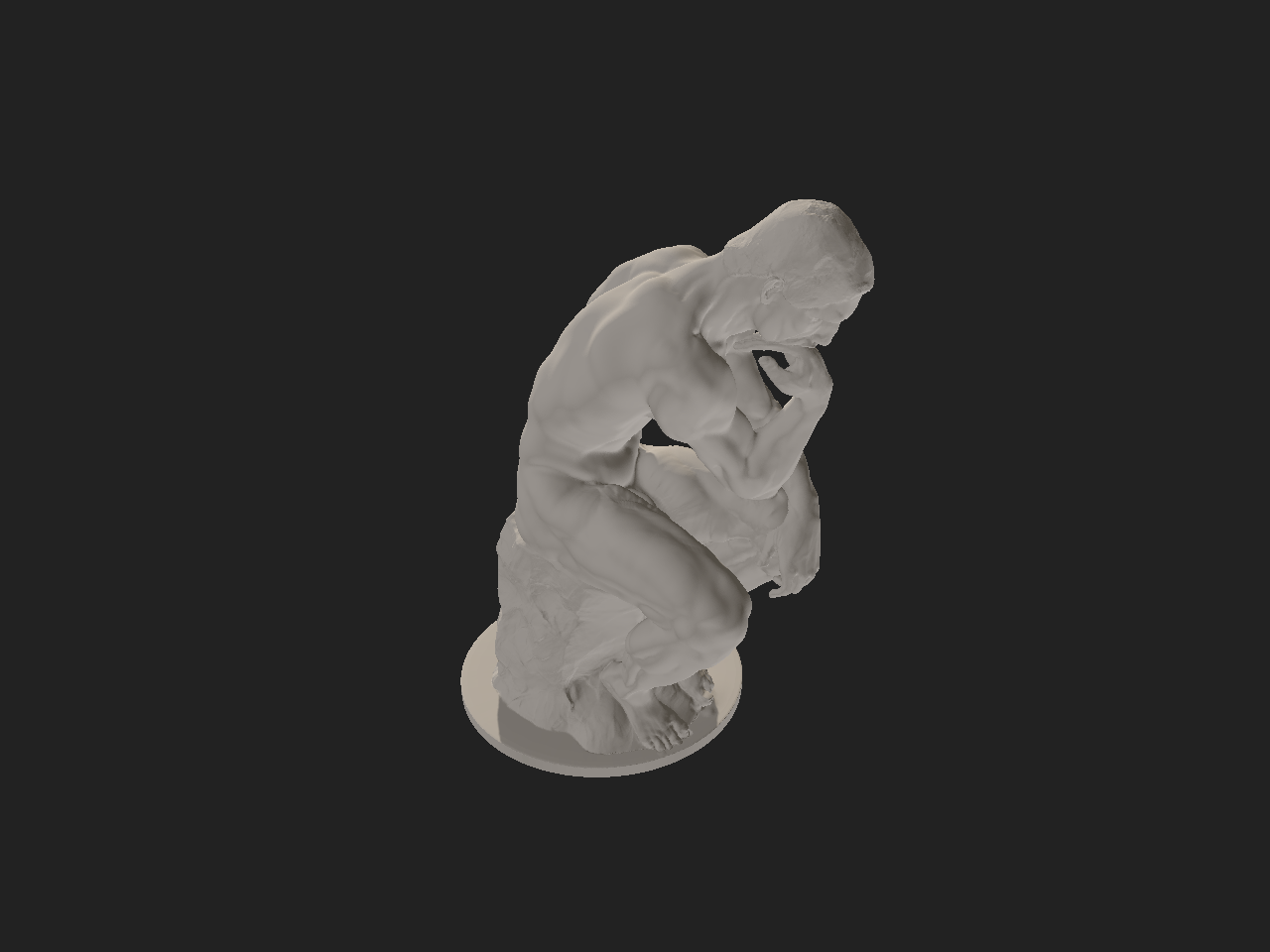
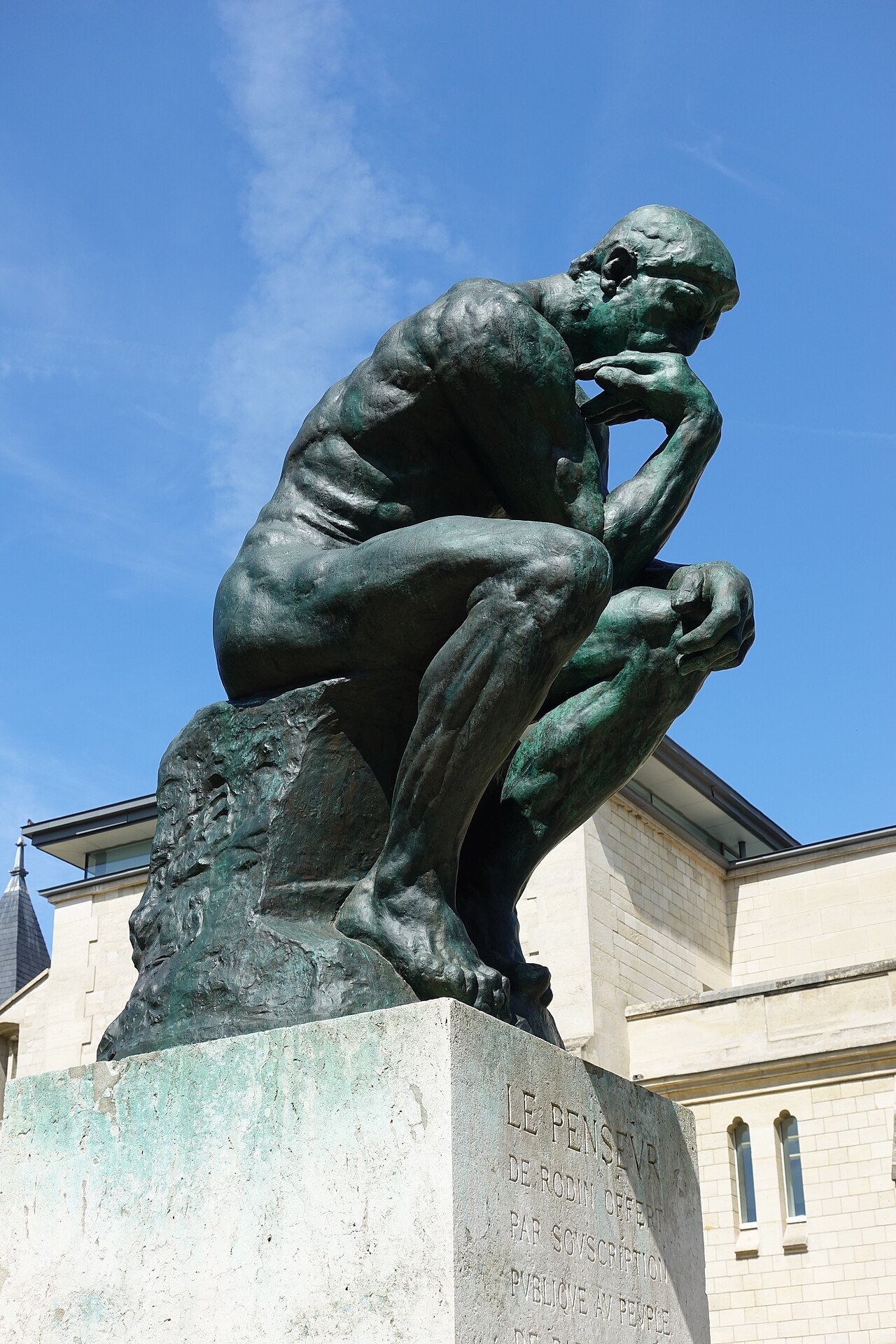
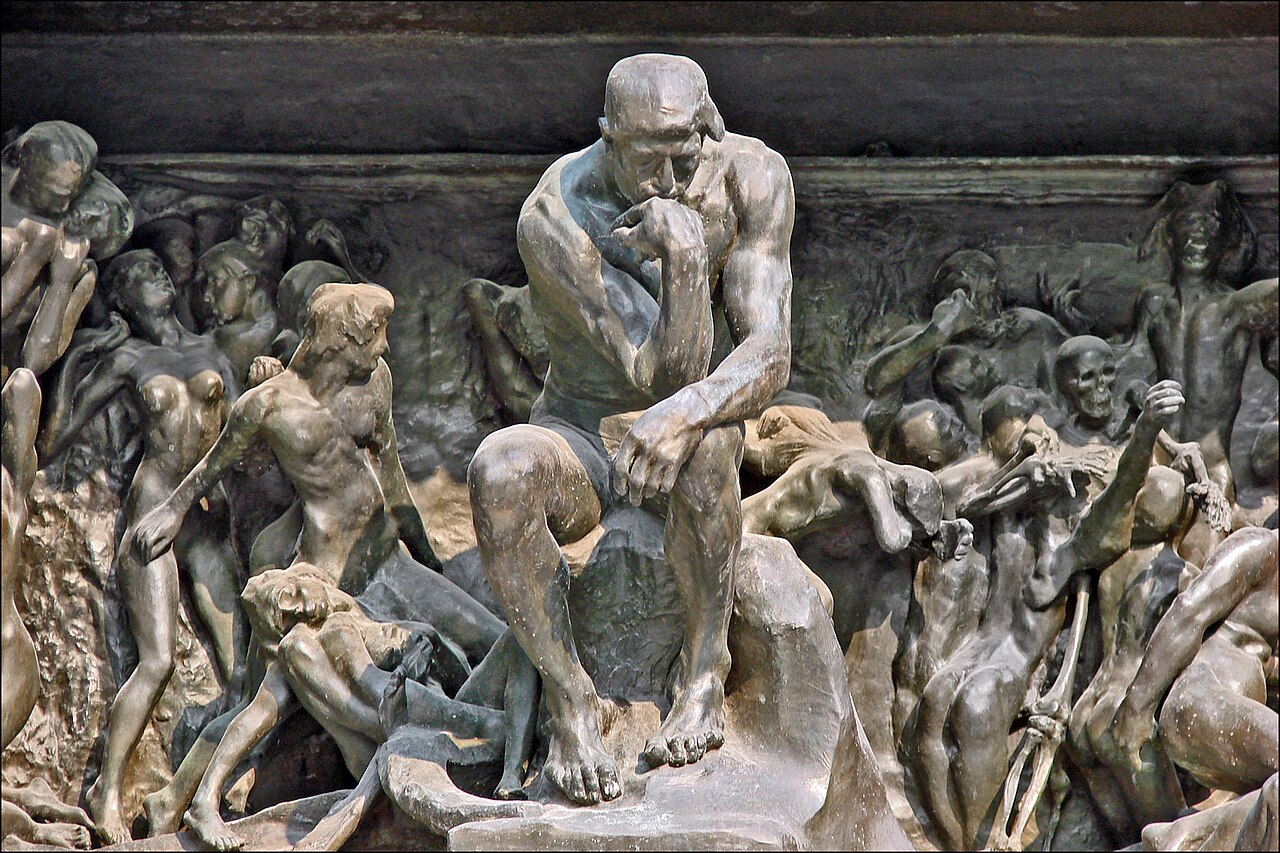
Auguste Rodin died in Paris on 17 November 1917, which means his sculptures, including The Thinker, have been public domain for a very long time6. Anyone can photograph them, study them, write about them, even cast replicas, without owing the Musée Rodin a cent in royalties. What nobody could legally get their hands on, for years, was something that didn't exist in Rodin's lifetime at all: a high-resolution digital scan of those sculptures, the kind of file precise enough to let someone 3D print a nearly perfect copy.
That gap is what pulled Cosmo Wenman, an American artist and fabrication consultant, into a decade-long standoff with one of France's most prestigious museums. Wenman's interest in Rodin scans goes back to 2014, when he discovered the Baltimore Museum of Art had promised, then quietly failed, to release its own scan of The Thinker, deferring instead to Musée Rodin as the sculptor's moral-rights heir1,7. Chasing that thread led him straight to Paris.

In late 2018, Wenman formally requested Musée Rodin's 3D scans under French freedom-of-information law, covering works including The Thinker, The Kiss, The Gates of Hell, and The Sleep, in various materials from marble to patinated plaster1,4,2. The museum said no, and warned French officials that releasing the files would be disastrous for the whole national museum system, since scanning technology was itself a product it had paid to produce1.
Wenman took the fight to CADA, the French commission that referees these disputes, and in June 2019 it ruled in his favor for the first time in its history: 3D scans made by French national museums, it said, were administrative documents subject to public disclosure1,8. The museum ignored the ruling anyway, so in December 2019 Wenman sued in the Administrative Tribunal of Paris, asking for the files, an order to comply, and financial penalties, reportedly up to 1,000 euros a day, for continued delay1,7.

The case dragged. The museum stayed silent for more than a year before a court finally forced it to present a defense in early 2021, and when it did, in March 2021, Wenman called the filing a mendacious manifesto against openness1,9. By then the dispute had attracted real allies: Wikimedia France, Communia, and La Quadrature du Net joined as plaintiffs, with Communia filing its first-ever strategic litigation brief arguing that an undefended public domain is a public domain in name only1.
On 21 April 2023, the Administrative Tribunal of Paris ruled, and Wenman says it ordered the museum to make scans of The Thinker, The Kiss, and The Gates of Hell accessible, a decision he called historic3,10. International press at the time had already been framing the case as a potential landmark, a precedent that could stop museums everywhere from re-fencing art the public already owns2,11.
Then the story gets murkier. According to a French legal analysis published 15 January 2026, France's Conseil d'État, the country's highest administrative court, ruled on 23 December 2025 that works in Musée Rodin's collections, and their reproductions, including digital ones, are not administrative documents at all, and therefore are not subject to disclosure under the law Wenman had used4. That analysis states the museum's refusals over files for The Kiss, The Gates of Hell, The Sleep, and The Thinker remain legally effective, even as it also notes those same refusals were, in part, annulled, a contradiction the source itself does not fully resolve4. Wenman's own account, last updated in 2026, says the matter is still pending before that same top court5. Whether the public actually has, or will ever have, a right to these files remains an open question depending on whose account you trust.
Who's who
- Cosmo Wenman: American artist and open-access campaigner who filed the original requests and lawsuit1,2.
- Musée Rodin: Paris museum holding Rodin's estate; refused to release its scans, citing economic harm1,4.
- CADA (Commission d'accès aux documents administratifs): French body that ruled in June 2019 that the scans were disclosable administrative documents1,8.
- Administrative Tribunal of Paris: Court that ordered disclosure in April 2023 after the museum ignored CADA1,3.
- Conseil d'État: France's supreme administrative court, which, per a January 2026 report, ruled in the museum's favor in December 20254.
- Wikimedia France, Communia, La Quadrature du Net: Open-access organizations that joined the suit as plaintiffs in 20211.
Why a scan isn't just a photo
The legal fight never really argued that Rodin's sculptures belong to the public; that was settled the moment his copyright expired. The argument was over the file: a point cloud or mesh detailed enough to drive a 3D printer or CNC mill and produce a near-exact physical copy1,7. Musée Rodin's position, as French commentary later summarized it, rested on reading its scans as falling outside the category of government records the disclosure law covers, exempting museum-owned works and their reproductions altogether4.
The stakes were never abstract. Reunion des Musees Nationaux, the Ministry of Culture's own commercial arm, has been selling access to roughly two thousand museum 3D scans since 2013, including works by Michelangelo and the Venus de Milo, while simultaneously stonewalling Wenman's requests to actually buy one12. Across the Channel, the British Museum blocked a researcher group's attempt to scan the Parthenon marbles in 2022, and the group reportedly obtained images of one fragment anyway and had it replicated in Italy, a parallel skirmish in the same larger war over who controls digital access to old stone13.

For museums, the scans are revenue and leverage. For campaigners, withholding them turns public domain art into something that functions, in practice, like property again, just one layer removed from the original object.
What's actually settled, and what isn't
The two latest accounts of the case flatly disagree. Wenman describes the April 2023 trial court ruling as a historic win establishing a public right to these scans, and says the case is still alive before France's top court3,10,5. A French legal website, writing in January 2026, says the Conseil d'État already decided against that reading in December 2025, holding that museum reproductions, digital or otherwise, are not disclosable4.
Even that source is internally inconsistent: it states the refusals over several specific files were annulled, in the same breath it says those refusals remain in effect4. That may reflect a split outcome across different parts of the original 2023 judgment, since the December 2025 ruling reportedly addressed only two articles of it, but the available material doesn't spell out which files, if any, were actually released. Nobody disputes that the fight happened, that CADA sided with Wenman in 2019, or that the trial court ruled in his favor in 2023. What's unresolved is whether any of that produced a real, final, enforceable right to the files, or whether France's highest court quietly closed that door at the end of 2025.
Timeline
- 17 November 1917Auguste Rodin dies in Paris; his works later enter the public domain6.
- 5 July 2017Cosmo Wenman's first contact with Musée Rodin about 3D scan access7.
- Late 2018Wenman formally requests Musée Rodin's 3D scans under French FOI law1,2.
- June 2019CADA rules the scans are disclosable administrative documents1,8.
- December 2019Wenman sues Musée Rodin in the Administrative Tribunal of Paris1,7.
- March 2021Museum files its defense; Wenman calls it corrupt1,9.
- 21 April 2023Tribunal rules scans of The Thinker, The Kiss, and The Gates of Hell must be accessible, per Wenman3.
- 23 December 2025Conseil d'État reportedly rules against disclosure4.
- 15 January 2026French legal analysis reports the scans are not communicable administrative documents4.
Pictures



Sources
- RODIN MUSEUM FOIAcosmowenman.com · 2018
- Musée Rodin could be forced to release 3D scans of bronze sculptures—including The Thinker—to the publictheartnewspaper.com
- Secret 3D Scans in the French Supreme Court - cosmo wenmancosmowenman.substack.com
- Les scans 3D du Musée Rodin ne sont pas des documents administratifs communicables - Jurisfacjurisfac.org · 2026
- COSMO WENMANcosmowenman.com
- The ThinkerWikipedia
- Les données des scans 3D du Musée Rodin devant la justice administrativenext.ink · 2022
- RODIN 3D SCAN ACCESS CAMPAIGNcosmowenman.com
- The Rodin Museum Files a Corrupt Defensecosmowenman.substack.com
- urgent appeal for expert testimony on point cloudscosmowenman.com
- Imminent Win For The Public Domain: Court Likely To Compel Musée Rodin To Release Its 3D Scans Of Sculptor's Works For Free - Above the Lawabovethelaw.com
- RÉUNION DES MUSÉES NATIONAUX PRETENDS TO SELL 3D SCANScosmowenman.com · 2022
- La battaglia per il diritto di replica in 3D - Il Giornale dell'Arteilgiornaledellarte.com · 2023
Researched and written by Lorelet from the sources above. It cites as it goes, but it can still get things wrong, so check the sources for anything that matters.
Report a problem
More featured lorelets
See all
Today · History
Stealing Thunder: The Petty Grudge Behind a Famous Phrase
A failed 1709 tragedy, a borrowed sound effect, and the critic who never let it go: how John Dennis gave English one of its sharpest idioms for getti…
Today · Film & TV
Late Night Horror: The BBC's Lost Ghost Tapes
A six-week 1968 BBC Two horror anthology vanished soon after it aired, and the story of why has grown scarier in the telling than the show itself.

Oct 3 · Technology
It Runs Doom: Now Inside a SQL Database
A database company spent its engineering hours making a 1993 shooter run entirely as SQL queries, the latest and strangest chapter in a decades-long…