Featured · TodayFilm & TV
From Middle-earth to Camelot: Building Excalibur
John Boorman tried to cram all of Tolkien into one strange, unmakeable movie. When it collapsed, he poured everything he'd learned into King Arthur instead.

Listen
Read by Wren · 8 min
The Movie That Ate Middle-earth
In 1970, United Artists owned the film rights to J.R.R. Tolkien's The Lord of the Rings and needed someone to turn three fat volumes into one movie1. They picked John Boorman, a British director who had just made Point Blank, and paired him with Rospo Pallenberg, an Italian architect-turned-screenwriter chasing a career in film1,7.
What they produced was not a cautious abridgment. Boorman and Pallenberg mapped the whole of Middle-earth, broke the story into scenes, worked out how to stage battles with thousands of extras before anyone had computer-generated imagery to fake it, and tried to solve, on paper, problems no one had solved on screen before2,1. Boorman later called the result an almost-unmakeable script, and that was not false modesty1.
Accounts of the drafts, drawn from Boorman's own papers, describe an adaptation wildly unlike anything a Tolkien estate would sanction today: Lothlorien reimagined by Pallenberg as something closer to a house of pleasure, a scene pairing Boromir and Aragorn with a kiss to seal their alliance, and battle notes totaling more than 66,000 men and 8,000 horses for the war scenes8. Boorman later recalled spending roughly a year on the project, though other accounts put the core writing period closer to six months, numbers that likely describe different phases of a long process rather than contradicting each other outright2,7.
It never got made. United Artists was in financial trouble and balked at the cost, and the project was shelved rather than greenlit2,1. Boorman shopped the script around, reportedly getting as far as a conversation with Disney, and even later tried to buy the rights back from producer Saul Zaentz for a reported $1 million, all without success2. The film version of The Lord of the Rings that actually reached screens in the 1970s came not from Boorman but from Ralph Bakshi's animated adaptation4.
Second Chance, Different Legend
Boorman did not throw away what he'd built. He had been drawn to Arthurian material even earlier, with a Merlin-centered script dating back to around 1969, before United Artists ever brought him Tolkien5,3. When the Tolkien deal fell apart, he went back to that older idea, and this time the pieces fit.

Boorman has said plainly that the technical groundwork from the Tolkien project, the design thinking, the visual research, the sheer practice of imagining a mythic world at scale, carried straight over into Excalibur2. The sets and some of the imagery, according to multiple accounts, were recycled from the abandoned Rings production3,4. The subject changed from hobbits to knights, but the problem Boorman had already spent a year wrestling with, how to make an epic, legendary world feel physically real on a modest budget, stayed the same.
The new screenplay, again written with Pallenberg, drew primarily on Sir Thomas Malory's 15th-century Le Morte d'Arthur, reshaped into something closer to myth than history5,9. Boorman told an interviewer during filming that the project was concerned with mythical truth, not historical truth, and that he was setting it in a world of the imagination, deliberately evoking, in his own words, a kind of Middle-earth3,4. The line between the two projects, in his head at least, never fully closed.
Building Camelot in Ireland
Boorman and production designer Anthony Pratt spent roughly a year developing Excalibur's look, producing more than 1,000 concept drawings for sets, armor, and props10. The goal was never archaeological accuracy. Saturated color, mirror-polished armor, mist, and theatrical, almost static compositions turned budget limits into a style, one that reviewers have since described as feeling more like watching a stage play than a conventional historical epic3.
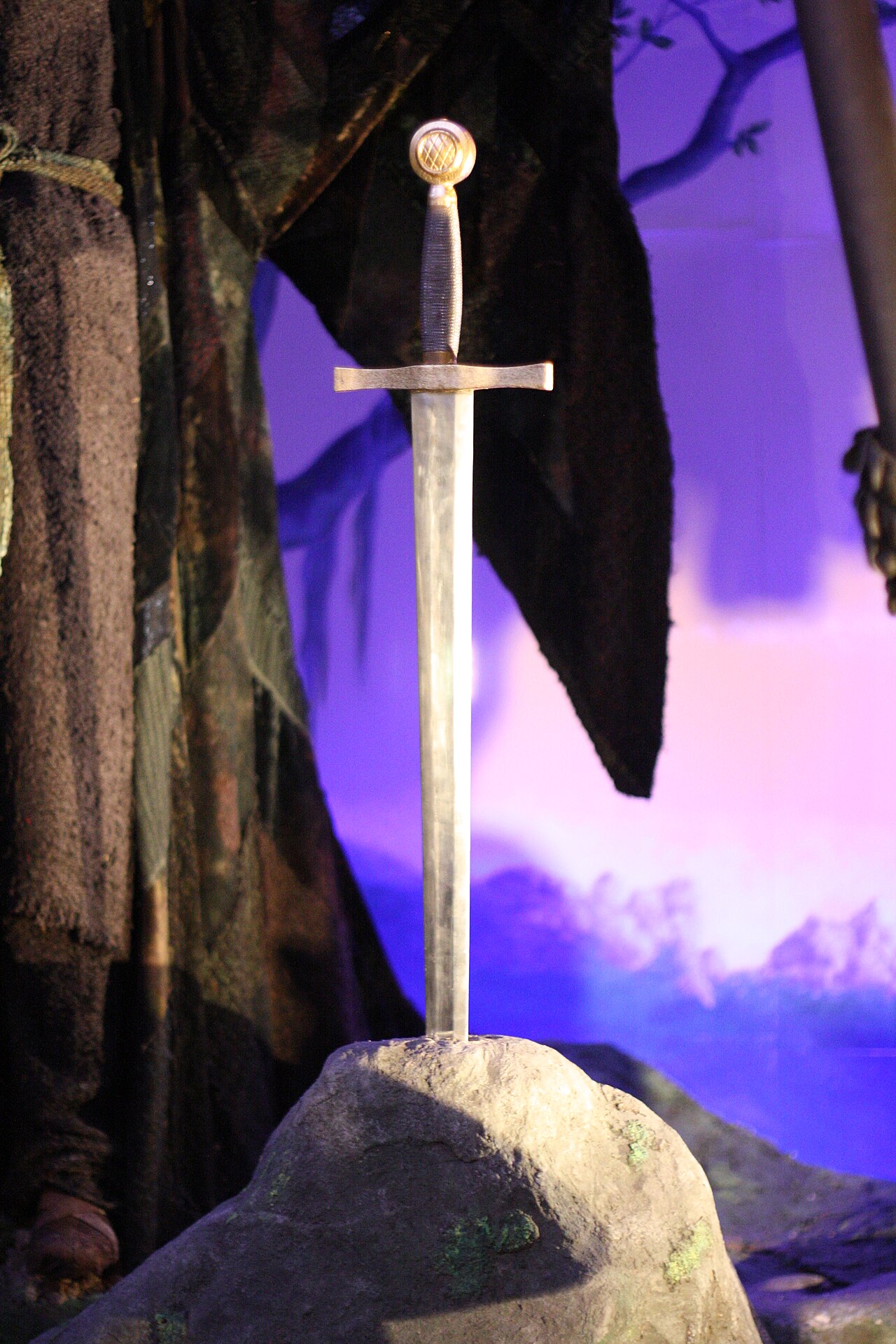
Financing came together through Orion Pictures, with Warner Bros. distributing, on a budget reported at around $11 million5,6. Principal photography began in March 1980, shot entirely on location in Ireland, across County Wicklow, County Tipperary, and County Kerry, with interiors built at Ardmore Studios5,3,6. The decision to shoot practically everything outdoors in Ireland's forests, hills, and ruined castles meant the production rarely had to build an exterior world from scratch; the landscape largely supplied one9.
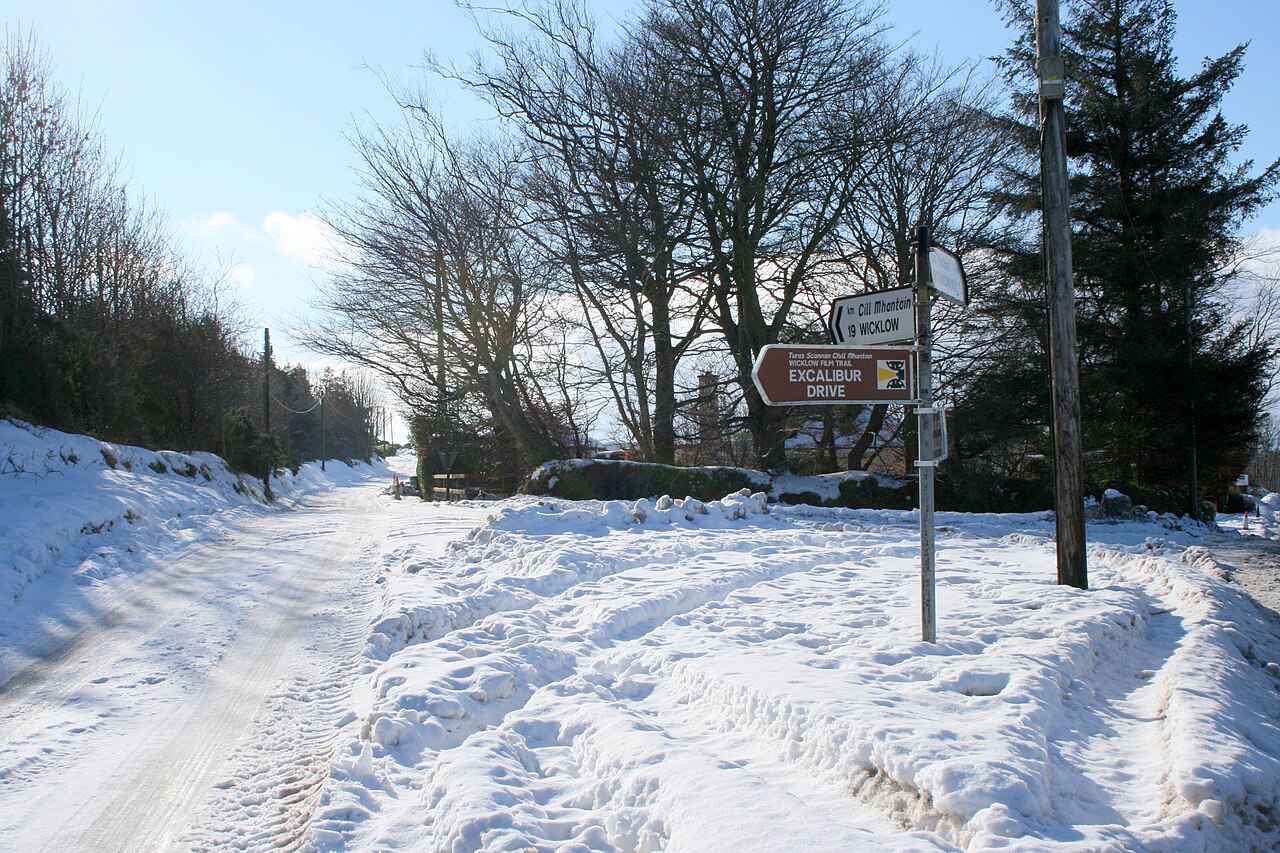
That choice had consequences beyond the screen. Excalibur became a landmark production for the Irish film industry, employing Irish crews, actors, and locations at a scale the country hadn't often seen, and the film is still credited with helping launch the careers of Liam Neeson, Patrick Stewart, Gabriel Byrne, and Ciarán Hinds5,9.
Who's Who
- John Boorman: British director and co-writer; pursued both the Tolkien adaptation and Excalibur, carrying design work from one into the other.
- Rospo Pallenberg: Italian architect turned screenwriter; co-wrote both the unproduced Lord of the Rings script and Excalibur.
- United Artists: Studio that held the Lord of the Rings film rights around 1970 and rejected Boorman's finished script as too costly during a period of financial strain.
- Anthony Pratt: Production designer who spent about a year with Boorman developing Excalibur's visual world.
- J.R.R. Tolkien: Author whose press secretary corresponded with Boorman during development; Tolkien reportedly expressed interest in the project and relief that it would not be animated8.
By the Numbers
- ~1969: Boorman's earliest Merlin-focused Arthurian concept, predating the Tolkien offer5,3.
- ~1970: United Artists approaches Boorman to adapt The Lord of the Rings1.
- ~1 year or ~6 months: Conflicting accounts of how long Boorman and Pallenberg spent writing the Tolkien script2,7.
- 66,810 men, 8,050 horses: Figures from Boorman's production notes for the Tolkien battle scenes8.
- $1 million: Amount Boorman was reportedly authorized to offer Saul Zaentz to revive the Tolkien rights2.
- 1,000+: Concept drawings produced for Excalibur's design10.
- March 1980: Principal photography begins on Excalibur in Ireland6.
- $11 million: Reported production budget for Excalibur6.
- $35 million: Excalibur's US and Canada box office gross5.
What's Fuzzy
Sources agree United Artists turned down Boorman's Tolkien script, but they differ on emphasis. Some retellings frame the rejection as purely creative, as if the studio balked at a script that paired Boromir and Aragorn in a kiss or reimagined Lothlorien as a house of delights8. The more consistently documented explanation is financial: United Artists was in a weak position and considered the production too expensive to finance, independent of how unconventional the content was3,2,1.
The timeline of Boorman's writing period is similarly inexact, with Boorman's own recollection of about a year sitting alongside other accounts citing roughly six months2,7. One peer-reviewed case study also cautions that United Artists may have authorized exploratory development rather than a firm production commitment, complicating the popular image of a fully greenlit film that simply got cancelled at the last minute11. No surviving account offers a complete scene-by-scene reconstruction of the Boorman-Pallenberg Lord of the Rings screenplay; what exists is a mix of documented correspondence, production notes, and Boorman's own later recollections, which do not always align perfectly.
Timeline
- c. 1969Boorman develops an early Merlin-centered Arthurian script with Rospo Pallenberg.
- c. 1970United Artists asks Boorman to adapt The Lord of the Rings as a single film.
- 1970Boorman and Pallenberg write a full Lord of the Rings screenplay; United Artists rejects it as too costly.
- 1970sBoorman shops the script to other studios, including reportedly Disney, without success.
- UnknownBoorman attempts to buy the Tolkien rights from Saul Zaentz for a reported $1 million.
- 1979-1980Boorman and designer Anthony Pratt develop Excalibur's visual world.
- March 1980Principal photography on Excalibur begins in Ireland.
- 1981Excalibur is released, winning the Best Artistic Contribution award at Cannes.
Pictures

Sources
- The Best Lord Of The Rings Movie That Never Was Is Finally Getting A 4K Upgradeinverse.com
- No, not Peter Jackson -- John Boorman. - The One Ringtheonering.com
- Excalibur (film) - WikipediaWikipedia
- 45 Years Ago, a Failed Lord of the Rings Movie Became a Film That Transcended Fantasypolygon.com · 2026
- Excalibur (film)Wikipedia
- Excalibur (1981) at the Pickwick Theatre - Park Ridge Classic Filmparkridgeclassicfilm.com
- An Analysis of the Reconstruction of Mythonshow.iadt.ie
- The Box of Lost Tales: John Boorman’s Lord of the Ringsblogs.libraries.indiana.edu
- Excalibur ***** (1981, Nigel Terry, Helen Mirren, Nicholas Clay, Cherie Lunghi, Nicol Williamson) – Classic Movie Review 2233derekwinnert.com
- EXCALIBUR (1981) • Frame Ratedframerated.co.uk
- John Boorman's the Lord of the Rings: A Case Study of an ...tandfonline.com
- Excalibur (1981) - Moria Reviewsmoriareviews.com
Researched and written by Lorelet from the sources above. It cites as it goes, but it can still get things wrong, so check the sources for anything that matters.
Report a problem
More featured lorelets
See all
Today · Technology
It Runs Doom: Now Inside a SQL Database
A database company spent its engineering hours making a 1993 shooter run entirely as SQL queries, the latest and strangest chapter in a decades-long…

Today · Travel
The Melaka Monorail: Malaysia's Stranded Tourist Train
A tourism project meant to show off a UNESCO river city instead gave Malaysia one of its most reliable punchlines: a monorail that stranded passenger…
Oct 2 · Culture
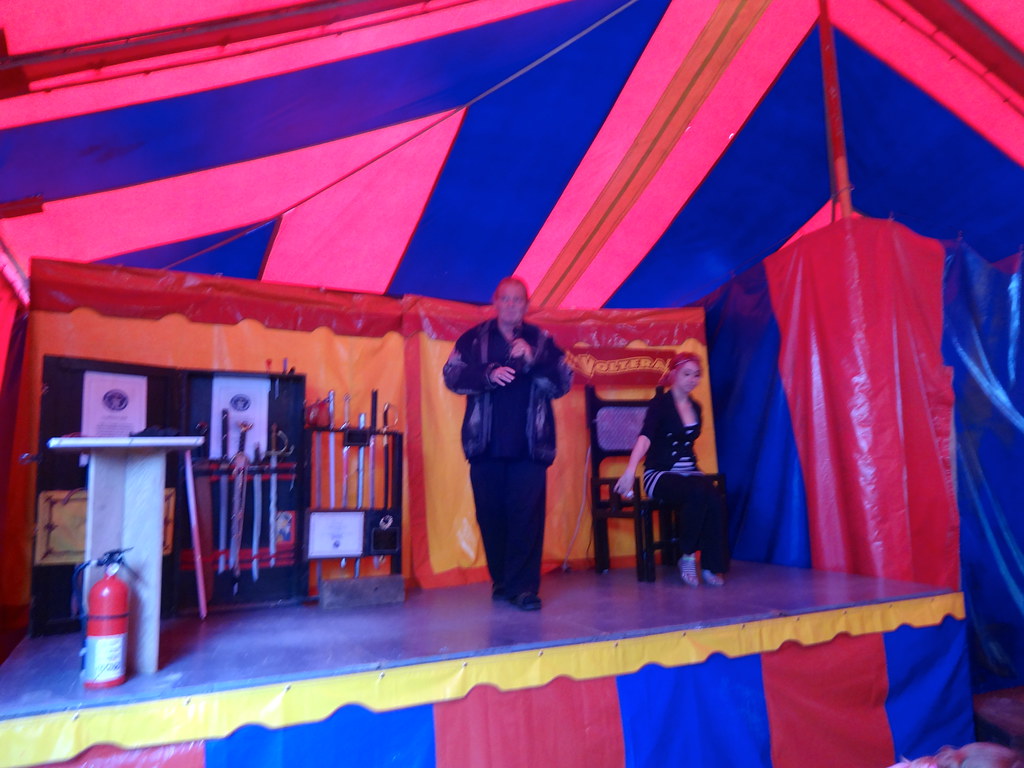
Live Forever: The Carnival Sword That Made a Writer
In 1932, a traveling sideshow magician tapped a 12-year-old boy with an electrified sword and shouted two words that Ray Bradbury spent the rest of h…