
Featured · Nov 14Books
The Burning of the First Draft of Jekyll and Hyde
In the autumn of 1885, a feverish writer in Bournemouth produced a horror story in three days, then watched it vanish into the fireplace, and nobody who was in the house that night ever quite agreed on how it got there.
Listen
Read by Wren · 6 min
Ashes in the Fireplace
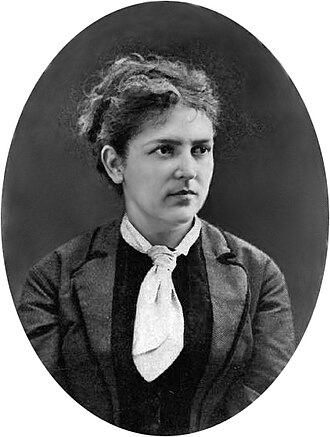
Fanny Stevenson found her husband in bed with a thermometer in his mouth. He said nothing, just pointed at a pile of ashes in the fireplace. The manuscript he had been writing for days was gone. "I nearly fainted away with misery and horror when I saw all was gone," she wrote later1.
That is the one detail every version of the story agrees on: the draft existed, and then it did not. What nobody who was in the house that autumn could settle, not Fanny, not her son, not Stevenson himself in any surviving account, was who actually put it in the fire2,1.
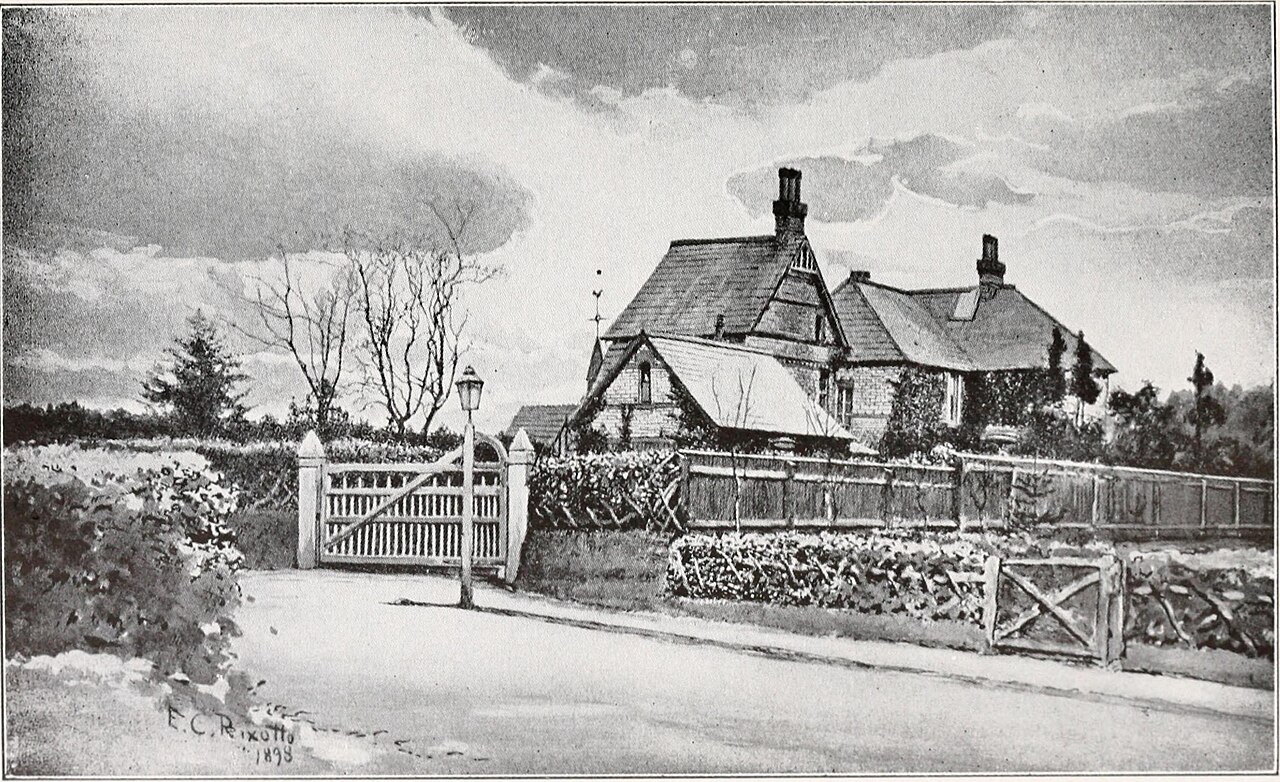
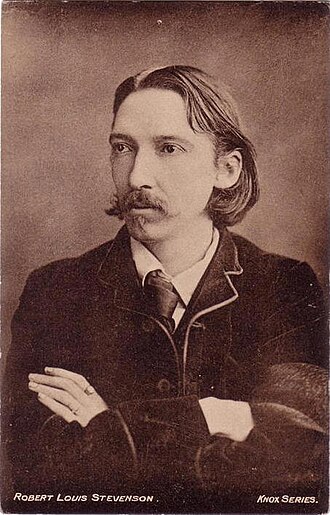
To understand how a finished manuscript ended up as ash, you have to go back to a bad night a few days earlier at Skerryvore, the Stevenson family's house in Bournemouth, where Robert Louis Stevenson was convalescing after a pulmonary hemorrhage3,4. Stevenson had chronic respiratory illness going back to childhood, and the mild coastal climate was supposed to help5,3.
One night that autumn, Fanny was woken by Stevenson crying out in his sleep. Thinking he was having a nightmare, she shook him awake. He was furious with her. "Why did you wake me?" he said. "I was dreaming a fine bogey tale." She had interrupted him at the story's transformation scene2,1.
By daybreak he was writing it down. Within about three days, by his stepson Lloyd Osbourne's account, he had a complete draft, something like 30,000 words, written while he was still confined to bed from the hemorrhage2,6. Osbourne later said he doubted any literary feat had ever moved that fast: Stevenson came downstairs in a fever, read nearly half the book aloud to the household, and then went straight back upstairs to keep writing while everyone else was still reacting6.

Fanny read the draft the way she read everything her husband wrote, with a critic's eye rather than a wife's indulgence. Her objection, as Osbourne remembered it decades later, was that Stevenson had "missed the allegory": he had written Hyde as an external monster rather than as the part of Jekyll that Jekyll himself could not control. Stevenson was furious. Osbourne left the room rather than listen to the argument2.
When Osbourne came back, by his account, Stevenson had come down from his room and conceded the point. "I have absolutely missed the allegory, which, after all, is the whole point of it," he reportedly said, and then threw the manuscript into the fire himself, with Fanny making what Osbourne called an "ineffectual start to prevent him"2. That is the version that became the standard story for most of the twentieth century: the ailing author, confronted with his own failure, burning his own work rather than let it survive in a weaker form.
It is not the only version. In 1885, around the same time all this was happening, Fanny wrote to the poet and critic W. E. Henley describing the draft as "nearly a quire full of utter nonsense" and telling him, "I shall burn it after I show it to you"7,8. That letter sat unnoticed for more than a century. It surfaced in 2000, ahead of an auction at Phillips in London, and it points toward a different ending: not a husband making a hard artistic choice, but a wife who had already decided, in her own words, to destroy the thing before her husband could stop her2,9.
Whichever hand struck the match, the result was the same. Stevenson rewrote Strange Case of Dr Jekyll and Mr Hyde from the beginning, reportedly in another three to six days, and then spent four to six more weeks refining it, a process Osbourne said "roused and cheered him inexpressibly" rather than wearing him down further6,2. The book Longmans, Green and Co. published in January 1886 was the allegory Fanny had demanded, not the straightforward horror tale that went up in smoke at Skerryvore3,6.
What nobody wrote down, in any letter or memoir that has surfaced, is the moment itself: whose hand actually held the pages over the fire. Fanny's own 1905 account of the burning never named a culprit at all, only the verdict that the first draft had failed, "probably from haste, and the compelling influence of the dream"2.
Timeline
- 13 November 1850Robert Louis Stevenson is born in Edinburgh5.
- 1884Stevenson moves to Bournemouth, England, for his health, settling at the house Skerryvore6.
- Autumn 1885Stevenson, convalescing from a lung hemorrhage, is woken by Fanny mid-nightmare and begins writing the first draft of Jekyll and Hyde2,4.
- Autumn 1885 (days later)The roughly 30,000-word first draft is finished, read aloud to the household, criticized by Fanny for missing the story's allegory, and burned6,2,1.
- Autumn 1885 (soon after)Stevenson rewrites the novella from scratch in a matter of days, then spends four to six weeks revising it6,2.
- January 1886Strange Case of Dr Jekyll and Mr Hyde is published by Longmans, Green and Co.3.
- October 2000A letter from Fanny Stevenson to W. E. Henley surfaces ahead of a London auction, complicating the question of who burned the original draft2,9.
Pictures




Sources
- 11 Strange Facts About ‘Dr. Jekyll and Mr Hyde’mentalfloss.com · 2015
- The Strange Story Behind the Destroyed First Draft of 'Dr. Jekyll and Mr. Hyde'mentalfloss.com · 2026
- Robert Louis Stevenson’s Strange Case of Dr Jekyll and Mr Hyde | The British Librarybritishlibrary.cn
- The Strange Case of Dr. Jekyll and Mr. Hydelink.springer.com · 1984
- Robert Louis StevensonWikipedia
- Strange Case of Dr Jekyll and Mr HydeWikipedia
- The Mysterious Burning of ‘Dr. Jekyll and Mr. Hyde’thedailybeast.com
- The strange case of Dr Jekyll and the burning manuscript Letter gives clue to the mystery of Stevenson's novel effortheraldscotland.com
- Stevenson's wife burnt Jekyll and Hyde 'nonsense'independent.co.uk
- [PDF] Jekyll and Hyde Wider Reading Booklet | Alderbrook Schoolalderbrookschool.co.uk
Researched and written by Lorelet from the sources above. It cites as it goes, but it can still get things wrong, so check the sources for anything that matters.
Report a problem
More featured lorelets
See all
Today · Food
The Turkey Surplus That Became the TV Dinner
A company drowning in frozen birds found an answer on an airline food cart, or so the story goes for fifty years.

Today · Space
Why Is Jupiter's Great Red Spot Actually Red?
Jupiter is built almost entirely of colorless gas, yet its most famous storm glows orange-red. Scientists have spent decades in the lab trying to fig…

Today · Art & Design
The Aztec Labret Whose Golden Tongue Still Moves
A small gold serpent made for a pierced lip somehow ended up with a tongue that flicks side to side. No one alive has ever seen it worn.