Featured · TodayCulture
Live Forever: The Carnival Sword That Made a Writer
In 1932, a traveling sideshow magician tapped a 12-year-old boy with an electrified sword and shouted two words that Ray Bradbury spent the rest of his life trying to earn.
Listen
Read by Finch · 8 min
The Sword, the Chair, and "Live Forever"
The carnival rolled into Waukegan, Illinois, during Labor Day week of 1932, pitching its tents near the Lake Michigan shore under the banner of the Dill Brothers Combined Shows2. Ray Bradbury was twelve, a kid already stuffed full of Edgar Rice Burroughs and Poe, and he went to see a sideshow act built entirely around electricity5,1.
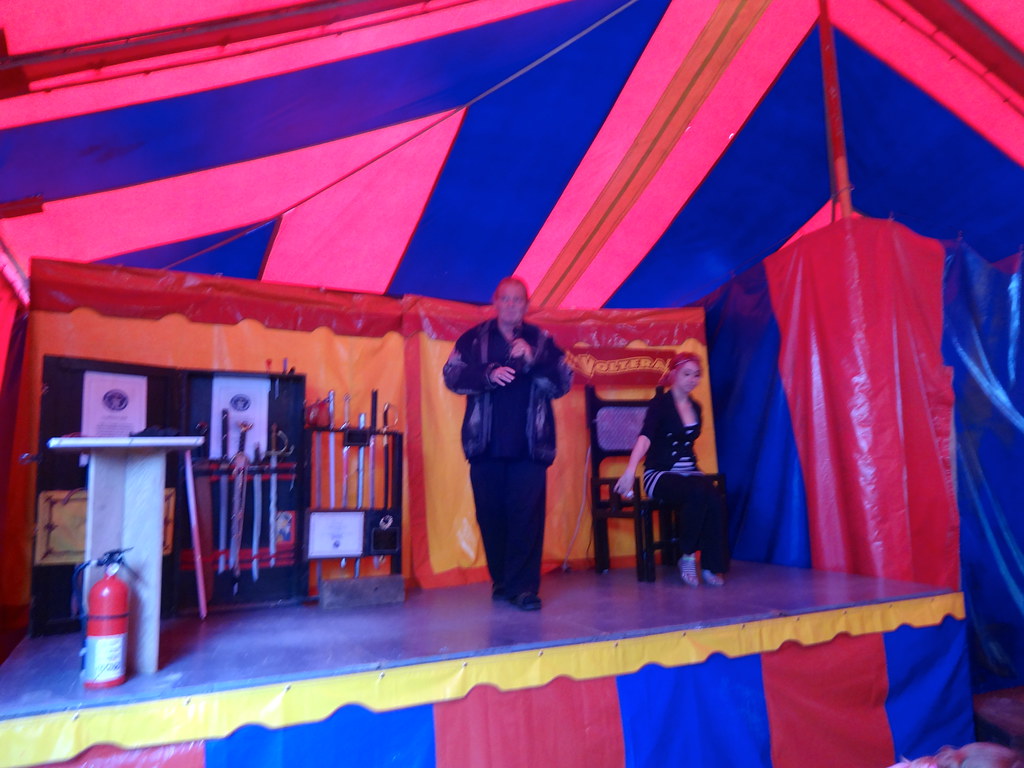
The performer called himself Mr. Electrico. His act centered on an electric chair: a stagehand threw a switch, and somewhere between fifty thousand volts and, in Bradbury's more exuberant later tellings, ten billion, surged through him. His hair stood up. Sparks jumped between his teeth1. Then he rose, sword in hand, and began touching audience members with it, as if knighting them with fire1,6.
When he reached Bradbury, in the front row, he tapped him on both shoulders and the tip of his nose. Bradbury felt the charge jump into him, his own hair rising, and Mr. Electrico leaned down and shouted the two words that would define how Bradbury told his own life story ever after.
That same week, Bradbury's uncle, Lester Moberg, had died, in some accounts murdered during a robbery, and the family was in the middle of funeral arrangements1,7. The accounts differ on whether Bradbury saw the carnival before or after the burial, but he consistently tied the two events together: a death in the family, and a stranger in an electric chair promising the opposite1,2,7.
Bradbury went back the next day. He wanted help with a magic trick, and Mr. Electrico obliged, then introduced him to the rest of the show: a tattooed man, a strong man, a fat lady, a dwarf, a skeleton performer, people who would later resurface, lightly disguised, in Bradbury's fiction2. Sitting by the lake afterward, Mr. Electrico told him something stranger still: that Bradbury was the reincarnation of a friend who had died in his arms near the Argonne Forest in France in 19181,4.
"I'm glad you're back in the world," the performer told him, by Bradbury's account. "You have a different face, a different name, but the soul shining out of your face is the same as my friend. Welcome back"2.
Bradbury walked away in tears, not from grief but from something closer to recognition. Within days, he said, he started writing, and he kept at it, by his own account, every day for the rest of his life3.
A Boy Already Primed for Wonder
Bradbury was not a blank slate waiting for a carnival to switch him on. He had been writing stories since age twelve on butcher paper, haunting the Carnegie Library in Waukegan, and devouring Jules Verne, H.G. Wells, and Edgar Rice Burroughs well before Labor Day 19325. He was, as he put it himself, already "in love with circuses and their mystery"2.
What the Mr. Electrico encounter gave him wasn't the raw material of imagination so much as a story to explain it, a single vivid scene he could point to whenever anyone asked why he became a writer. He told it publicly as early as 1952 and kept retelling it, with small variations, for sixty more years1.
Who Was There
- Ray Bradbury: Twelve-year-old Waukegan resident who later became one of the defining American science-fiction and fantasy writers, author of The Martian Chronicles, Fahrenheit 451, and Something Wicked This Way Comes5.
- Mr. Electrico: Traveling sideshow performer with the Dill Brothers Combined Shows, known for an electric-chair act and a sword he used to "charge" audience members; according to Smithsonian Magazine research, no independent trace of his real identity has ever been found1.
- Lester Moberg: Bradbury's uncle, whose death during the same week anchors the story in Bradbury's own chronology1,7.
- The unnamed wartime friend: A soldier Mr. Electrico claimed had died in his arms in France in 1918, and whom he said Bradbury's soul now inhabited; his identity, if he existed, has never been established1,4.
What's Solid, What's Shaky
The outline that Bradbury told again and again holds steady: 1932, Waukegan, age twelve, an electric chair, a sword, "Live forever," and a sudden, sustained commitment to writing1,2,3. That much is corroborated across decades of interviews and Bradbury's own essays.
Much else is not independently verified. Jason Aukerman, director of the Ray Bradbury Center, has called the encounter "the holy grail of Ray Bradbury scholarship" precisely because, unlike other episodes in Bradbury's life that can be checked against letters or family testimony, this one has no corroborating witness or document1.
Details shift from telling to telling: whether the sword touched his nose, his brow, or both shoulders and his nose; whether the carnival came before or after the uncle's funeral; whether Electrico mentioned fifty thousand volts or an absurdly inflated number1,8,7. Scholars who have studied Bradbury's storytelling, including Jonathan R. Eller, note that his "strong sense of suggestion" tended to reshape timelines to heighten the wonder of a memory, not to deceive but to make the story truer to how it felt1.
The reincarnation claim, that Bradbury was the returned soul of a soldier killed near the Argonne in 1918, is presented only as something Mr. Electrico told a twelve-year-old by a lakeside. No source treats it as established fact, only as part of the mythology Bradbury carried forward1,4.
The Facts on Record
- 1932: year of the Mr. Electrico encounter, during Labor Day week1,2.
- 12: Bradbury's age at the time5,1.
- 50,000: volts Bradbury said passed through Mr. Electrico in the electric chair, in his most-cited telling (he gave wildly larger figures in other versions)1.
- 1941: year Bradbury's first professional short story was published9.
- 1947: publication of Dark Carnival, his first book9.
- 1952: first known public telling of the Mr. Electrico story1.
- 91: Bradbury's age when he died, on June 5, 20124.
Timeline
- 1920-08-22Ray Bradbury born in Waukegan, Illinois.
- 1932-09 (Labor Day week)Bradbury's uncle Lester Moberg dies; Bradbury sees Mr. Electrico's carnival act and is touched with an electrified sword.
- 1932-09 (next day)Bradbury returns to the carnival; Mr. Electrico tells him he is the reincarnation of a wartime friend.
- 1941Bradbury's first professional short story is published.
- 1947Dark Carnival, Bradbury's first book, is published.
- 1952Bradbury first tells the Mr. Electrico story publicly.
- 2012-06-05Ray Bradbury dies at age 91.
Pictures




Sources
- The Sideshow Magician Who Inspired Ray Bradbury—Then VanishedSmithsonian Magazine · 2023
- The Strange Encounter With a Carnival Magician That Inspired Ray Bradbury to Writementalfloss.com · 2026
- Legacy - Ray Bradburyraybradbury.com
- Ray Bradbury, writer who captivated a generation of sci-fi ...The Guardian
- Ray BradburyWikipedia
- Being Ray Bradburyvcreporter.com
- RIP Ray Bradbury (1920-2012)sffworld.com
- Mr. Electrico | American carnival magician | BritannicaBritannica
- Life - Ray Bradburyraybradbury.com
Researched and written by Lorelet from the sources above. It cites as it goes, but it can still get things wrong, so check the sources for anything that matters.
Report a problem
More featured lorelets
See all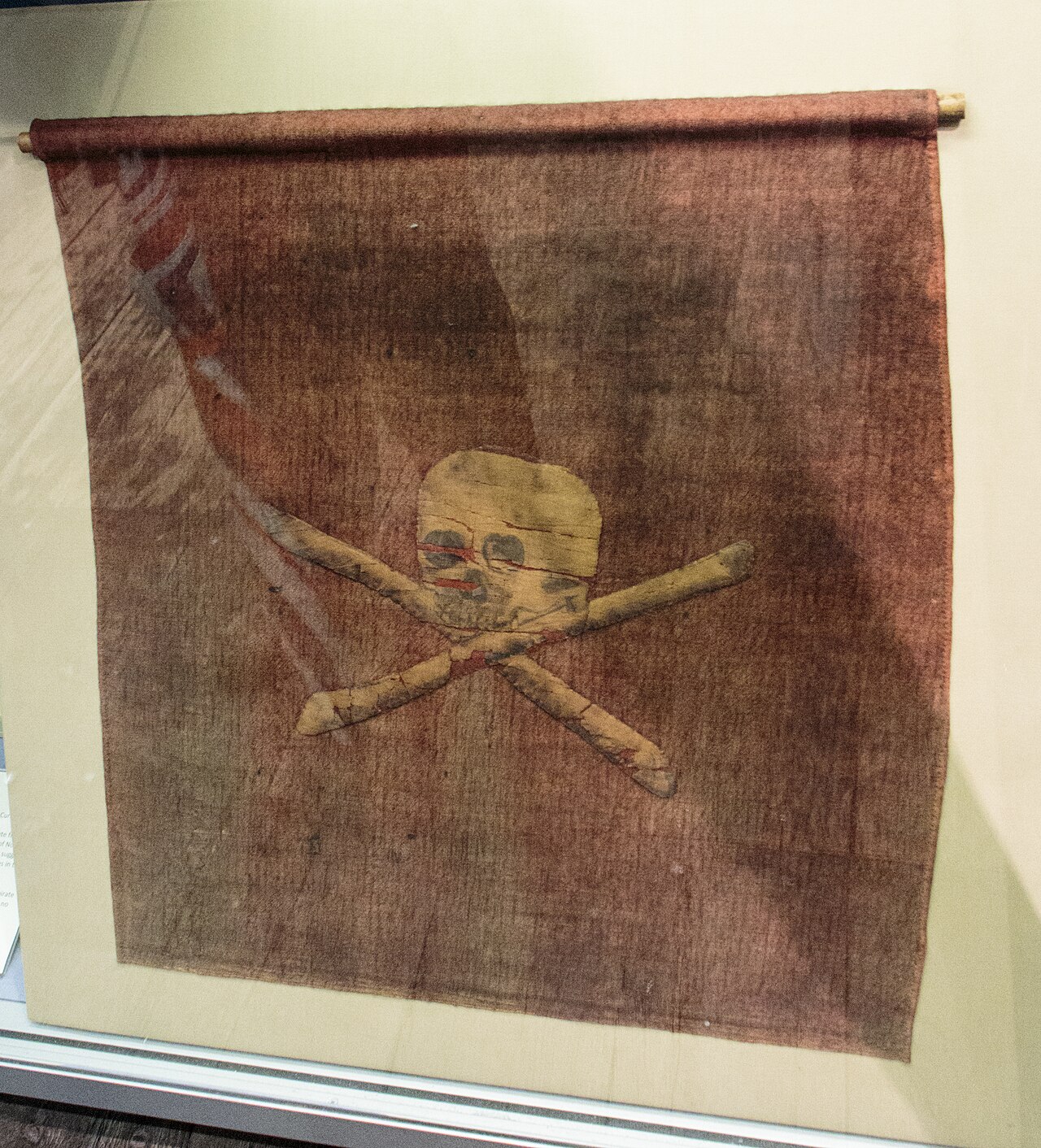
Today · History
The Real Jolly Roger: Rare Surviving Pirate Flags
Pop culture gives every pirate a crisp skull-and-crossbones banner. Reality left behind maybe two or three faded, bullet-scarred scraps of cloth, and…
Today · History
The Little Cannon That Started a Revolution
A loaned Mexican cannon, a buried gun in a peach orchard, and a hand-painted flag daring soldiers to come and take it: how a small-town squabble in G…
Oct 1 · Film & TV
Why Nick Jr. Aired the Same Blue's Clues Episode All Week
A preschool show about a cartoon dog and her pawprints became a quiet experiment in how children actually learn from television, and the data said: r…