Featured · TodayFilm & TV
The Lost Interactive Art of 2000s DVD Menus
For about a decade, before streaming flattened everything into a thumbnail grid, the humble DVD menu was a playground for designers, who turned a simple navigation screen into motion graphics, hidden jokes, and sometimes a tiny film of its own.

Listen
Read by Finch · 9 min
A Remote Control Became a Paintbrush
Before DVD, home video navigation meant one tool: fast-forward. The DVD-Video spec, which reached Japanese shelves in October 1996 and American ones in March 1997, changed that by letting a disc carry multiple video and audio streams, chapter lists, subtitles, still or animated menus, and even playable mini-games, all controlled by the arrow keys on a remote1.
That technical leap created a strange, specific design problem. A menu had to work on a television seen from across a room, navigated with four directional buttons instead of a mouse, and it had to fit inside a tight bitrate budget shared with the movie itself. Designers responded by treating that constraint like a genre: branching menus with animated backgrounds, synced sound, and highlight states standing in for buttons1,5.

According to a press archive maintained by designer Michael Pace of EMA Multimedia, the format moved fast toward spectacle. The archive credits Mars Attacks! on June 24, 1997 as the first disc with menu sound, The Player: Special Edition two weeks later with motion menus, and The Adventures of Pinocchio that September with a playable DVD-Video game2. These are company-history claims, not settled industry record, since definitions of "first" are slippery and documentation from that era is thin.
By the early 2000s the menu had become part of a film's identity. Shrek's 2001 menu used Donkey begging "pick me, pick me" to turn the act of choosing a button into a joke, while Zoolander's menu that same year used original voiceover to talk directly to the viewer rather than just showing clips6. Horror discs leaned into unstable, threatening navigation; animated films leaned into character and play; prestige releases went quiet and typographic. The menu wasn't decoration anymore, it was a pitch for why you should own the disc instead of just streaming or renting it.
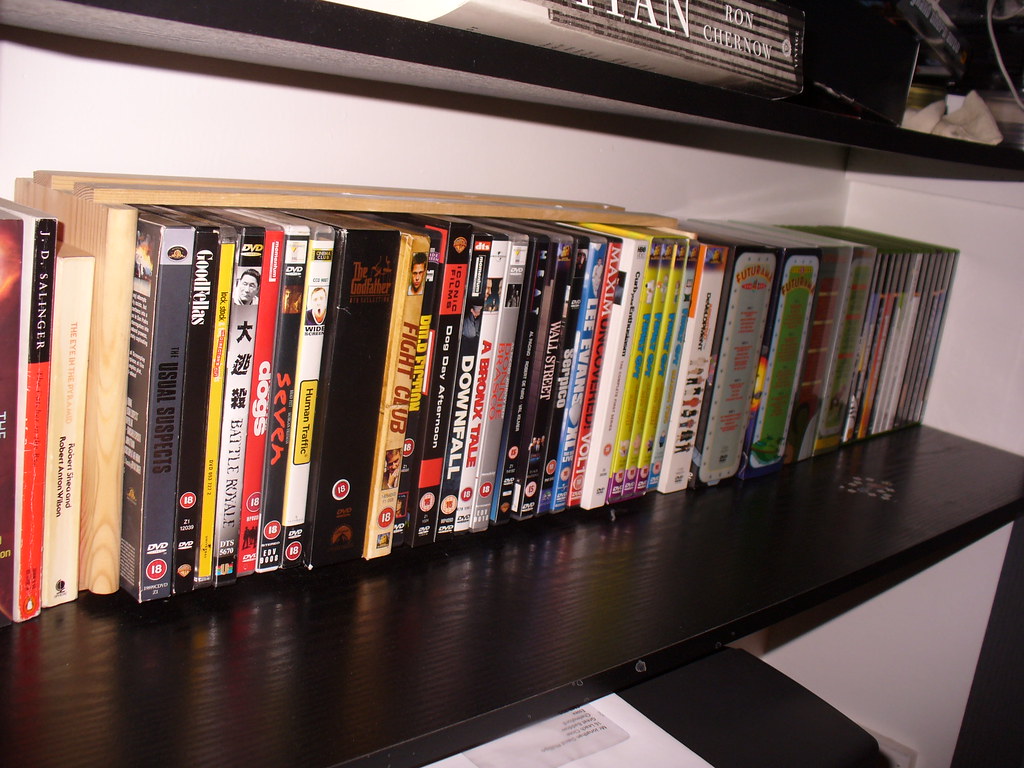
Studios also started hiding things inside that pitch. A Los Angeles Times report from December 2002 described how MGM's Easter eggs began small, a hidden martini recipe tucked into the Dr. No Special Edition, and grew more elaborate from there3. MGM executive David Braun told the paper the hidden features started as an inside joke among the design team before fans caught on and started hunting for them deliberately, and that the studio came to see eggs as a way of making the disc feel more personal3.
The peak came roughly between 2003 and 2005, when DVD players were common, consumers understood the format's quirks, and motion-graphics tools had matured enough for studios to treat a menu like a small film in its own right. A Los Angeles Times piece from January 2003 noted the industry had started handing out its own DVD Premiere Awards for menu design and documentary work, a sign of how seriously the craft was being taken7. One practitioner's retrospective put typical menu production budgets as high as $30,000 per title around 2003, though that figure reflects one person's account rather than an industry-wide average4. Sin City's 2005 menu, often cited in retrospectives for extending the film's stark black-and-white visual language into its interface, is held up as an example of menu design treated as part of a film's art direction rather than an afterthought6.
Why It Didn't Last
The same conditions that made elaborate menus possible started disappearing by the mid-to-late 2000s. Studios needed templates that could be reused across territories and languages, production schedules shrank, and quality-control costs on custom-authored menus became harder to justify4.
Viewer patience mattered too. A disc that opened with studio logos, legal warnings, and unskippable trailers before reaching a menu increasingly read as friction rather than ceremony, especially as online video trained audiences to expect something to start the moment they clicked it1,4.
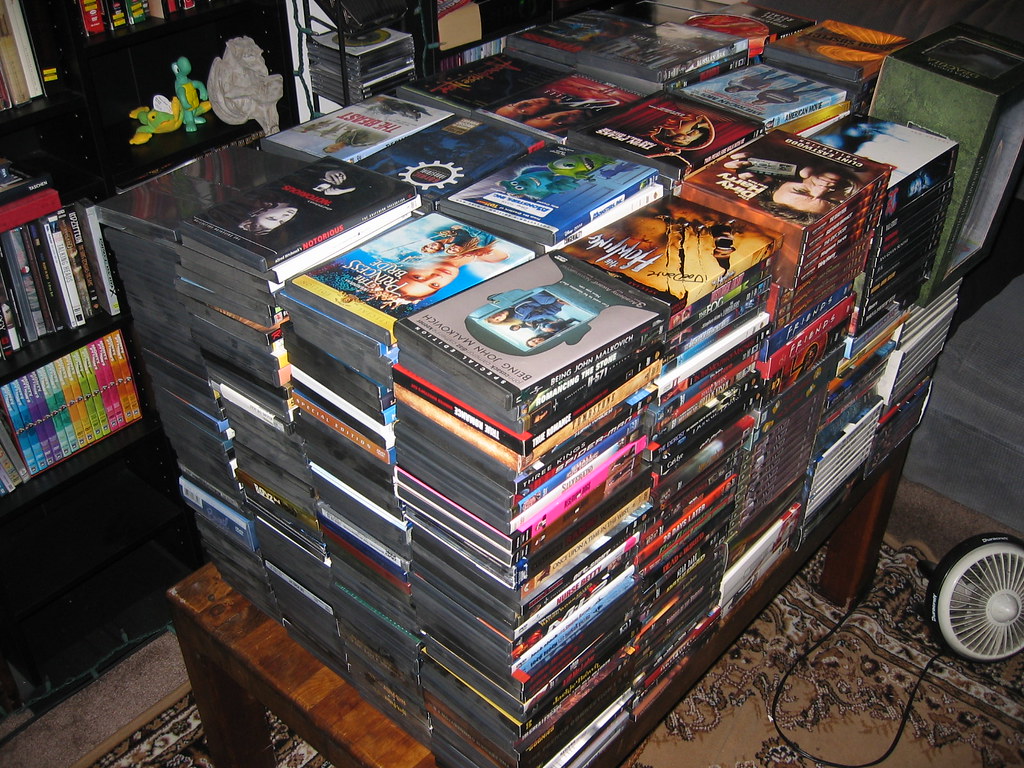
Blu-ray's arrival added a new authoring platform that, by one designer's account, never fully replicated the tools and workflows DVD authoring had matured over a decade4. Boutique labels and collector's editions kept commissioning distinctive menus well past this point, but the mainstream market settled on autoplay and hard cuts.
The Era in Figures
- 1996-1997: DVD-Video players launch, first in Japan (October 1996), then the United States (March 1997)1.
- June 24, 1997: Mars Attacks! identified as the first disc with menu sound, per an industry archive2.
- July 7, 1997: The Player: Special Edition identified as the first disc with a motion menu2.
- September 23, 1997: The Adventures of Pinocchio identified as the first disc with a playable DVD-Video game2.
- 2001: Shrek and Zoolander release with character-driven, direct-address menus6.
- ~2003: Menu production budgets reported as high as $30,000 per title4.
- 2003-2005: Widely cited as the creative peak of DVD menu design4.
- 2005: Sin City's menu praised in retrospectives for matching the film's visual style6.
What's Shaky Here
Claims about "firsts" in DVD menu history come almost entirely from one company's self-maintained press archive, which makes them useful markers but not neutral industry record. Definitions of what counts as a motion menu, menu sound, or disc-based game vary enough that other discs could plausibly contend for the same titles2.
Easter egg chronology is similarly murky. Studios rarely documented hidden features systematically, so most of what's known survives through fan databases and forum threads, sources that often disagree about which disc used a given trick first, whether a hidden clip was intentional, or whether a reissue kept the egg at all3.
The $30,000 production-budget figure for menu design in 2003 comes from a single industry practitioner's retrospective essay, not an audited industry survey, and costs likely varied heavily by studio, title, and whether work was done in-house or outsourced4.
Pictures
Sources
- DVD-VideoWikipedia
- PRESS ARCHIVE of Michael Pace, EMA Multimedia, Inc.michaelpace.com
- Cracking the code of DVD 'eggs'latimes.com · 2002
- The Golden Era of DVD Menu Designlinkedin.com · 2022
- DVD Menu Authoringinteractivewalker.wordpress.com · 2013
- The lost art of the DVD menutheweek.com
- The behind-the-scenes art of developing DVD extraslatimes.com · 2003
Researched and written by Lorelet from the sources above. It cites as it goes, but it can still get things wrong, so check the sources for anything that matters.
Report a problem
More featured lorelets
See all
Today · Crime
The Steal of Dalí's 330-Pound Apocalypse
A bronze book cover decorated with gold, pearls and seashells vanished from a small French museum, leaving investigators with a very heavy mystery an…

Today · Technology
The First LED: How a Red Glow Doomed Edison's Bulb
In 1962 a General Electric scientist lit up a tiny red crystal that nobody thought was good for much. It took fifty years, but it ended up replacing…

Oct 8 · Sports
The Perfect Game Nobody Saw Coming
A journeyman pitcher with a losing record and a reputation for late nights found a baseball in his shoe one October morning and threw the only perfec…