
Featured · TodayHistory
Indianola: The Boomtown Erased by the Gulf
Texas's second-busiest port once rivaled Galveston. Twice the Gulf tried to take it, and the second time, almost no one was left to argue.

Listen
Read by Finch · 9 min
The Night the Lighthouses Went Dark
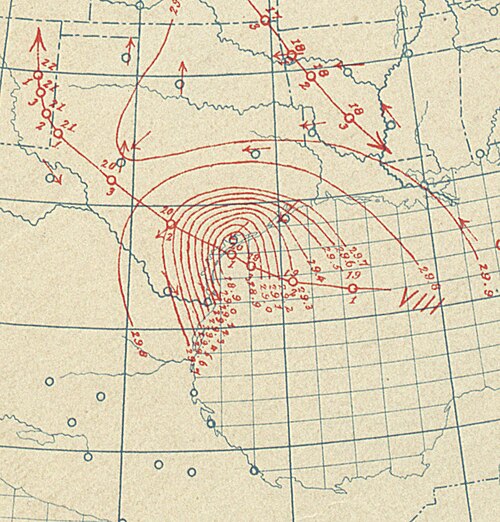
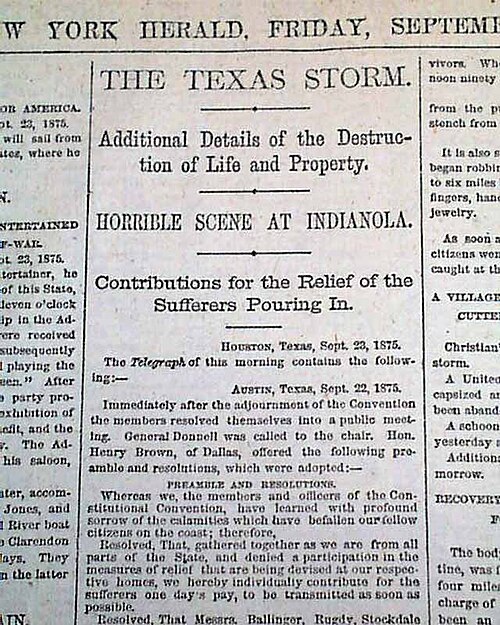
On the evening of September 16, 1875, a Category 3 hurricane made landfall near Indianola, Texas, with winds of 115 miles per hour3. Storm surge swept away both lighthouses at Pass Cavallo, drowning their keepers, including Thomas H. Mayne and Edward Flick Jr. of the East Shoal Lighthouse1. The surge went on to wash away three-quarters of the buildings in town, leaving only eight structures undamaged3. By the time it was over, at least 300 people in Indianola alone were dead, part of a storm that killed roughly 800 people across the region3.
It should have been the end of the story. It was not1.

Indianola's rise had started three decades earlier with a very different kind of arrival. In December 1844, Prince Carl of Solms-Braunfels, commissioner-general of the German immigration society known as the Adelsverein, picked a stretch of beach on Matagorda Bay as the landing point for German colonists bound for the Texas interior2,1. He named it Carlshafen, after himself, though the immigrants he was shepherding kept calling it Carlshaven long after the name officially changed1. The settlement that grew up around the landing was practical rather than grand: tents and temporary shelters for people waiting on wagons to carry them toward New Braunfels and the hill country4.
In August 1846, Sam Addison White and William M. Cook founded Indian Point nearby, and the two communities merged and grew2. By 1849 the town had been renamed Indianola, combining "Indian" with the Spanish word for wave, "ola"1. That same year, shipping magnate Charles Morgan made it a port of call for his Gulf Coast steamship line, and the town's fortunes accelerated from there2,5.

What followed was two and a half decades of genuine boom. Indianola became a deep-water port vital during the Mexican-American War, a stop on the eastern end of the Chihuahua Trail to San Antonio and beyond, and in 1856 and 1857 the unlikely port of entry for shiploads of camels brought in under Secretary of War Jefferson Davis's camel corps experiment2. In July 1869, the world's first shipment of mechanically refrigerated beef left Indianola for New Orleans aboard the steamer Agnes1. By 1875, the town had more than 5,000 residents, four newspapers, and the rank of second port in Texas, behind only Galveston2,6.
After the September storm, survivors did what towns on this coast tended to do: they rebuilt, on a smaller scale, on the same low strip of land2. The port resumed operations. The railroad kept running. Nothing about the site's exposure to the Gulf had changed, but nothing about the rebuilding suggests the town seriously considered moving.
Eleven years later, on August 19-20, 1886, another hurricane struck, and this time it brought fire with it2,1. Structures that had survived 1875 were destroyed in this second storm, according to the National Weather Service's account of the region's hurricane history7. The county seat, which Indianola had held since 1852, moved to Port Lavaca1. On October 4, 1887, the post office closed for good, and the town was officially declared dead1.
The aftermath reached beyond Indianola itself. According to journalist Erik Larson's account in Isaac's Storm, Galveston's leading citizens initially grasped what had happened: a city with no barrier islands and no buffer of high ground was, if anything, more exposed than Indianola had been1. Six weeks after the second Indianola storm, thirty prominent Galveston residents formed the Progressive Association and called for a seawall, and the city's Evening Tribune endorsed the plan1. The state eventually authorized a bond for the work, but by then, in city engineer E.M. Hartwick's words as quoted by Larson, "the attitude was, Oh, we'll never get another one, and they didn't build"1.
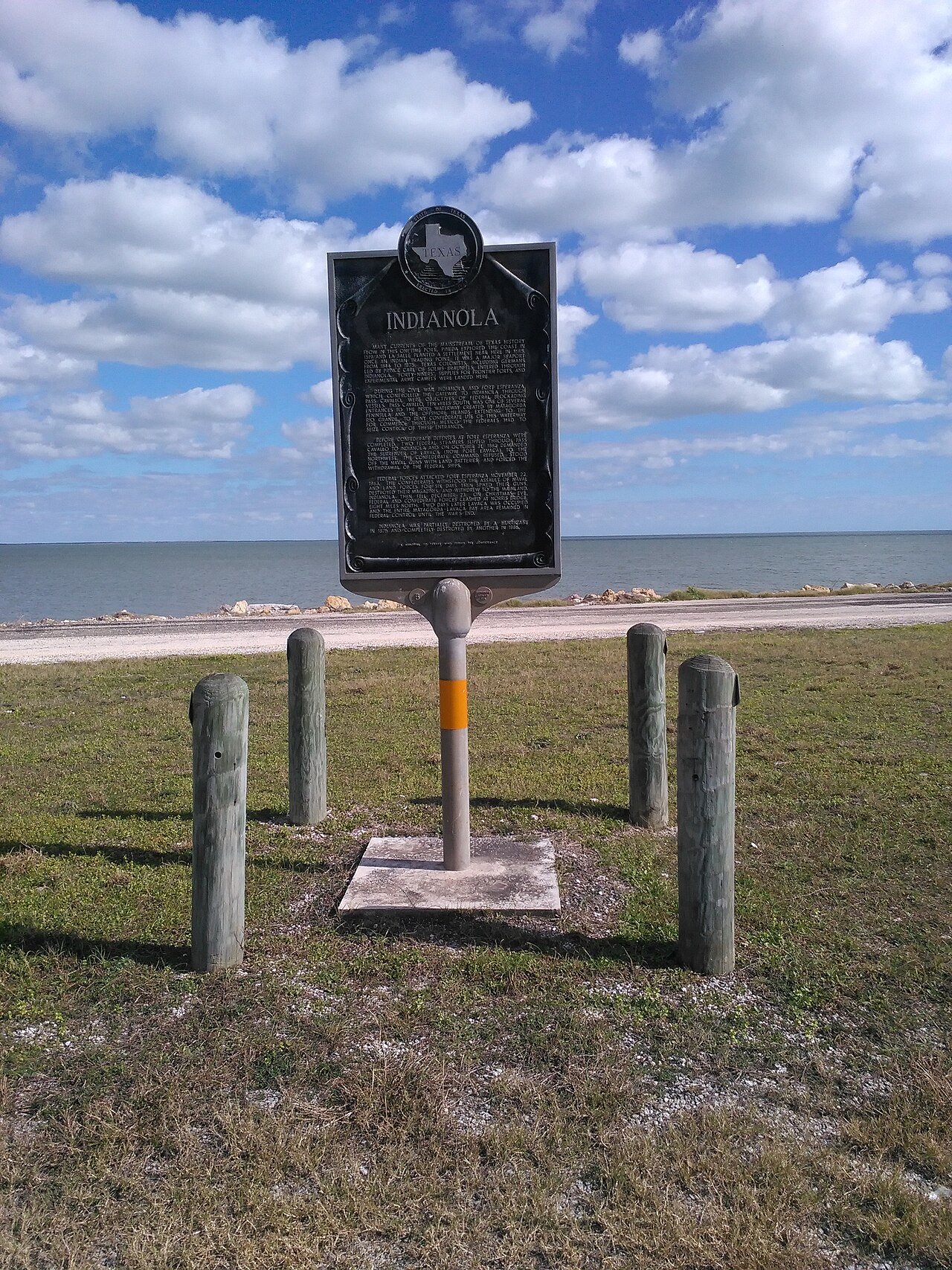
Galveston got another one, in 1900, in a hurricane that killed thousands1. Indianola, for its part, never came back. Today the original townsite is mostly underwater, worn away by erosion, and a granite marker stands onshore at the nearest point to where the Calhoun County courthouse once stood, now some 300 feet out in Matagorda Bay1.
A Port Built for Immigrants, Not for Permanence
Indianola's location made commercial sense and almost nothing else. It sat on a narrow, low-lying strip on the western shore of Matagorda Bay, in what is now Calhoun County, positioned between Matagorda and Lavaca bays8,2. That made it easy for ships to reach and brutally exposed to anything the Gulf sent its way2,8.
For the Germans who first landed there, the port was a waypoint, not a destination. More than 100,000 immigrants are reported to have passed through the wider Indianola landing system between 1844 and 1887, though the figure shifts depending on whether historians count only those who disembarked at Indianola itself or the broader German immigration movement tied to the port6. Most who arrived stayed only long enough to find wagons heading inland toward the German settlements of the Hill Country4.

That transience shaped the town's character even after it became a serious commercial port. Indianola functioned as a deep-water harbor for inland trade, a connector between the coast and overland routes into western and central Texas, and a hub for military, agricultural, and commercial traffic before railroads and competing ports like Galveston and later Houston pulled much of that business away2,9.
Who Was Who
- Prince Carl of Solms-Braunfels: Commissioner-general of the German Adelsverein who selected the Indianola area as a landing point for German colonists in 1844 and briefly renamed it Carlshafen after himself2,1.
- Sam Addison White and William M. Cook: Founded Indian Point in August 1846, the settlement that grew into Indianola2.
- Charles Morgan: Shipping magnate who made Indianola a port of call for his Gulf Coast steamship line in 1849, accelerating the town's growth2,5.
- Thomas H. Mayne and Edward Flick Jr.: Lighthouse keepers at the East Shoal Lighthouse, Pass Cavallo, killed when the structure was swept away in the 1875 hurricane1.
- Isaac Cline: Galveston meteorologist who in 1891 publicly argued a storm wave could not materially harm Galveston, a position later cited by historian Erik Larson as part of why the city failed to prepare before 19001.
By the Figures
- Roughly 5,000 residents in Indianola at its peak around 1875, making it Texas's second-busiest port behind Galveston2,6.
- 115 mph: peak sustained winds of the hurricane that struck on September 16, 18753.
- Three-quarters of Indianola's buildings destroyed by storm surge in the 1875 hurricane, leaving only eight structures undamaged3.
- At least 300 deaths in Indianola from the 1875 storm, part of roughly 800 deaths across the broader storm's path3.
- 11 years between the two hurricanes that destroyed the town, 1875 to 18862.
- October 4, 1887: date the Indianola post office closed permanently and the town was declared dead1.
What the Record Doesn't Settle
Sources agree on the broad arc, but several details vary. Population estimates and immigrant totals differ depending on which source and which years are counted: more than 100,000 immigrants are reported to have passed through the wider port system between 1844 and 1887, but that figure depends on whether only Indianola landings or the broader German immigration movement is counted6.
The exact dates of the storms also shift slightly between sources. Some accounts, including Wikipedia's summary, date the first hurricane's landfall to September 15, while the Texas State Historical Association and the National Hurricane Center timeline place landfall on September 161,2,3. The second storm is sometimes dated August 19, sometimes August 20, 1886, likely because the hurricane crossed the coast over more than a single calendar day2,1.
Popular retellings sometimes describe the 1875 hurricane as having wiped Indianola off the map outright. That is not accurate: the town was heavily damaged but rebuilt and continued operating as a port for another eleven years, until the 1886 storm and fire finished what the first one started2,7.
Timeline
- December 1844Prince Carl of Solms-Braunfels selects the Indianola area as a landing point for German immigrants, naming it Carlshafen.
- August 1846Sam Addison White and William M. Cook found Indian Point, the settlement that becomes Indianola.
- 1849The town is renamed Indianola; Charles Morgan makes it a port of call for his steamship line.
- 1852Indianola becomes the seat of Calhoun County.
- 1856-1857Camels are landed at Indianola as part of the U.S. Army's camel corps experiment.
- July 1869The world's first shipment of mechanically refrigerated beef departs Indianola for New Orleans.
- September 16, 1875A Category 3 hurricane destroys three-quarters of Indianola's buildings and kills at least 300 people there.
- August 19-20, 1886A second hurricane and accompanying fire destroy what remained of the rebuilt town.
- October 4, 1887The Indianola post office closes permanently and the town is declared dead.
- 1900Galveston, which had debated and failed to build a seawall after Indianola's fate, is devastated by a catastrophic hurricane.
Pictures



Sources
- Indianola, TexasWikipedia
- The History of Indianola: Texas' Second Porttshaonline.org
- 1875 Indianola hurricaneWikipedia
- Microsoft Word - History of Indianola (long version).docxtexasseagrant.org
- Indianola, Texas - WikipediaWikipedia
- Escape to Indianola, a True Ghost Town on Matagorda BayTexas Monthly
- Texas Hurricane Historyweather.gov
- Fire and Rain | January 2008 - Texas Parks & Wildlife Magazinetpwmagazine.com
- Port Lavaca - Guadalupe-Blanco River Authoritygbra.org
Researched and written by Lorelet from the sources above. It cites as it goes, but it can still get things wrong, so check the sources for anything that matters.
Report a problem
More featured lorelets
See all
Today · Sports
The Night Canton and Massillon Nearly Killed Pro Football
A two-game series between Ohio's best teams ended with a brawl in a hotel bar and accusations that would hang over professional football for a decade.

Today · Film & TV
Errol Morris and the Machine He Built to Steal Eye Contact
For years a documentary filmmaker pressed his own head against the camera lens trying to fake intimacy. Then he built a machine that made four strang…

Nov 23 · History
Boss Tweed's Downfall: Caught by His Own Caricature
A New York political boss fled across an ocean under a false name. Something about him was impossible to hide.