
Featured · TodayHistory
When Alfred Nobel's Will Shocked His Family
A handwritten testament gave away a fortune to strangers and left a young assistant to make it real, against the wishes of furious relatives and a king.
Listen
Read by Finch · 10 min
A Pistol, a Train, and a Fortune in Paper
Ragnar Sohlman, the young engineer who had worked for Alfred Nobel, later described slipping securities and other valuables out of France after Nobel's death, dividing them into small packages and keeping a pistol on his lap as he went4. He was twenty-seven years old, and had only just learned that Nobel's will had made him one of its two executors2.
Nothing about the document he was carrying out of the country looked like the start of one of the world's most famous institutions. It looked, to the people who stood to lose from it, like a problem that needed to disappear before anyone had the chance to act on it.
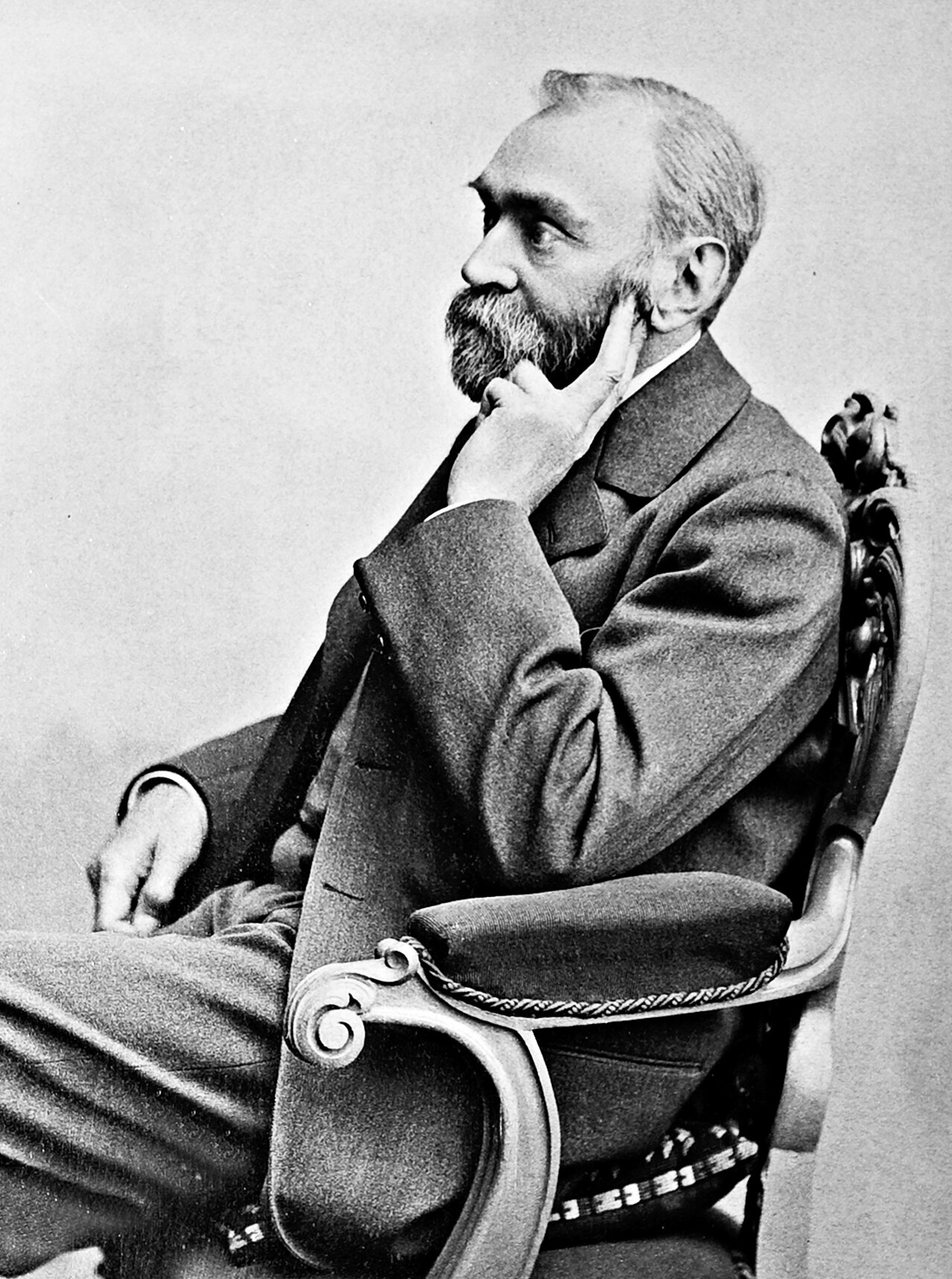
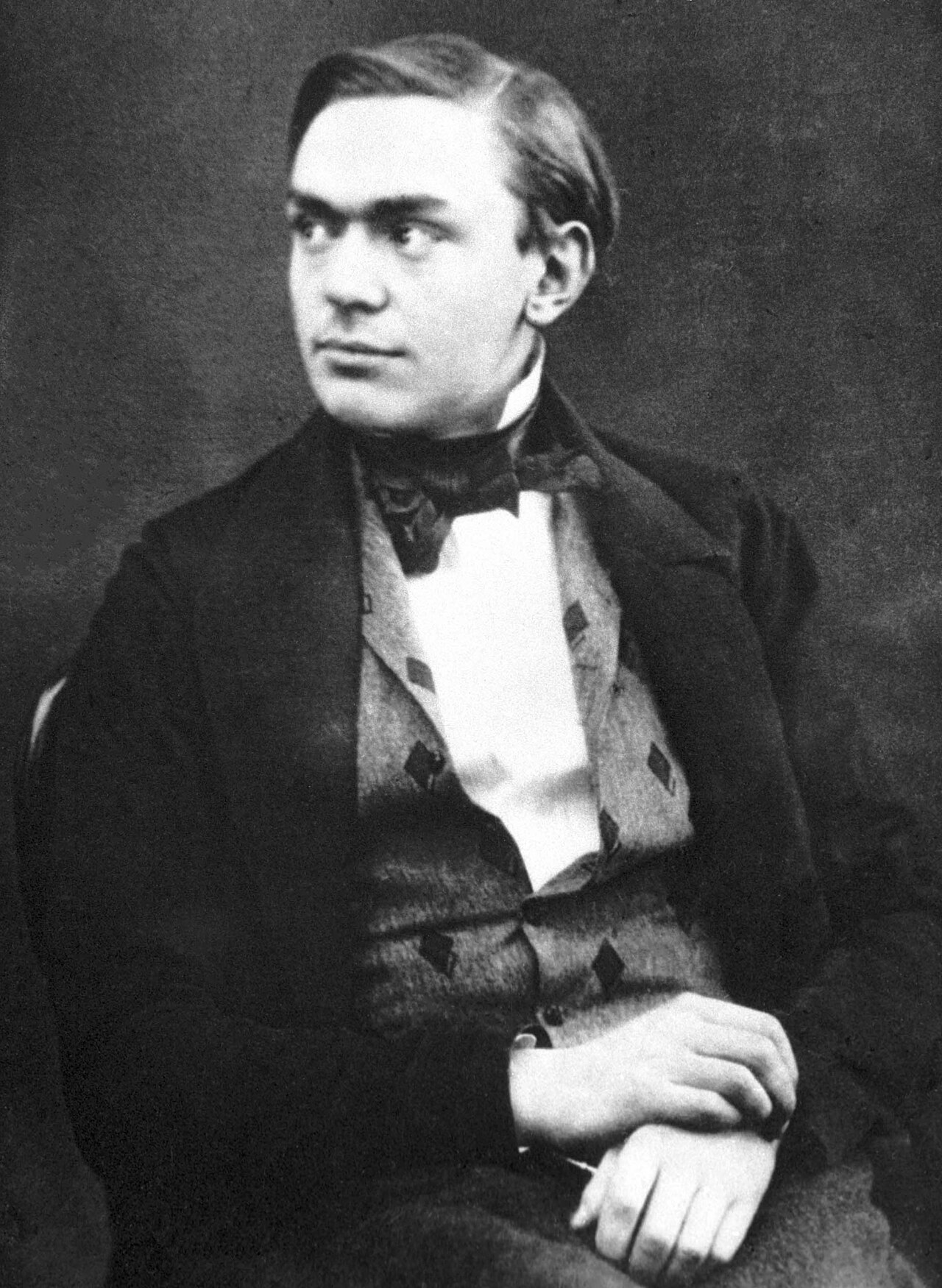
Alfred Nobel had died in San Remo, Italy, on 10 December 1896, from a cerebral haemorrhage, at the age of 635,1. Born in Stockholm on 21 October 1833, he had made his fortune largely through dynamite, which he patented in 1867, along with gelignite and ballistite5,6. He never married and had no children, and his nearest relatives were the families of his brothers Robert and Ludvig Nobel5,7.
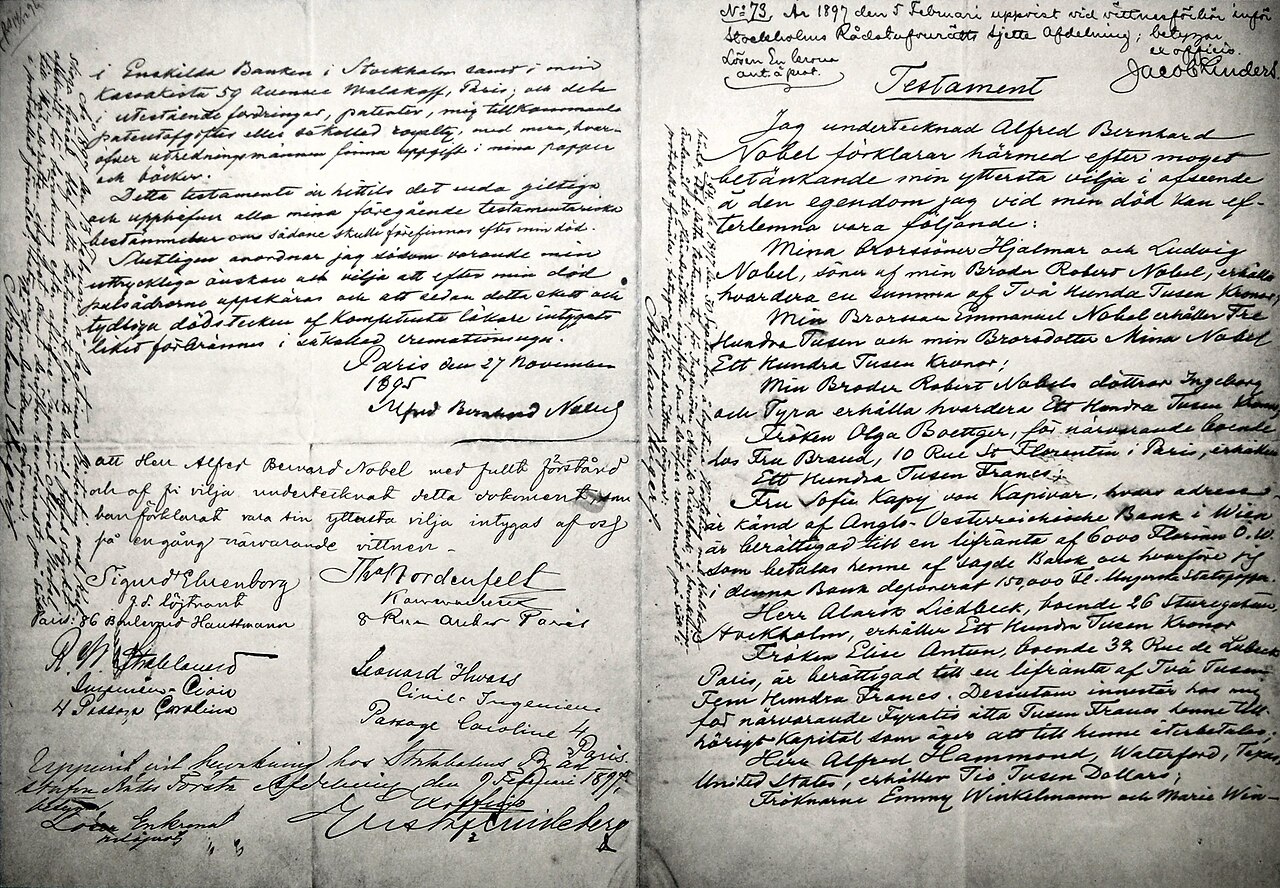
On 27 November 1895, at the Swedish-Norwegian Club in Paris, Nobel signed a handwritten will that set aside roughly 94 percent of his estate, about 31 million Swedish kronor, to fund annual prizes for whoever had "conferred the greatest benefit on mankind"5,3. The prizes covered physics, chemistry, physiology or medicine, literature, and peace, with the first four to be awarded in Sweden and the peace prize assigned to a committee chosen by the Norwegian Storting3,1. The will also insisted that no consideration be given to the nationality of candidates3,1.
When the will was opened in Stockholm in late December 1896, the reaction among Nobel's relatives was shock, and in some cases fury3,7. They had expected to inherit a vast private fortune. Instead most of it was being handed to a scheme that did not yet have a legal structure, a staff, or even confirmed cooperation from the institutions named to run it1,2.
King Oscar II of Sweden and Norway sided with the family at first, arguing that their claims should not be overridden by what he considered the eccentric ideas of an aging man3,2. Conservative politicians in Sweden called the will an infringement on the legal rights of Nobel's heirs, and nationalists objected that the prizes were not reserved for Swedes or Scandinavians, which they considered unpatriotic3,2. The king reportedly pressed Nobel's nephew Emanuel to challenge the will's terms, warning him against favoring the "nonsensical ideas" of an uncle influenced, in the king's view, by "peace fanatics and particularly by women," a dig aimed at the Austrian peace campaigner Bertha von Suttner, who had corresponded with Nobel for years and helped steer him toward including a peace prize at all2,7.
The will's weakness went beyond politics. Nobel had drafted it himself, having had enough of lawyers after years of patent disputes, and the clause establishing the prizes was legally defective2. He had never asked the Royal Swedish Academy of Sciences, the Karolinska Institute, the Swedish Academy, or the Norwegian Storting committee whether they were willing to take on the job, and if even one had refused, the family's lawyers argued, the whole bequest could have been thrown out2. There was also the question of where the will should even be probated, since Nobel had lived most of his life abroad and death found him on the Italian Riviera2.
It fell to Sohlman and his co-executor, the engineer Rudolf Lilljequist, to turn a page of ambitious but unfinished instructions into a working institution1,2. Over roughly three years they negotiated simultaneously with the family, with Swedish authorities, and with the prize-awarding bodies, trying to secure agreement before anyone's objection could sink the whole plan3,2. Lilljequist, occupied with his own business, left most of this work to Sohlman, who by his own account became something closer to a friend of Nobel's than a mere employee2.
The pressure eased gradually rather than all at once. By 1900 the major legal and financial obstacles had been cleared, and on 29 June of that year King Oscar II, who had reversed his early opposition, approved the statutes of the newly formed Nobel Foundation3,1. On 10 December 1901, five years to the day after Nobel's death, the first prizes were awarded in Stockholm and Oslo, with the king himself handing them out, a tradition his successors have kept ever since3,2. Sohlman went on to a long career at the Foundation, including ten years as its managing director, and looking back decades later he summed up the whole fight with characteristic understatement: the final outcome, he wrote, "must be deemed satisfactory"2. The securities he had once carried out of France under guard became, in the end, the seed money for an institution nobody at that funeral in San Remo could have promised would exist.
A Newspaper's Mistake, and What It Did and Didn't Explain
A popular story holds that Nobel decided to fund the prizes after reading his own obituary. In April 1888, a French newspaper mistook the death of his brother Ludvig for his own and printed a line describing Nobel as a man who "can only with the utmost difficulty be considered a benefactor of mankind," calling him the inventor of dynamite before retracting the piece the next day5,6.
Historians have not been able to verify that this incident directly produced the 1895 will, and some treat the story as myth5,8. What is better documented is that Nobel had long-standing interests in literature, science, and the peace movement, including a correspondence with Bertha von Suttner, the Austrian peace activist whose 1889 novel Lay Down Your Arms was a bestseller and who later won a Nobel Peace Prize herself6,7. Nobel once wrote to her that his factories might end war faster than her peace congresses, reasoning that armies capable of annihilating each other instantly would recoil from war altogether7.
Separately, Nobel's own health was poor for much of his later life. A review of 216 letters he wrote to a longtime correspondent describes decades of unexplained pain, migraines, and fatigue that doctors of the time never fully diagnosed, which some later researchers have speculated may have been fibromyalgia9. He died believing he had heart disease his physicians had long dismissed, before finally being diagnosed with angina in his last years9.
The Estate, By the Figures
- 31 million Swedish kronor (about 94 percent of Nobel's total assets) was assigned to the prize fund5,3.
- 0.5 percent of the estate was the family's original share under the will; later settlements raised some relatives' total take to roughly 6 percent, according to the Library of Congress4.
- 1900 is when the Nobel Foundation was formally established, after King Oscar II approved its statutes on 29 June3,1.
- 10 December 1901 is when the first Nobel Prizes were awarded, in Stockholm and Oslo3.
- 6 billion Swedish kronor was the Foundation's invested capital by 2022, grown from that original 1900 fund5.
Who Was Pulling Which Way
- Alfred Nobel: the inventor and arms-and-explosives industrialist whose self-written, legally rough will redirected nearly all his wealth to the prize fund5,2.
- Ragnar Sohlman: Nobel's twenty-seven-year-old former assistant and co-executor, who did most of the hands-on work securing assets and negotiating the Foundation into existence2,4.
- Rudolf Lilljequist: the second executor, an engineer who left most day-to-day execution to Sohlman but was essential to the legal and financial negotiations1,2.
- King Oscar II: initially backed the family's objections to the will, then reversed course and approved the Nobel Foundation's statutes in 19003,2.
- Bertha von Suttner: Austrian peace campaigner and correspondent of Nobel's, widely credited with influencing his decision to include a peace prize6,7.
- Nobel's relatives: disinherited in large part by the will, they challenged it as legally vulnerable and unfairly vague before eventually settling1,4.
What's Solid and What's Legend
The "merchant of death" obituary is real and dated to April 1888, but its role as the direct trigger for the 1895 will is unverified and treated by some historians as myth5,8,6.
Sohlman's account of smuggling securities out of France with a pistol on his lap comes from his own later recollections rather than an independent contemporary record, so it is best treated as his version of events rather than a confirmed court-documented scene4.
The exact share the family eventually received varied by account and by individual relative, with figures cited anywhere from roughly 0.5 percent in the original distribution to about 6 percent after settlements, depending on the source4.
Timeline
- 21 October 1833Alfred Nobel is born in Stockholm.
- 1867Nobel patents dynamite.
- April 1888A French newspaper mistakenly publishes an obituary for Alfred Nobel after his brother Ludvig's death.
- 27 November 1895Nobel signs his final will at the Swedish-Norwegian Club in Paris.
- 10 December 1896Nobel dies in San Remo, Italy.
- Late December 1896The will is opened and read, shocking relatives.
- 1897Relatives challenge the will in probate; King Oscar II initially supports them.
- 1897-1900Executors Sohlman and Lilljequist negotiate with family, government, and prize-awarding institutions.
- 29 June 1900King Oscar II approves the statutes of the newly formed Nobel Foundation.
- 10 December 1901The first Nobel Prizes are awarded in Stockholm and Oslo.
Pictures



Sources
- “We’re in this forever” – the history of the Nobel Foundationnobelprize.org · 2025
- "Where There's a Will... The Struggle over Alfred Nobel's Testament"irwinabrams.com
- Alfred Nobel's will - Nobel Peace Prizenobelpeaceprize.org · 2021
- Ragnar Sohlman - executor of the Will - NobelPrize.orgnobelprize.org
- Alfred NobelWikipedia
- History - Nobel Peace Prizenobelpeaceprize.org
- The explosive origins of the Nobel PrizesNational Geographic · 2017
- Nobel PrizeWikipedia
- Alfred Nobel : JCR: Journal of Clinical RheumatologyOvid
- Alfred Nobel's willnobelprize.org
Researched and written by Lorelet from the sources above. It cites as it goes, but it can still get things wrong, so check the sources for anything that matters.
Report a problem
More featured lorelets
See all
Today · History
The RAF Fauld Explosion: Britain's Largest Blast Crater
On a quiet Monday morning in wartime Staffordshire, the ground opened up. It took thirty years for anyone outside the military to find out why.
Today · Space
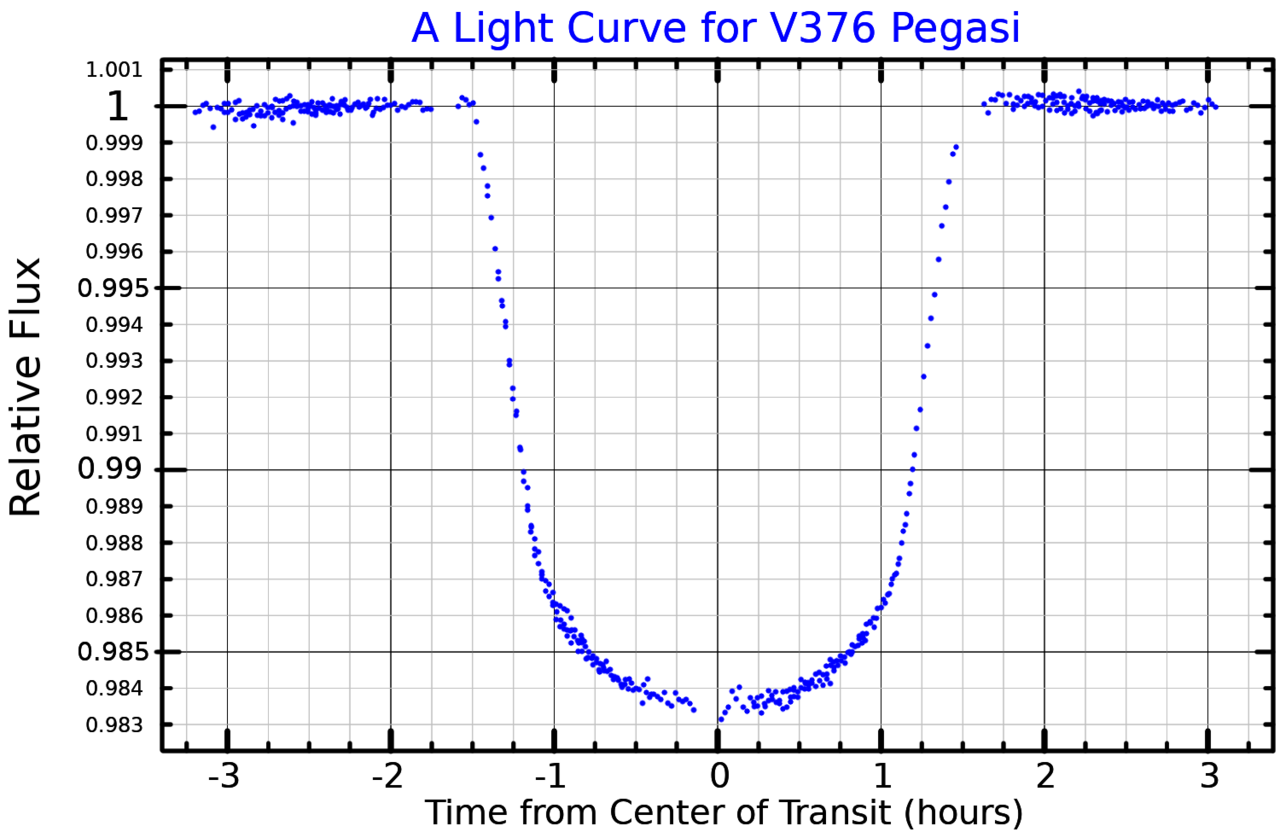
First Breath: How Astronomers Sniffed an Exoplanet's Air
A star 150 light-years away, a planet crossing its face, and a sliver of color in the spectrum that changed what astronomers thought was measurable.

Nov 26 · Mystery
The Night Vrillon Spoke Through Southern Television
On a quiet November evening in 1977, a British newsreader's voice vanished from the air and something else took its place, addressing viewers in thei…