Featured · TodayHistory
The Welsh Legend of Magnus Maximus and the Lost Roman Fort
A medieval dream-tale placed an emperor's camp on a Welsh mountainside. Two thousand years later, something turned up in a field near Crymych that nobody expected to find.
Listen
Read by Wren · 9 min
A Fort Nobody Was Looking For
In 2024, Mark Merrony, a Roman specialist and fellow at Oxford's Wolfson College, was cycling through north Pembrokeshire when he noticed something odd in a field: the faint suggestion of earthworks, shaped like a playing card, the signature outline of a Roman military camp1,2. He was already deep into a different hunt, tracing a network of Roman roads through west Wales that had occupied him since 2002, when he first rediscovered a Roman villa south of the region2.
What he'd spotted would take two more years of geophysics, trial trenches, and a full excavation to actually understand2,1.
The landscape he was riding through carries its own story, one written down centuries before any archaeologist showed up. In the Mabinogion, the medieval Welsh tale collection, there's a story called The Dream of Macsen Wledig. In it, a Roman emperor dreams of a beautiful woman in a faraway land, travels to find her, and pitches his tent near the summit of Frenni Fawr. The text says plainly: "that encamping place is called Cadair Maxen, even to this day"1.
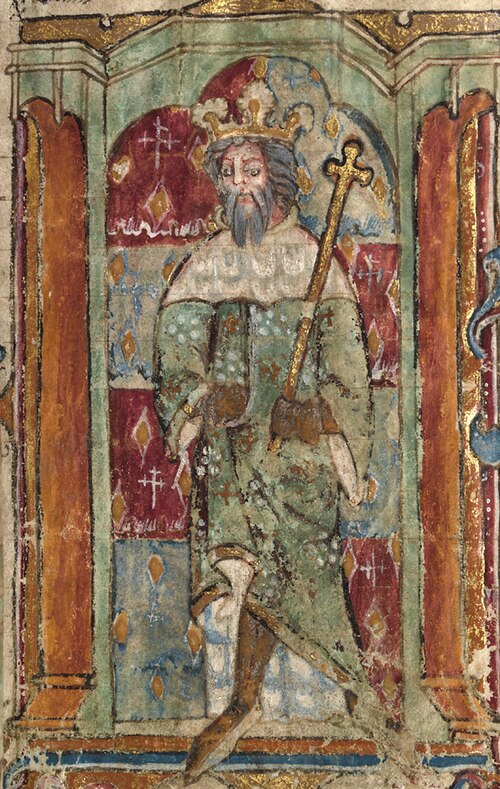
Macsen Wledig was long understood to be a legendary stand-in for a real person: Magnus Maximus, a Roman general proclaimed emperor in Britain in AD 383, who ruled parts of the western empire until Theodosius I defeated and executed him in AD 3886,7. For centuries, though, nobody had found a fort to go with the story. The tale was filed under folklore, charming but unverifiable1,4.
Merrony's hunch, once he noticed the earthworks, was that this might be the missing piece. "When I discovered the site in 2024, I began to think that it may relate to Cadair Maxen," he later wrote2. But a hunch isn't a fort. The site sat in a field partly hidden by vegetation, and turning a suspicious outline into evidence meant years of unglamorous work: a geophysical survey in October 2025 that picked out two rectangular buildings in the right places, then trial excavations in March and July of that year that produced coins, a gaming counter, pottery, and a spindle whorl2.
The real test came in September 2026, when Merrony's team, working with archaeologist Paul Cheetham of Bournemouth University, opened five trenches, each about 10 by 2 metres, over the spots the geophysics had flagged as most promising8,5. "In September, we decided to do some more archaeological excavations where we thought the most important buildings and features were, and we found what we were looking for," Merrony told the BBC5.
What came out of the ground was unambiguous: Roman pottery, large ceramic roof tiles, an iron stylus, a possible game piece, floor bases built of clay and packed stone, and traces of a kiln and a Roman road5,3,1. The fort itself turned out to be substantial, roughly 180 by 150 metres, sitting on a slope with sweeping views over the Preseli countryside, big enough that researchers estimate it could have garrisoned around 500 soldiers3,1,4.

Then came the complication. The coins recovered from the site date to the late fourth century, the era of Magnus Maximus himself5,3. But the fort's main construction phase, based on the pottery and other evidence, points to roughly AD 74 to 78, under the Roman governor Sextus Julius Frontinus, during Rome's campaigns to subdue Wales5,1,2. That's about three hundred years before Maximus ever claimed a throne.
Merrony doesn't argue that Maximus built the place. His case is narrower and, he thinks, still remarkable: the fort already existed, visibly, for centuries before Maximus's time, and would have been plainly in view from the mountain the legend names. "If there's a fort a couple of miles away that's clearly visible from the peak of the mountain, which it is and would have been, he would have not only been able to see it but would have known about it," Merrony told the BBC's Newsround5. The fourth-century coins, in his reading, suggest the site stayed in use, or was reused, right around the time an emperor remembered in Welsh legend was supposedly camping nearby3,1.
No stone at the site names Macsen or Magnus Maximus. Nothing proves he ever slept there3,1. What the dig does show is that a real, fortified Roman installation sat exactly where a nine-hundred-year-old story said an emperor's camp once stood, visible from the same peak, in a landscape the tale describes with unusual precision3,1,2. Merrony has called it "an extraordinary fusion between myth and reality," evidence that folklore is "often underpinned by fact"1,2. Whether Magnus Maximus himself ever climbed that slope is a question the trenches, so far, don't answer.
The Dream That Started It
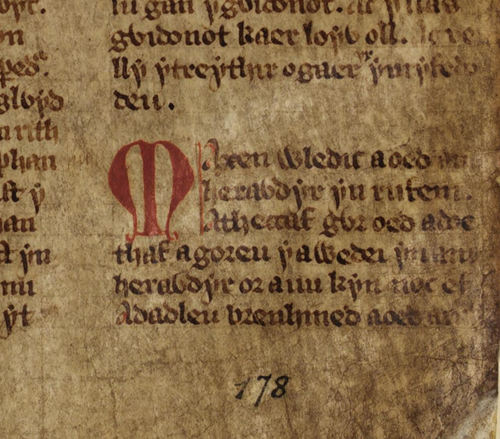
The Dream of Macsen Wledig survives as one of the tales in the Mabinogion, a collection of medieval Welsh stories. In it, the emperor Macsen is tormented by visions of a woman he's never met, abandons his throne to search for her, and finds her in Britain, where her family demands he conquer the island on her behalf1. The story folds a real political transition, the end of direct Roman rule in Britain, into a romance.
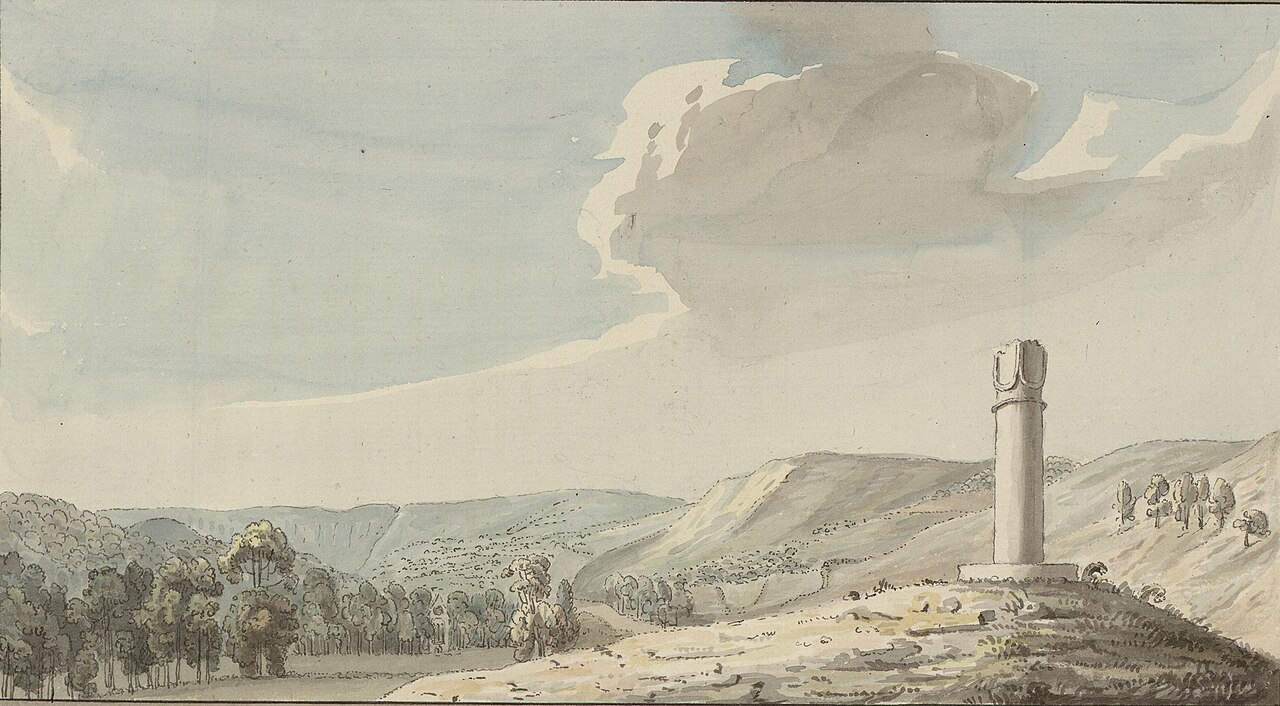
The historical Magnus Maximus left a complicated legacy in Wales that goes well beyond this one tale. Early Welsh genealogies name him as a founding ancestor of several medieval Welsh kingdoms, including Powys, Gwynedd, and Gwent, and he appears on the ninth-century Pillar of Eliseg, a stone inscription that claims his otherwise unrecorded daughter Sevira married Vortigern, a king of the Britons6.
The Welsh politician and author Gwynfor Evans wrote in 1983 that Welsh storytellers transformed the "quite romantic story of Magnus Maximus," giving Macsen Wledig a place in Welsh legend "second only to Arthur"1. That reputation is precisely why a real fort in the right spot matters: it's rare for medieval legend to point so specifically at a location that archaeology can actually go and check.
Who's Who
- Magnus Maximus: Roman general proclaimed emperor in Britain in AD 383, defeated and executed by Theodosius I in AD 388; remembered in Welsh tradition as Macsen Wledig6,7.
- Dr Mark Merrony: Oxford Roman specialist and Wolfson College fellow who identified the fort site in 2024 and led the subsequent investigation1,9.
- Paul Cheetham: Archaeologist at Bournemouth University who supervised the September 2026 excavation8.
- Sextus Julius Frontinus: Roman governor of Britain under whose campaigns, around AD 74 to 78, Merrony believes the fort was actually built5,1,2.
By the Numbers
- AD 74-78: proposed founding date of the fort, under governor Frontinus5,1,2.
- AD 383-388: reign of Magnus Maximus as Roman emperor in the West6.
- 180 by 150 metres: approximate size of the fort, about three hectares3,1,4.
- 500: estimated number of soldiers the fort could have housed, an archaeological estimate rather than a Roman record1.
- 5: trenches opened during the September 2026 excavation, each about 10 by 2 metres8.
- 3.5 km: distance of the fort from the summit of Frenni Fawr1,4.
What's Still Unproven
The identification of the fort with Cadair Maxen, the camp named in the Mabinogion, rests on location, scale, and the fort's military character rather than any inscription. No stone or object found so far names Macsen Wledig or Magnus Maximus3,1.
The fourth-century coins establish that the site saw activity during Maximus's era. They do not show that he personally visited, stayed at, or ordered anything connected to the fort5,3.
Merrony's own argument is careful on this point: he does not claim Maximus founded the fort, and dates its main construction to roughly three centuries earlier, under Frontinus1,2. The later parts of the Mabinogion tale, involving Macsen's marriage and his wife's family gaining land in northern France, have no archaeological evidence attached to them at all10.
Timeline
- AD 74-78Proposed founding of the fort near Frenni Fawr under governor Sextus Julius Frontinus5,1,2.
- AD 383Magnus Maximus proclaimed Roman emperor in Britain6.
- AD 388Magnus Maximus defeated and executed by Theodosius I6.
- 2024Mark Merrony notices earthworks near Crymych while cycling1,2.
- October 2025Geophysical survey locates two rectangular buildings at the site2.
- March and July 2025Trial excavations recover coins, a gaming counter, pottery, and a spindle whorl2.
- September 4, 2026Major excavation begins, with five trenches opened near Crymych8.
- October 12-16, 2026Discovery publicly announced through media coverage5,3,1.
Pictures


Sources
- Legend Has It That This Roman Emperor Established a Camp in Wales. A Newly Discovered Fort May Offer Proof That It Really ExistedSmithsonian Magazine · 2026
- I discovered a Roman fort in Wales – it may hold the key to the ancient Welsh legend of Macsen Wledigtheconversation.com
- Coins Found at Site of Roman Fort Could Prove a Medieval ...people.com
- Opgraving in Wales lijkt te bewijzen dat legendarisch Romeins fort echt bestondnu.nl
- 2000-year-old Roman fort could prove an ancient Welsh mythBBC
- Magnus MaximusWikipedia
- The Romans in Walesheneb.org.uk
- I Discovered a Roman Fort in Wales—It May Hold the Key to the Ancient Welsh Legend of Macsen Wledigground.news
- Roman fort discovery by Wolfson Fellow sheds new light on Welsh legend - Wolfson Collegewolfson.ox.ac.uk · 2026
- Römisches Fort in Wales entdeckt – Legende könnte wahr seinhna.de
Researched and written by Lorelet from the sources above. It cites as it goes, but it can still get things wrong, so check the sources for anything that matters.
Report a problem
More featured lorelets
See all
Today · Art & Design
The Week Garfield Woke Up Alone
For six days before Halloween 1989, a comic strip built on lasagna jokes went somewhere nobody expected, and the silence that followed let readers wr…

Today · Food
The Dish That Empties a Texas Smokehouse
A food truck in a county seat of 4,200 people runs out of meat almost every day.

Oct 16 · Science
Hearing a Bell That Has Not Rung Since 1846
Nobody alive has heard the Liberty Bell sound freely, so how did engineers end up playing its voice off a cassette tape.