Featured · TodayTechnology
Spinning Wheels and Static: The 1950 CBS Color TV War
For a few strange months, the official color standard for American television required a motorized disk spinning inside your TV set, and almost nobody's set could use it.
Listen
Read by Wren · 7 min
The Standard Nobody Could Watch
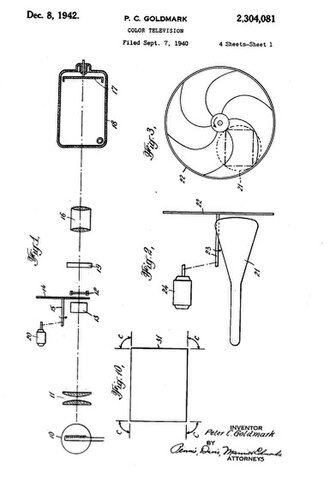
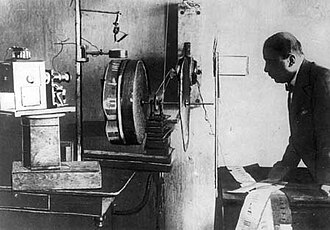
On October 11, 1950, the Federal Communications Commission did something it would come to regret: it declared that American color television would run on a system built around a spinning disk2,3. The disk, mounted in front of both the camera lens and the viewer's picture tube, carried red, green, and blue filter segments and had to whirl in perfect sync at 1,440 revolutions per minute6. It worked. It also had nothing to do with the roughly 10 million black-and-white television sets already sitting in American living rooms4.
The system came from Peter Carl Goldmark, an engineer at CBS Laboratories, who had first shown it off to the press in his New York lab on September 4, 1940, running a color film through a telecine for reporters2,7. Contemporary coverage described a picture built from roughly 405 lines rather than the standard 525, with a field rate boosted to 144 fields per second to tame flicker6. It was clever, cheap to engineer at the camera end, and visually convincing. It was also a dead end for anyone who already owned a television.
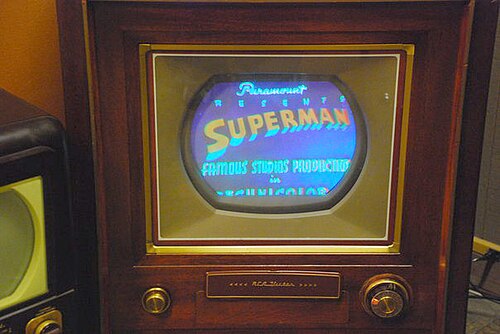
That didn't stop CBS. Chairman William Paley pushed the technology hard, and on January 12, 1950, the company staged a public demonstration in New York that made the front page, showing off a receiver with its own synchronized rotating color wheel bolted to the front of the tube8,9. The spectacle impressed audiences and FCC engineers alike. By September 1950, the Commission's own technical review concluded that CBS's picture beat its rivals on texture, fidelity, and contrast3. A month later, the FCC made it official.
Standing against all of this was David Sarnoff, chairman of RCA, who had no interest in a standard that stranded RCA's own installed base of monochrome sets and NBC's broadcasting investment. RCA engineers Richard Kell and George Brown had been quietly building something more complicated and far more valuable commercially: an all-electronic color system that let an ordinary black-and-white set keep working, in black and white, during a color broadcast10. Compatibility, not picture quality, was the real battlefield.
CBS began regular color broadcasts under its new government-blessed standard on June 25, 1951, with a variety show in New York2. It did not go well. No manufacturer besides CBS itself wanted to build receivers for a format that might not survive, so CBS bought a set maker, Air King, in April 1951 just to produce them2. Only around 200 CBS-Columbia color sets were ever made, and only 100 shipped before the Korean War's National Production Authority ordered color-set manufacturing halted as a wartime economy measure2. CBS suspended color broadcasting on October 20, 1951, after airing a college football game, and by March 1953 it had formally abandoned the system2.
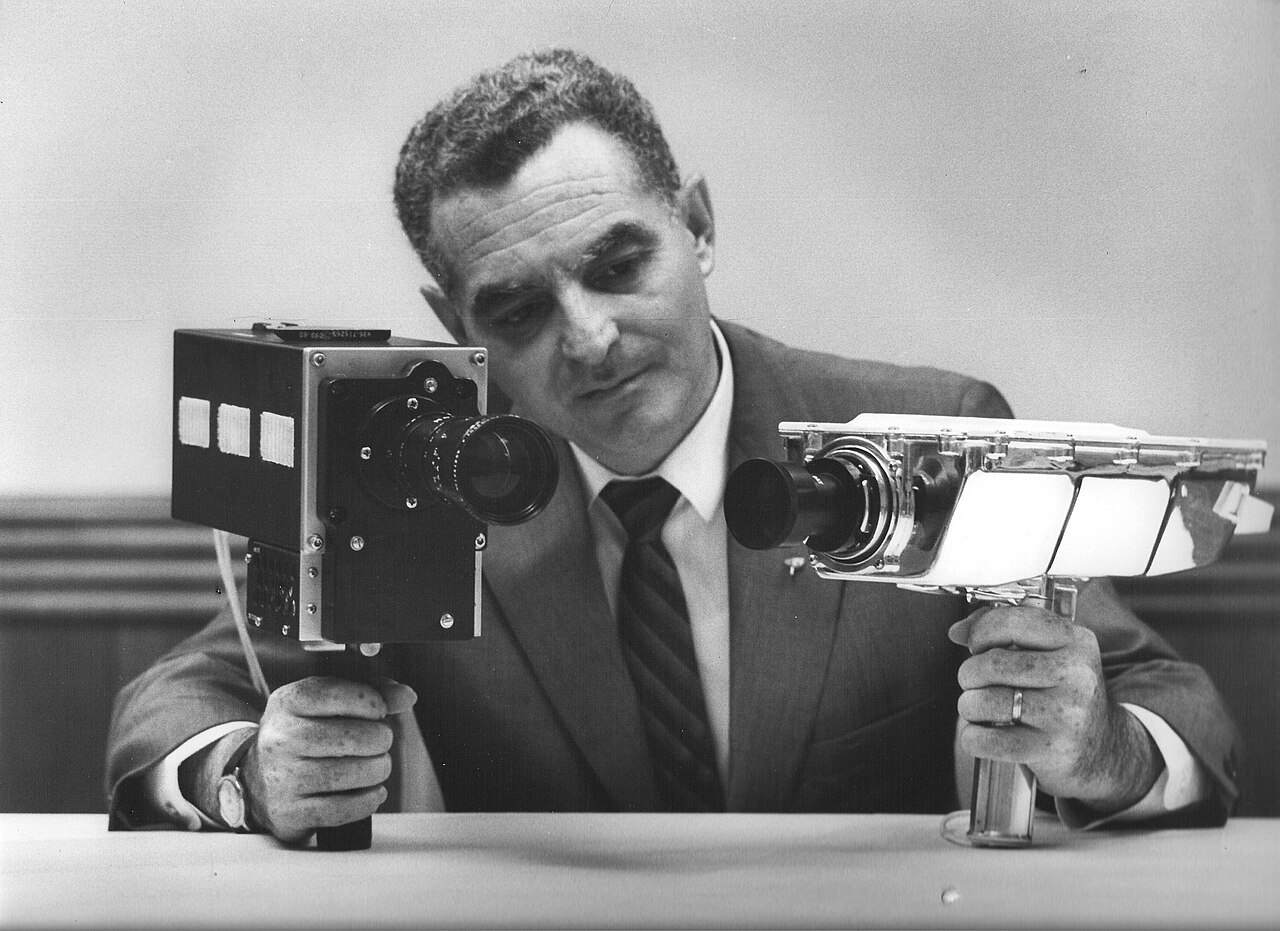
RCA, meanwhile, kept refining its compatible electronic approach, and in December 1953 the FCC adopted it as the NTSC color standard that would run American television for the next four decades2,5. The spinning wheel did not quite die, though. NASA dusted off Goldmark's field-sequential design in the late 1960s, flying Westinghouse color cameras built on the same principle aboard Apollo spacecraft starting with Apollo 10 in 1969, including cameras that eventually broadcast from the lunar surface2.
Who Was Fighting Whom
- Peter Carl Goldmark: CBS Laboratories engineer who invented the field-sequential, spinning-wheel color system, first shown publicly in 19402,1.
- William S. Paley: CBS chairman who backed Goldmark's system aggressively, betting the company's future on a standard it controlled.
- David Sarnoff: RCA chairman who opposed the CBS system and pushed for an electronic, backward-compatible alternative.
- Richard Kell and George H. Brown: RCA engineers who developed the compatible color technology that eventually became NTSC10.
- FCC: The regulator that approved CBS's system in 1950, then reversed course and adopted RCA-aligned NTSC compatible color in December 19532,5.
The Numbers Behind the Fight
- 1,440 rpm: speed of the rotating color filter wheel in CBS receivers and cameras6.
- 405 lines: vertical resolution of the CBS color picture, versus 525 for standard black-and-white broadcasts6.
- 144 fields per second: CBS's field rate, more than double the usual 60, to reduce visible flicker6.
- 10,000 pages / 265 exhibits: the record compiled during FCC hearings on color standards between September 1949 and May 19509.
- 200 sets made, 100 shipped: total production run of CBS-Columbia color receivers before the system was shelved2.
Why Compatibility Mattered So Much
The core problem was timing. CBS first proposed field-sequential color to the FCC in 1947, when relatively few households owned televisions at all, and the company had pushed similar ideas as early as 1941 and 19466. Had the standard been locked in then, incompatibility might have been a minor inconvenience.
Instead, the postwar boom intervened. GI Bill households bought black-and-white sets by the million through the late 1940s, and by the time the FCC held its color hearings in 1949 and 1950, the installed base had grown too large to write off4. The FCC even floated a compromise, suggesting manufacturers build 'bracket standard' receivers able to handle both monochrome and CBS color signals, but the industry refused, calling the timetable unworkable6. That refusal left the FCC boxed in: adopt CBS now, incompatibility and all, or wait indefinitely for a workable alternative. It picked CBS, and five years of commercial chaos followed before RCA's genuinely compatible system took over for good2,5.
Timeline
- 1940-08-29Goldmark's field-sequential color system is first demonstrated.
- 1940-09-04CBS shows the system to the press in Goldmark's New York lab2,7.
- 1947CBS formally petitions the FCC to adopt its color system; the FCC initially rejects it as not advanced enough4.
- 1949-07-11FCC calls for hearings on color television standards9.
- 1950-01-12CBS gives a widely covered public demonstration of its color system in New York8,9.
- 1950-10-11FCC formally adopts the CBS field-sequential system as the U.S. color standard2,3.
- 1951-06-25CBS begins regular color broadcasting in New York2.
- 1951-10-20CBS suspends color broadcasts amid Korean War production restrictions2.
- 1953-03CBS formally abandons its color system2.
- 1953-12-17FCC adopts RCA-backed NTSC compatible color as the new U.S. standard2.
Pictures
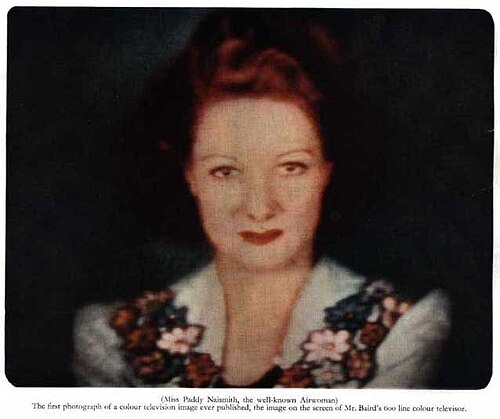
Sources
- Sarnoff, David | Encyclopedia.comencyclopedia.com
- Field-sequential color systemWikipedia
- Early Color Televisionearlytelevision.org
- "The Following Program . . . "archives.gov · 2025
- Color televisionWikipedia
- CBS Field Sequential Color Systemearlytelevision.org
- COLOR TELEVISION ACHIEVES REALISM; Transmission of Vivid Tones Demonstrated by Inventor of 'Painting' Process ACTION SHOTS NEXT IN LINE Effect Is Attained by Filters on Receiver That Respond to Broadcast Impulsestimesmachine.nytimes.com
- Цветное телевидение — ВикипедияWikipedia
- Public Sees Color Television for First Time; Demonstration ...The New York Times
- The Human Test Patterns Who First Calibrated Color TVThe Atlantic
Researched and written by Lorelet from the sources above. It cites as it goes, but it can still get things wrong, so check the sources for anything that matters.
Report a problem
More featured lorelets
See all
Today · Technology
The Holy Grail of Bug Bounties: Knuth's Reward Checks
For more than fifty years, finding a mistake in a Donald Knuth book has earned you a strange little check that almost nobody wants to cash.
Today · Music
The Three Drummers of 'Love Me Do'
Before Ringo Starr became the Beatles' drummer in the public imagination, two other men sat behind the kit for the same song, and the mix-up has conf…

Oct 10 · Technology
Watching the Watchers: A DIY Camera That Hunted Cops
A Canadian YouTuber built a homemade license-plate reader modeled on police surveillance tech, then pointed it at the police themselves. The officers…