Featured · TodayMusic
The Three Drummers of 'Love Me Do'
Before Ringo Starr became the Beatles' drummer in the public imagination, two other men sat behind the kit for the same song, and the mix-up has confused record collectors for sixty years.
Listen
Read by Wren · 8 min
One song, three drummers, one angry mother
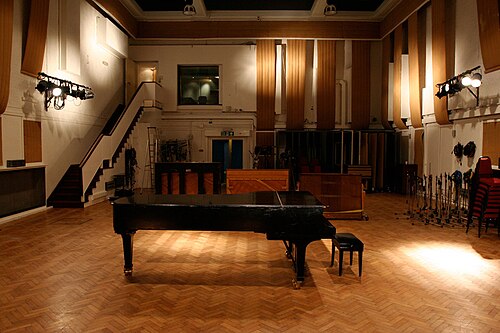
On the evening of June 6, 1962, four young men from Liverpool set up in Studio Three at Abbey Road and tried to convince a comedy-record producer that they were worth signing. The producer was George Martin, and he was not impressed by the tape his contact Brian Epstein had played him beforehand. He had agreed to give the band an hour in the studio mostly out of pity for Epstein, who seemed, in Martin's words, "such an earnest young man"2.
The band ran through Besame Mucho, then Love Me Do, then P.S. I Love You and Ask Me Why, with engineer Norman Smith initially unconvinced by what he was hearing: "I thought their music was rubbish"2. Afterward, Martin called the group into the control room and delivered what engineer Norman Smith remembered as a long lecture about their equipment, and, specifically, about the drumming of Pete Best, whose Cavern Club style did not translate to studio recording2.

Within weeks, Best was out. On August 16, 1962, Epstein told him that Lennon, McCartney, and Harrison wanted him replaced3,6. Best's mother Mona reportedly phoned Martin in fury afterward, and Best himself has said he went home and "cried like a baby" once he was behind his own front door2,6. His replacement was Ringo Starr, poached from the rival Liverpool band Rory Storm and the Hurricanes7.
Ringo's trial by fire came fast. On September 4, 1962, just over two weeks after joining, he recorded Love Me Do with the Beatles across fifteen takes, and this version was good enough that Martin and EMI used it for the band's debut single2,1. For a few weeks, it looked settled: Ringo was the drummer, and his playing was on the record.
It was not settled. A week later, on September 11, the band returned to Abbey Road and found a session musician named Andy White already set up at the kit5. Whether Martin had simply decided to try again with a seasoned professional, or whether the band arrived to find the decision already made for them, the outcome was the same: White played drums on a new take of Love Me Do, with Ringo moved to tambourine, and also played on P.S. I Love You, with Ringo on maracas4,5. Accounts differ on exactly why Martin wanted another pass. The standard explanation is that he remained unconvinced by the September 4 take and preferred the reliability of a hired session player he had used before4. Nothing in the record suggests Ringo was in danger of losing his place in the band over it; this was a studio decision about one single, not a referendum on his future2,1.
The twist is that White's version did not become the single. Mark Lewisohn's dry verdict on the matter, that the September 11 recording was apparently "not regarded as having been a significant improvement after all," sums up what happened next: Martin released the Ringo version as the actual 45, on October 5, 1962, while White's take got filed away for the album1. Nobody at EMI seems to have flagged this to the public, which is how two different versions of the same debut single ended up circulating under one title.
Why the drummer kept changing
Session drummers were a routine fact of early-1960s British recording. Studios wanted performers who could nail a part in a handful of takes under time pressure, and labels kept rosters of reliable players for exactly that purpose. Andy White, Scottish-born and raised in Glasgow, was one of them, with credits backing Billy Fury, Tom Jones, and Marlene Dietrich's touring band over a long career4,8,5.

That context matters because it cuts against the more dramatic version of the story that sometimes circulates, in which Martin is said to have been testing or humiliating Ringo. The documented sequence is less personal: a producer unsatisfied with a take, a drummer available through the ordinary session network, and a release schedule that didn't bother to reconcile which version went where1,4. White himself seemed to find the whole thing more amusing than momentous. His wife later recalled that he liked to joke about the gig: "It could have been anybody. It just happened to be me"8.
Who was behind the kit
- Pete Best: The Beatles' drummer from 1960, present for the band's Hamburg years and its rise in Liverpool; played on the unreleased June 6, 1962 test recording before his dismissal2,3.
- Ringo Starr: Formerly of Rory Storm and the Hurricanes; joined the Beatles August 1962 and played drums on the September 4 recording used for the original UK single7,1.
- Andy White: Veteran London session drummer; played drums on the September 11 recording used on the Please Please Me album, while Ringo played tambourine4,5.
- George Martin: EMI/Parlophone producer who ran the June and September sessions and whose dissatisfaction with the studio drumming drove each change2,5.
- Brian Epstein: The Beatles' manager, who delivered the news of Best's dismissal to him directly3,6.
The release trail
- June 6, 1962: Pete Best version recorded; unreleased until Anthology 1 in 19951.
- September 4, 1962: Ringo Starr version recorded in 15 takes; used for the original UK Parlophone single1,2.
- September 11, 1962: Andy White version recorded, with Ringo on tambourine; used on the Please Please Me album and most later compilations1,4.
- October 5, 1962: UK single release date, featuring the Ringo Starr recording, peaking at number 172,1.
- March 22, 1963: Please Please Me album released, carrying the Andy White recording2,1.
What's still disputed
Sources agree on the sequence of recordings and who played on each, but they diverge on motive. Some accounts frame Martin's dissatisfaction with Best as a judgment on his technical ability; others suggest Martin had already decided, for reasons beyond pure musicianship, that Best would not do for recording work2,5.
There is also no firm evidence of a staged, dramatic confrontation between Ringo and Andy White, despite how the story is sometimes retold. The record instead shows three separate studio decisions spread across three months, later compressed by storytellers into a single showdown2,1,5.
Timeline
- 1960Pete Best joins the Beatles, playing through their Hamburg residencies and Liverpool rise.
- June 6, 1962First EMI session; Pete Best plays drums on an unreleased take of 'Love Me Do.'
- August 16, 1962Brian Epstein dismisses Pete Best; Ringo Starr joins the Beatles.
- September 4, 1962Ringo Starr records drums on the 'Love Me Do' take used for the original UK single.
- September 11, 1962Session drummer Andy White records 'Love Me Do' with Ringo on tambourine.
- October 5, 1962UK single released, featuring the Ringo Starr recording.
- March 22, 1963Please Please Me album released, featuring the Andy White recording.
- 1995Pete Best's original June 1962 recording released on Anthology 1.
Pictures


Sources
- Love Me DoWikipedia
- When George Martin met The Beatles: The story of Love Me DoBBC · 2016
- Pete BestWikipedia
- Andy White (drummer)Wikipedia
- Andy White: Drummer who was Ringo Starr's stand-in on Love Me Doindependent.co.uk · 2015
- ‘There’s nothing to forgive’: Pete Best on being sacked from The BeatlesThe Irish Times · 2020
- Love Me Do – song facts, recording info and more! | The Beatles Biblebeatlesbible.com · 2008
- Andy White, a Beatle for less than 5 minutes, dies at 85latimes.com · 2015
Researched and written by Lorelet from the sources above. It cites as it goes, but it can still get things wrong, so check the sources for anything that matters.
Report a problem
More featured lorelets
See all
Today · Technology
The Holy Grail of Bug Bounties: Knuth's Reward Checks
For more than fifty years, finding a mistake in a Donald Knuth book has earned you a strange little check that almost nobody wants to cash.
Today · Technology
Spinning Wheels and Static: The 1950 CBS Color TV War
For a few strange months, the official color standard for American television required a motorized disk spinning inside your TV set, and almost nobod…

Oct 10 · Technology
Watching the Watchers: A DIY Camera That Hunted Cops
A Canadian YouTuber built a homemade license-plate reader modeled on police surveillance tech, then pointed it at the police themselves. The officers…