
Featured · TodaySpace
Little Green Men: How Jocelyn Bell Burnell Found Pulsars
A graduate student spotted a stubborn quarter inch of scruff on a chart recorder and spent months chasing down what it was.

Listen
Read by Wren · 8 min
A Quarter Inch of Scruff
Jocelyn Bell was going back through old chart recordings in late November 1967 when she found it again: a short, irregular-looking patch of marks that did not behave like ordinary interference1,8. It occupied, by Hewish's own estimate, about a quarter inch of paper out of the roughly four acres she had already checked by hand2,8. She brought it to her supervisor, who at first suggested the signal was too small a fraction of the data to bother with8.
Hewish told her to switch to a faster recorder to see the thing properly, and for a month it recorded nothing at all8. Whatever was producing that scruff was either gone, broken, or waiting.
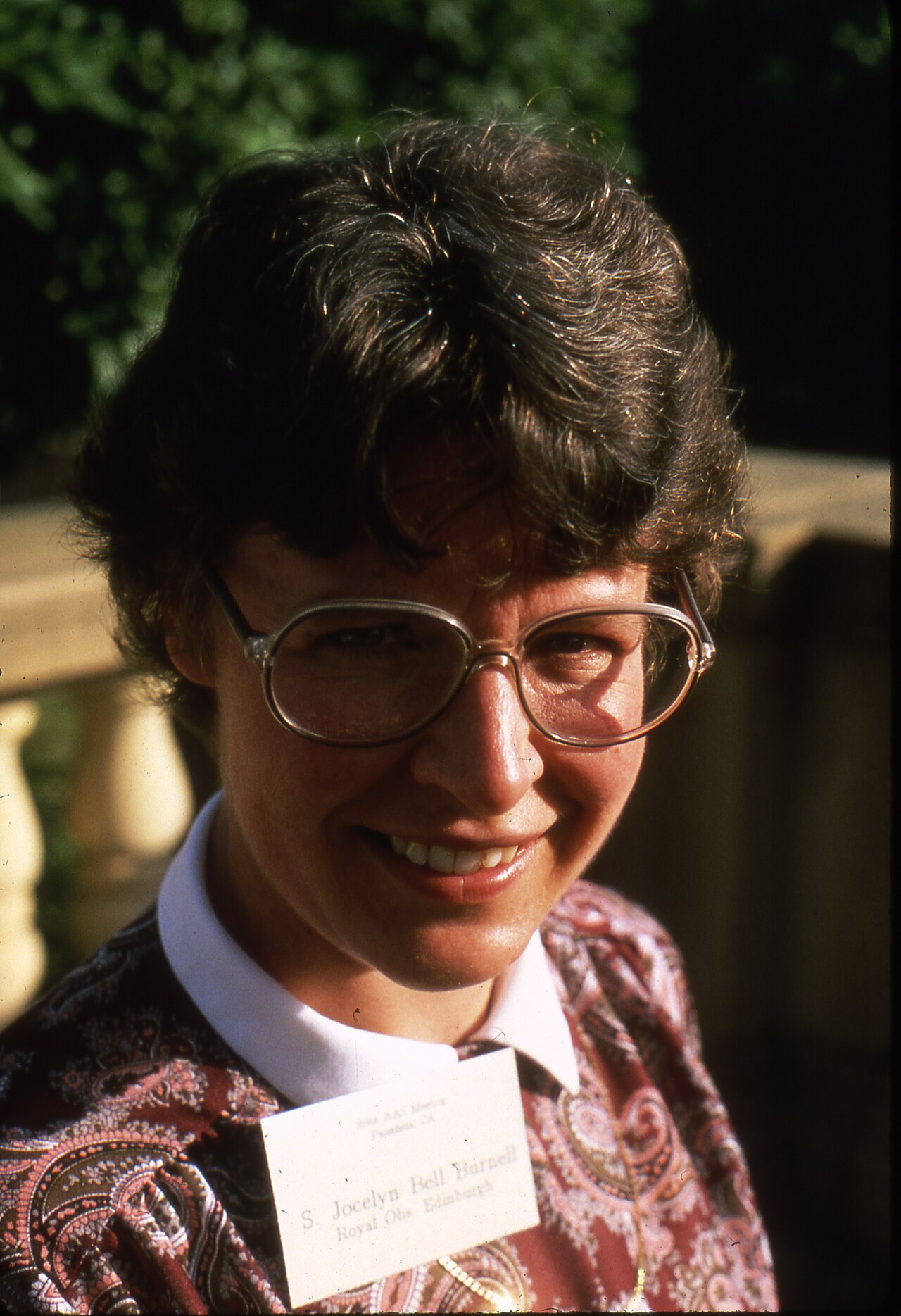
Bell Burnell was born on 15 July 1943 in Lurgan, County Armagh, and had grown up visiting Armagh Observatory before studying physics at Glasgow and starting a doctorate at Cambridge under Antony Hewish1. Hewish had designed an instrument called the Interplanetary Scintillation Array to catch the radio twinkle of distant quasars as their signals passed through the solar wind, and Bell had spent two years helping to build it, soldering and even sledgehammering antennae into the ground outside Cambridge9,8. Her job once it was running was to read the output, sometimes as much as 96 feet of paper a night1.
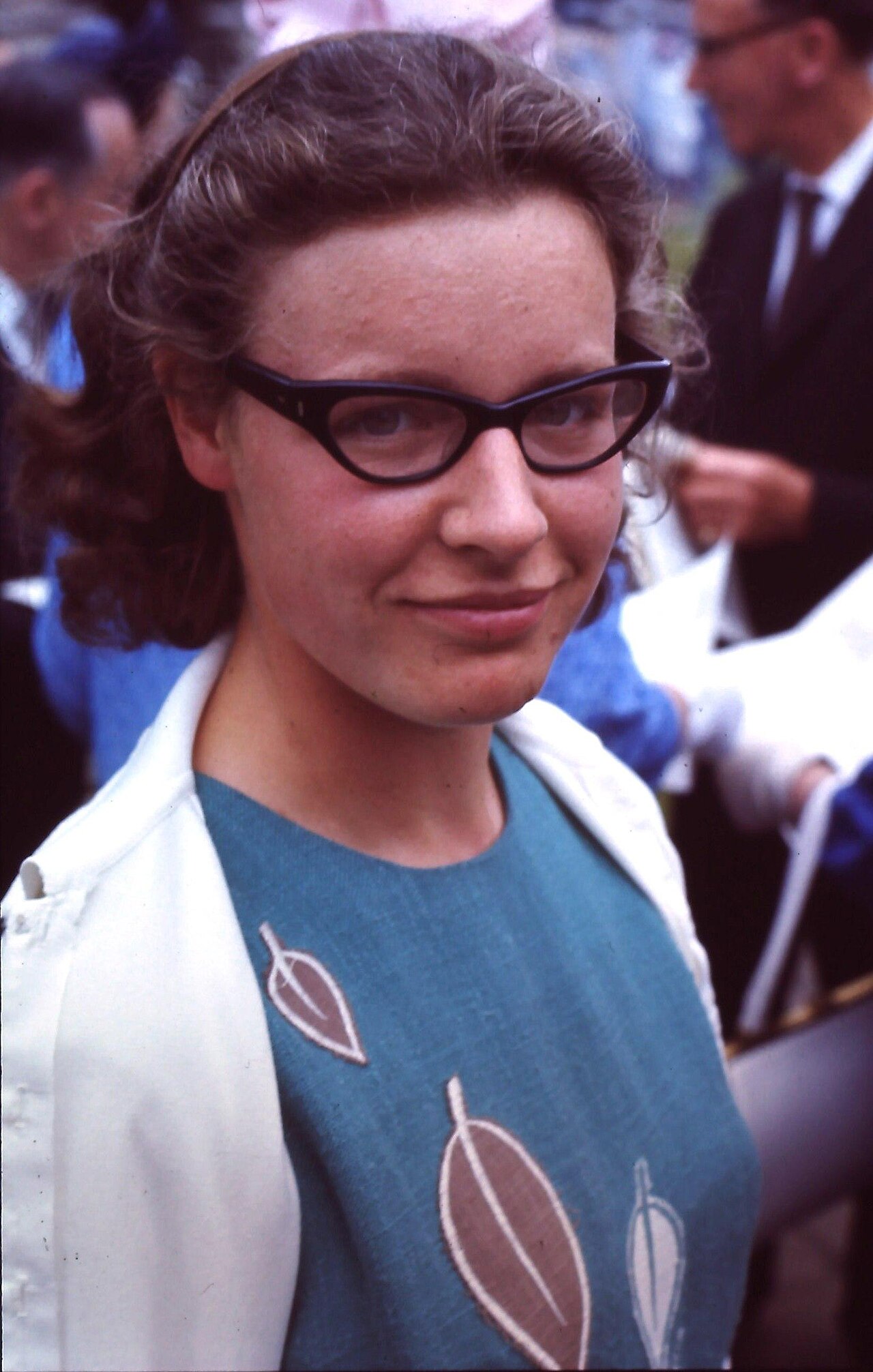
The array had first caught the signal, unrecognized, on 6 August 1967, buried somewhere in the ordinary clutter of scintillation and interference that radio telescopes pick up: arc welders, sparking thermostats, badly suppressed car engines4,8. It took Bell three months of hand-checking to notice the pattern again, because the charts had to be read by eye, roll after roll1.
Then, on 28 November 1967, the faster recorder caught it clean: a string of pulses, one and a third seconds apart8. The regularity was almost too neat for a natural radio source, and Bell and Hewish spent December checking for terrestrial interference and confirming that the source tracked the stars rather than the sun, which meant it lived beyond the solar system2,4. Only half-joking, they labeled it LGM-1, for Little Green Men, a private shorthand that was easier to say than reciting its coordinates8,3.
Just before Christmas, Bell walked into what she later described as a high-level conference already underway about how to present the results, a meeting about her discovery that she had not been invited to call10. That same evening she found a second repeating source in a completely different part of the sky, which made the idea of two separate alien civilizations signaling Earth at once implausible, and effectively ended the Little Green Men hypothesis2. She went off, she later said, much happier, for Christmas10.
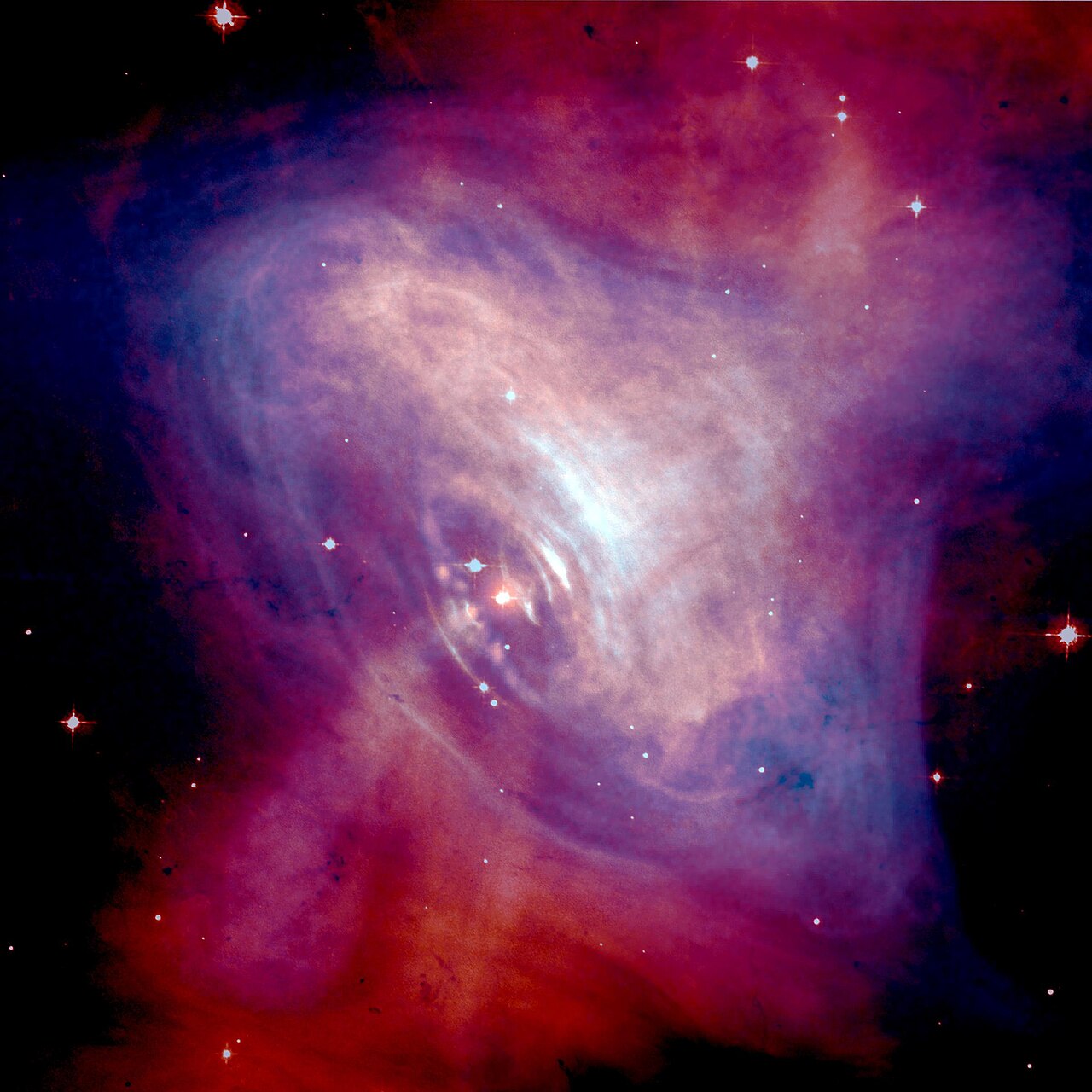
The Cambridge team published their find in Nature on 24 February 1968 under the title 'Observation of a Rapidly Pulsating Radio Source,' with five authors: Hewish first, Bell second5,1. The source, first called CP 1919 and now known as PSR B1919+21, was soon understood as a pulsar, a rapidly spinning neutron star sweeping a beam of radio waves past Earth with each rotation, and astronomers Thomas Gold and Fred Hoyle worked out the rotating-neutron-star explanation almost as soon as the announcement came out3,9.
In 1974, the Nobel Prize in Physics went to Hewish and Martin Ryle, for what the citation called Hewish's decisive role in the discovery of pulsars2. Bell, by then married and working part time as an X-ray astronomer, was left off the prize entirely, and Fred Hoyle told reporters at a press conference in Montreal that it amounted to a scientific scandal of major proportions7. Hewish called the charge untrue and ridiculous; a Nobel committee physicist said there simply was not enough reason to include her7. Bell Burnell herself has never publicly contested the decision, saying once that an award to her, a research student on a flash of observation, would have debased the prize7.
She went on, decades later, to win the $3 million Breakthrough Prize for the same discovery, which she gave away to fund physics students from underrepresented groups1,8. The quarter inch of scruff that Hewish almost waved off had turned out to be one of the largest classes of object in the galaxy.
Timeline
- 1965-1967Hewish designs and Bell helps build the Interplanetary Scintillation Array at Mullard Radio Astronomy Observatory9,4.
- 1967-08-06First unrecognized trace of the pulsar signal recorded9,8.
- 1967-11-28Bell detects the regular pulsing signal, 1.33 seconds apart, on a faster recorder5,8.
- 1967-12Terrestrial interference ruled out; signal confirmed to track the stars; second source found, ending the Little Green Men idea2,10.
- 1968-02-24Discovery paper published in Nature5.
- 1974Nobel Prize in Physics awarded to Antony Hewish and Martin Ryle; Bell excluded, sparking Fred Hoyle's public criticism2,7.
- 2018Bell Burnell awarded the Special Breakthrough Prize in Fundamental Physics, donates the $3 million award to fund underrepresented physics students1.
Pictures


Sources
- Jocelyn Bell BurnellWikipedia
- Little Green Men? Pulsars Presented a Mystery 50 Years Agospace.com · 2017
- PSR B1919+21Wikipedia
- LGM-1: The First Pulsar | Anomaly Registryanomalyregistry.com
- Jocelyn Bell Burnell - The Linda Halllindahall.org
- PSR B1919+21 - WikipediaWikipedia
- Science: A Nobel Scandal?time.com · 1975
- Journeys of discovery: Jocelyn Bell Burnell and pulsarscam.ac.uk · 2020
- Pulsar - WikipediaWikipedia
- 1ABSTRACTarXiv
- Jul 29th: Dr. Jocelyn Bell Burnell - 365 Days of Astronomycosmoquest.org
- Nobel Prize in Physics controversies - WikipediaWikipedia
Researched and written by Lorelet from the sources above. It cites as it goes, but it can still get things wrong, so check the sources for anything that matters.
Report a problem
More featured lorelets
See all
Today · Film & TV
How Blade Runner Got Its Name from Black Market Scalpels
Ridley Scott loved a word buried in his screenwriter's draft. The screenwriter admitted, a little sheepishly, that it wasn't his.

Today · History
The 1895 Race Run Through a Chicago Blizzard
On Thanksgiving Day 1895, six motor wagons set out from Chicago to prove the automobile could survive American roads. The weather had other plans.

Nov 27 · History
The RAF Fauld Explosion: Britain's Largest Blast Crater
On a quiet Monday morning in wartime Staffordshire, the ground opened up. It took thirty years for anyone outside the military to find out why.