Featured · TodayTechnology
The First LED: How a Red Glow Doomed Edison's Bulb
In 1962 a General Electric scientist lit up a tiny red crystal that nobody thought was good for much. It took fifty years, but it ended up replacing the light bulb.
Listen
Read by Wren · 7 min
A Red Glow in Syracuse
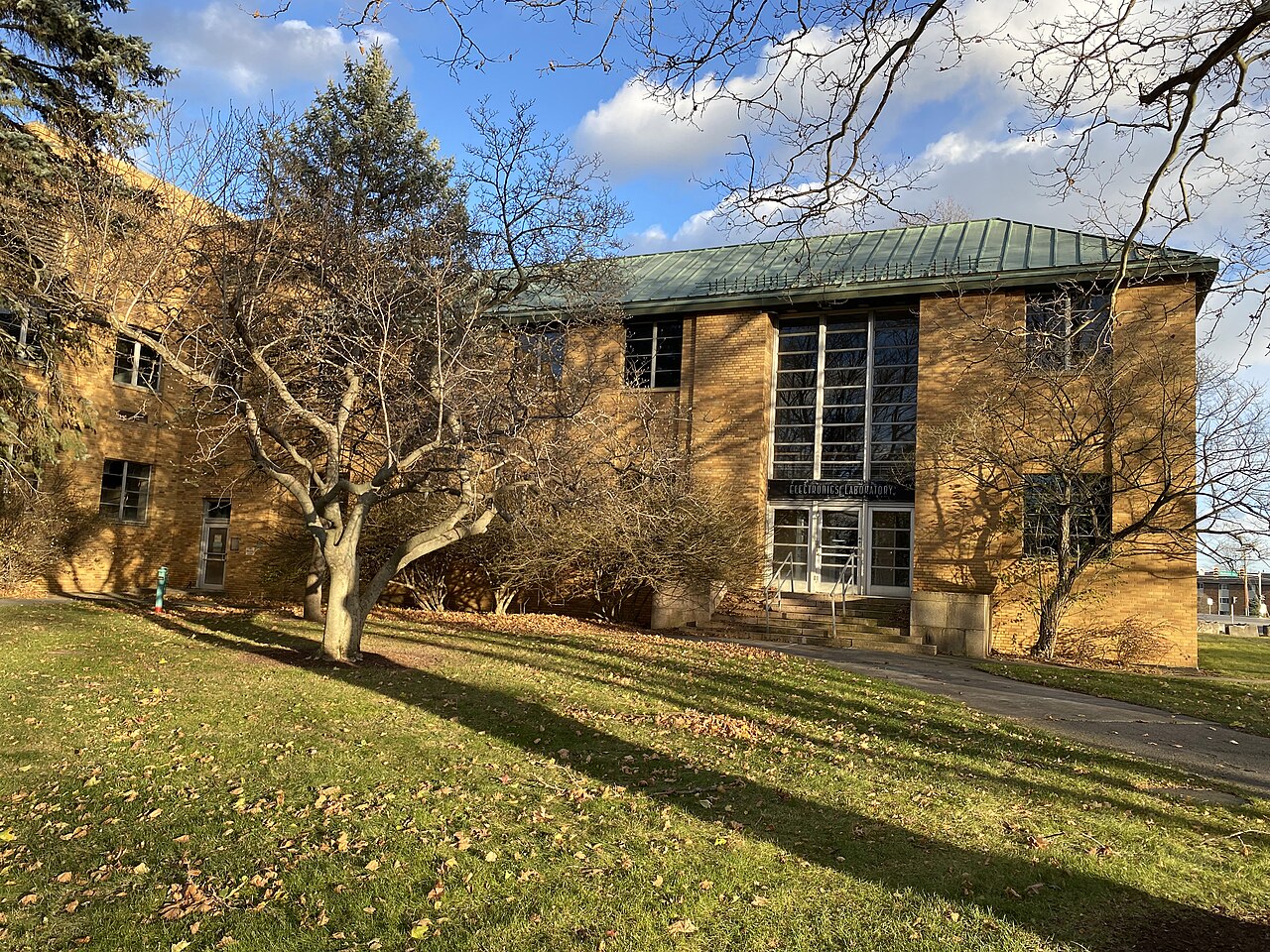
On October 9, 1962, a 33-year-old scientist named Nick Holonyak Jr. switched on a small semiconductor crystal in a General Electric lab outside Syracuse, New York, and watched it glow red1,2. It was not much to look at. But it was visible, which made it strange and valuable in a lab full of devices that only worked in the infrared, invisible to the naked eye1,2.
Holonyak was working at GE's Advanced Semiconductor Laboratory, where the real race that summer was over semiconductor lasers3. His colleague Robert N. Hall was pursuing an infrared laser using gallium arsenide (GaAs), a material that reliably produced light nobody could see4,2. Teams at MIT, IBM, and elsewhere were chasing the same prize3. Holonyak took a different path: he grew crystals of an alloy, gallium arsenide phosphide (GaAsP), reasoning that adding phosphorus would widen the material's band gap and push the emitted light into wavelengths the eye could register4,5.
It worked, and GE colleagues reportedly nicknamed it "the magic one," because unlike everything else on the bench, you could just look at it and see the light2. Within months GE was selling the LED version for $260 each, and a laser version of the same crystal, which produced a narrow, coherent beam rather than diffuse light, for ten times that1. Holonyak himself wasn't shy about the stakes. In the February 1963 issue of Reader's Digest, in an article titled "Light of Hope, or Terror?", he said he believed the device could become "a practical light source" within a decade or so1,4.

He was off on timing, but not on substance. The red indicator lights that began appearing on calculators, digital clocks, and computer panels through the 1960s and 1970s all traced back to that GaAsP crystal1,3. It took the invention of efficient blue LEDs in the 1990s, work that won Isamu Akasaki, Hiroshi Amano, and Shuji Nakamura the 2014 Nobel Prize in Physics, before LEDs could produce the white light needed to replace a household bulb6,4. But the chain started in Syracuse, with a dim red glow nobody could call practical.
Why Visible Light Was the Hard Part
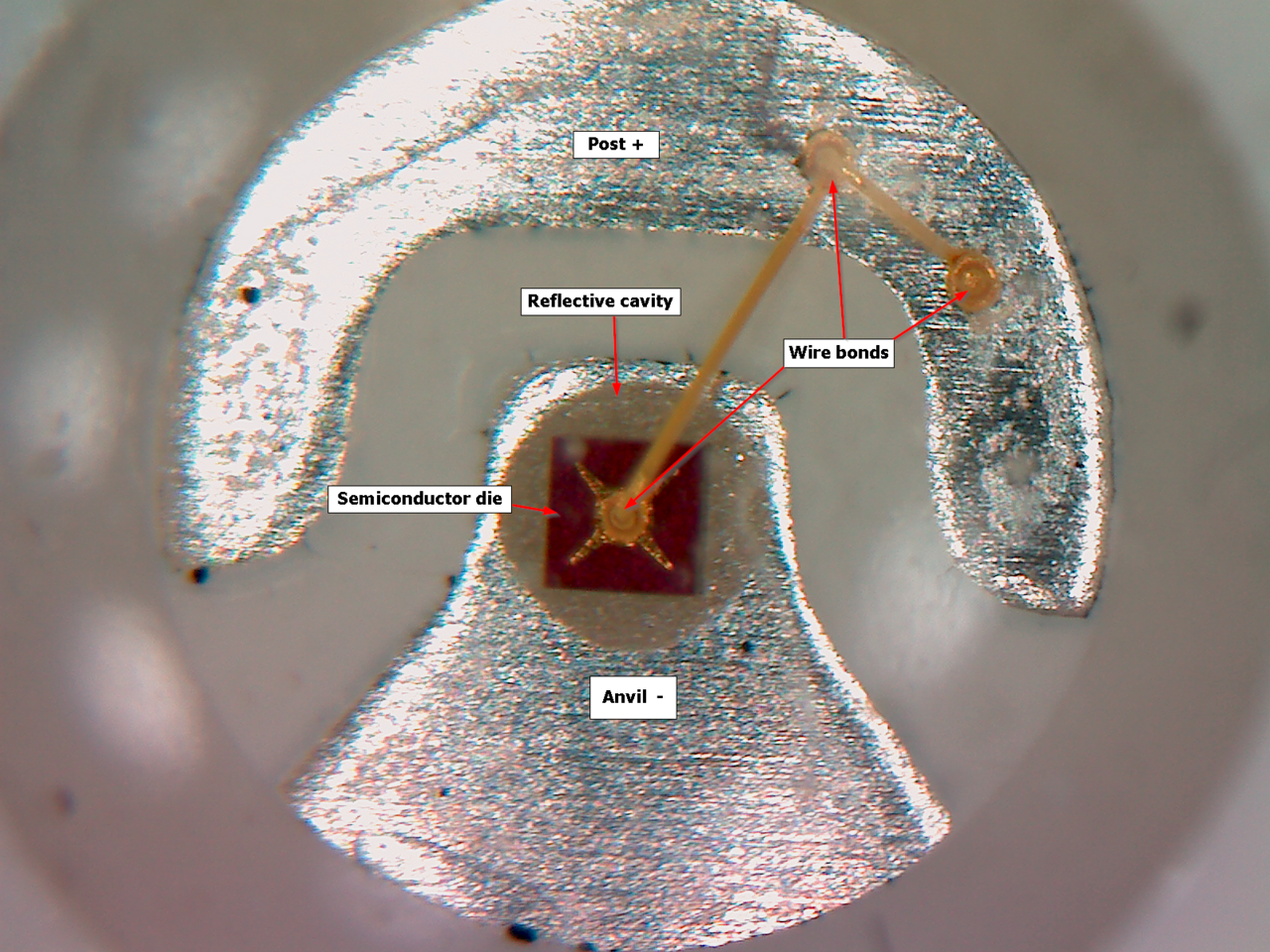
An LED makes light when electrons and "holes" in a semiconductor recombine, and the energy released escapes as a photon. The size of the material's band gap sets the photon's energy, which is to say its color7. Gallium arsenide, the workhorse material of early semiconductor research, has a band gap that produces infrared light, outside what human eyes can detect4,7.
That wasn't a new problem in 1962. British engineer H. J. Round reported electroluminescence from silicon carbide crystals back in 1907, and Soviet researcher Oleg Losev studied similar effects in the 1920s and 1930s7,8. Neither produced anything close to a usable device. The transistor's invention in 1947 and the subsequent explosion of semiconductor research finally gave scientists the materials and techniques to take the idea seriously1,8.
Holonyak's fix was mixing in phosphorus to make GaAsP, which widened the band gap enough to shift emission from infrared into visible red4,5. It sounds like a small tweak. It was the whole trick.
Who's Who
- Nick Holonyak Jr.: GE scientist who grew the GaAsP crystal and demonstrated the first practical visible LED in 1962, later a longtime professor at the University of Illinois4,1.
- Robert N. Hall: GE researcher working in parallel on an infrared semiconductor laser using plain gallium arsenide, part of the competitive backdrop Holonyak worked against4,2.
- John Bardeen: Nobel laureate physicist who was Holonyak's doctoral advisor at the University of Illinois; Holonyak later held a professorship named for him4,1.
- H. J. Round: British engineer who first reported semiconductor electroluminescence in 1907, decades before any practical device existed7,8.
- Oleg Losev: Soviet researcher who studied light-emitting semiconductor junctions in the 1920s and 1930s7,8.
- Isamu Akasaki, Hiroshi Amano, and Shuji Nakamura: Developed efficient blue LEDs in the early 1990s, enabling white LED lighting; awarded the 2014 Nobel Prize in Physics6,4.
LED, Laser, or Both?
Holonyak's own 1962 paper, co-written with S. F. Bevacqua, was titled "The Semiconductor Near-Infrared Diode," and GE's own historical materials describe his October 9 device as a "visible semiconductor alloy laser"4,2. Many later accounts, including Wikipedia's biography of Holonyak, call it the first visible light laser diode, with the LED described as its commercial offshoot4.
Other technical retrospectives draw a sharper line: a laser requires coherent, stimulated emission from a resonant structure, while an LED produces mostly incoherent, spontaneous emission, and the device that actually worked at room temperature and became the basis for commercial products was functioning as an LED, not a laser5. GE itself sold both versions from the same material: an LED for $260 and a laser for $2,600, which suggests contemporaries saw them as related but distinct products1.
The confusion isn't really about who did what. Nobody disputes that Holonyak built the device and that it was the first to produce practical visible light from a semiconductor. The dispute is terminological, a side effect of the fact that in 1962 the race for a working semiconductor laser was the glamorous project, and the LED was, for a while, treated as its less impressive cousin5,3.
Pictures



Sources
- Fifty Years Ago, GE Engineer Nick Holonyak Turned On The World's ...ge.com
- LED Inventor Nick Holonyak Reflects on Discovery 50 ...ge.com
- Red Hotspectrum.ieee.org · 2003
- Nick HolonyakWikipedia
- 50 years ago: How Holonyak won the race to invent visible LEDs | MRS Bulletin | Cambridge Corecambridge.org · 2012
- Light-Emitting Diode (LED)ece.illinois.edu
- Light-emitting diodeWikipedia
- Remembering LED Pioneer Nick Holonyakspectrum.ieee.org · 2022
Researched and written by Lorelet from the sources above. It cites as it goes, but it can still get things wrong, so check the sources for anything that matters.
Report a problem
More featured lorelets
See all
Today · Film & TV
The Lost Interactive Art of 2000s DVD Menus
For about a decade, before streaming flattened everything into a thumbnail grid, the humble DVD menu was a playground for designers, who turned a sim…
Today · Crime
The Steal of Dalí's 330-Pound Apocalypse
A bronze book cover decorated with gold, pearls and seashells vanished from a small French museum, leaving investigators with a very heavy mystery an…

Oct 8 · Sports
The Perfect Game Nobody Saw Coming
A journeyman pitcher with a losing record and a reputation for late nights found a baseball in his shoe one October morning and threw the only perfec…