Featured · TodayHistory
The Trawler Captain Who Sailed by a School Atlas
A Grimsby fishing boat went out for a fortnight on the Dogger Bank and did not come back. Three months later it turned up five thousand miles away, and getting it back took a gunfight that wasn't quite a gunfight.

Listen
Read by Finch · 8 min
A Two-Hour Chase Off Georgetown
On the evening of 18 June 1936, the British steamer Arakaka spotted a small vessel a few miles outside Georgetown harbour and radioed word to shore1. An unarmed police launch went out to investigate, and as it closed in, the crew of the unidentified boat turned hostile, denying she was the missing Girl Pat and threatening violence if officers tried to board1. The launch pulled back, the police armed themselves and got authority to seize the boat, and when they returned the next morning they found their quarry trying to slip away. What followed was a two-hour pursuit that one paper, the Hull Daily Mail, dressed up as sport1.
Just two days before, several newspapers had reported something grimmer: the wreck of a small boat and three bodies found at Atwood Cay in the Bahamas, with one headline asking whether a school atlas had steered the crew to their deaths1. It was wrong. Early on the morning of 19 June, a police launch towed the real Girl Pat into Georgetown harbour, battered but afloat, with everyone aboard alive1.
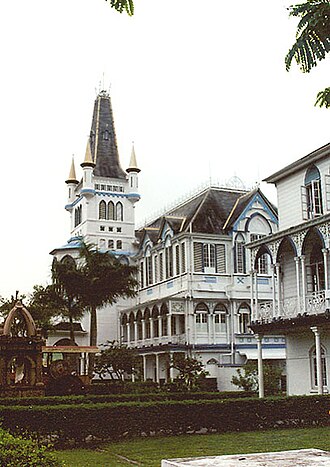
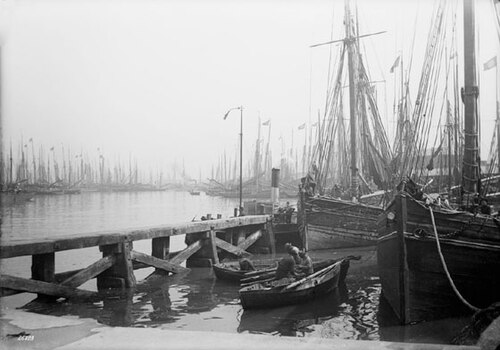
The boat the police were chasing had left Grimsby almost three months earlier under very different circumstances. The Girl Pat was a small trawler, built in 1935 and owned by the Marstrand Fishing Company, converted for seine-net fishing and fitted out for crews of six1. Her skipper, George Black Orsborne, known to everyone as Dod, was an Aberdeen-raised seaman who had joined the Royal Navy as a boy of fourteen and spent the following decade doing, in his own words, "a bit of everything, rum-running, whaling, deep-sea trawling in the Arctic"1. His younger brother James came along as an unauthorized passenger, and the owners expected the boat back within two or three weeks after an ordinary North Sea trip to the Dogger Bank1,3.
It did not go that way. Days out from Grimsby, after dropping the regular engineer George Jefferson at Dover without telling him what was happening, Orsborne gathered the rest of the crew in the wheelhouse and told them this was no normal fishing trip1. He then showed them something that would define the whole affair: there were no charts aboard, only a cheap school atlas he intended to steer by1. He had the boat's registration number blacked out and her bowsprit altered, and false names went into the log1.
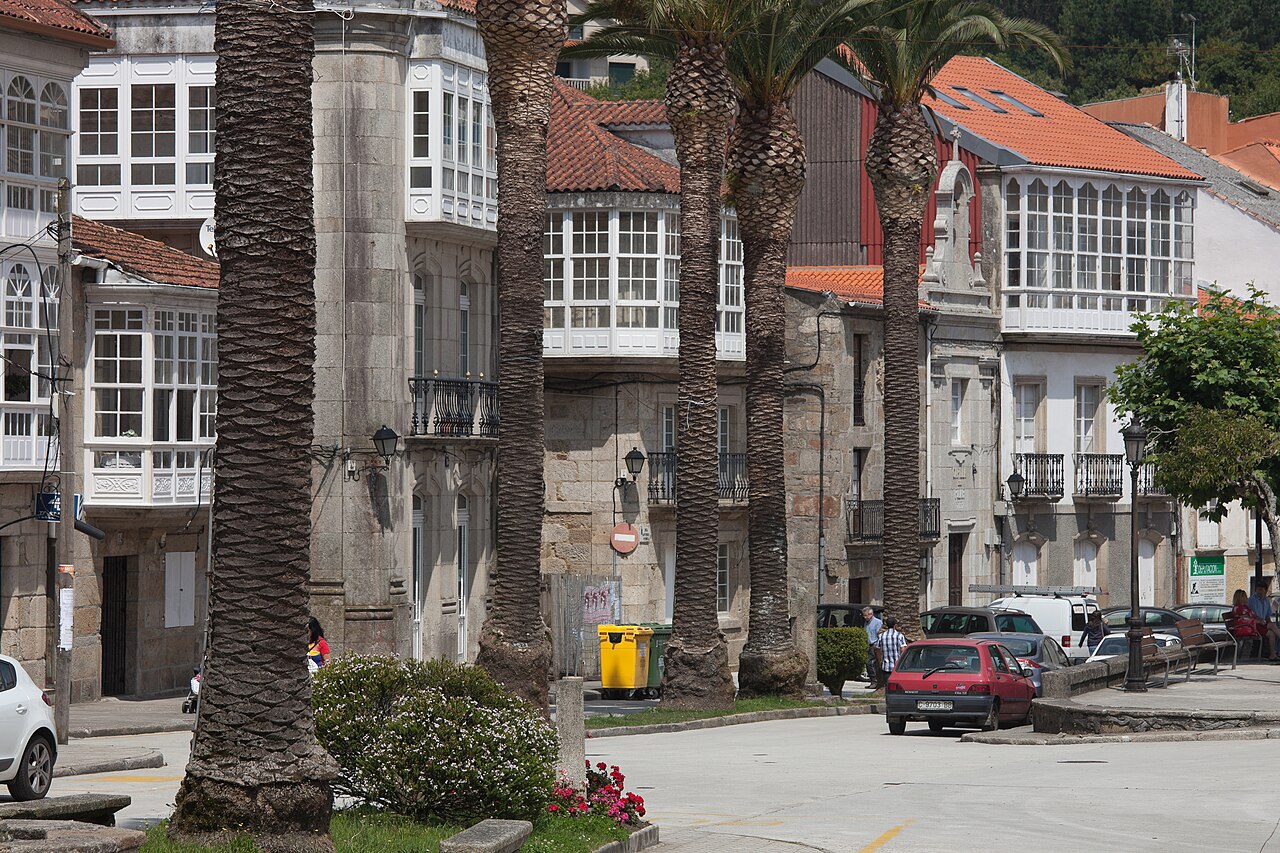
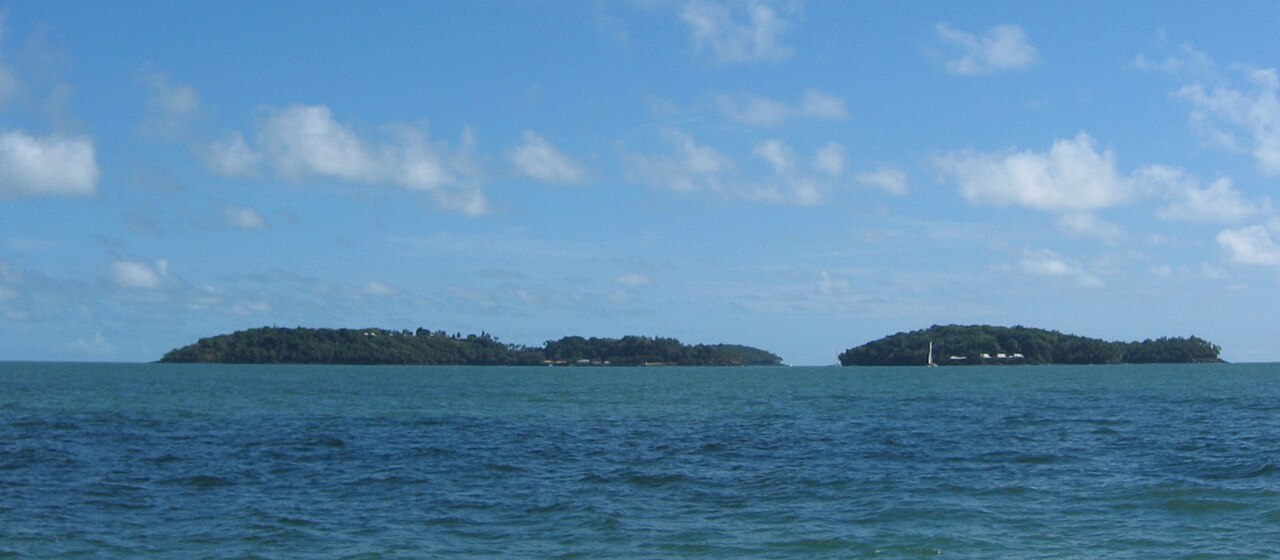
From there the Girl Pat worked her way south through the Bay of Biscay, rested at Corcubión in Spain, and continued down the West African coast past the Savage Islands to Dakar before turning west across the Atlantic1,6,7. Sources differ on the exact distance, somewhere between 5,000 and 6,000 nautical miles depending on how the route is measured, but agree on the method: an atlas, a compass, and whatever local knowledge the crew could pick up along the way2,8. The vessel is believed to have taken on water at the Îles du Salut off French Guiana before making its final approach to British Guiana1,9.
By the time the Girl Pat reached Georgetown, the story had already made Orsborne famous in Britain, with reports of sightings, a false distress call under the name "Margaret Harold," and even interest from Gaumont British in a feature film1. What the chase and the capture exposed was not a shipwreck but a theft, and in the following months the real contest moved from the sea to a London courtroom. There, Orsborne's defense claimed the Marstrand Fishing Company had wanted the boat "done away with" so it could collect on a £3,000 insurance policy, and that his voyage was part of that scheme rather than a simple theft4,3,5. The owners denied being under any financial pressure, the defense fell apart under cross-examination, and the jury convicted both brothers: eighteen months for George, twelve for James1,4,5.
The Girl Pat herself outlived the scandal. A Georgetown syndicate sailed her home to Portsmouth in May 1937, after which she toured as a tourist attraction before being sold on for wreck-marking work and requisitioned during the war1,3. Orsborne later claimed in his memoirs that the whole voyage had actually been a secret mission for British Naval Intelligence tied to the outbreak of the Spanish Civil War, a story no other source corroborates1,3. He died of a heart attack in France in 1957, having gone on to further scrapes, including an arms-smuggling arrest in Trinidad during a later voyage retracing Charles Darwin's route on the Beagle2. Whatever he was actually doing out there with his school atlas, the two-hour chase off Georgetown was the moment the rest of the world caught up with him.
Timeline
- 1935Girl Pat built at Oulton Broad, Suffolk, for the Marstrand Fishing Company of Grimsby1.
- 1 April 1936Girl Pat leaves Grimsby, authorized only for a two to three week North Sea fishing trip1,3.
- 3 April 1936Engineer George Jefferson is left behind at Dover; Orsborne reveals the real plan and the school atlas to the crew1.
- April-May 1936Girl Pat sails via Corcubión, the Savage Islands, and Dakar, then crosses the Atlantic1,6,7.
- 17 June 1936False reports circulate that Girl Pat wrecked at Atwood Cay in the Bahamas with three dead1.
- 18-19 June 1936Police launch spots and chases the real Girl Pat off Georgetown, British Guiana; vessel towed in1.
- September 1936George and James Orsborne indicted at Bow Street Court for stealing the Girl Pat4.
- 22 October 1936George Orsborne sentenced to 18 months, James to 12 months1,4,10.
- 9 May 1937Girl Pat sailed back to Portsmouth by a volunteer crew and put on display as a tourist attraction3.
Pictures

Sources
- Girl PatWikipedia
- Milestones, Jan. 6, 1958time.com · 1958
- The Adventures of the Girl Pathampshirearchivesandlocalstudies.wordpress.com · 2017
- Transport: Girl Pattime.com · 1936
- The master of the Girl Patfishingnews.co.uk
- Wikipedia:Wikipedia Signpost/2015-02-25/Featured content - WikipediaWikipedia
- Wikipedia:Wikipedia Signpost/Single/2015-02-25 - WikipediaWikipedia
- Stories Behind Stampslargsprobus.org.uk
- Гёрл Пат — ВикипедияWikipedia
- RUNAWAY TRAWLER. - SKIPPER ORSBORNE'S DEFENCE Instructed to Cast Vessel Away. - The West Australian (Perth, WA : 1879 - 1954) - 22 Oct 1936Trove
Researched and written by Lorelet from the sources above. It cites as it goes, but it can still get things wrong, so check the sources for anything that matters.
Report a problem
More featured lorelets
See all
Today · History
Finding the Spot Where Photography First Saw a Person
A night out near a Paris square sent three filmmakers chasing a nearly two-century-old shadow, back to the exact patch of pavement where an anonymous…

Today · Art & Design
Catharina van Hemessen Paints Herself at Work
In 1548, a twenty-year-old Antwerp painter sat down at her easel and did something almost no woman before her had done on canvas: she showed herself…

Oct 21 · Art & Design
Frank Lloyd Wright's War with New York City
A museum built to house art that didn't look like anything else took sixteen years, institutional turmoil, and a small war with city hall before anyo…