
Featured · Nov 26Gaming
The Turtle Who Had to Hold the Camera
Before Super Mario 64, nobody had figured out how to let a player see a 3D world and still trust their own controller. Nintendo's fix arrived on a cloud.

Listen
Read by Finch · 8 min
A Koopa with a Camera
Mario walks out into the open air in front of Princess Peach's castle, and before the player touches the analog stick, Lakitu drops into view on his cloud, camera in hand, and speaks to him3,6. It is the first thing the game bothers to explain. Not the jump, not the coins, the camera.
That choice was doing more work than it looked like. Nintendo was handing the player a floating, semi-autonomous viewpoint that could get stuck behind walls, swing wide of a jump, or simply pick a bad angle, and it needed the player to trust that viewpoint before the real difficulty of the game even started7,8.
The problem went back further than the castle courtyard. In a 2D Mario game, the screen is basically a stage: the player moves along two axes, the camera scrolls, and distance reads through sprite size and layout4. A fully navigable 3D space breaks all of that. The player can move in any direction, obstacles can hide both Mario and his destination, and a jump has to be judged in depth as well as height9.
Shigeru Miyamoto had been circling this problem since the early 1990s, when the idea of a 3D Mario first came up during work connected to Star Fox for the Super Nintendo4,10. By the time Nintendo began real production on September 7, 1994, at its Entertainment Analysis and Development division, the team of around fifteen to twenty people started not with levels or enemies but with Mario's movement and the camera, months before anything resembling the finished castle hub existed4,5.

Programmer Giles Goddard remembered working on an SGI Indy workstation in an open-plan office, grabbing colleagues as needed, with no fixed process because, as he put it, Nintendo at the time was less organized than it later became2,5. The earliest prototype wasn't free-roaming at all. It followed something closer to a fixed, isometric path, similar to Super Mario RPG, before the team pushed it toward open 3D space with some linear stretches kept deliberately, including a corridor meant to funnel the player toward Bowser4,5. Underneath all of it sat an unresolved question nobody at the company had answered before: if the camera moves on its own, does the same stick input still feel like it points the same direction on screen.
The camera itself became one programmer's job, almost entirely. Takumi Kawagoe, who had worked on the camera and cutscenes for the canceled Star Fox 2, built Super Mario 64's camera system and stayed on the project the entire time4,5. According to Goddard, Miyamoto spent the bulk of his own attention on exactly two things: how Mario moved, and how the camera behaved around him, testing both repeatedly rather than working from a finished specification5,11.
Midway through, the project nearly hit a wall that had nothing to do with code. Someone from another part of the building told the team that Sega held a patent covering the ability to switch between different 3D camera views, and, in Goddard's words, jaws dropped while they checked whether anything they'd built was now a legal problem5. The team investigated and kept going, but the moment is a reminder that the camera wasn't just a design puzzle. It was also untested legal and technical ground, being staked out in real time by more than one company.
The solution that survived all of this was a hybrid, not a single clever trick. Automatic behaviors chose a generally useful viewpoint and tried to avoid scenery, while the Nintendo 64 controller's four C-buttons let the player nudge or zoom that view, leaving the analog stick free to control Mario2,9. Depth, a genuinely new problem in a Mario game, got a low-tech fix: a shadow under Mario's feet so players could judge where he'd land10.
And Lakitu was the piece that made the whole arrangement legible. Miyamoto later said the idea came from the fact that Lakitu already appeared as a flying character on a cloud in earlier Mario games, so he could plausibly be the one carrying a camera and following Mario on his adventure, and Miyamoto said he realized afterward that nobody else in the industry had hit on that framing1. Players could even catch Lakitu in the game's mirrors, actually trailing Mario with his camera, which confirmed the cameraman wasn't just an opening line of dialogue3,8.
Super Mario 64 was released in Japan on June 23, 1996, in North America on September 29, 1996, and in Europe on March 1, 19974. Reviewers praised its ambition and level design and, almost in the same breath, criticized the camera that made all of it visible4,8. Back at the castle gate, that is the odd bargain Lakitu was introducing all along: a system good enough to carry the whole game, built from scratch, and never quite perfect.
Who Built It
- Shigeru Miyamoto: Director of Super Mario 64; conceived a 3D Mario during Star Fox development and proposed using Lakitu as the in-world cameraman4,1.
- Takumi Kawagoe: Programmer who built the camera system, drawing on his earlier work on the canceled Star Fox 2, and stayed on the project throughout4,5.
- Giles Goddard: Nintendo R&D programmer who worked on early 3D prototypes and later gave detailed interview accounts of the development process2,5.
- Takashi Tezuka: Assistant director who described the team as working without precedent or a fixed process2.
- Yoshiaki Koizumi: Assistant director who recalled there being no existing reference for 3D jumping, so the team learned through trial and error2.
- Lakitu: The flying Koopa character repurposed as the game's in-world cameraman, giving the camera system a visible, understandable identity4,1,3.
Why 2D Rules Didn't Transfer
A 2D platformer treats the screen like a stable stage. The player moves mainly along two axes, the camera scrolls, and distance is read through sprite scale and level layout4.
A navigable 3D space breaks each of those assumptions at once. The player can move in any direction, the camera has to choose a useful angle on its own, scenery can block the camera even when it doesn't block the character, and a jump has to be judged in depth as well as height9.
Earlier games had already tried fixed cameras, chase cameras, rail-based cameras, and fully manual ones, so Nintendo wasn't starting from zero7. What Super Mario 64 did was combine automatic positioning, limited manual correction through dedicated controller buttons, and an in-world explanation into one system built specifically around precise jumping platforming, which hadn't been done together before7,2,9.
Timeline
- 1991-1993Miyamoto conceives the idea of a 3D Mario during work connected to Star Fox for the Super Nintendo4,10.
- 1994-09-07Production on Super Mario 64 formally begins at Nintendo's Entertainment Analysis & Development division, starting with the camera and movement4.
- 1994-1995Early prototypes test Mario's movement and camera behavior in small 3D spaces using SGI workstations; midway through, the team learns of a Sega patent on switching camera views2,5.
- 1995-11A fifty-percent-complete playable prototype, with thirty-two courses, is shown at Nintendo Space World4.
- 1996-05-20Production on Super Mario 64 concludes4.
- 1996-06-23Super Mario 64 is released in Japan4.
- 1996-09-29Super Mario 64 is released in North America4.
- 1997-03-01Super Mario 64 is released in Europe4.
Pictures



Sources
- Q&A: Shigeru Miyamoto On The Origins Of Nintendo's Famous CharactersNPR · 2015
- How Super Mario 64 changed the face of the games industry - 25th Anniversaryvg247.com · 2021
- Super Mario 64: A 20 year anniversary retrospectivenintendowire.com
- Super Mario 64Wikipedia
- https://web.archive.org/web/20201115041135/http:/pixelatron.com/blog/the-making-of-super-mario-64-full-giles-goddard-interview-ngc/Internet Archive
- Super Mario 64 – Video Game Canonvideogamecanon.com
- Virtual camera systemWikipedia
- Super Mario 64 introduced the camera as a friend and foe in video gamesavclub.com · 2016
- The History of the Videogame Cameragamestudies.org
- Super Mario 64 - Featurenintendoworldreport.com
- The Making Of Super Mario 64 – full Giles Goddard interview (2001)daily.dev
- Evolution of the Console Controller – Super Mario 64 (1996)digitalgamemuseum.org
- Banjo-Kazooie (video game) - WikipediaWikipedia
Researched and written by Lorelet from the sources above. It cites as it goes, but it can still get things wrong, so check the sources for anything that matters.
Report a problem
More featured lorelets
See all
Today · History
The RAF Fauld Explosion: Britain's Largest Blast Crater
On a quiet Monday morning in wartime Staffordshire, the ground opened up. It took thirty years for anyone outside the military to find out why.
Today · History
When Alfred Nobel's Will Shocked His Family
A handwritten testament gave away a fortune to strangers and left a young assistant to make it real, against the wishes of furious relatives and a ki…
Today · Space
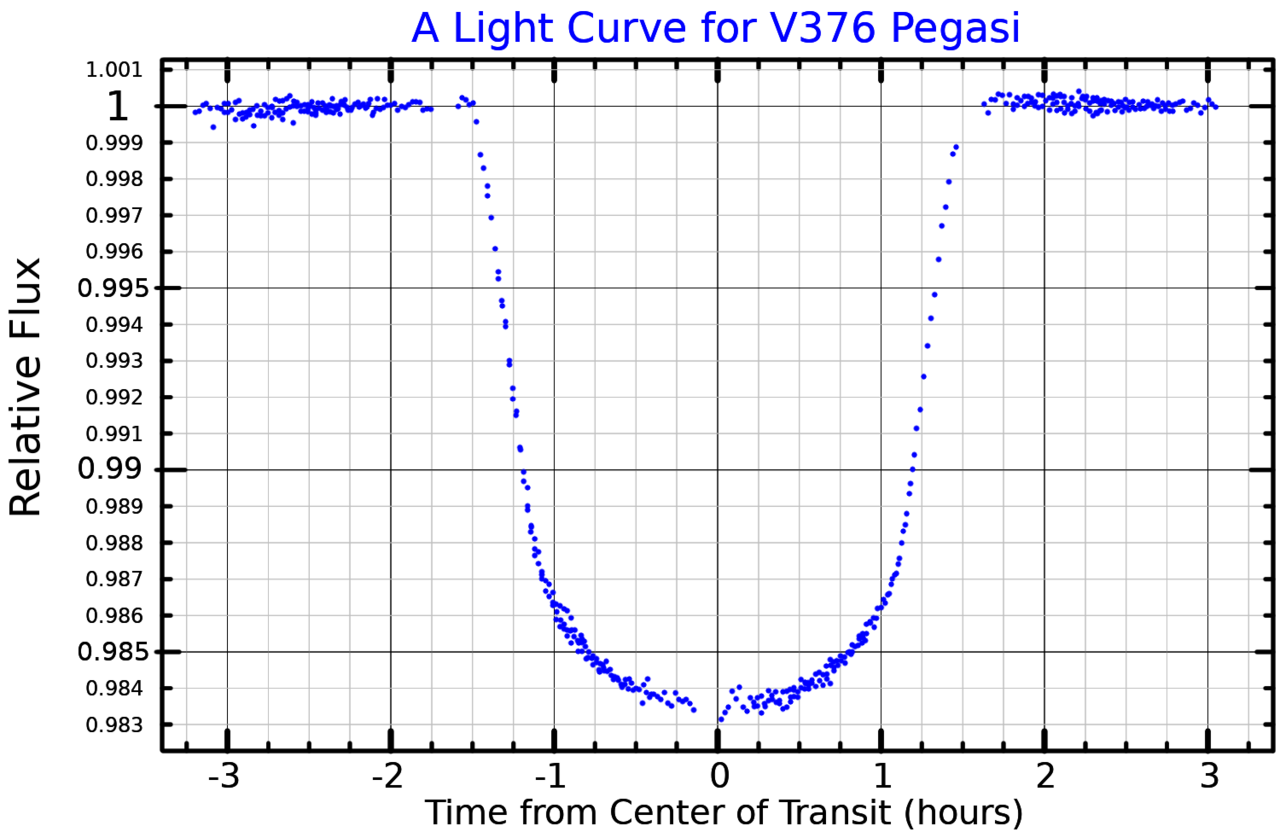
First Breath: How Astronomers Sniffed an Exoplanet's Air
A star 150 light-years away, a planet crossing its face, and a sliver of color in the spectrum that changed what astronomers thought was measurable.