
Featured · TodayHistory
The Sign That Promised More Than a Movie
On opening day in 1921, Chicago crowds lined up hours early for a new movie palace on State Street. The real draw wasn't only on the screen.

Listen
Read by Wren · 9 min
Lines Before Noon on State Street
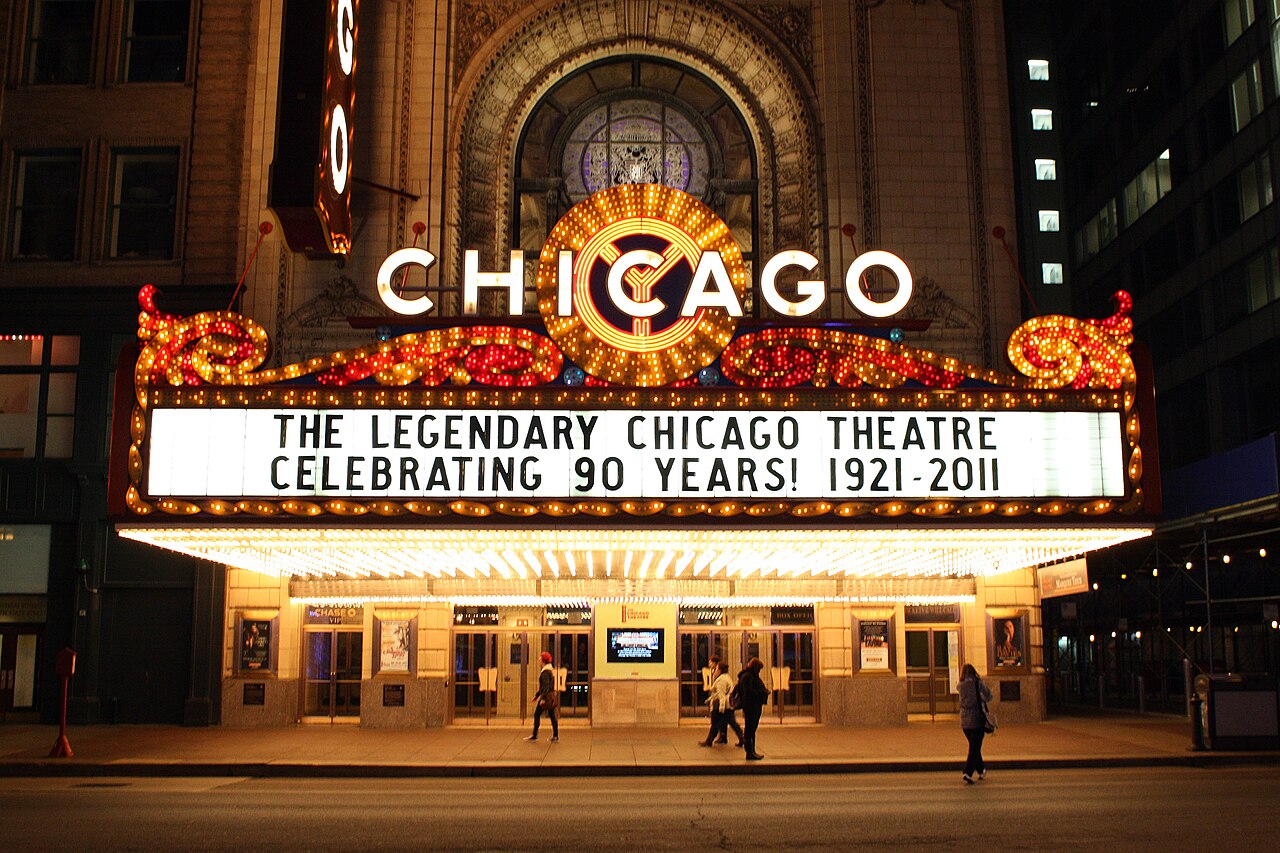
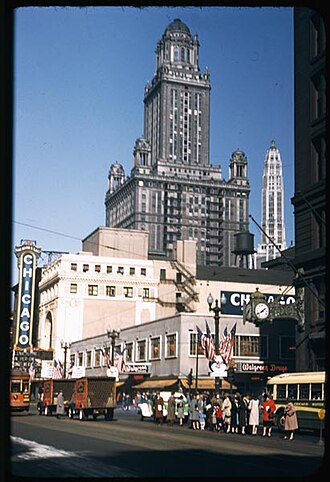
On October 26, 1921, people began lining up outside the new Chicago Theatre as early as two in the afternoon, three and a half hours before the doors opened1. Crowds packed State Street all week to see Norma Talmadge in The Sign on the Door, with a fifty-piece orchestra and organist Jesse Crawford waiting inside2. Poet Carl Sandburg, covering the opening for the Chicago Tribune, reported that mounted police had to be brought in to manage the crowd2.
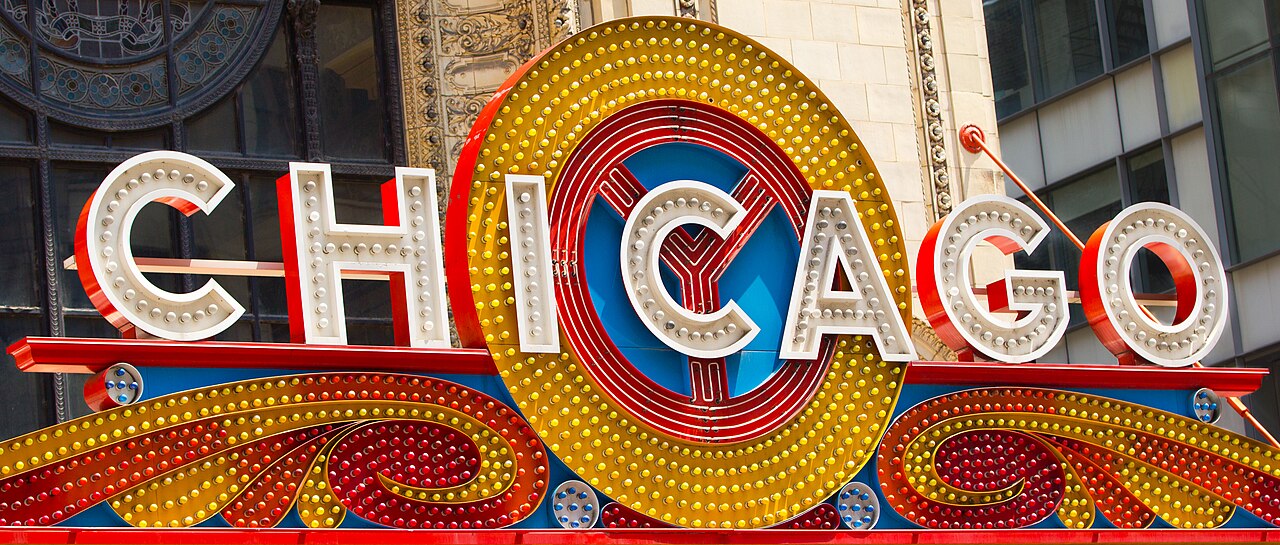
Beneath the marquee, a sign told passersby something beyond the night's film listing: "Balaban & Katz Air Conditioned Theater," and under it, "Delightfully Comfortable Inside!!"3. For a theater chain that could have simply advertised a movie and an orchestra, that was an odd thing to put in lights.
The sign made sense because of a problem Chicago's theater owners had been fighting for years. Before mechanical cooling, movie houses were often miserable in summer: crude systems blew fans across blocks of ice, producing noise, uneven cooling, and sometimes a spray of water onto patrons below4. Many theaters simply closed for the hot months or limped along with thin crowds, treating summer as dead weight on the books5.
Balaban & Katz, the company behind the Chicago Theatre, was built by brothers Abe and Barney Balaban together with Sam and Morris Katz, and their whole approach was to sell moviegoing as an experience, not just a screening: grand architecture, uniform prices, live music, lounges, and controlled climate2,6. Barney Balaban had worked for Western Cold Storage Company before joining the family business, and that background mattered. Rather than treat cooling as a stage trick, he pushed for a genuine mechanical refrigeration system, with equipment supplied through the Kroeschell Brothers Ice Machine Company7,8.
The theater most people now associate with air conditioning, though, wasn't the Chicago Theatre at all. Four years before the State Street crowds formed, Balaban & Katz had opened the Central Park Theatre in 1917, widely identified as the world's first mechanically air-cooled movie theater3,7. Its early advertising promised patrons "fresh and exhilarating air, chilled to any degree of coolness necessary to our patrons' comfort"1. That system still had the rough edges of a first attempt, built on fans and ice rather than true refrigeration machinery, and it was the lessons learned there, including the embarrassment of water spraying onto customers, that pushed the company toward something sturdier4.
By the time the Tivoli and the Chicago Theatre opened in 1921, the engineering had moved past simply lowering the temperature. Those installations added dehumidification, pulling moisture out of the air rather than just cooling it, which mattered because damp air feels hotter and can damage plaster, fabric, and woodwork over time7. One account of a movie-palace cooling plant from the era describes a basement system filling an entire room, with more than 15,000 feet of pipe, 240-horsepower motors, and two 1,000-pound flywheels, representative of the scale these systems reached, even if it isn't certain every figure applies specifically to the Chicago Theatre's plant rather than a related Balaban & Katz installation5.
The payoff showed up at the box office. Once theaters could promise real comfort instead of just a show, summer stopped being a slow season and became an opportunity: audiences came in from the heat specifically because the building promised relief from it1,5,7. By around 1926, the practice had spread through the industry, and most major movie palaces either retrofitted cooling systems or designed new buildings around them from the start5.
So when the crowds gathered on State Street in October 1921, three and a half hours before showtime, they weren't just coming for Norma Talmadge or the Wurlitzer organ2. The sign under the marquee, promising they'd be "delightfully comfortable inside," was advertising something Balaban & Katz had spent four years and two theaters learning how to deliver3.
Why Summer Used to Empty the Seats
Before mechanical cooling existed, a hot spell could gut a theater's weekly take. Crude ice-and-fan rigs were the standard workaround, and they were unreliable enough that many exhibitors simply shut their doors for the season rather than fight the heat5,4.
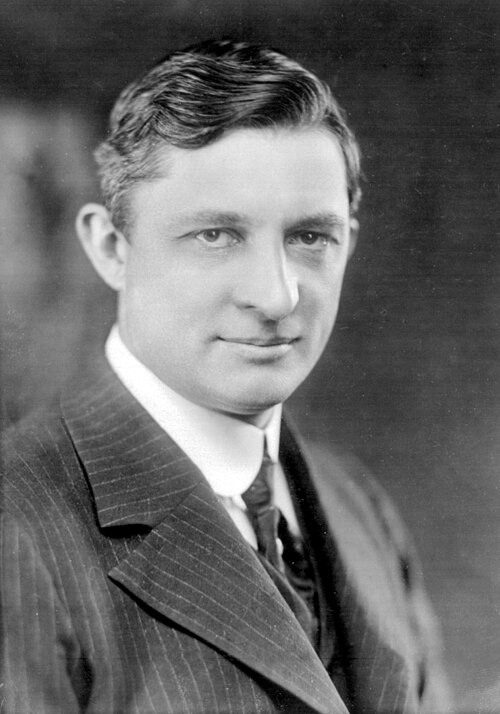
The broader technology behind all of this traces to Willis Carrier, who developed the system generally regarded as the start of modern air conditioning in July 1902, originally to solve industrial humidity problems, not to cool audiences9. It took fifteen years, and a theater chain willing to gamble on comfort as a selling point, before that industrial idea found its way into a Chicago movie house9,7.
Who Built It
- Barney Balaban: Balaban and Katz executive whose earlier work at Western Cold Storage Company shaped the push toward true mechanical refrigeration rather than fans and ice7,8.
- Abe Balaban, Sam Katz, Morris Katz: co-founders alongside Barney Balaban of the Balaban and Katz theater chain2,6.
- Rapp and Rapp (Cornelius W. Rapp and George L. Rapp): architects who designed the Chicago Theatre and other flagship Balaban and Katz movie palaces2,10.
- Willis H. Carrier: engineer whose 1902 system is credited as the foundation of modern air conditioning, applied later to theaters9.
The Scale of It
- October 26, 1921: date the Chicago Theatre opened on State Street2,1.
- About 3,600 seats: the Chicago Theatre's capacity after later renovation, with some sources citing 3,880 at the original 1921 opening2,10.
- 1917: year the Central Park Theatre opened, widely cited as the first mechanically air-cooled movie theater3,7.
- 15,000+ feet of pipe, 240-horsepower motors, two 1,000-pound flywheels: scale of a movie-palace cooling plant described in period accounts, representative of the era's systems5.
- 1926: rough point by which air conditioning had become standard across major movie palaces5.
Where the Record Gets Fuzzy
Some popular accounts call the Central Park Theatre the first "air-conditioned" theater outright, while others are careful to distinguish mechanically cooled or air-cooled systems from later systems that fully controlled both temperature and humidity. The terminology isn't used consistently across sources3,7.
The specific figures describing a movie-palace cooling plant, the pipe length, motor horsepower, and flywheel weight, come from a general account of the era's technology. It isn't established with certainty that all of those numbers describe the Chicago Theatre's own 1921 system rather than a related Balaban and Katz installation5.
Timeline
- July 1902Willis Carrier develops the system regarded as the start of modern air conditioning, aimed at industrial humidity control9.
- 1917Balaban and Katz open the Central Park Theatre in Chicago, widely cited as the first mechanically air-cooled movie theater3,7.
- 1921Balaban and Katz open the Tivoli Theatre and the Chicago Theatre with upgraded systems adding dehumidification7.
- October 26, 1921The Chicago Theatre opens on State Street, designed by Rapp and Rapp, with roughly 3,600 to 3,880 seats2,10.
- After 1926Air conditioning becomes standard across major American movie palaces5.
Pictures



Sources
- The Chicago Theatre: Chicago's Comeback Kidthelocaltourist.com · 2023
- Chicago TheatreWikipedia
- Staying Cool at the Movies | Picture ThisLibrary of Congress
- Barney Balaban - WikipediaWikipedia
- cineCollage :: Silent Hollywoodcinecollage.net
- Chicago Theatre (1921), Chicago - CHOculturalheritageonline.com · 2026
- Balaban & Katzchicagology.com
- Central Park Theater — a 2022 Chicago 7 Most Endangeredpreservationchicago.org
- Carrier History | Carrier air conditioning, heating and refrigerationcarrier.com
- A. J. Balaban - WikipediaWikipedia
Researched and written by Lorelet from the sources above. It cites as it goes, but it can still get things wrong, so check the sources for anything that matters.
Report a problem
More featured lorelets
See all
Today · History
Baron von Toll and the Island That Wasn't There
An Arctic ship sat trapped in ice, ninety miles from four men waiting on a remote island for a rescue that could not come.

Today · History
Ali Maow Maalin and the Last Case of Smallpox
In 1977 a hospital cook in a small Somali port came down with a fever that doctors first called malaria. What his case set in motion would end one of…

Oct 25 · History
The Zinoviev Letter and Britain's 1924 Red Scare
Four days before a general election, a newspaper published a secret document said to prove Moscow was plotting with Britain's governing party. Decade…