
Featured · Nov 25History
The Squabble That Invented Banff National Park
Three railway workers found a steaming cave on a mountainside in 1883 and did what most people would do: tried to claim it for themselves.

Listen
Read by Finch · 7 min
A Hole in the Mountain
On a cool day in November 1883, three Canadian Pacific Railway workers climbed down into a hole in the lower slopes of Sulphur Mountain, using a tree they had felled to reach the skylight opening of a cave below3,4. Inside, Frank McCabe and brothers William and Tom McCardell found a chamber of warm, sulphurous water1,2,4. William McCardell later described the mist-filled cave as being like something out of the Arabian Nights9.
They did not simply admire it. The following year the three men built a small cabin near the entrance and put up a fence, the crude first boundary markers of what would become Canada's first national park1,9,4.
The setting was not accidental. The Dominion government had committed to a transcontinental railway after Confederation in 1867, partly to bind British Columbia to the rest of the country, and construction crews reached the Bow River valley in 1883 while the line was still unfinished1,3,6. McCabe was a section foreman; William McCardell worked construction alongside him, with his brother Tom making the third man on site3,1. None of them were naturalists or officials. They were laborers who had stumbled onto something they believed they could sell.
By March 1884, McCabe had put that belief into writing. He sent a letter to the Minister of the Interior asking for title to the land, not just for himself but on behalf of William and Tom McCardell and two other men, Archie McNeil and C.W.H. Sansom1. It reads less like a trespasser's bluff and more like a partnership agreement, five names on a claim to a patch of steaming ground.
Other parties had their own designs on the same site, and the overlapping claims turned into what Parks Canada's own history calls legal wranglings over who had truly discovered the springs first1,5. The government, for its part, had reasons beyond scenery to care: the mineral waters were seen as a commercially valuable attraction, the kind of thing that could help bankroll a railway still desperately short of cash10,11. According to a later scholarly account, CPR vice president William Van Horne also recognized the springs' tourist value and pushed federal officials to protect the site outright12.
The dispute dragged through 1885 and 1886, with the government eventually holding an inquiry into the competing claims and the question of compensation4. Rather than let five railway workers carve up a hot spring, Prime Minister Sir John A. Macdonald's government reserved 26 square kilometers around the Cave and Basin in 1885, the Banff Hot Springs Reserve5,6. It was a narrow, defensive move, aimed at settling one property fight. But it set a precedent the government then expanded: the Rocky Mountains Park Act received royal assent on June 23, 1887, enlarging the reserve to roughly 665 to 674 square kilometers and creating Rocky Mountains Park, the first national park in Canada5,3,7.
What began as three men trying to fence off a cave for profit ended as federal policy, a legal category, a park system that now spans the country. The men who climbed down through that skylight in 1883 were trying to own something. Instead they handed it, by accident, to everyone.
Before the Railway Workers
The land the three men claimed was not undiscovered in any absolute sense. Parks Canada notes that archaeological evidence places human habitation in the Bow Valley back roughly 10,000 to 10,700 years, and that the Cave and Basin held longstanding cultural significance for Indigenous peoples, including the Stoney Nakoda4,6,8.
Earlier written references to the springs also predate 1883: James Hector of the Palliser Expedition recorded them in 1859, and a man named Joe Healey is said to have come across the Cave and Basin site around 1874 or 18754. What made McCabe and the McCardell brothers different was not priority of discovery but the attention they drew: their encounter is the one that reached Canadian officials and triggered the land dispute that produced a national park4,1.
Who Was There
- Frank McCabe: CPR section foreman who co-discovered the springs with the McCardells in November 1883 and wrote the March 1884 letter claiming the site for himself and four others3,1.
- William McCardell: CPR construction worker who entered the cave through its skylight and later described the scene in vivid terms1,9.
- Tom McCardell: William's brother, the third man in the group; Parks Canada's accounts consistently name both brothers as present2,5.
- Sir John A. Macdonald: Prime Minister whose government created the 1885 Hot Springs Reserve to settle the ownership dispute and keep the springs under federal control5,6.
- William Van Horne: CPR vice president said to have pushed federal officials to protect the springs for tourism, according to a later scholarly account12.
The Scale of It
- November 1883: month the springs were encountered by the three CPR workers1,2,3.
- 26 km²: size of the original Banff Hot Springs Reserve, created in 18855,6.
- 665-674 km²: size of Rocky Mountains Park after the 1887 Act expanded the reserve6,1.
- June 23, 1887: date the Rocky Mountains Park Act received royal assent5,3,7.
- 6,641 km²: current size of Banff National Park6.
What's Fuzzy
The exact day of the discovery is not settled. Official and Parks Canada materials generally give only the month, November 1883, while some secondary accounts specify November 8, 1883, without the same level of sourcing1,13,3.
Popular retellings sometimes compress the story into a tidy cause and effect, as if the park sprang entirely from one quarrel over a pool. Parks Canada's own account is more layered: railway construction, federal land policy, and the government's interest in controlling a commercially valuable attraction all shaped the outcome alongside the ownership dispute1,5,11.
The word discovery is also doing some work it should not. The three railway workers were the first non-Indigenous people to bring the springs to wide public and government attention, not the first people to know the site existed4,8.
Timeline
- November 1883Frank McCabe and brothers William and Tom McCardell encounter the Cave and Basin hot springs on Sulphur Mountain.
- 1884The men build a cabin and fence near the cave; McCabe writes to the Minister of the Interior claiming the land for five men.
- 1885The federal government creates the 26 km² Banff Hot Springs Reserve.
- 1886The government holds an inquiry into competing private claims to the site.
- June 23, 1887The Rocky Mountains Park Act receives royal assent, expanding the reserve to roughly 665-674 km² and creating Canada's first national park.
Pictures


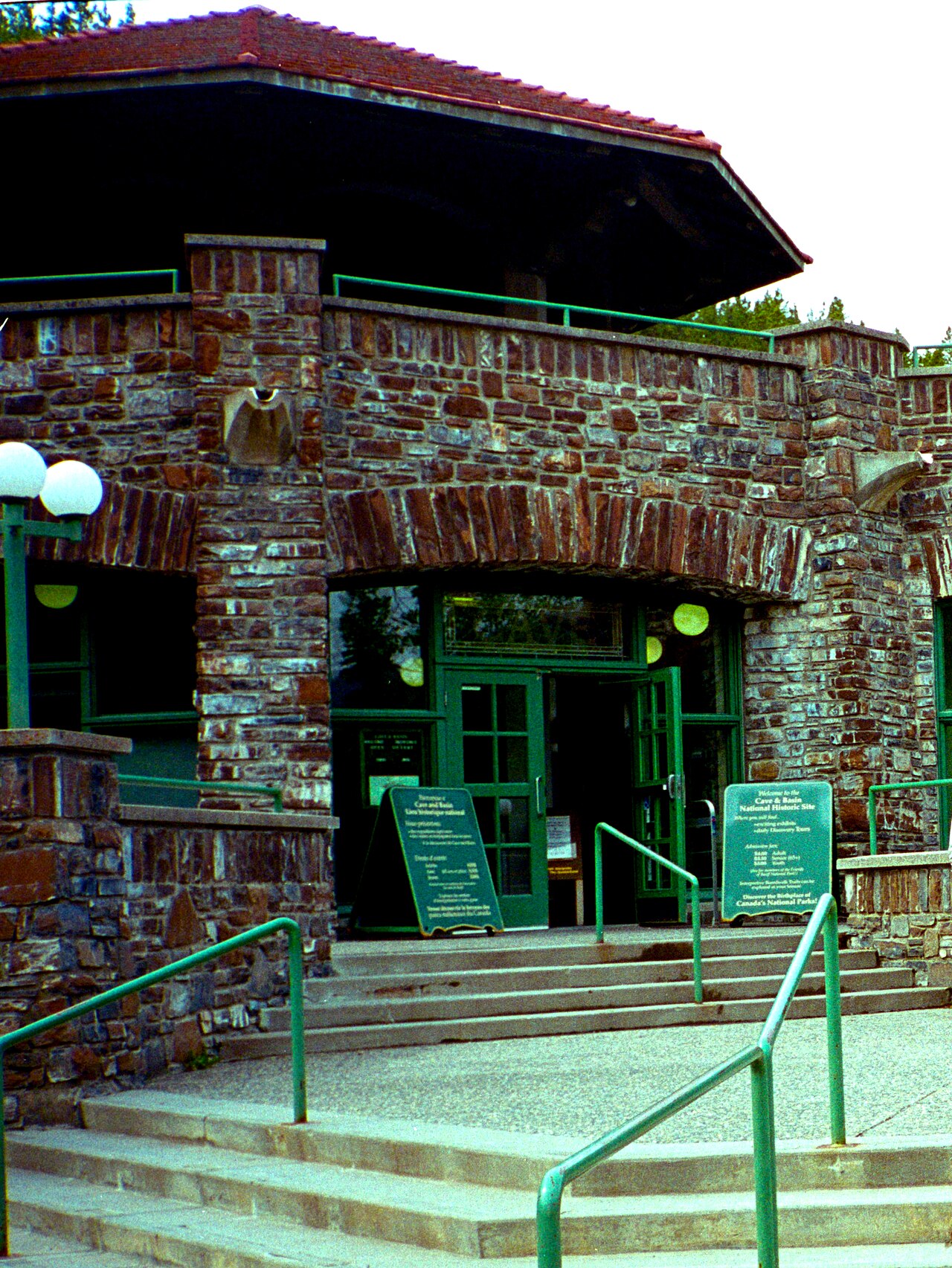


Sources
- The Cave and Basin Hot Springs - Parks Canada.parkscanadahistory.com
- Hot springsparks.canada.ca
- Information archivée dans le Web | Information Archived on the Webpublications.gc.ca
- Cave and Basin National Historic SiteWikipedia
- Banff’s legacyparks.canada.ca
- Banff National ParkWikipedia
- Rocky Mountains Park Act, 1887parkscanadahistory.com
- Cultureparks.canada.ca
- The Birthplace of Canada's National Parkscalgaryguardian.com · 2015
- Cave and Basin National Historic Site in BanffAtlas Obscura
- Making the Wildernesscca.qc.ca
- Interpreting boundariesjournals.uclpress.co.uk
- Banff National Park Complete History Guidemachupicchu.org · 2025
Researched and written by Lorelet from the sources above. It cites as it goes, but it can still get things wrong, so check the sources for anything that matters.
Report a problem
More featured lorelets
See all
Today · History
The RAF Fauld Explosion: Britain's Largest Blast Crater
On a quiet Monday morning in wartime Staffordshire, the ground opened up. It took thirty years for anyone outside the military to find out why.
Today · History
When Alfred Nobel's Will Shocked His Family
A handwritten testament gave away a fortune to strangers and left a young assistant to make it real, against the wishes of furious relatives and a ki…
Today · Space
First Breath: How Astronomers Sniffed an Exoplanet's Air
A star 150 light-years away, a planet crossing its face, and a sliver of color in the spectrum that changed what astronomers thought was measurable.